
Choosing between a polycarbonate vs glass roof NZ solution requires balancing budget, thermal performance, and durability. Polycarbonate is a cost-effective, lightweight option with high UV protection, while safety glass offers premium aesthetics and clarity. However, for maximum ventilation and heat control in New Zealand’s variable climate, automated louvre systems provide the most sophisticated architectural integration.
The Science of Heat Transfer in Clear Roofing
When evaluating polycarbonate vs glass roof NZ options, the primary concern for most commercial and high-end residential projects is thermal regulation. New Zealand’s unique atmospheric conditions—characterized by high UV levels and rapidly changing weather—mean that clear roofing can easily turn an outdoor space into an unusable greenhouse during the summer months.
Heat transfer occurs through three primary mechanisms: conduction, convection, and radiation. In the context of clear roofing, solar radiation is the most significant factor. Standard clear materials allow short-wave solar radiation to pass through, which is then absorbed by surfaces inside the structure. These surfaces re-radiate long-wave infrared energy, which cannot pass back through the roofing material as easily, leading to significant heat buildup.
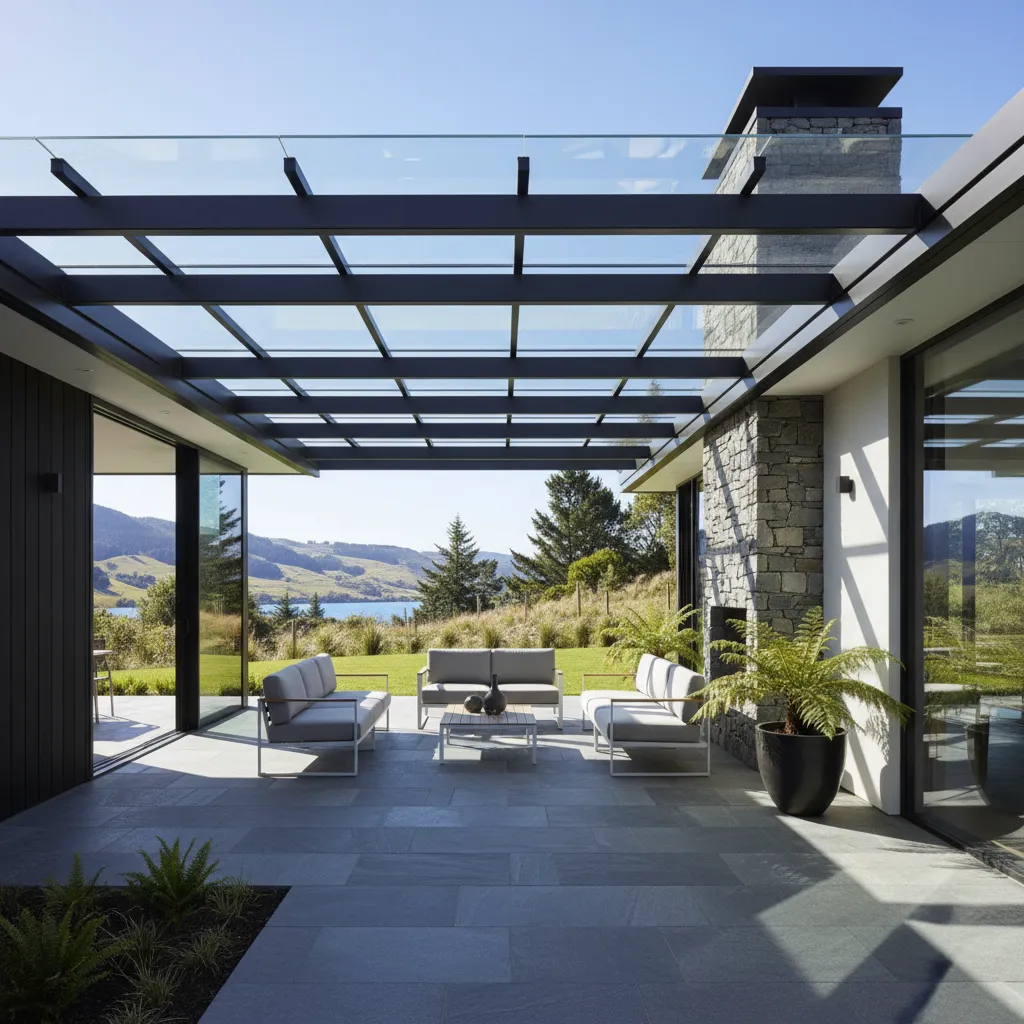
Solar Heat Gain Coefficient (SHGC)
To professionally assess roofing materials, architects look at the Solar Heat Gain Coefficient (SHGC). This metric measures the fraction of incident solar radiation that enters through the roof. A lower SHGC means less heat is transmitted. High-performance glass with low-E coatings can achieve significantly lower SHGC ratings than entry-level polycarbonate, making it a superior choice for south-facing or sheltered areas where heat trapping is a risk.
Why Cheap Polycarbonate Goes Brittle in NZ
Polycarbonate is often the go-to material for budget-conscious projects, but in the New Zealand market, the distinction between high-quality and “cheap” polycarbonate is critical. Many property owners find that lower-grade polycarbonate sheets become brittle, yellowed, and prone to cracking within just a few years of installation.
The culprit is New Zealand’s exceptionally high UV index. Polycarbonate is a polymer, and UV radiation causes a chemical process called photodegradation. This breaks down the molecular bonds within the plastic. High-quality polycarbonate manufacturers integrate UV inhibitors directly into the material or apply a co-extruded UV protective layer. Cheap alternatives often lack this depth of protection, leading to rapid degradation.
The Impact of Thermal Expansion
Another reason for failure in polycarbonate roofing is improper installation regarding thermal expansion. Polycarbonate expands and contracts significantly more than glass or metal. If the sheets are fixed too tightly without allowing for movement in the joinery or oversized pre-drilled holes, the stress leads to micro-fractures around the fasteners. Over time, these fractures expand, leading to leaks and eventual structural failure of the sheet.
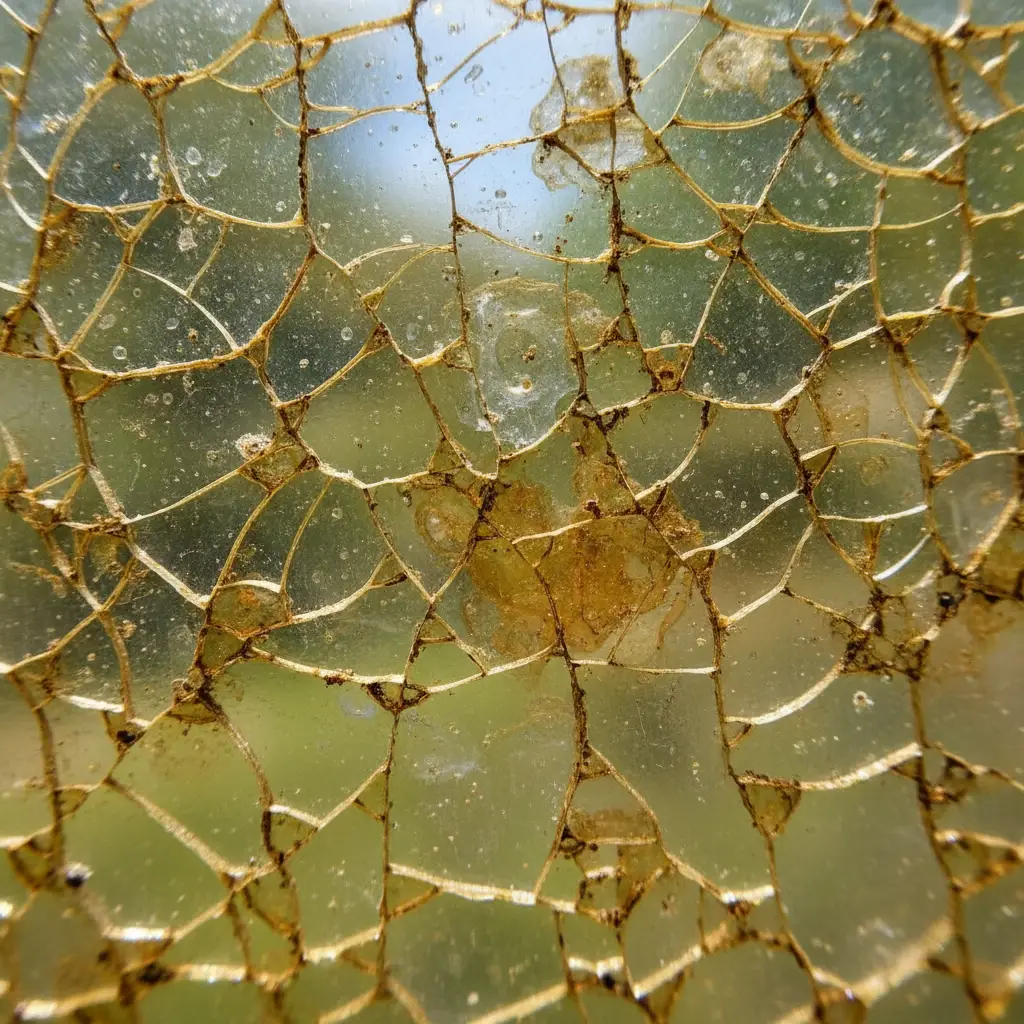
Safety Glass: Costs, Benefits, and Aesthetics
For those prioritizing a premium finish, safety glass is the gold standard. In the New Zealand building code, any overhead glazing must meet strict safety standards (NZS 4223). This usually involves the use of toughened or laminated glass to ensure that if the glass breaks, it does not shatter into dangerous shards.
Laminated vs. Toughened Glass
Toughened glass is heat-treated to be up to five times stronger than standard glass. When it breaks, it disintegrates into small, relatively blunt granules. Laminated glass, on the other hand, consists of two layers of glass with an interlayer (usually PVB). If the glass breaks, the interlayer holds the pieces in place. For commercial environments, laminated glass is often preferred for overhead applications to prevent any debris from falling on patrons.
While the initial cost of glass is significantly higher than polycarbonate—often 3 to 4 times the price per square meter—the return on investment comes through longevity and property value. Glass does not yellow, it is much quieter during heavy NZ rain, and it provides a level of clarity that polymers simply cannot match.
Ventilation Control with Automated Louvres
While polycarbonate vs glass roof NZ debates often center on transparency, the modern architectural trend is shifting toward louvre systems. Louvres represent the pinnacle of outdoor living technology because they solve the one problem that fixed clear roofs cannot: stagnant heat.
Even with UV tints, a fixed roof traps air. Automated louvres allow the user to rotate aluminum or glass blades to create a chimney effect. As the sun heats the space, the louvres can be angled to let hot air escape while still providing shade. This passive ventilation is essential for commercial hospitality spaces like cafes and restaurant courtyards.
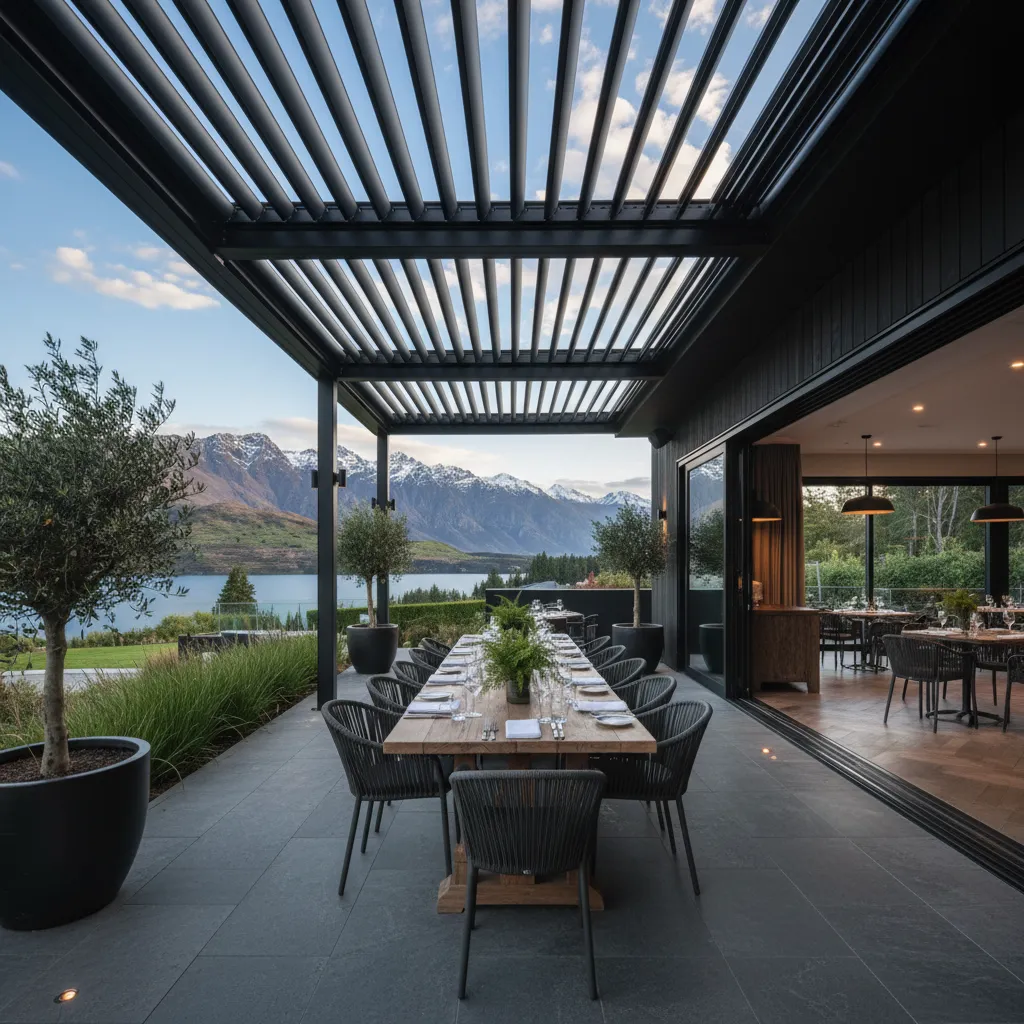
Smart Integration and Sensors
Modern louvre systems in NZ are frequently equipped with rain sensors. In the event of a sudden Auckland downpour, the sensors trigger the motor to close the blades automatically, protecting furniture and guests. This level of automation provides a “set and forget” convenience that fixed roofing cannot offer.
Performance Comparison Summary
To help determine the best fit for your project, consider the following performance breakdown:
| Feature | Polycarbonate | Safety Glass | Louvre Systems |
|---|---|---|---|
| Initial Cost | Low | High | Very High |
| Durability | 10-15 Years | 25+ Years | 20+ Years |
| UV Protection | Excellent | Varies (High with coatings) | Total (when closed) |
| Ventilation | None (Fixed) | None (Fixed) | Superior (Adjustable) |
| Acoustics (Rain) | Loud | Moderate | Quiet (Aluminum) |
Compliance and Wind Zones
In New Zealand, any outdoor structure must comply with local council regulations and the New Zealand Building Code. This is particularly important for wind zones. Because polycarbonate is lightweight, it requires robust fixing systems to prevent it from acting like a sail in high-wind areas like Wellington or coastal Otago.
Glass roofs require significant structural engineering due to the weight of the panes. The supporting frame (usually aluminum or steel) must be calculated to handle the dead load of the glass plus potential snow loads in southern regions. Louvre systems, while complex, are usually sold as engineered kits that come with pre-approved PS1 (Producer Statement) documentation, simplifying the building consent process for commercial operators.
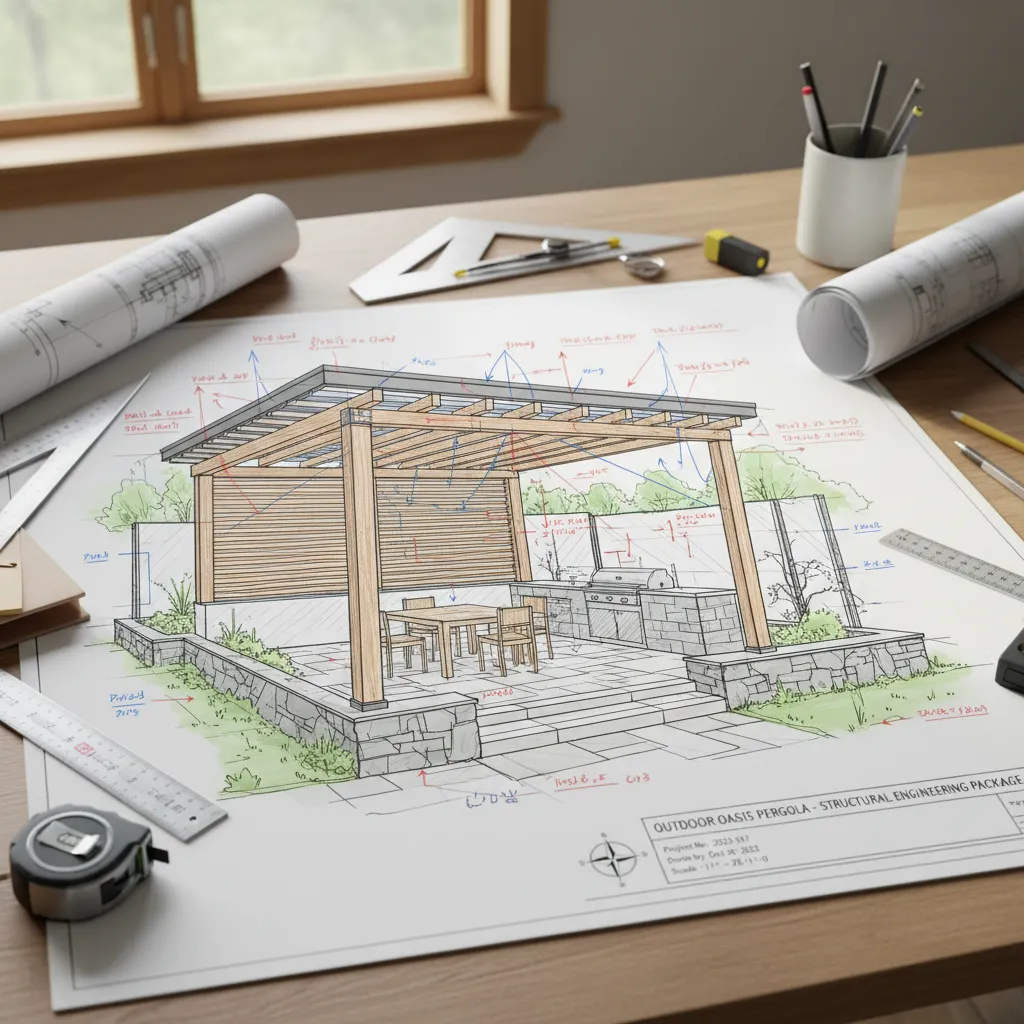
Ultimately, the choice between polycarbonate vs glass roof NZ solutions depends on the intended use. For a simple carport or basic walkway, high-quality polycarbonate is sufficient. For a luxury home extension where aesthetics and acoustic comfort are paramount, safety glass is the winner. However, for a truly versatile commercial space that requires year-round climate control, an automated louvre system is the undisputed leader.
Final Considerations for Commercial Projects
When selecting for a commercial environment, consider the maintenance schedule. Glass requires regular cleaning to maintain its premium look, especially in coastal environments where salt spray can build up. Polycarbonate can scratch easily, so abrasive cleaning must be avoided. Louvres, while having more moving parts, are often the easiest to maintain as the vertical nature of the blades when open allows for easy hosing down of both sides.
Is polycarbonate or glass better for noise reduction in rain?
Glass is significantly better for noise reduction. Polycarbonate acts like a drum skin, amplifying the sound of raindrops, which can make conversation difficult during heavy New Zealand downpours. Laminated glass absorbs much of this acoustic energy.
Does glass roofing require a building consent in NZ?
Generally, yes. Because of the weight and safety requirements associated with overhead glazing, most councils require a building consent to ensure the supporting structure is engineered correctly for wind and snow loads.
How long does a polycarbonate roof last in NZ?
A high-quality, UV-protected polycarbonate roof typically lasts 10 to 15 years in New Zealand. Lower-end products may begin to show signs of yellowing or brittleness in as little as 5 years due to the high UV index.
Can louvre roofs be integrated with smart home systems?
Yes, most premium louvre systems available in NZ can be integrated with platforms like Google Home or Amazon Alexa, or operated via dedicated smartphone apps and internal weather sensors.
Which roofing material provides the best UV protection?
Most modern polycarbonate sheets block 99% of harmful UV rays. Glass also provides excellent UV protection, especially if laminated or treated with a low-E coating, which blocks both UV and infrared light.
What is the most expensive option among the three?
Automated louvre systems are typically the most expensive due to the mechanical components, aluminum engineering, and installation complexity, followed by safety glass, with polycarbonate being the most affordable.