
Choosing between stainless steel vs galvanized screws for an NZ deck depends on proximity to the coast and timber treatment. Stainless steel (Grade 316) is essential within 5km of the sea and for ACQ-treated timber to prevent corrosion. Galvanized screws suit inland projects using CCA-treated wood but offer lower longevity in high-salt environments.
What is the 5km Coastal Zone Rule in New Zealand?
In New Zealand, the environment is particularly harsh due to the high salt content in the air and the prevailing winds that carry sea spray far inland. The New Zealand Building Code, specifically NZS 3604, classifies the country into different corrosion zones. While the technical standards define Zone D (High) as anything within 500 meters of the high-water mark, industry experts and the Building Research Association of New Zealand (BRANZ) strongly recommend the “5km rule” for deck hardware longevity.
The 5km coastal zone rule dictates that if your property is located within five kilometers of the coastline, you should exclusively use Grade 316 stainless steel for all external fixings. This is because salt aerosols can penetrate deep into residential areas, settling on deck screws and structural brackets. Galvanized steel, even if hot-dipped, relies on a sacrificial zinc coating. In high-salt environments, this zinc layer oxidizes rapidly, leaving the underlying steel vulnerable to structural failure within a few short years.
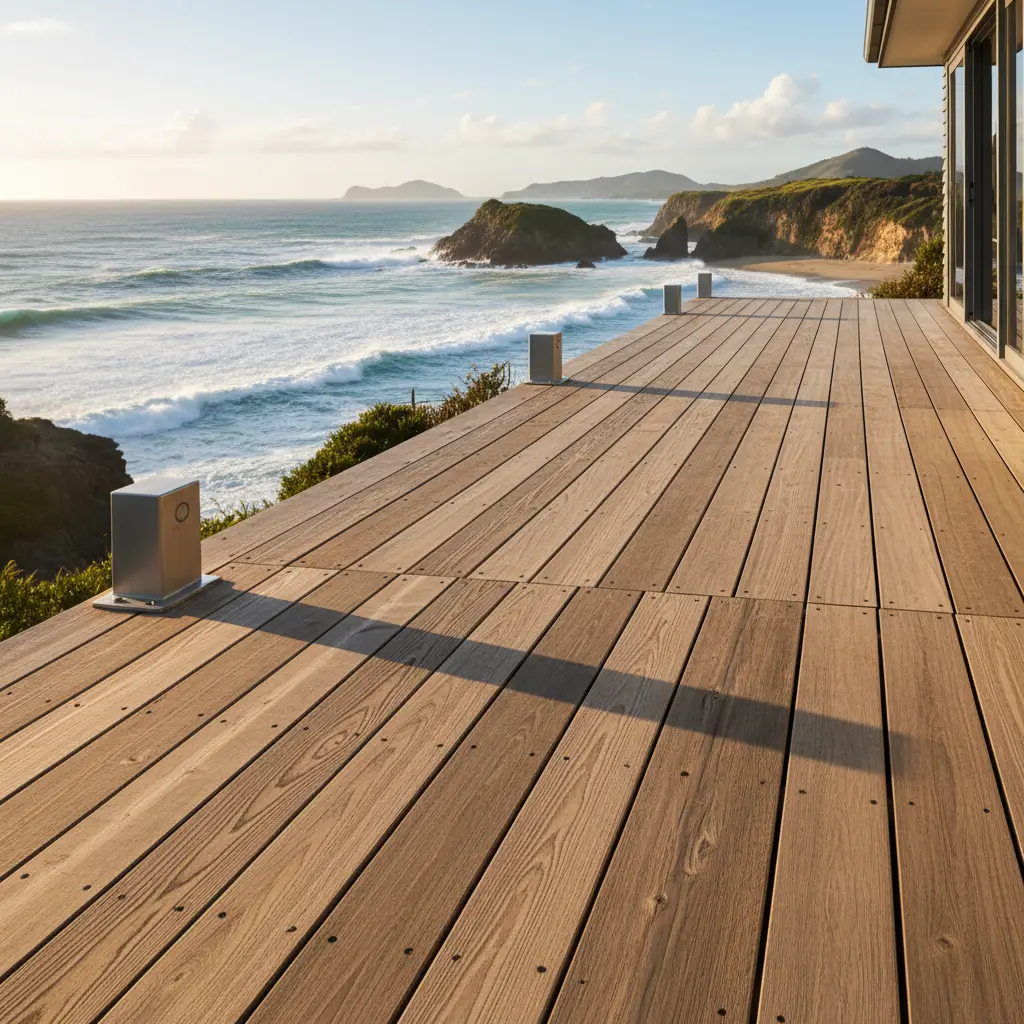
For those living in geothermal areas like Rotorua, the rules are even stricter. Sulfur compounds in the air are arguably more corrosive than sea salt, necessitating 316-grade stainless steel regardless of the distance from the ocean. Understanding your specific micro-climate is the first step in ensuring your outdoor living space remains safe and aesthetically pleasing for its intended 25-to-50-year lifespan.
How do hardware metals react with treated timber (ACQ/Copper)?
The chemical composition of your decking timber is just as important as the air quality. In New Zealand, timber is treated to prevent rot and insect infestation. Historically, CCA (Chromated Copper Arsenate) was the standard. However, modern environmental preferences have shifted toward ACQ (Alkaline Copper Quaternary) and Copper Azole treatments, especially for timber that will be in direct contact with people, such as decking boards and handrails.
The high copper content in ACQ and Copper Azole treatments creates a significant problem for galvanized hardware. When moisture is present, a galvanic reaction occurs between the copper in the wood and the zinc on the screw. In this electrochemical cell, the zinc acts as the anode and the copper as the cathode. The zinc is consumed at an accelerated rate to protect the copper. Once the zinc coating is gone, the steel screw core begins to rust immediately.
This is why using galvanized screws in ACQ-treated timber is a recipe for disaster. The hardware can lose its structural integrity in as little as two to three years. Stainless steel, however, is much further apart from copper on the galvanic scale and does not suffer from this accelerated corrosion. If you are using premium hardwoods or ACQ-treated pine, stainless steel is the only viable choice for long-term durability.
Why do cheap hardware kits rust within 12 months?
Many homeowners are lured by the low price tags of “all-in-one” decking kits or bulk-buy screws found in big-box retailers. Unfortunately, these products often fail within the first year. The primary reason is the difference between “electro-galvanized” and “hot-dip galvanized” coatings, or worse, the use of low-quality alloys marketed as stainless steel.
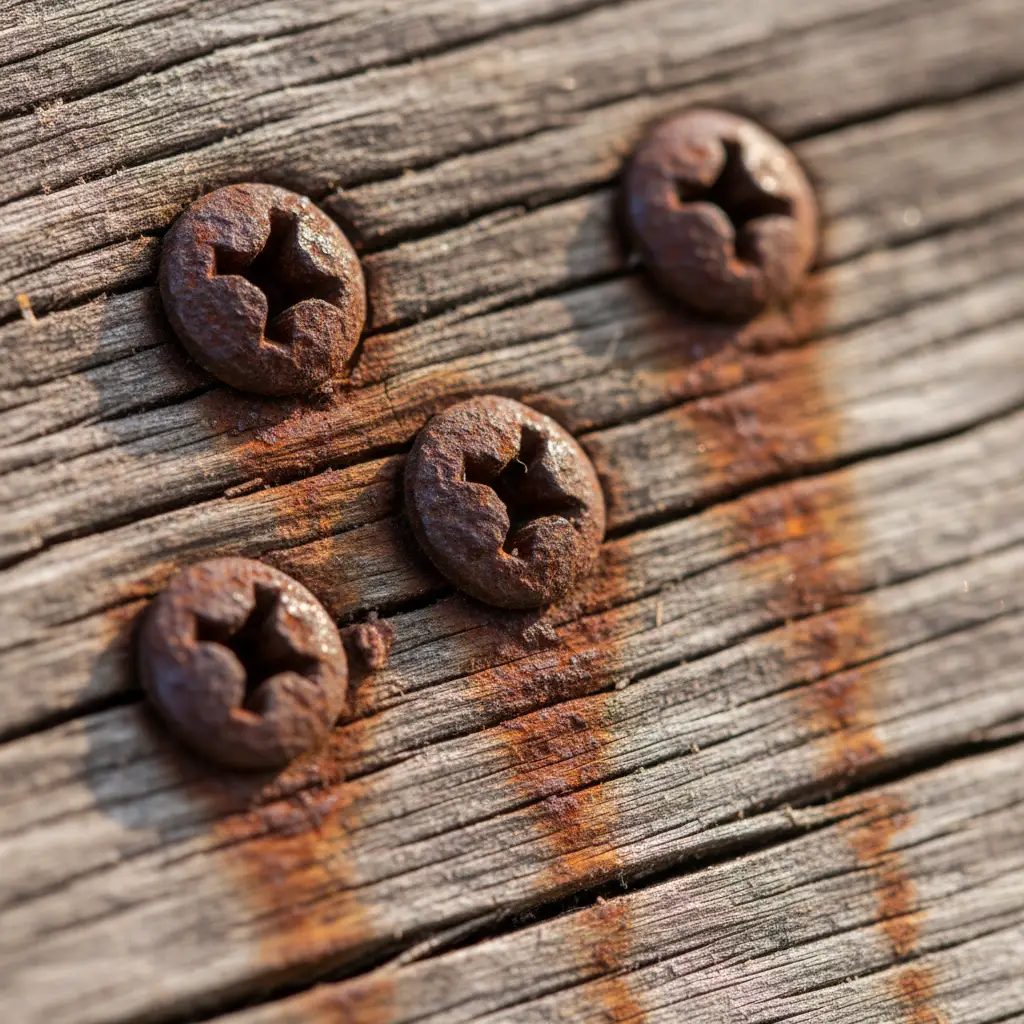
Electro-galvanized screws have a very thin layer of zinc applied through an electric current. This layer is often only a few microns thick—sufficient for indoor furniture but entirely inadequate for the New Zealand outdoors. Hot-dip galvanization involves dipping the steel into molten zinc, creating a much thicker, more durable metallurgical bond. However, even hot-dip galvanizing can be compromised during installation; if the driver bit slips and scratches the coating, the path for rust is opened.
Furthermore, cheap “stainless” screws may be made from inferior 400-series alloys which contain less chromium and no nickel. These are magnetic and will rust almost as quickly as carbon steel when exposed to the elements. In the NZ market, where UV radiation and moisture levels are high, these “budget” options represent a false economy, leading to expensive remedial work and potential safety hazards as deck boards begin to lift or structural joists detach.
What is the difference between 304 and 316 marine grade stainless steel?
When shopping for stainless steel vs galvanized screws for an NZ deck, you will encounter two main grades: 304 and 316. Understanding the molecular difference is crucial for hardware longevity. Grade 304 is the most common form of stainless steel, containing chromium and nickel. It offers excellent corrosion resistance in most environments but has one major weakness: chlorides (salt).
Grade 316 is often referred to as “Marine Grade.” It contains an additional element: Molybdenum (usually 2-3%). This addition significantly increases the metal’s resistance to pitting and crevice corrosion in chloride-rich environments. For New Zealand decks, 304 grade is prone to “tea-staining”—a brownish surface discoloration that looks like rust but is usually just surface oxidation. While tea-staining doesn’t always indicate structural failure, it is unsightly and difficult to remove.
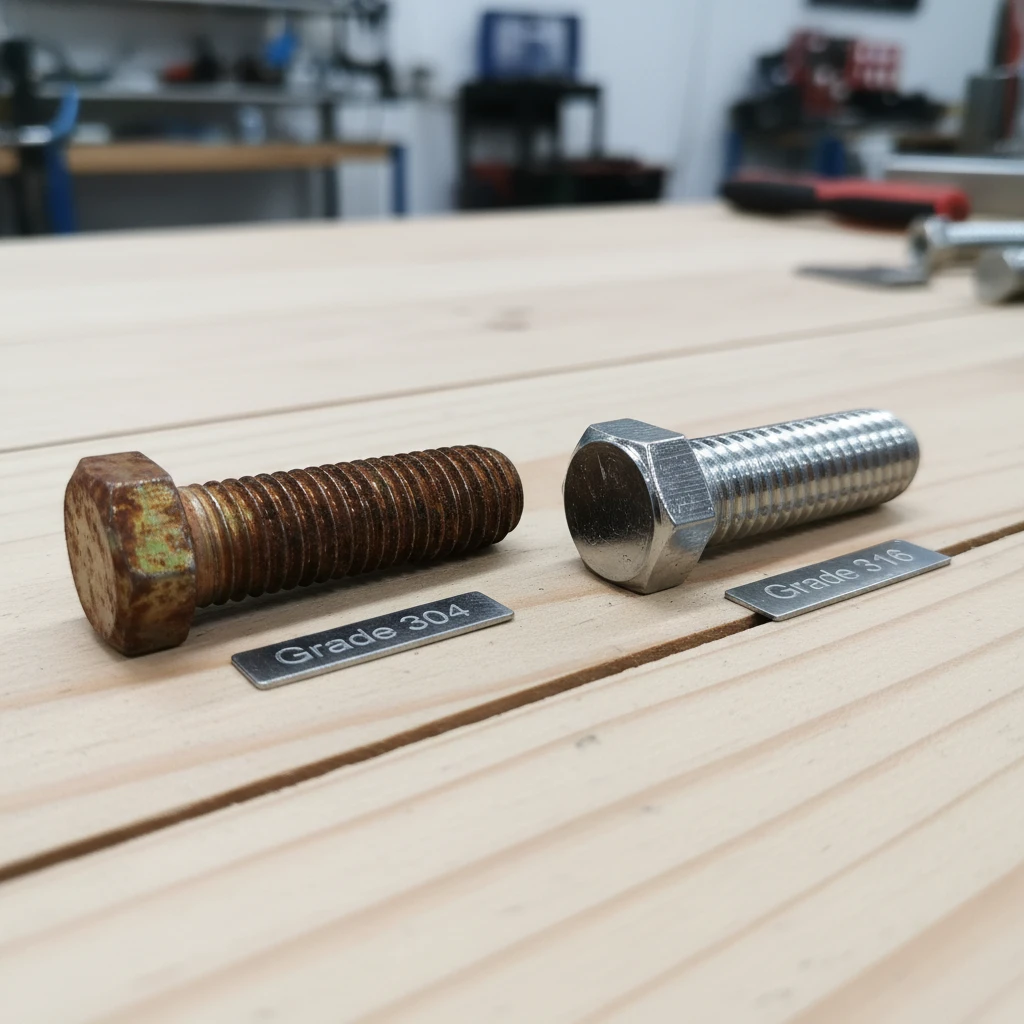
To identify the two, look for markings on the head of the screw. Higher-quality fasteners will often have “316” or “A4” (the European equivalent) stamped into the metal. If there are no markings, you can use a strong magnet. While 300-series stainless steel is generally non-magnetic, the cold-working process of manufacturing screws can make 304 slightly magnetic, whereas 316 remains almost entirely non-magnetic. For any deck within sight of the ocean, 316 is the non-negotiable standard.
The Long-Term Cost-Benefit Analysis
The initial cost of 316 stainless steel screws can be double or even triple that of galvanized alternatives. For a standard 20-square-meter deck, this might mean an extra $200 to $400 in hardware costs. However, when viewed through the lens of architectural integration and property value, this investment is negligible. A deck is a significant asset; its value is tied to its safety and appearance.
Consider the cost of failure: if galvanized screws fail in five years, you must remove the decking boards (which often damages them), replace the screws, and potentially replace the joists if the rust has bled into the timber. This remedial work can cost thousands of dollars in labor and materials. By choosing 316 stainless steel from the outset, you are effectively buying an insurance policy for your deck’s structural integrity. In the New Zealand real estate market, a well-maintained deck with high-quality hardware is a major selling point, whereas a deck with visible rust streaks (tea-staining) can be a red flag during a pre-purchase inspection.
Installation Best Practices for NZ Conditions
Even the best hardware can fail if installed incorrectly. Stainless steel is softer than galvanized carbon steel, meaning the heads are more likely to “cam out” or snap if too much torque is applied. This is particularly true when driving into high-density NZ hardwoods like Vitex or Kwila.
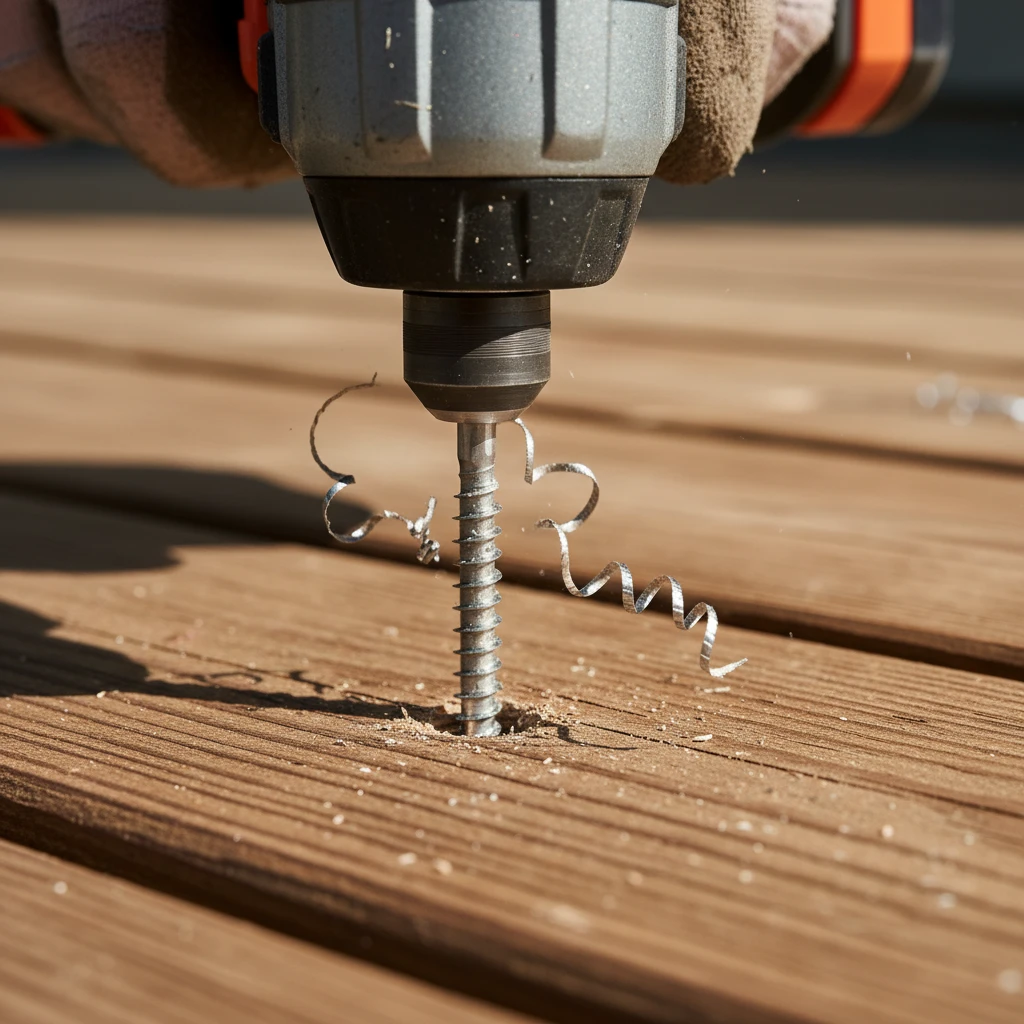
The first rule of thumb is to always pre-drill and countersink. This reduces the friction and heat generated during installation, which preserves the molecular structure of the stainless steel. Secondly, use a high-quality driver bit that fits the screw head perfectly (usually a Square Drive or Torx/Star Drive in NZ). This prevents slipping and damaging the screw head, which can create pockets where salt and moisture can sit.
Finally, for those using stainless steel in coastal areas, a regular wash-down with fresh water is recommended. Even 316 grade can accumulate salt crusts over time. A simple rinse once or twice a year removes these deposits and keeps the hardware looking brand new. This minor maintenance, combined with the correct choice of metal, ensures your New Zealand outdoor living space remains a durable, beautiful extension of your home for decades to come.
Is 304 stainless steel okay for a deck in Auckland?
It depends on your distance from the coast. If you are in an inland suburb like Epsom, 304 may suffice. However, because Auckland is an isthmus with salt air crossing from both the Waitemata and Manukau harbors, 316 is highly recommended to avoid tea-staining and long-term corrosion.
Can I use galvanized nails for my deck joists if I use stainless screws for the boards?
It is generally discouraged. If the joists are ACQ-treated, the galvanized nails will corrode rapidly. Furthermore, using two different metals in close proximity can cause galvanic corrosion. It is best practice to match the hardware grade throughout the entire structure.
Why are my stainless steel screws showing brown spots?
This is likely ‘tea-staining,’ a surface oxidation common in Grade 304 stainless steel or 316 exposed to heavy salt without cleaning. It is usually cosmetic and can be removed with a specialized stainless steel cleaner or a mild abrasive pad and fresh water.
Do I need stainless steel screws for a deck in Christchurch?
If you are in coastal areas like New Brighton or Sumner, 316 stainless steel is essential. For inland suburbs like Riccarton, hot-dip galvanized may be acceptable, provided the timber is CCA-treated rather than ACQ-treated.
What happens if I use galvanized screws in Kwila decking?
Kwila contains natural tannins that can react with the iron in steel. If the galvanized coating is breached or is of low quality, the tannins will cause black staining around the screw holes, and the screws will eventually fail due to the moist environment the timber creates.
Are Torx head screws better than Square Drive for stainless steel?
Yes, Torx (star) heads are generally superior for stainless steel. Because stainless is softer, the six points of contact in a Torx head distribute torque more evenly, significantly reducing the risk of stripping the head compared to a four-point Square Drive.