
A Bunnings vs. premium pergola comparison reveals distinct differences in structural longevity and safety. While Bunnings kits offer low upfront costs suitable for temporary shading in sheltered areas, premium custom pergolas feature heavy-gauge structural aluminium and welded joinery engineered to withstand New Zealand’s ‘Extra High’ wind zones, offering a permanent, high-value architectural integration.
For New Zealand homeowners, the outdoor living space is an extension of the lounge. Whether it is shielding against the harsh UV rays of an Otago summer or withstanding the salt-laden gales of a coastal Auckland property, the structure you choose matters. The market is generally divided into two distinct categories: the off-the-shelf DIY kits available at big-box retailers like Bunnings or Mitre 10, and the bespoke, architectural-grade structures designed by specialist outdoor living companies.
This guide moves beyond surface-level aesthetics to analyze the engineering, materials science, and long-term financial implications of your choice.
1. Structural Integrity: Aluminium Gauge & Metallurgy
The most critical differentiator in a Bunnings vs. premium pergola comparison is the volume and quality of the metal used. To the untrained eye, two aluminium posts may look identical, but their performance under load varies drastically based on wall thickness and alloy temper.
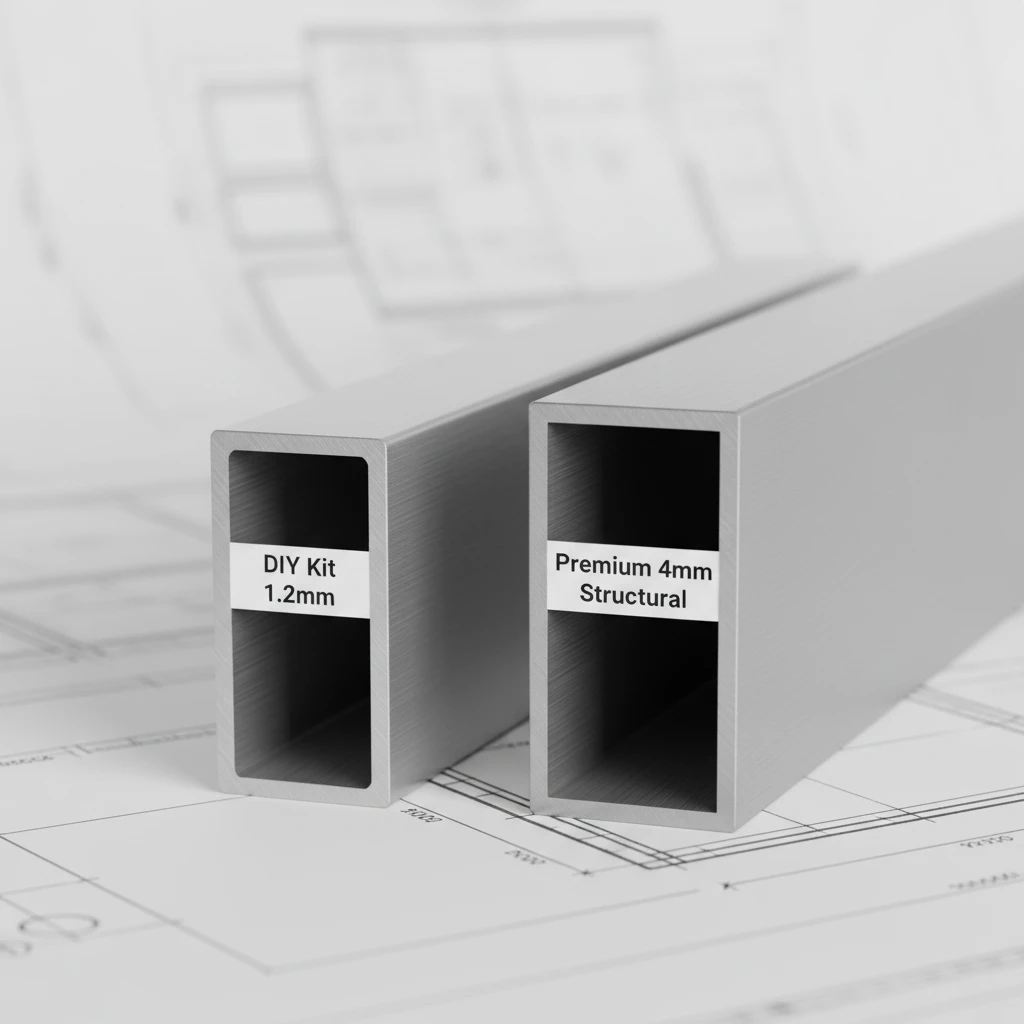
The “Beer Can” Effect: Wall Thickness
Most mass-produced pergola kits are designed for ease of shipping and low manufacturing costs. Consequently, the aluminium extrusion profiles often feature wall thicknesses ranging from 1.0mm to 1.5mm. While this is sufficient to hold the structure’s own weight, it lacks the tensile strength to resist lateral forces (shaking) or heavy snow loads.
In contrast, premium New Zealand-made pergolas typically utilize structural-grade aluminium with wall thicknesses between 3.0mm and 5.0mm, depending on the span. This increased mass allows for:
- Wider Spans: Premium beams can span 6+ meters without sagging, whereas DIY kits usually max out at 3-4 meters and often require intrusive middle posts.
- Impact Resistance: Thicker aluminium resists denting from hail or accidental impacts, whereas thin-walled kits can easily deform.
Alloy Temper and Hardness
Not all aluminium is created equal. Premium manufacturers utilize 6060 T5 or T6 architectural grade aluminium. The “T6” designation indicates the metal has been solution heat-treated and artificially aged to maximize hardness. Many budget kits utilize softer alloys that are easier to extrude quickly but lack the rigidity required for permanent structural integrity.
2. Joinery Quality: Plastic vs. Welded Connections
A structure is only as strong as its weakest connection point. This is where the disparity between store-bought kits and professional installations becomes most apparent.
The Problem with Plastic Corners
To make DIY kits easy to assemble for a novice, manufacturers rely heavily on slip-joints and plastic corner connectors. These components are problematic for several reasons:
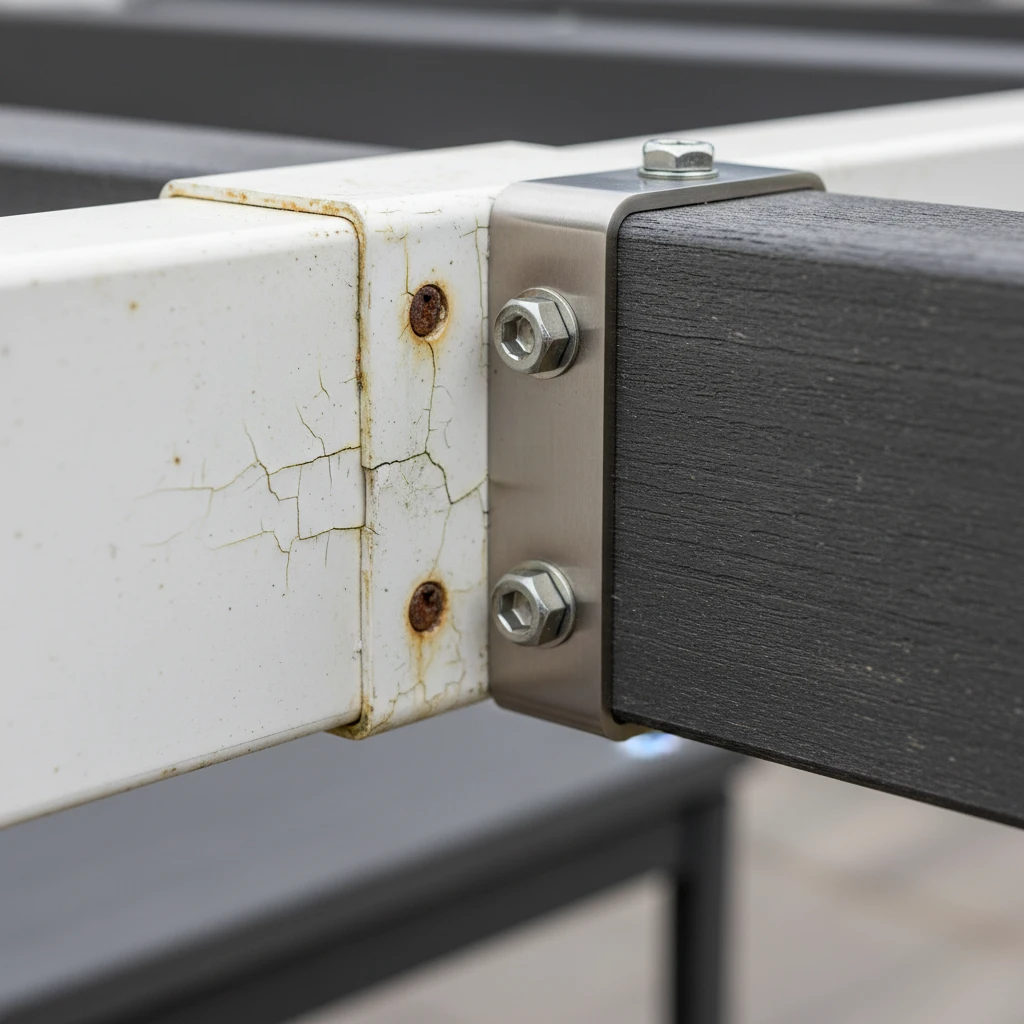
- UV Degradation: New Zealand has some of the highest UV radiation levels in the world. Plastic components, even those treated with UV stabilizers, eventually become brittle and crack, compromising the structure’s stability.
- Flexibility: Plastic allows for movement. In high winds, a pergola held together by plastic joints will sway and rattle. This movement causes “metal fatigue” around the screw holes, eventually leading to failure.
Premium Fixings: The Invisible Strength
High-end pergolas utilize internal die-cast aluminium brackets or fully welded connections. Fasteners are typically 316 Marine Grade Stainless Steel, which is essential for NZ’s coastal environment to prevent galvanic corrosion (where dissimilar metals react and corrode).
Furthermore, premium systems often feature “hidden fixings.” You will not see bolt heads or screws on the exterior of the beam. This not only provides a cleaner aesthetic but also protects the fixings from the elements, significantly extending the lifespan of the joinery.
3. Wind Ratings & NZ Building Code Compliance
New Zealand is a windy nation. Understanding wind zones is non-negotiable when installing outdoor structures. This is perhaps the most dangerous oversight in the DIY market.
What are NZ Wind Zones?
NZS 3604 defines wind zones ranging from ‘Low’ to ‘Extra High’.
- Low/Medium: Typical suburban areas with shelter.
- High/Very High: Hilltops, open farmland, or areas funneling wind.
- Extra High: Coastal properties and exposed ridges.
The Limitations of DIY Kits
Most Bunnings or hardware store pergolas are engineered for global markets, often based on European or Australian standards that do not account for NZ’s specific wind dynamics. Many are rated only for wind speeds up to 80-100km/h. In a severe NZ storm, gusts can easily exceed 120km/h.
If a DIY pergola fails during a storm, it becomes a dangerous projectile. Furthermore, insurance companies may deny claims if the structure was not rated for the wind zone of your property.
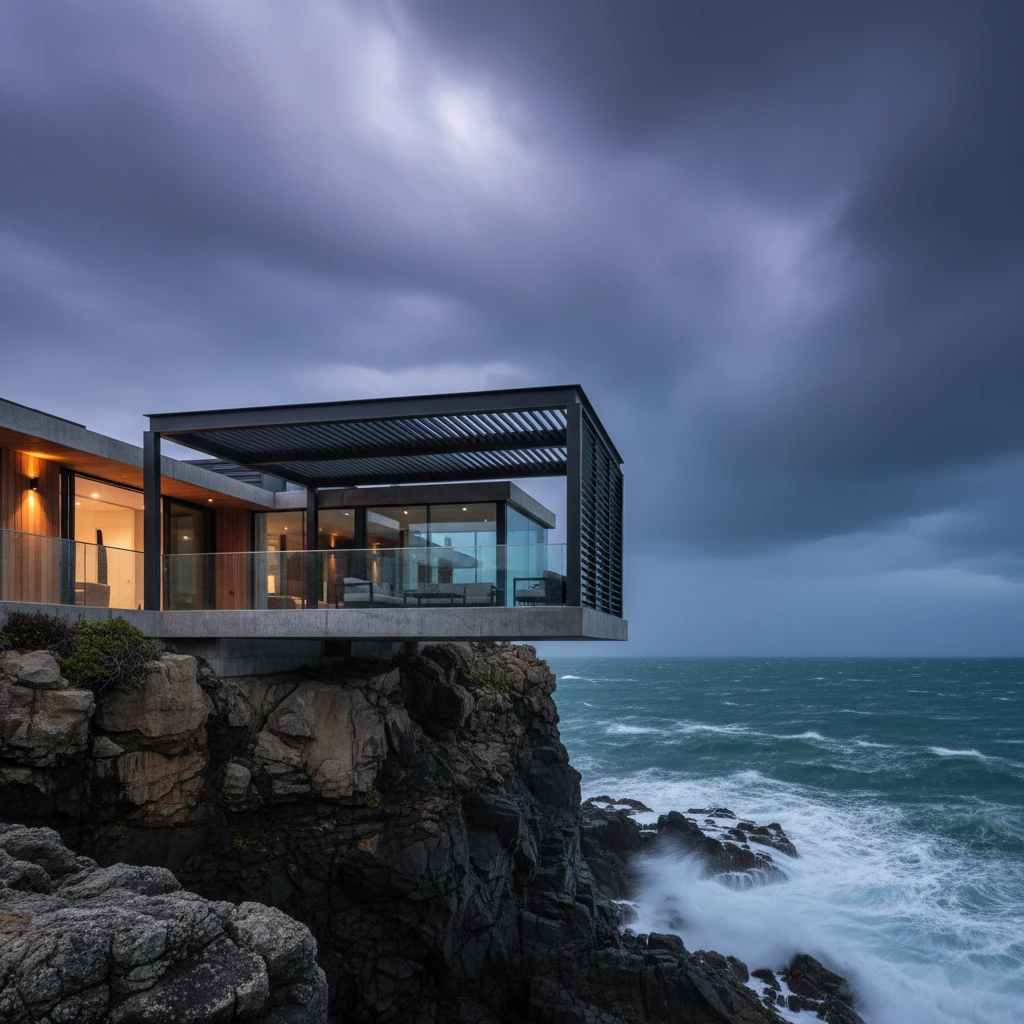
Engineered for the Environment
Premium pergolas are often “PS1 engineered,” meaning a producer statement can be provided to certify the design meets the specific wind loading requirements of your site. Professional installers assess the terrain category and wind zone before ordering materials. For ‘Extra High’ wind zones, premium manufacturers can upgrade the louvre blades and posts to heavier profiles to ensure safety and compliance.
4. Architectural Integration & Customization
The visual difference between a “bolt-on” addition and an integrated architectural feature significantly impacts property value.
Standard Sizes vs. Custom Fit
DIY Kits: Come in fixed sizes (e.g., 3m x 3m or 3m x 4m). If your patio is 3.5m wide, you are forced to either have a gap or cut the kit (which voids the warranty and compromises integrity). This often results in posts landing in awkward positions, obstructing views or doorways.
Premium Custom: Manufactured to the millimeter. Posts are positioned to align with existing architectural lines, window mullions, or deck corners. The height is adjusted to maximize light flow into the home while ensuring weather tightness against the soffit.
Powder Coating Quality
The finish on the aluminium determines how long it looks new.
- Budget: Often use standard powder coating with a 1-2 year warranty. These finishes can fade (chalking) rapidly under NZ’s harsh UV index.
- Premium: Utilize Dulux Duralloy or Interpon D1000/D2000 commercial-grade powder coats. These come with 10-20 year warranties against fading and peeling and are available in hundreds of colours to perfectly match your home’s joinery (e.g., FlaxPod, Grey Friars, or Titania).
5. Price Breakdown: Is the Saving Worth It?
When conducting a Bunnings vs. premium pergola comparison, the price disparity is the elephant in the room. Why does one cost $4,000 and the other $20,000?
The DIY Economy
A typical manual louvre kit from a hardware store costs between $3,000 and $6,000 NZD. You are paying for:
– Thin-gauge materials.
– Mass manufacturing economies of scale.
– No installation labor (you do the work).
– No site inspection or engineering customization.
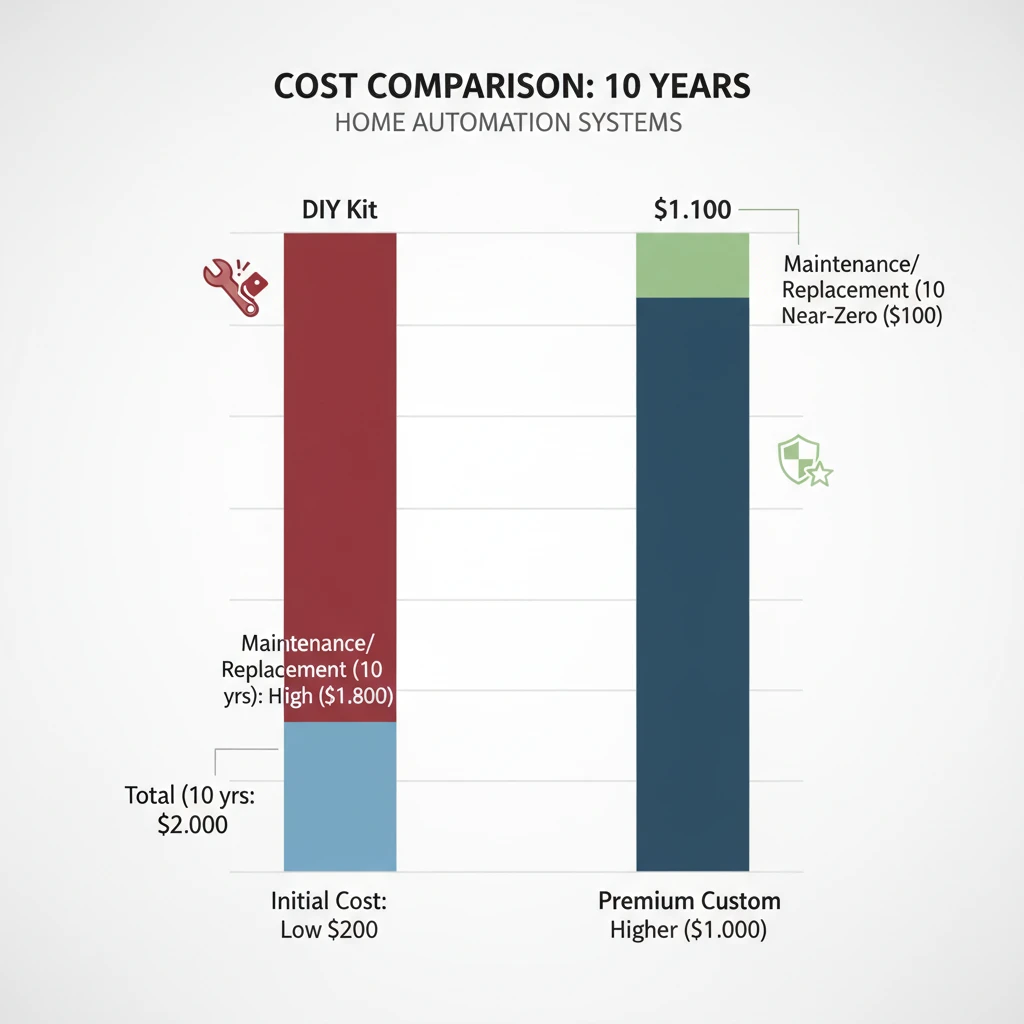
Hidden Costs: You will likely need to rent tools, buy concrete for footings, and purchase flashing kits to attach it to the house. If the product fails in 5 years (common for plastic components), the replacement cost doubles your investment over a decade.
The Premium Investment
A custom, motorized louvre roof typically starts from $1,000 – $1,500 per square meter installed. For a 20sqm area, this is a $20k-$30k investment. You are paying for:
– Consultation: Site measure and design.
– Materials: Structural grade aluminium and stainless steel.
– Motorization: Somfy or similar high-end motors with rain sensors.
– Electrical: Integrated LED lighting and heaters.
– Labour: Professional installation and sealing.
– Warranty: Typically 10+ years on structure and 5+ years on electronics.
Verdict: Which is Right for You?
If you are looking for a temporary solution for a rental property, a bach, or a sheltered garden corner where wind isn’t a threat, a Bunnings kit offers excellent short-term value. However, if you are looking to add permanent value to your primary residence, require a structure that is weather-tight attached to your home, or live in a high-wind zone, the premium option is not just a luxury—it is a safety necessity and a smarter long-term financial decision.
Frequently Asked Questions
Do I need a building consent for a pergola in NZ?
Generally, pergolas under 30 square meters do not require a building consent in New Zealand, provided they are on the ground floor and meet height-to-boundary regulations. However, if the pergola has a solid roof (like closed louvres) and is attached to the house, it may be technically classified as an extension. Many premium louvre roofs are engineered as “exempt building work” (Schedule 1), but it is crucial to check with your local council or a professional installer.
How long do Bunnings pergolas last compared to premium ones?
A typical hardware store pergola kit has a lifespan of 3 to 7 years before plastic components degrade or the finish fades significantly. Premium architectural pergolas are designed with a 20+ year lifespan, often carrying 10-year warranties on the structure and powder coating.
Can a DIY pergola withstand NZ coastal winds?
Most DIY kits are not rated for NZ’s “Extra High” wind zones common in coastal areas. Salt spray can also rapidly corrode the lower-grade fasteners used in budget kits. For coastal properties, a premium pergola with marine-grade 316 stainless steel fixings and heavy-duty engineering is highly recommended.
Does a premium pergola add value to my home?
Yes. Real estate agents in New Zealand consistently report that high-quality, permanent outdoor living structures (often marketed as an “outdoor room”) yield a high return on investment. They effectively increase the usable square footage of the home. Cheap, flimsy structures may conversely be seen as a liability that needs removal.
What is the difference between manual and motorized louvres?
Manual louvres (common in DIY kits) are operated by a hand crank. They are simple but less convenient. Motorized louvres (standard in premium systems) use an electric drive, allowing operation via remote or smartphone app. Premium systems often include rain sensors that automatically close the roof when it starts raining.
Can I attach a Bunnings pergola to my house?
While physically possible, it is risky. Attaching a structure to your home’s cladding requires perfect weather-tightness to prevent leaks and rot in your home’s framing. DIY kits rarely come with the sophisticated flashing systems required for a safe connection. Premium installers use specific flashing details to ensure the watertight integrity of your home remains compromised.