
A waterproof pergola roof is a specialized outdoor structure covering designed to provide complete protection from rain and moisture. These systems typically utilize interlocking aluminium louvers, polycarbonate sheets, or heavy-duty retractable PVC canopies integrated with internal guttering and downpipes to effectively channel water away, ensuring a completely dry outdoor living area regardless of weather conditions.
In the variable climate of New Zealand, where “four seasons in one day” is a common reality, transforming an outdoor space into a year-round sanctuary requires more than just shade. A truly waterproof pergola roof elevates a simple garden structure into a functional extension of the home, protecting furniture, outdoor kitchens, and guests from the elements.
What Are the Best Materials for a Waterproof Pergola Roof?
Selecting the right material is the foundation of any successful waterproof pergola project. In the commercial and high-end residential market, durability and aesthetics must balance with functional waterproofing capabilities. Unlike shade cloth or timber slats, which offer permeability, waterproof solutions must create an impermeable barrier against heavy rainfall.
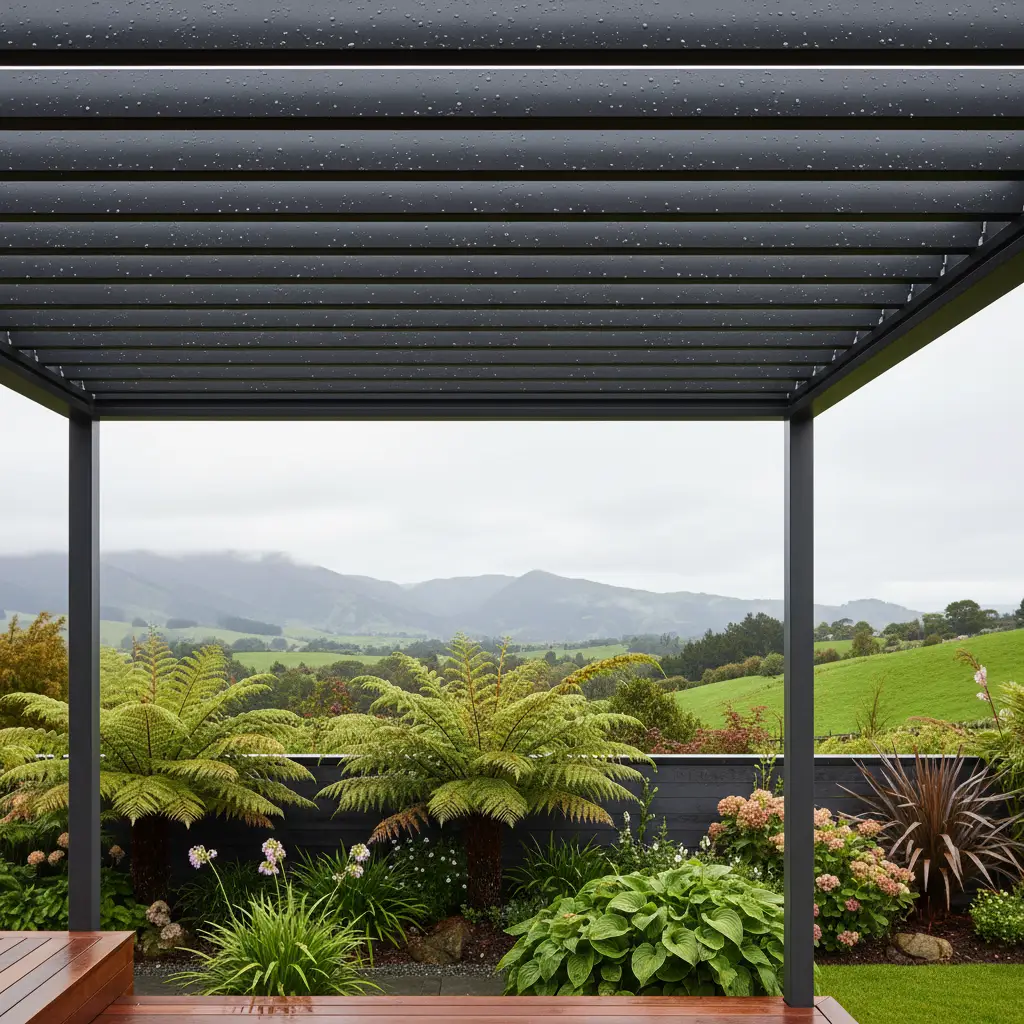
1. Automated Aluminium Louvers
Currently the gold standard in New Zealand outdoor living, automated louvered roofs offer the ultimate versatility. These systems consist of extruded aluminium blades that rotate up to 180 degrees. When closed, the blades interlock to form a completely watertight seal.
The engineering behind these systems is sophisticated. Each blade typically features a specially designed profile that traps water and channels it into the adjacent blade’s channel or a perimeter gutter beam. This prevents water from dripping through the gaps when the louvers are opened after a downpour. For coastal NZ zones, powder-coated marine-grade aluminium is essential to resist corrosion while maintaining a waterproof barrier.
2. Multi-wall and Solid Polycarbonate
Polycarbonate offers a transparent or translucent waterproof roofing option, allowing natural light to filter through while blocking rain and harmful UV rays. For a strictly waterproof application, the installation method is critical.
- H-Bar Joiners: Sheets must be joined using proper H-bar connectors with rubber gaskets to prevent capillary action from drawing water through the seams.
- UV Protection: In NZ’s harsh sun, non-UV stabilized polycarbonate will become brittle and crack, compromising the waterproof integrity. Always opt for co-extruded UV protection.
- Thermal Efficiency: Multi-wall sheets provide insulation, reducing condensation build-up on the underside—a common issue that mimics a leak (often called “false leaking”).
3. Retractable PVC Canopies
For commercial hospitality venues, retractable tensioned PVC membranes are a popular choice. These are not simple canvas awnings; they are engineered tension systems that run on tracks. The fabric is typically a heavy-duty, waterproof PVC composite. To ensure the roof is waterproof, the fabric must be under high tension to prevent pooling (pocketing) of water, which can lead to structural failure. High-quality systems use an anti-drip rim on the fabric edges to guide water into side gutters.
What Are the Pitch Requirements for Proper Drainage?
Even the most impermeable material will fail if water cannot flow off it efficiently. The pitch, or slope, of your pergola roof is the critical factor in preventing pooling, leaks, and structural damage.
Why is the Minimum Fall Critical?
Water that pools on a flat surface will eventually find a way through microscopic gaps or cause the material to sag, exacerbating the problem. Stagnant water also breeds algae and moss, which can degrade seals over time.
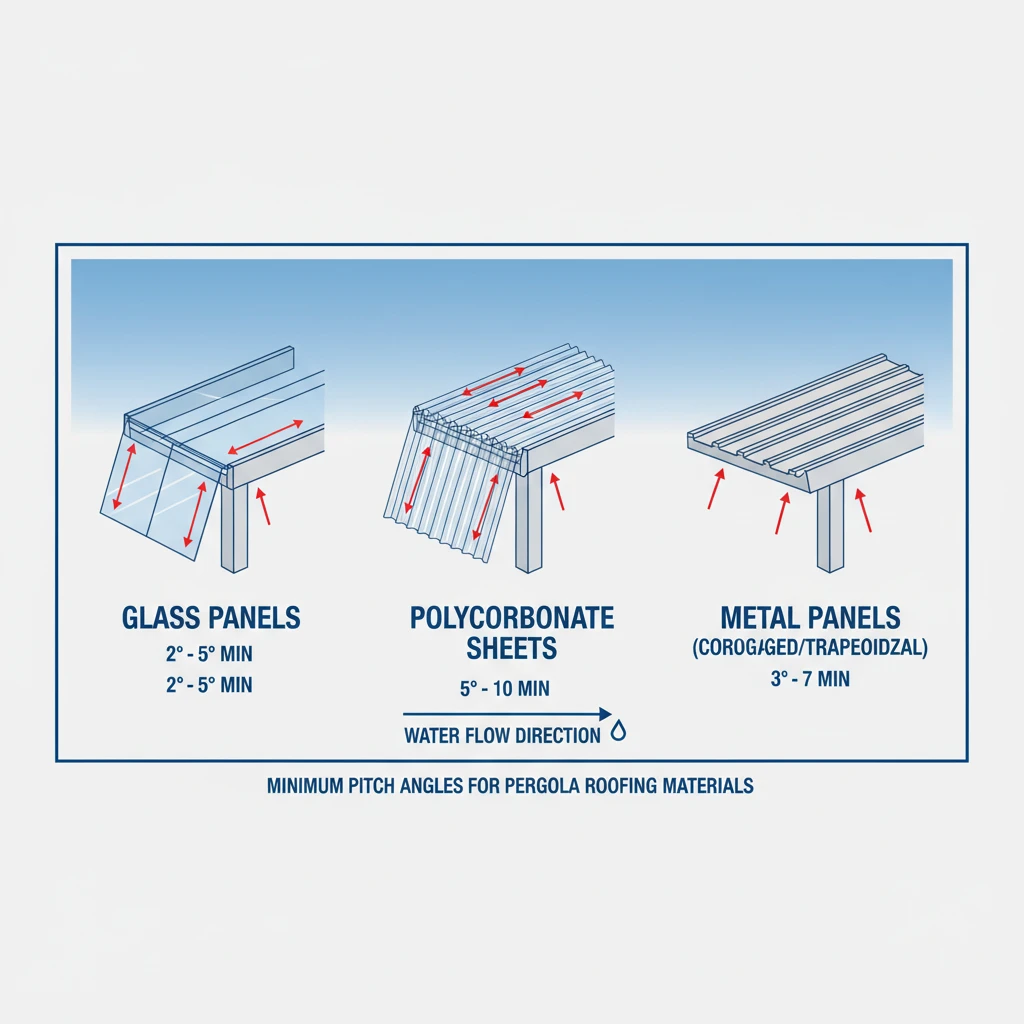
Recommended Pitch Angles
The required pitch depends heavily on the material chosen:
- Corrugated Iron or Polycarbonate: A minimum pitch of 5 degrees (approximately 88mm rise per meter of run) is generally recommended by NZ manufacturers. This ensures that during heavy rain, water moves fast enough to clean the roof and exit before backing up under flashings.
- Louvered Roofs: These are often installed flat (0 degrees) visually, but the blades themselves are engineered with a slight camber, or the internal gutter system is pitched to facilitate flow. This allows for a modern, cubic aesthetic without sacrificing drainage.
- Retractable Canopies: These often require a steeper pitch, typically around 7 to 15 degrees, to ensure the fabric drains instantly and does not sag under the weight of the water.
How Do Guttering and Downpipe Systems Work?
A waterproof roof simply displaces water; a guttering system manages it. Without effective guttering, water cascading off a pergola creates a “waterfall effect” that can erode garden beds, splash back onto decking, or damage the foundation of the structure.
Integrated Gutter Beams
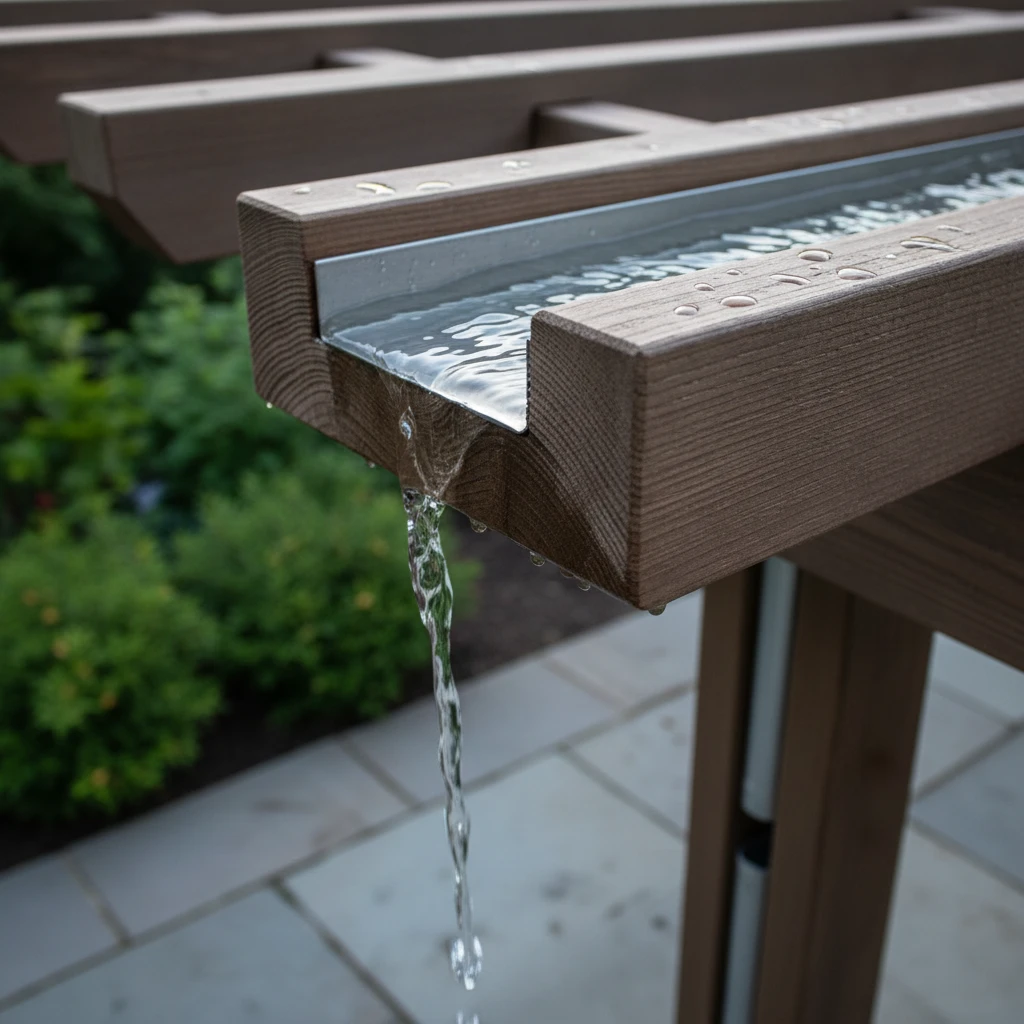
Modern premium pergolas, particularly louvered systems, utilize integrated guttering. In this design, the main horizontal beams of the pergola structure act as the gutters. This is a “hidden” solution where the water runs off the blades into the hollow beam, and then down through the supporting posts which act as downpipes.
Benefits:
- Aesthetics: No unsightly external PVC piping.
- Protection: The gutter is protected from external debris to some extent.
- Capacity: Commercial-grade beams can handle significant water volume.
External Guttering Systems
For timber-framed pergolas with polycarbonate or corrugated roofing, standard external guttering (similar to house guttering) is required.
Key Considerations for NZ Conditions:
- Box Gutters: Often preferred for a sleeker look on flat-roof style pergolas. They must be sized correctly (e.g., 125mm or larger) to cope with NZ’s high-intensity rainfall events.
- Snow Straps: In southern regions of New Zealand, external gutters on pergolas should be fitted with snow straps to prevent the weight of snow/hail from ripping the gutter off the fascia.
- Downpipe Placement: A general rule is one downpipe for every 10-12 meters of guttering, but for large surface area pergolas, increasing this frequency prevents overflow during storm surges.
Advanced Sealing Techniques for Leak Prevention
The junction where the pergola meets the existing house (if attached) is the most common failure point for waterproofing. If not sealed correctly, water will run down the face of the house wall, potentially causing rot in the cladding and framing.
The Importance of Flashing
Silicone alone is never enough. A physical barrier, known as flashing, is required.
- Apron Flashing: This is a metal strip bent to shape. One edge is tucked under the house cladding (or cut into the mortar of brickwork), and the other extends out over the pergola roof. This directs water flowing down the house wall onto the pergola roof, bridging the gap.
- Back-Channel Sealing: If the pergola has a back beam against the house, a “back channel” with a rubber seal is often used. However, for a truly waterproof connection, a flashing tape (like bitumen or butyl tape) should be applied behind the ledger board before installation to seal around bolt penetrations.
Silicone and Sealants
When silicone is necessary (e.g., sealing screw heads or minor gaps), use a high-grade, neutral-cure roofing silicone. Acid-cure silicones can react with zinc-alume or galvanized steel, leading to corrosion. In NZ, look for sealants rated for high UV exposure to prevent the seal from shrinking or peeling after a few summers.
New Zealand Building Code and Wind Zones
In New Zealand, constructing a waterproof structure often moves you from the realm of “exempt building work” into requiring a Building Consent, depending on size and location.
Exemptions vs. Consents
Generally, a pergola (an unroofed or open-roofed structure) is exempt from consent. However, once you add a permanent waterproof roof, it may be classified differently, especially if it is attached to the house or exceeds 20 square meters (or 30 square meters if built by a Licensed Building Practitioner).
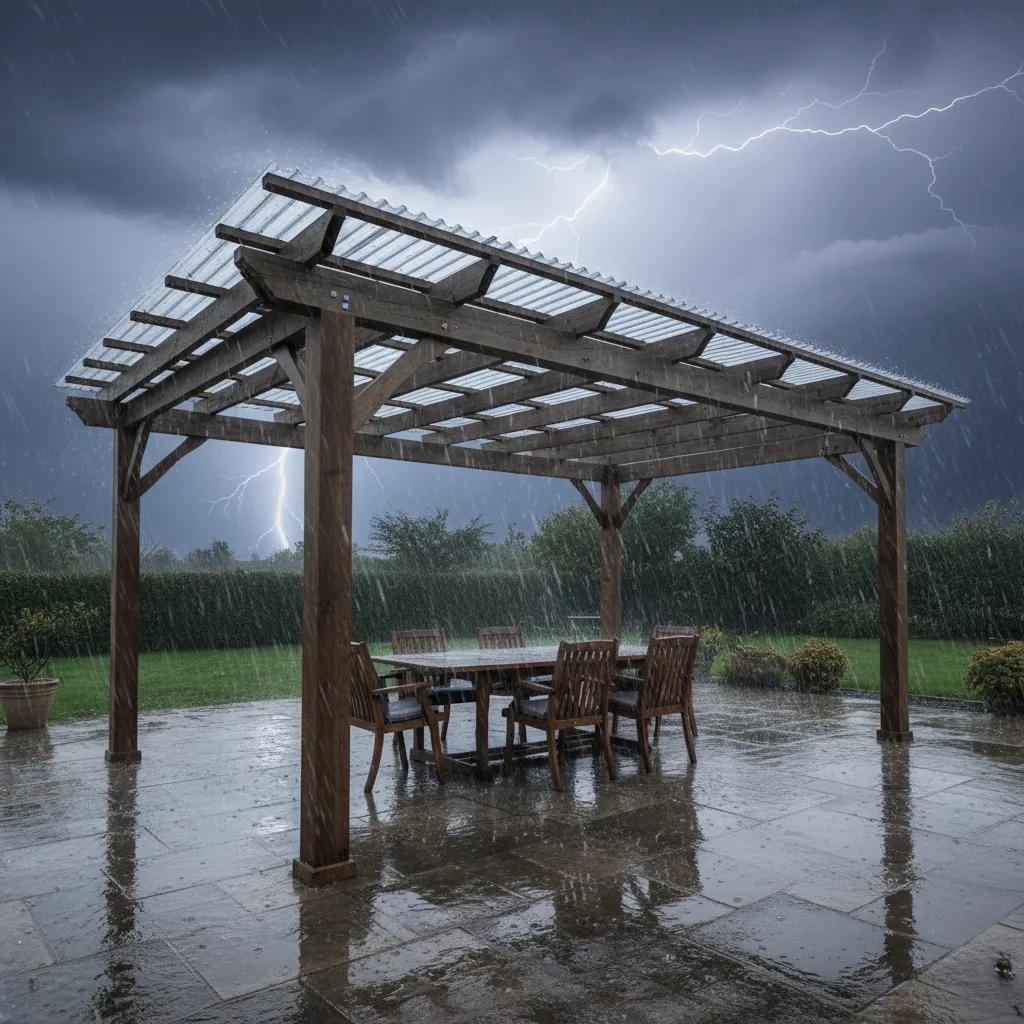
Always check with your local council. Adding a waterproof roof increases the wind load significantly compared to an open frame. The structure must be engineered to withstand the specific wind zone of your property (Low, Medium, High, or Very High). A waterproof roof acts as a sail; if the footings and bracing aren’t designed for the uplift force, the structure could fail during a storm.
Maintenance for Long-Term Waterproofing
To ensure your pergola remains waterproof for decades, a proactive maintenance schedule is required.
Cleaning Gutters
The most common cause of pergola leaks is blocked gutters. Leaves and debris clog the downpipes, causing water to back up and overflow internally. For integrated systems, access can be tricky, so ensure your installer demonstrates how to access the gutter channel (usually by removing a louver blade or an access panel). Clean these at least every 3 months, or more frequently if you have overhanging trees.
checking Seals
Inspect the silicone seals and flashings annually. Look for cracks, peeling, or separation. Re-sealing a small gap is a quick DIY job that prevents major water damage later. Wash the roof surface (especially polycarbonate) with warm soapy water and a soft brush to remove salt deposits (in coastal areas) and lichen, which can eat into protective coatings.
Can I turn my existing pergola into a waterproof one?
Yes, it is possible to retrofit a waterproof roof to an existing pergola, provided the existing structure can support the additional weight and wind load. Popular retrofit options include adding polycarbonate sheets or installing a retractable canvas system underneath or on top. However, you must ensure the pitch is sufficient for drainage and that the posts are anchored securely enough to handle the increased wind resistance.
What is the most durable waterproof pergola roof?
An automated aluminium louvered roof is widely considered the most durable option. Made from extruded aluminium and often powder-coated, it resists rust, UV damage, and high winds better than fabric or plastic alternatives. While it has a higher upfront cost, its longevity and low maintenance requirements make it a superior long-term investment for commercial and residential properties.
Do waterproof pergolas require a building consent in NZ?
It depends on the size and placement. Under the NZ Building Code, detached structures up to 30 square meters can often be built without consent if using a Licensed Building Practitioner (LBP) or lightweight materials. However, attaching a waterproof roof to your home or exceeding specific sizes typically requires consent due to weathertightness and structural load implications. Always verify with your local council.
How do I stop condensation on my pergola roof?
Condensation forms when warm, moist air hits the cold roof surface. To prevent this dripping (which looks like a leak), use twin-wall or multi-wall polycarbonate which acts as double glazing to insulate the surface. Alternatively, ensure adequate ventilation to keep airflow moving, or apply an anti-condensation coating to the underside of the roofing material.
How much pitch does a polycarbonate roof need?
A polycarbonate roof requires a minimum pitch of 5 degrees, which equates to a fall of about 88mm for every meter of length. This slope is necessary to ensure rainwater runs off freely, carrying dirt and debris with it, rather than pooling and causing the sheets to sag or leak at the joiners.
Are retractable pergola roofs 100% waterproof?
High-quality retractable systems using tensioned PVC fabrics are 100% waterproof when closed. They utilize anti-drip systems and side gutters to manage water. However, cheaper canvas awnings are often only “water-resistant” and will mist or leak during heavy downpours. It is crucial to specify “waterproof tension systems” rather than standard awnings for complete protection.