
A steel pergola in NZ is a robust outdoor structure fabricated from heavy-duty, often galvanized, steel designed to withstand New Zealand’s harsh coastal conditions and high winds. Unlike timber, steel pergolas offer superior strength, allowing for wider spans without intermediate posts, creating a modern, industrial aesthetic perfect for contemporary Kiwi backyards.
For New Zealand homeowners looking to elevate their outdoor living experience, the shift towards steel framing represents a significant evolution in landscape architecture. While traditional timber structures have long been the standard, the demand for longevity, minimal maintenance, and sleek architectural lines has propelled the steel pergola to the forefront of modern garden design. Whether you are in a high-wind zone in Wellington or a coastal property in Auckland, understanding the mechanics and benefits of steel structures is essential for a successful project.
Why Choose a Steel Pergola for Your NZ Home?
Choosing the right material for your outdoor structure is a critical decision that impacts not only the aesthetic of your property but also the longevity of your investment. In the context of the New Zealand market, a steel pergola NZ solution offers distinct advantages over traditional materials like pine or cedar.
New Zealand’s climate is notoriously variable, characterized by high UV radiation, heavy rainfall, and, in many regions, strong winds. Timber structures, while beautiful, are susceptible to warping, twisting, and rotting over time if not meticulously maintained. Steel, conversely, is an inorganic material that is impervious to rot, insect damage (such as borer), and warping due to moisture fluctuation.
Furthermore, steel provides a crisp, sharp aesthetic that aligns perfectly with modern architectural trends. The ability to manufacture steel to precise tolerances means that connections are cleaner, lines are straighter, and the overall finish is far more refined than what is typically achievable with rough-sawn timber.
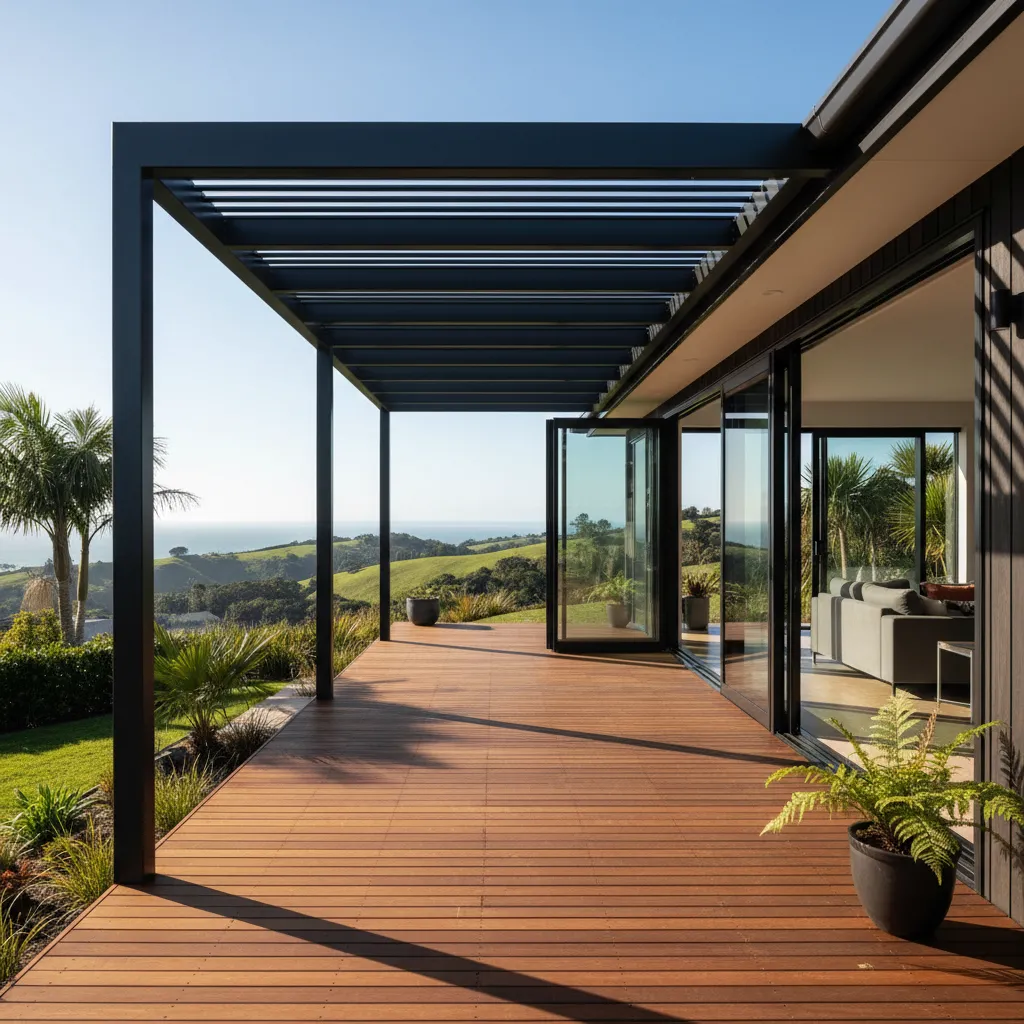
The Importance of Galvanized Steel for Rust Protection
One of the primary concerns homeowners have when considering steel for outdoor use is rust. In New Zealand, where a significant portion of the population lives within a few kilometers of the sea, airborne salt spray is a relentless corrosive force. This is where the galvanization process becomes non-negotiable.
What is Hot-Dip Galvanizing?
Hot-dip galvanizing is a process where the fabricated steel frame is submerged into a bath of molten zinc heated to approximately 450°C. This process creates a metallurgical bond between the zinc and the steel, forming a protective barrier that is part of the metal itself, not just a coating. For a steel pergola NZ built in coastal zones, this is the gold standard of protection.
The Self-Healing Mechanism
Zinc has a unique property known as “cathodic protection.” If the steel pergola’s surface is scratched or damaged, the surrounding zinc will sacrifice itself to protect the underlying steel from corroding. This means that minor abrasions during installation or daily use will not immediately lead to structural rust issues.
Duplex Systems for Maximum Durability
For the ultimate finish, most high-end steel pergolas in NZ utilize a “duplex system.” This involves galvanizing the steel first for corrosion protection, followed by powder coating for aesthetics. The powder coating provides a durable, colored finish (often matte black or charcoal) that further seals the zinc and ensures the structure remains pristine for decades.
Spanning Larger Distances: The Structural Advantage
Architecturally, the most significant advantage of steel over timber is its superior strength-to-weight ratio. This structural integrity allows for design possibilities that are simply unachievable with wood.
Eliminating the “Forest of Posts”
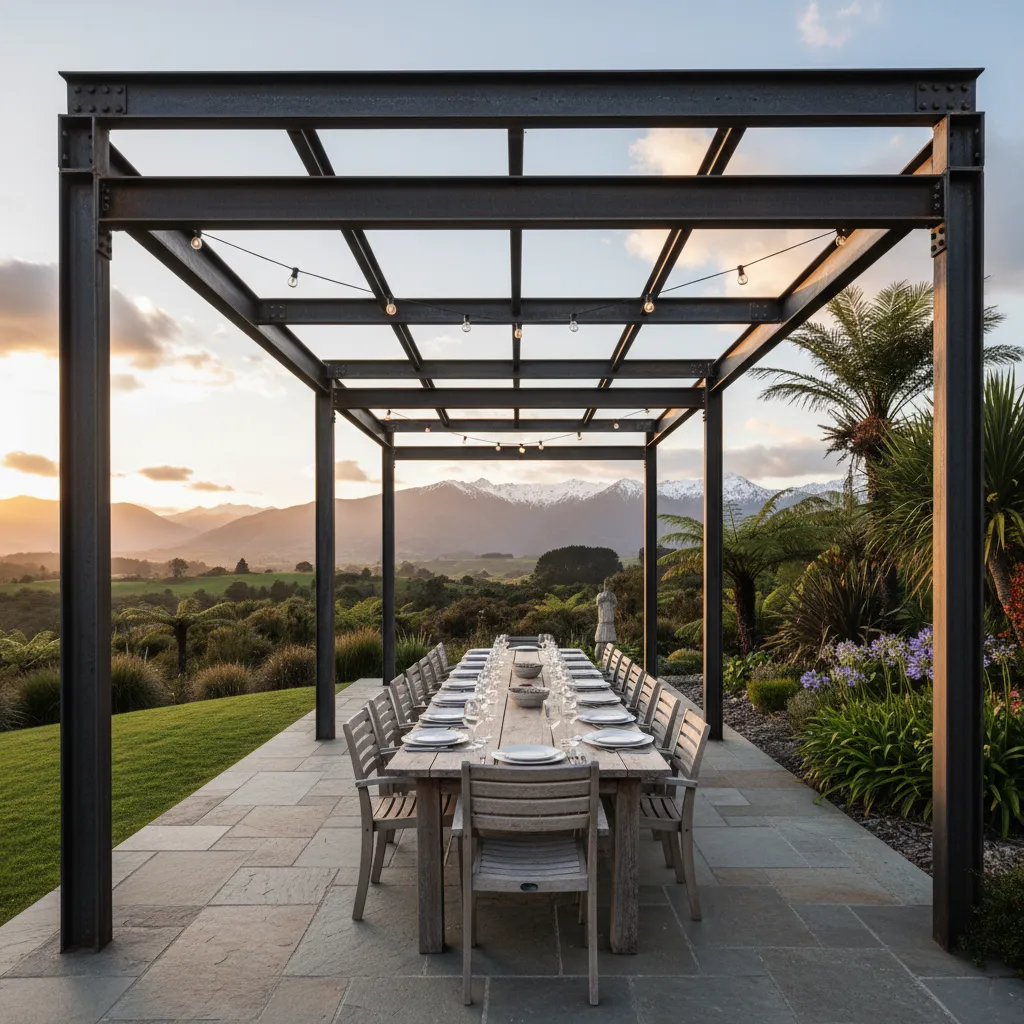
When using timber, the distance you can span between posts is limited by the deflection (sagging) of the beam. To cover a large patio or deck, you often need intermediate posts, which can obstruct views and clutter the outdoor living space. Steel beams, such as Universal Beams (UB) or Parallel Flange Channels (PFC), can span significantly larger distances without intermediate support.
For example, a heavy-duty steel beam can easily span 6 to 8 meters (or more, subject to engineering), allowing for a completely open-plan transition from indoor to outdoor living. This creates a seamless flow that enhances the sense of space and luxury in your backyard.
Slimmer Profiles
To achieve a similar span in timber, the beams would need to be incredibly deep and bulky, potentially lowering head height and blocking light. Steel allows for much slimmer profiles while maintaining the necessary load-bearing capacity. This results in a “light” and airy structure that defines the space without dominating it.
Embracing Industrial Design Trends in New Zealand
The “Industrial Chic” aesthetic has taken root in New Zealand’s design culture, influencing everything from cafe interiors to residential landscaping. A steel pergola NZ is the embodiment of this trend.
The Modern Black Frame
The quintessential look involves matte black steel framing (RHS or SHS sections) contrasting against natural materials. The stark black lines frame the view of the garden much like a picture frame, drawing the eye and creating a deliberate architectural statement. This contrasts beautifully with:
- Warm Timber Decking: Kwila or Vitex decking softens the hardness of the steel.
- Greenery: Climbing plants like Star Jasmine or ornamental grapes look vibrant against dark steel.
- Concrete: Polished concrete patios paired with steel create a raw, sophisticated urban look.
Exposed Fixings and Detailing
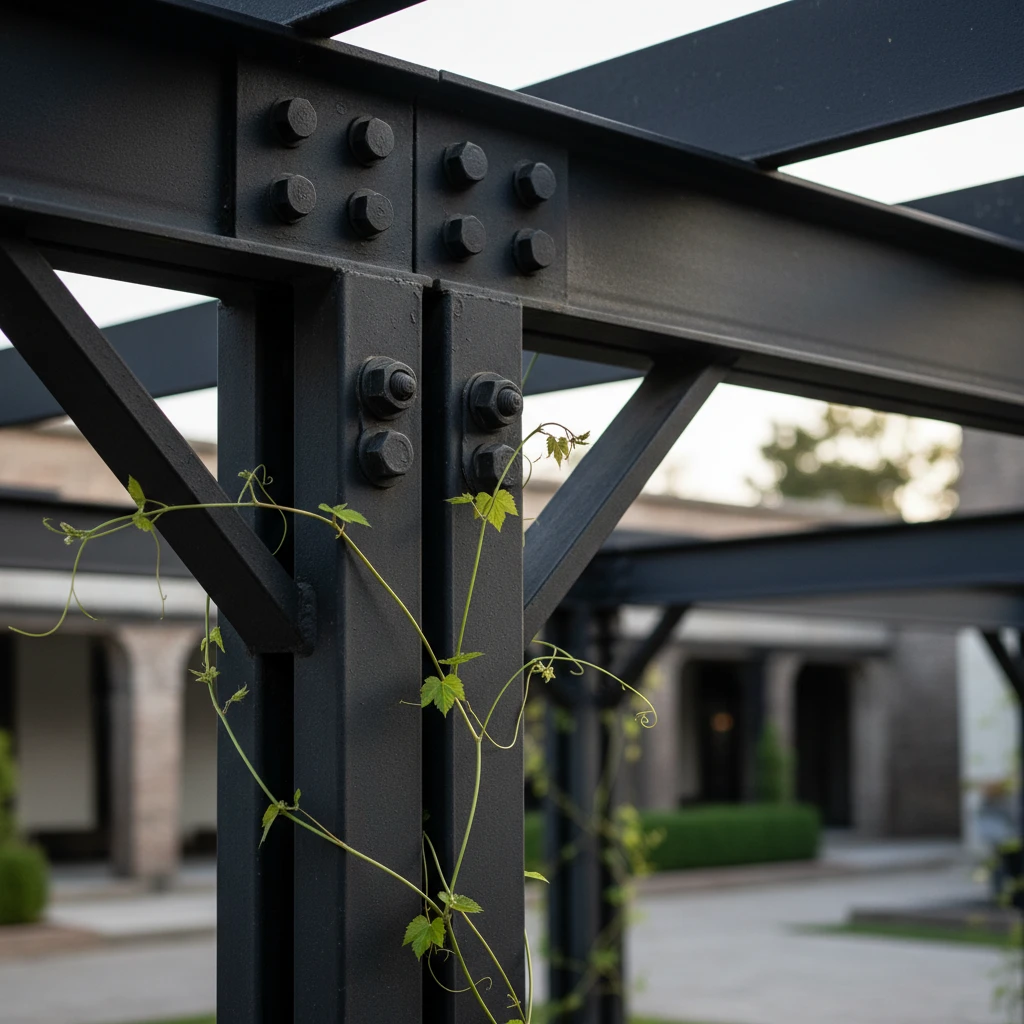
In industrial design, the structural elements are celebrated rather than hidden. Exposed bolts, visible welding joints (if done neatly), and chunky base plates become features of the design. This honesty in construction appeals to the Kiwi DIY spirit and appreciation for solid engineering.
Weight Considerations and Foundation Requirements
While steel offers immense strength, it also brings significant weight. Planning for the installation of a steel pergola requires careful consideration of logistics and foundations.
Engineering and Permitting
In New Zealand, many pergolas under 30 square meters may be exempt from building consent, provided they are their own height away from boundaries and residential dwellings. However, because steel structures are heavy and capable of significant spans, it is often prudent—and sometimes required—to have the design reviewed by a structural engineer. This ensures the steel sections are sized correctly to handle wind loads and their own dead weight.
Foundation Design
Unlike a light timber pergola that might sit on a deck, a steel pergola usually transfers significant point loads to the ground.
Key considerations include:
- Concrete Pads: Substantial concrete footings are often required. These must be dug deep enough to reach solid ground and large enough to prevent the heavy structure from sinking or uplifting in high winds.
- Crane Access: Due to the weight of steel beams, manual lifting is rarely an option for the main spans. You must consider site access for a Hiab truck or a crane to lift the beams into place.
- Thermal Bridging: If the pergola is attached to the house, thermal breaking is necessary to prevent cold transfer from the steel into the home’s framing, which can cause condensation issues.
Cost Comparison: Steel vs. Aluminium vs. Timber
Understanding the investment required is vital for planning your project. Generally, steel sits at the higher end of the market, but the value proposition lies in longevity.
- Timber: The most affordable option upfront. However, maintenance costs (staining, painting, replacing rot) accumulate over time. Life expectancy is 10-20 years depending on maintenance.
- Aluminium: More expensive than timber, lightweight, and corrosion-resistant. Often used for louvre roof systems. It lacks the rigidity of steel for very wide spans.
- Steel: Typically the highest initial investment due to material costs, fabrication, galvanizing, and crane installation. However, it offers the longest lifespan (50+ years) with minimal maintenance, making it cost-effective over the life of the property.
Maintenance Tips for Steel Structures
Although a galvanized and powder-coated steel pergola is low maintenance, it is not “no maintenance.” To keep your steel pergola NZ looking brand new, follow these simple steps:
Regular Washing
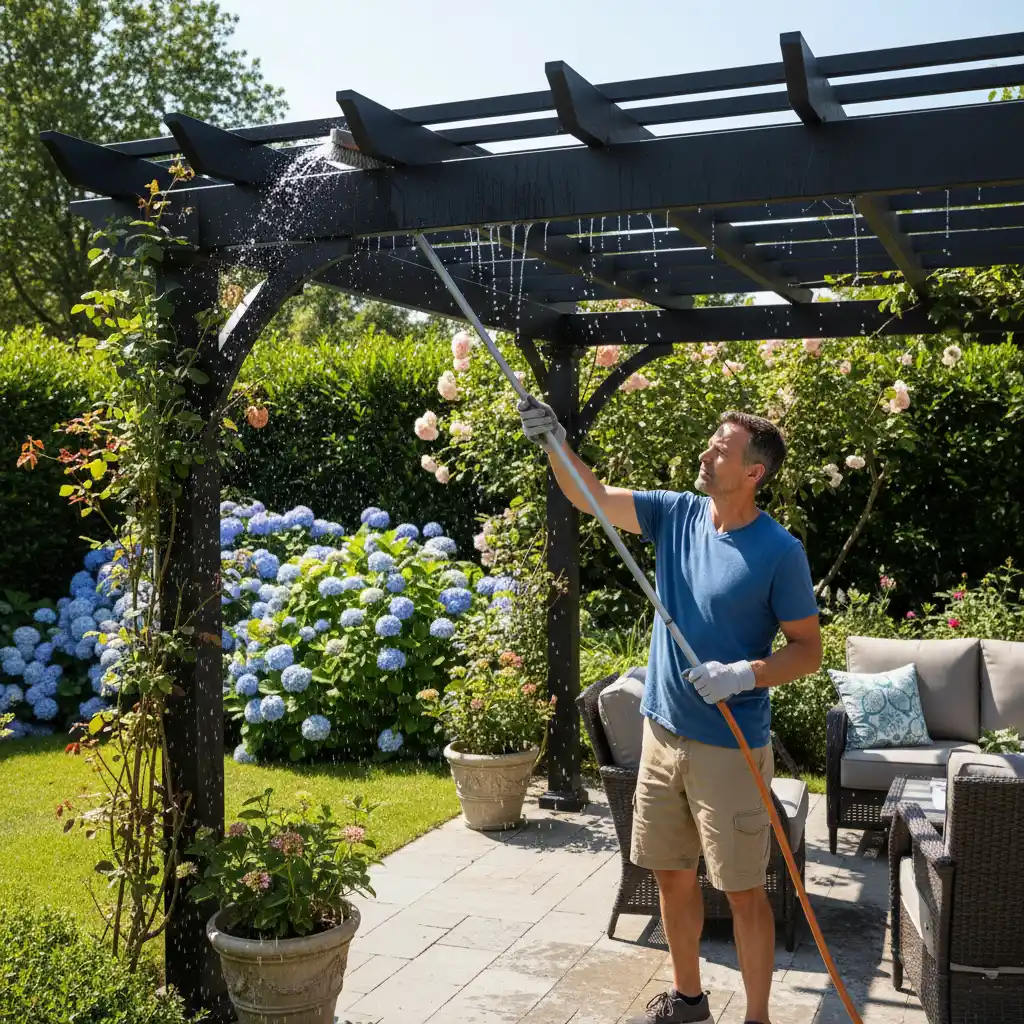
The most important maintenance task, especially in coastal NZ areas, is washing the structure. Salt deposits can accumulate on the surface, which, over time, can degrade the powder coating. A simple wash down with a garden hose and a soft brush every 3 to 6 months is usually sufficient. Avoid high-pressure water blasting which can damage the coating.
Inspect for Damage
Annually inspect the frame for any chips in the paintwork. If the steel is exposed, touch it up immediately with a zinc-rich primer and matching paint to prevent rust creep. Check bolted connections to ensure they remain tight.
People Also Ask
Do I need a building consent for a steel pergola in NZ?
Generally, pergolas under 30 square meters usually do not require a building consent in NZ, provided they are on the ground floor and meet boundary setbacks. However, because steel structures can be heavy and complex, it is highly recommended to consult with your local council or a professional to ensure compliance with the Building Code, especially regarding wind zones and structural integrity.
How much does a steel pergola cost in NZ?
The cost varies significantly based on size, steel section size, and customization. On average, a custom steel pergola can range from $500 to $1,000+ per square meter installed. Factors like galvanizing, powder coating, and crane hire for installation will influence the final price.
Will a steel pergola rust in coastal areas?
Untreated steel will rust quickly. However, hot-dip galvanized steel is specifically designed to resist corrosion, even in coastal environments. When combined with a high-quality powder coat finish (duplex system), a steel pergola is highly resistant to rust and suitable for NZ coastal conditions.
Can I attach a steel pergola to my house?
Yes, steel pergolas can be attached to existing dwellings, but this often requires specific engineering design. You must ensure the house framing can support the additional load, and proper flashing and thermal breaks must be installed to prevent water ingress and thermal bridging.
What is the difference between aluminium and steel pergolas?
Steel is significantly stronger and heavier than aluminium, allowing for wider spans without posts and a more robust, industrial look. Aluminium is lighter, naturally corrosion-resistant, and easier to install but may require more posts for larger areas. Steel is generally preferred for bespoke architectural features.
How long does a galvanized steel pergola last?
A properly hot-dip galvanized steel pergola can last 50 years or more in most environments. With the addition of powder coating and regular cleaning to remove salt deposits, the structure effectively becomes a permanent fixture of the property.