
A solar pergola in NZ is a dual-purpose outdoor structure that combines a traditional pergola framework with photovoltaic panels serving as the roof. Specifically designed for New Zealand’s high UV conditions, these structures generate renewable electricity while providing shade and weather protection, effectively turning an outdoor living space into a productive energy asset.
As New Zealand homeowners increasingly look to maximize the utility of their outdoor spaces while combating rising energy costs, the concept of the solar pergola has emerged as a leading innovation in sustainable architecture. Unlike roof-mounted systems, which are limited by the orientation and pitch of your existing home, a solar pergola offers the flexibility to position panels for optimal sun exposure while creating a premium outdoor entertainment area.
What Is a Solar Pergola and How Does It Work?
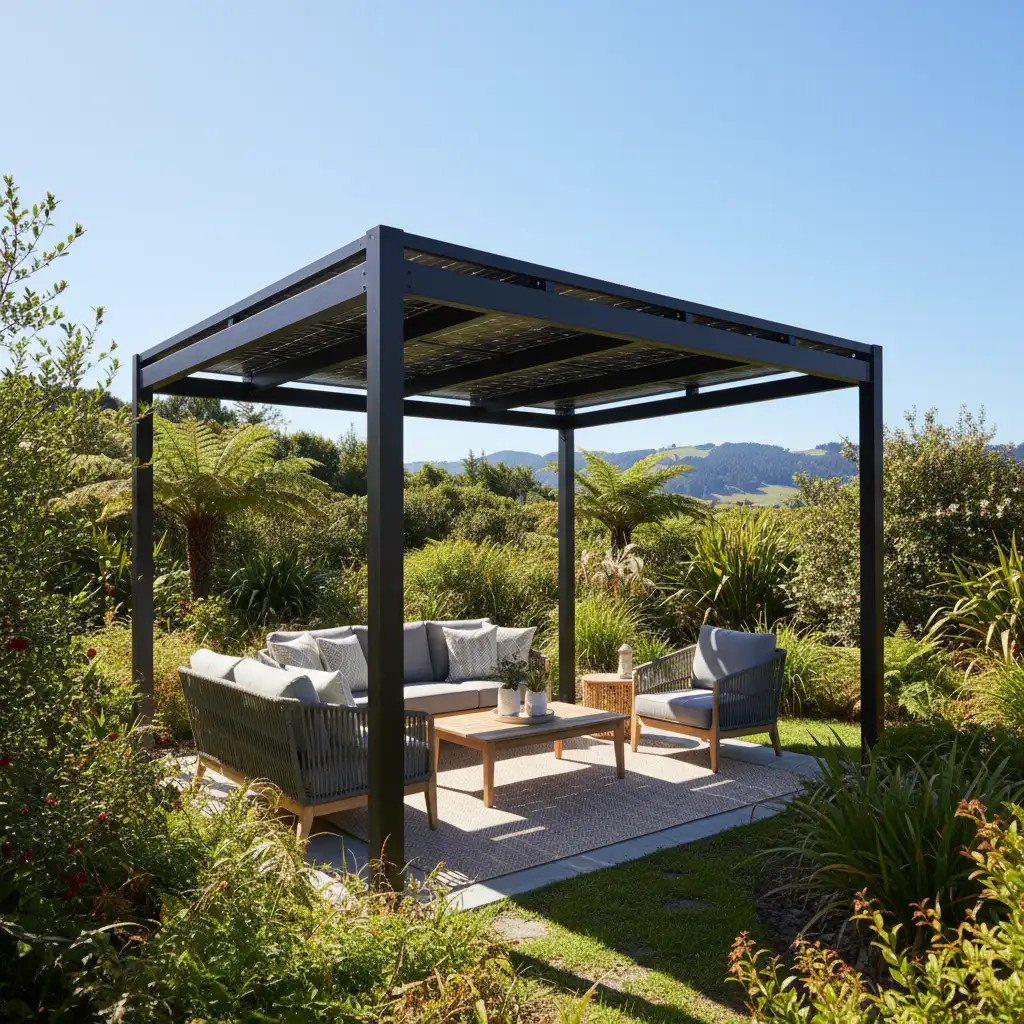
A solar pergola functions simultaneously as a shelter and a power plant. Unlike standard pergolas that use timber slats, polycarbonate, or louvres for roofing, a solar pergola utilizes robust solar panels—often frameless or bifacial glass-glass modules—to form a watertight canopy. This integration allows the structure to capture sunlight to power your home, charge an electric vehicle (EV), or feed energy back into the grid.
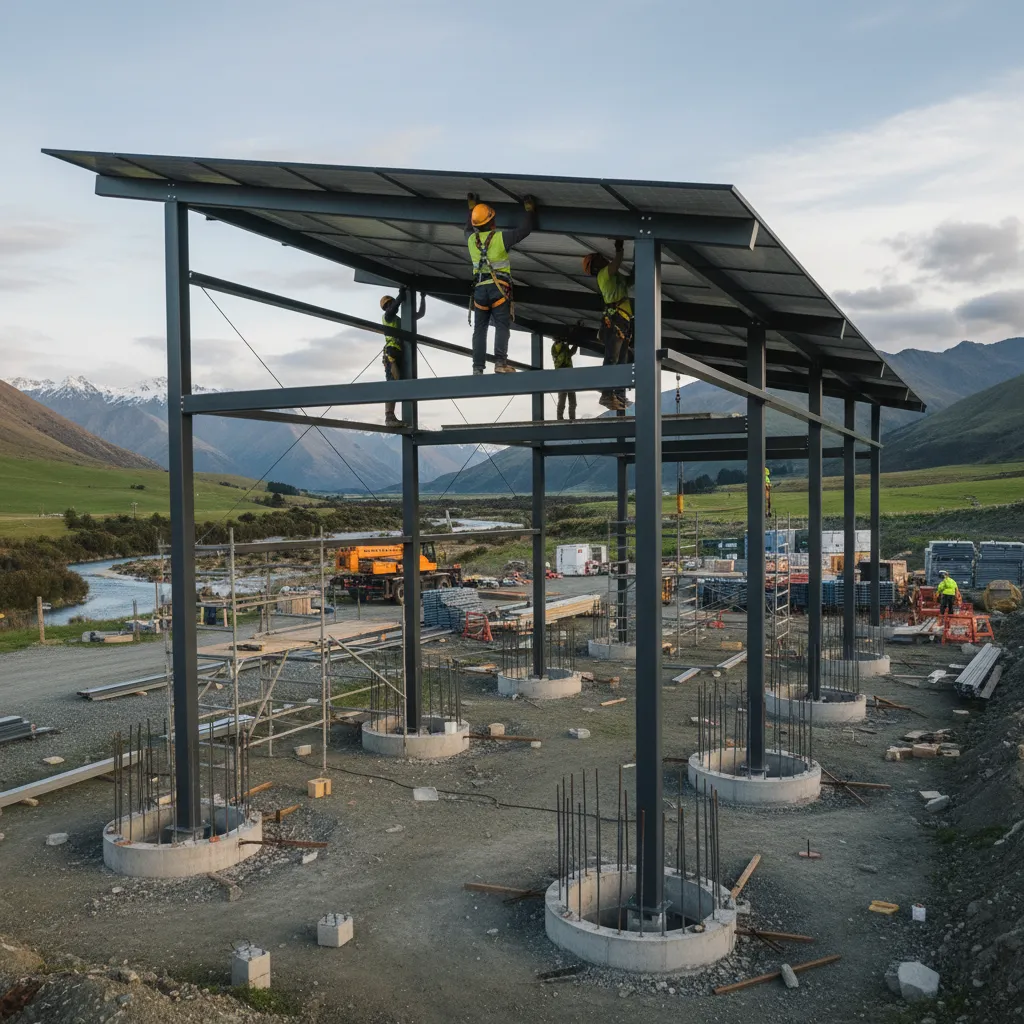
In the New Zealand context, where outdoor living is a staple of the lifestyle, these structures tackle two problems at once: the need for shade during our harsh summers and the desire for energy independence. The structural integrity is paramount; the frame, typically constructed from high-grade aluminium or treated timber, must be engineered to support the static load of the glass panels as well as the dynamic loads of wind and snow common in certain NZ regions.
Why Are Bifacial Solar Panels Best for Pergolas?
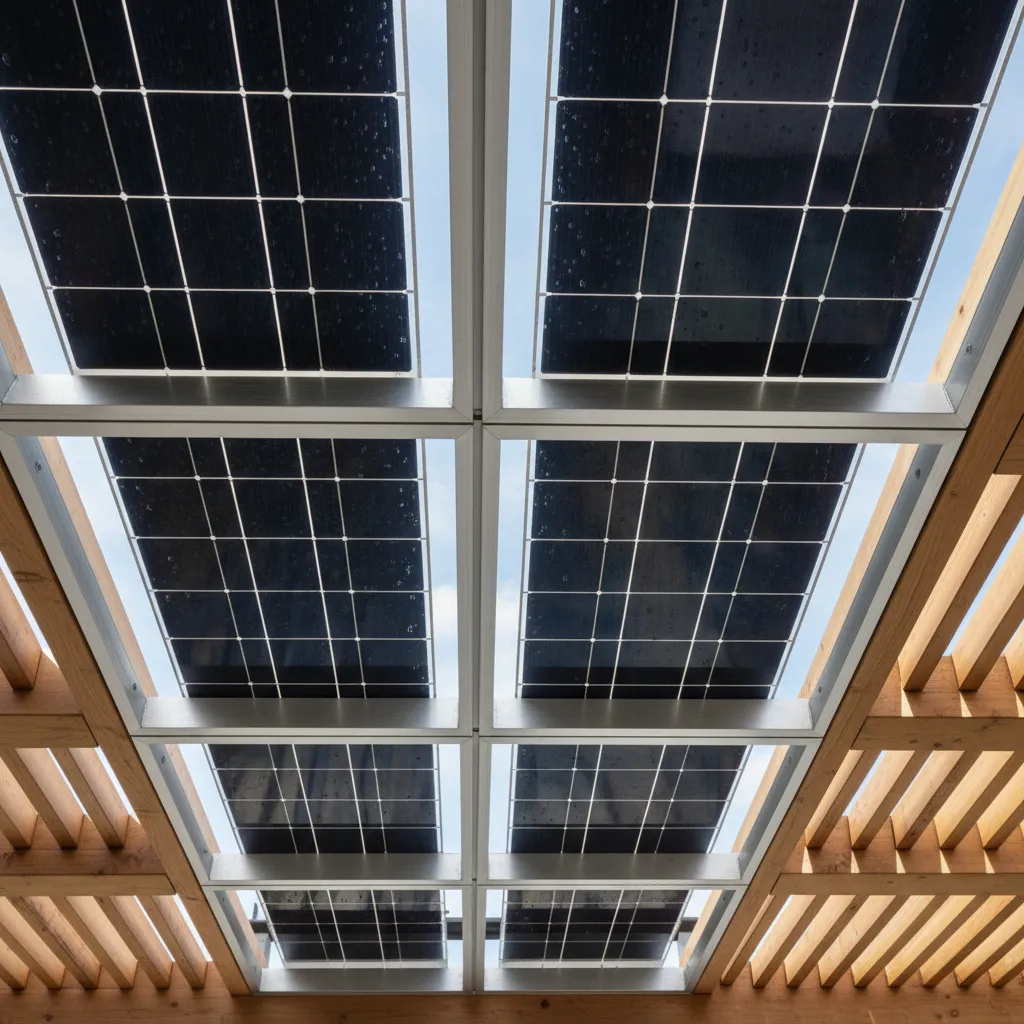
When designing a solar pergola, standard monofacial panels (which have an opaque backsheet) are often discouraged because they create a dark, heavy aesthetic that blocks all light. The industry standard for high-end solar pergolas is bifacial solar technology.
Understanding Bifacial Efficiency
Bifacial panels harvest sunlight from both the front and the rear surfaces. While the top side captures direct sunlight, the underside captures reflected light (albedo) bouncing off the ground or patio surface. In a pergola setting, this is particularly effective because the structure is open-sided, allowing ample ambient light to reach the underside of the panels. This can increase total energy yield by 5% to 30% compared to monofacial panels, depending on the reflectivity of the surface below (e.g., light-coloured paving yields higher reflection than grass).
Light Transmission and Ambience
Crucially for outdoor living, bifacial panels are often “glass-on-glass,” meaning solar cells are sandwiched between two layers of tempered glass. This construction allows for varying degrees of transparency. Instead of casting a solid, gloomy shadow, these panels provide a dappled light effect, filtering out harmful UV rays while keeping the area beneath bright and airy. This makes the space usable for reading, dining, and entertaining without the glare of direct sun.
The Aesthetics of Solar Roofs: Merging Form and Function
The visual appeal of a solar pergola is a critical factor for homeowners investing in their property’s value. Modern systems have moved far beyond the industrial look of early solar arrays.
Architectural Integration
Top-tier solar pergolas in NZ are designed to complement contemporary architecture. Black anodized aluminium frames are popular for their sleek, minimalist look that resists corrosion—a vital feature for coastal NZ properties. The solar panels themselves often feature black cells and busbars, creating a seamless, “infinity pool” look on the roof surface.
Waterproofing Solutions
One common question regarding aesthetics is weatherproofing. How do you stop rain from dripping between the panels? Specialized mounting systems use rubber gaskets or architectural silicone sealing between the modules to create a continuous waterproof surface. Some advanced systems incorporate internal guttering within the beams, channeling rainwater down through the legs of the pergola and into a drainage system, keeping the patio area completely dry and hiding unsightly PVC downpipes.
Wiring and Grid Connection: NZ Regulations Explained
Installing a solar pergola involves complex electrical work that must adhere to strict New Zealand standards, specifically AS/NZS 3000 (Wiring Rules) and AS/NZS 5033 (Installation and safety requirements for photovoltaic arrays).
Concealed Cabling
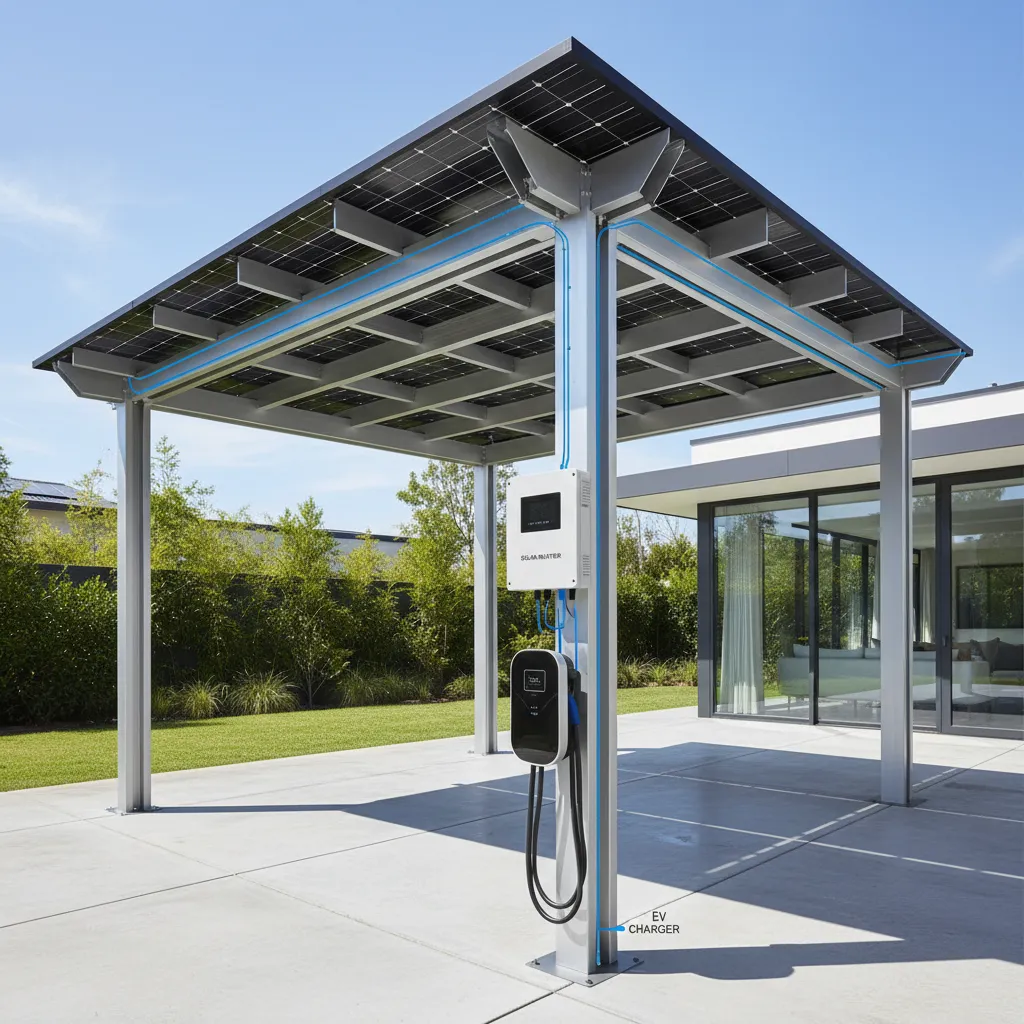
Unlike a roof-mounted system where cables can be tucked into the ceiling cavity, a pergola is an exposed structure. Aesthetic wiring is essential. Professional installers route DC cables through the hollow interiors of the pergola beams and posts. This “hidden wiring” approach ensures that no conduit or loose wires are visible, maintaining the clean lines of the structure.
Grid-Tied vs. Off-Grid
Most residential solar pergolas in NZ are grid-tied. This means the power generated flows into your home’s main switchboard. If you are producing more power than you consume, the excess is exported to the grid, earning you a credit from your electricity retailer.
However, the pergola can also be part of a hybrid system involving batteries. Since the pergola is often detached or semi-detached, it can serve as a perfect charging station for electric vehicles. Installing an EV charger directly on the pergola post minimizes cabling distance and allows for “solar charging”—powering your car directly from the sun.
Return on Investment: Is a Solar Pergola Worth It?
A solar pergola is a significant capital investment, often costing more than a standard roof-mounted solar system due to the structural elements involved. However, the ROI must be calculated differently, viewing the purchase as both a home improvement and an energy asset.
The Dual-Value Proposition
- Energy Savings: A typical 15-20 square meter pergola can host a 3kW to 4kW solar array. In sunny regions like Nelson or the Bay of Plenty, this can generate approximately 4,000 to 5,500 kWh per year. At current NZ power prices (approx. $0.30/kWh), this equates to savings of roughly $1,200 to $1,650 annually.
- Property Value Increase: Unlike a standard pergola, this structure pays you back. Furthermore, high-quality outdoor living structures are known to add significant resale value to NZ homes. You are effectively buying a patio cover that pays for itself over time.
Payback Period
While a standard rooftop solar system might have a payback period of 6-8 years in NZ, a solar pergola might extend to 9-12 years because of the cost of the structure itself. However, if you were already planning to build a high-end pergola (which can cost $15,000 – $30,000 without solar), the marginal cost of adding solar capability is relatively low, often resulting in a much faster ROI on the “solar portion” of the build.
Installation and Building Consents
Navigating local council regulations is a necessary step for outdoor structures.
Building Consent Exemptions
Under the New Zealand Building Code, certain low-risk building work is exempt from needing a building consent. Generally, pergolas under 20 square meters (and sometimes up to 30 square meters depending on the design and supervision by a Licensed Building Practitioner) may be exempt. However, because a solar pergola has a solid roof (the panels) and adds weight, it may be classified differently than an open-slat pergola. It is critical to check with your local council. If the structure is attached to the house, it is more likely to require consent due to weathertightness risks at the junction.
Wind Zones
New Zealand has high wind zones. Solar pergolas act as sails. The engineering must account for uplift forces. Professional installers will assess your property’s wind zone (Low, Medium, High, or Very High) and specify the footing depth and beam thickness accordingly.
Maintenance and Durability in NZ Weather
One of the advantages of a solar pergola over a roof-mounted system is accessibility. Because the panels are lower, cleaning them is significantly easier. This is beneficial in NZ, where pollen, salt spray (in coastal areas), and dust can accumulate.
Cleaning: A simple hose down or a wipe with a soft brush and water is usually sufficient. Keeping the panels clean ensures maximum efficiency.
Durability: Bifacial glass-glass panels are incredibly durable. They do not have a plastic backsheet that can degrade under UV exposure over time. They are rated to withstand hail and heavy loads, making them a long-term solution for the variable Kiwi climate.
People Also Ask
How much does a solar pergola cost in NZ?
The cost varies significantly based on size and materials, but a fully installed solar pergola in NZ typically ranges from $20,000 to $45,000. This includes the custom framework, bifacial solar panels, inverter, and electrical installation. While higher than a standard pergola, the cost is offset by electricity generation savings over time.
Do I need a building consent for a solar pergola?
It depends on the size and location. Structures under 20m² often do not require consent if they meet specific height and boundary distance requirements. However, because solar pergolas have solid roofs and electrical components, it is best to consult with your local council or a professional installer to ensure compliance with the NZ Building Code.
Can a solar pergola be waterproof?
Yes. High-quality solar pergolas use specialized mounting rails with rubber gaskets or silicone seals between the panels to create a watertight canopy. Many systems also include integrated guttering within the beams to channel water away, keeping the area underneath dry and usable during rain.
Are bifacial solar panels worth the extra cost?
For pergolas, absolutely. Bifacial panels allow light to pass through, creating a pleasant ambience rather than a dark shadow. They also generate energy from the underside using reflected light, increasing efficiency by up to 30%. Their glass-on-glass construction is also more durable and aesthetically superior for visible structures.
Can I charge my electric car from a solar pergola?
Yes, a solar pergola is an ideal location for an EV charger. You can install a dedicated EV wall charger on one of the pergola posts. While the pergola may not generate enough power to fully charge a car instantly, it contributes significant renewable energy to the process, reducing your charging costs.
How do I clean the panels on a solar pergola?
Maintenance is easy due to the lower height compared to a roof. You can clean them using a hose and a soft broom or a squeegee with soapy water. In coastal NZ areas, regular rinsing is recommended to remove salt spray and prevent corrosion or efficiency loss.