
Small pergola ideas focus on maximizing limited outdoor footprints through smart structural designs like cantilevered beams, wall-mounted frames, and vertical gardening integration. These compact structures provide essential shade and define zones in courtyards or balconies without overwhelming the space, blending functionality with aesthetic appeal for intimate outdoor living.
The Challenge of Compact Outdoor Living
In the evolving landscape of New Zealand real estate, particularly in dense urban hubs like Auckland and Wellington, section sizes are shrinking. The rise of medium-density housing, townhouses, and subdivided sections means that for many homeowners, the “quarter-acre dream” has transformed into a “courtyard reality.” However, a smaller footprint does not necessitate a sacrifice in outdoor luxury or functionality. Implementing strategic small pergola ideas can transform a modest patio into a sophisticated alfresco extension of the home.
The primary objective when designing for small spaces is to avoid visual clutter. A traditional four-post heavy timber pergola can easily dominate a 20-square-meter courtyard, making it feel claustrophobic rather than cozy. Therefore, the architectural approach must shift towards minimalism, dual-purpose structures, and clever engineering that draws the eye upward and outward.
Maximizing Vertical Space
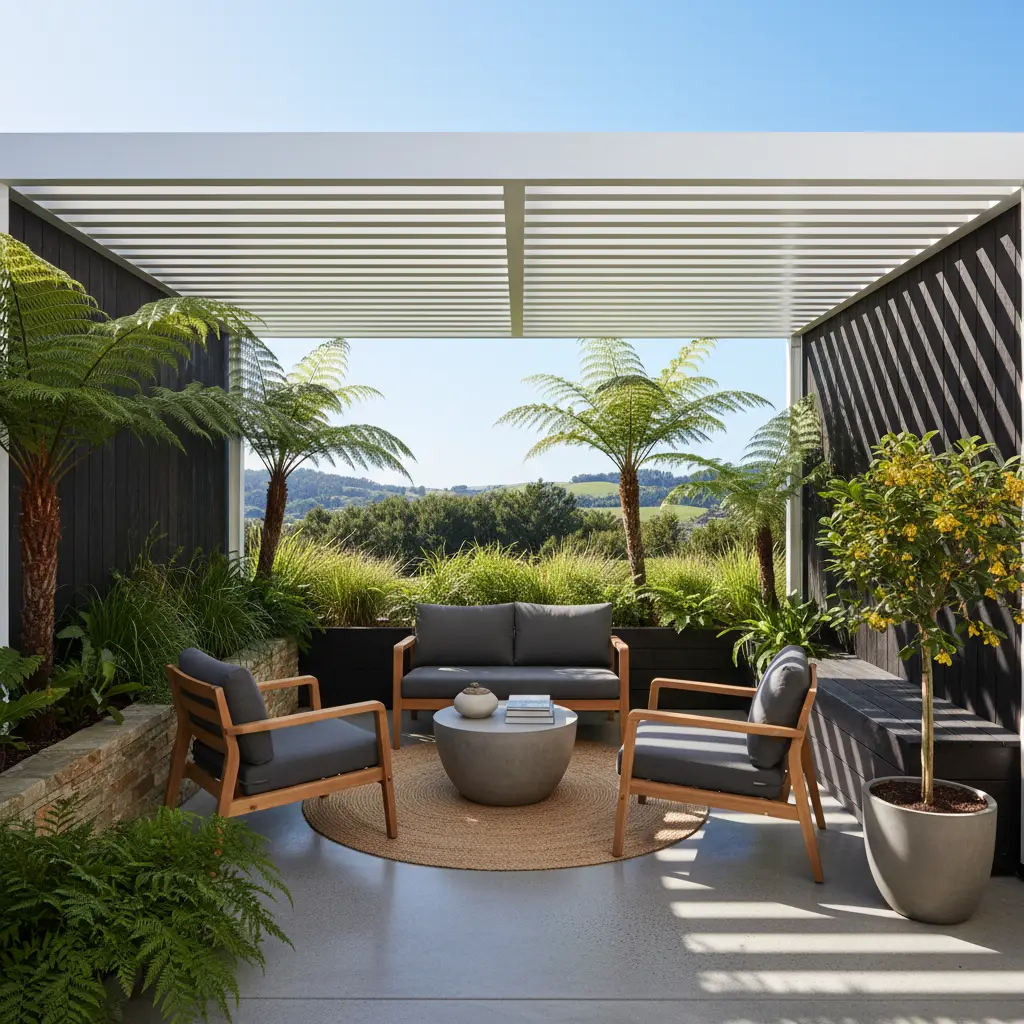
When horizontal square footage is at a premium, the only way is up. Maximizing vertical space is a cornerstone of effective small garden design. Your pergola structure should serve not just as a roof, but as a vertical canvas.
Integrating Greenery Without Losing Floor Space
In a small area, large potted plants can consume valuable floor space needed for furniture. Instead, utilize the posts and beams of the pergola for vertical gardening. Tension wires run between posts can support climbing plants such as Star Jasmine or Passionfruit, which are popular in the NZ climate. This creates a “living wall” that provides privacy from neighbours—a common issue in townhouse developments—without requiring a physical footprint wider than the pergola post itself.
Structural Height and Proportions
The height of the pergola plays a psychological role in how spacious the area feels. A low ceiling in a small room feels oppressive; the same logic applies outdoors. Aim for a minimum clearance of 2.4 to 2.7 meters. This added height allows for better airflow and draws the eye upward, creating an illusion of volume. Additionally, higher beams allow for the installation of pendant lighting or hanging planters that add character without obstructing movement.
Cantilevered Designs: The Ultimate Space Saver
Perhaps the most efficient structural solution for tight spaces is the cantilevered pergola. Traditional pergolas require at least two, often four, posts anchored to the ground. In a small 3×3 meter patio, losing space to posts can significantly restrict furniture layout and flow.
What is a Cantilevered Pergola?
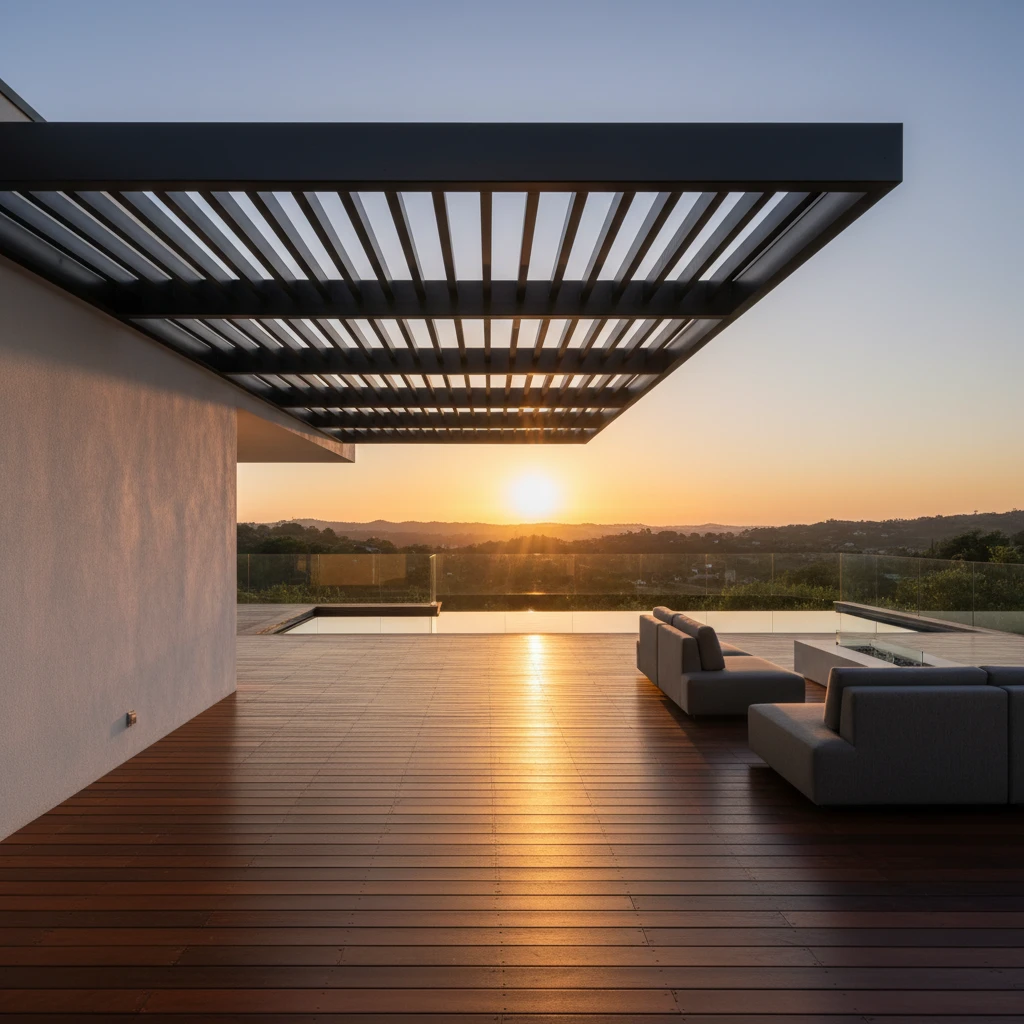
A cantilevered pergola is anchored securely to an existing wall (usually the house) and extends outward with no supporting posts on the outer edge, or it uses two heavy-duty posts on one side with the roof extending out over the open space. This engineering feat eliminates the “cage” effect of four posts.
Benefits for Bi-Fold Doors and Decks
For New Zealand homes that utilize indoor-outdoor flow via large bi-fold or sliding doors, a wall-mounted cantilevered design is superior. It ensures that when the doors are open, there are no obstructions breaking the visual line from the kitchen or lounge to the garden. This seamless transition tricks the brain into perceiving the indoor and outdoor areas as one large, continuous space.
Using Light-Coloured Materials to Open Space
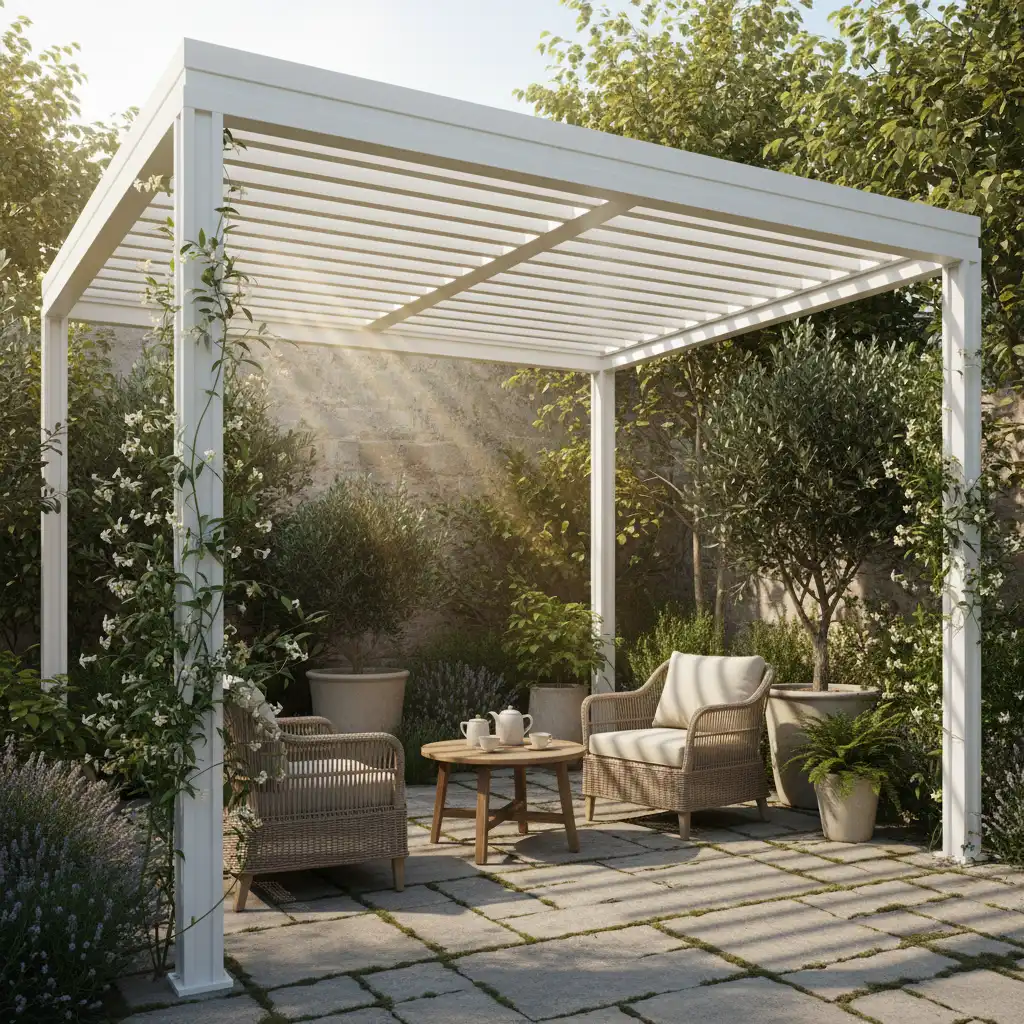
Color psychology is a potent tool in interior design, and it is equally effective in landscaping. Dark colours absorb light and tend to make structures appear heavier and more imposing. In contrast, light colours reflect light and recede visually, making spaces appear larger and airier.
Material Selection: Timber vs. Aluminium
While traditional stained cedar or pine has a rustic charm, it can feel visually “heavy” in a confined courtyard. Modern powder-coated aluminium in matte white, silver pearl, or titania is often a better choice for small pergola ideas. Aluminium allows for slimmer profiles than timber while maintaining structural integrity. A 100mm aluminium post often looks much less intrusive than a 150mm rough-sawn timber post.
Roofing Translucency
If you are covering the pergola, avoid solid opaque roofing materials like corrugated iron, which can cast deep shadows and darken the adjacent interior rooms. Instead, opt for clear or opal polycarbonate, or glass. Opal polycarbonate is particularly effective as it diffuses harsh sunlight, reducing glare while keeping the area bright and open.
Compact Shade Solutions and Roofing
In a small space, static elements can be limiting. Flexibility is key. The ability to alter the environment based on the weather—which in New Zealand can change four times in a day—adds immense value to a small outdoor area.
Retractable Awnings and Canopies
Retractable roofing systems are ideal for small pergolas. When the sun is desirable, the roof folds back completely, leaving the frame open to the sky. When rain threatens or UV levels peak, the fabric tension system extends to provide full cover. This ensures the pergola doesn’t permanently block natural light from entering the home’s windows.
Louvre Systems
Opening roof louvre systems have revolutionized the “Kiwi backyard.” While often associated with large luxury builds, they are highly effective in small spaces. By adjusting the angle of the blades, you can control ventilation and light precisely. In a small, enclosed courtyard, heat build-up can be an issue; louvres allow hot air to escape upward, creating a passive cooling effect that solid roofs cannot match.
Smart Furniture Integration for Small Pergolas
The structure is only half the equation; how you furnish the space dictates its usability. In small pergola setups, furniture must be proportionate and often multi-functional.
Built-in Seating
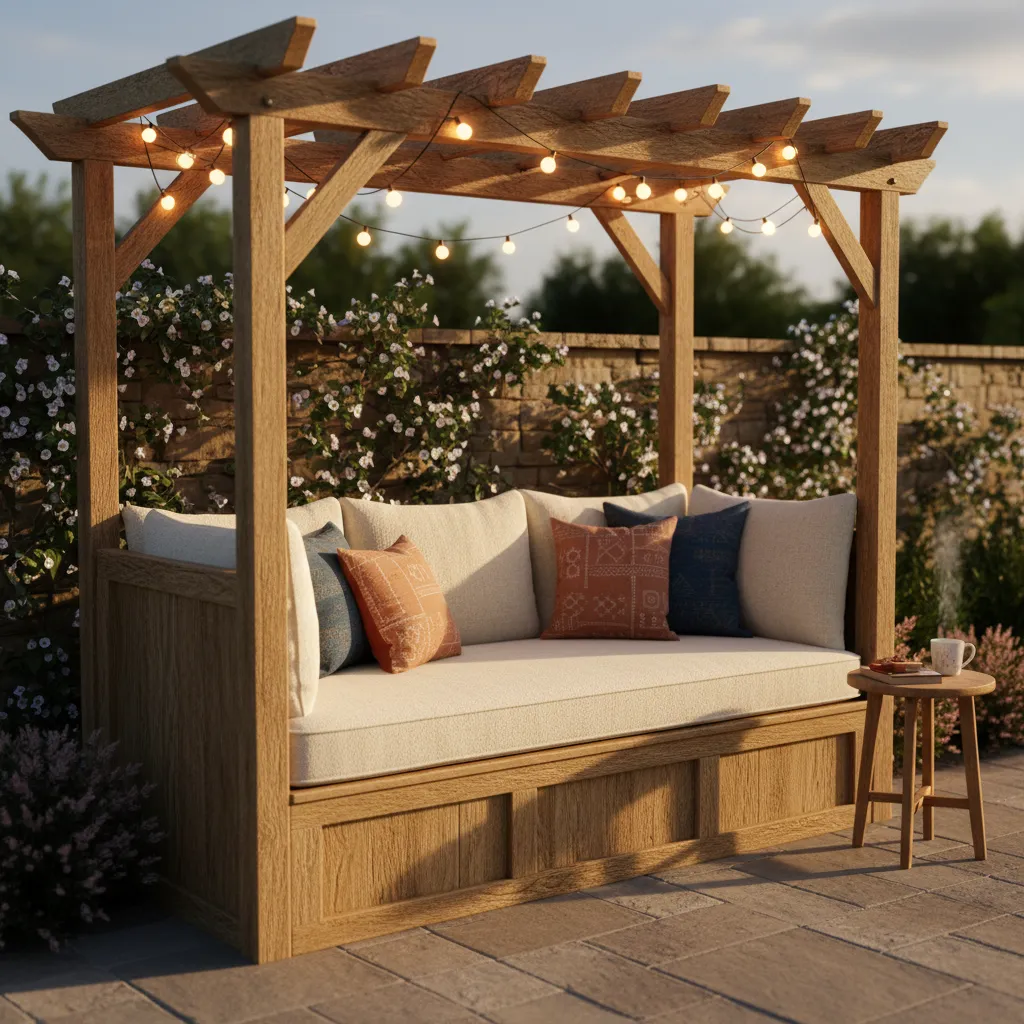
Freestanding outdoor sofas can be bulky. A space-savvy alternative is built-in bench seating integrated between the pergola posts. This anchors the furniture to the perimeter, leaving the central zone open for movement or a small coffee table. Lift-up bench seats also offer storage for cushions and garden tools, removing the need for a separate shed or storage box.
Zoning without Barriers
Use outdoor rugs to define the “lounge” area under the pergola. This visual zoning separates the relaxation space from the rest of the garden or deck without requiring physical barriers like screens or planters, which would reduce the usable area.
NZ Building Considerations and Regulations
Before breaking ground on your small pergola, it is crucial to understand the regulatory environment in New Zealand. While small structures are often exempt from full building consents, specific criteria must be met.
Schedule 1 Exemptions
Under Schedule 1 of the Building Act 2004, you can generally build a pergola without a building consent if:
- It is less than 20 square meters in area (for ground floor structures).
- It does not contain plumbing or drainage.
- It is structurally sound and complies with the Building Code.
However, if the pergola is attached to the house (modifying the building envelope) or is located on a balcony or upper deck, the rules become stricter regarding weathertightness and load-bearing capacity. Always consult with your local council or a professional installer, especially regarding boundary setbacks and site coverage ratios in high-density zones.
Frequently Asked Questions
How much does a small pergola cost in NZ?
The cost varies significantly based on materials and automation. A basic DIY timber kitset for a small space might start around $1,500 – $3,000 NZD. Custom aluminium structures typically range from $5,000 to $10,000. High-end automated louvre systems for small courtyards generally start from $15,000+ depending on installation complexity.
Do I need a permit for a pergola in NZ?
Generally, a pergola under 20m² on the ground floor does not require a building consent, provided it complies with the Building Code. However, if it is attached to the home in a way that affects the weathertightness, or is over a certain height or close to boundaries, you may need consent. Always check with your local council first.
What is the best height for a small pergola?
A height of between 2.4m and 2.7m is ideal. This height ensures the space feels open and airy without being so high that it fails to provide adequate shade or intimacy. If you are attaching it to the house, the height will often be dictated by the fascia or soffit height.
Can you put a pergola on a small balcony?
Yes, but it requires careful engineering. Weight loading is the primary concern on balconies. Lightweight aluminium frames are preferred over heavy timber. Additionally, wind loads on upper levels are higher, so the structure must be securely bolted to the substrate, which usually requires Body Corporate approval and potentially a building consent.
How to anchor a pergola on pavers?
You cannot anchor a pergola solely to pavers, as they lack the weight to hold the structure down in high winds. You must lift the pavers and dig footings for concrete pads, or use chemical anchors to bolt through the pavers into an existing concrete slab beneath. If no slab exists, concrete footings are mandatory.
What is the best wood for pergolas in NZ?
H3.2 treated Radiata Pine is the most cost-effective and common option, suitable for painting. For a natural look, Macrocarpa or Cedar are premium choices that weather beautifully but require maintenance. Vitex and Kwila are durable hardwoods often used, though leaching can be an issue initially.