
Traditional wooden pergola designs in New Zealand primarily utilize locally sourced timbers like H5 treated Radiata Pine and Macrocarpa to create robust, open-air structures that withstand the maritime climate. These designs typically feature exposed rafter tails, knee-brace joinery, and natural oil finishes, blending seamlessly with the rugged Kiwi landscape while providing durable, rustic outdoor living spaces.
The Allure of Rustic Timber in NZ Gardens
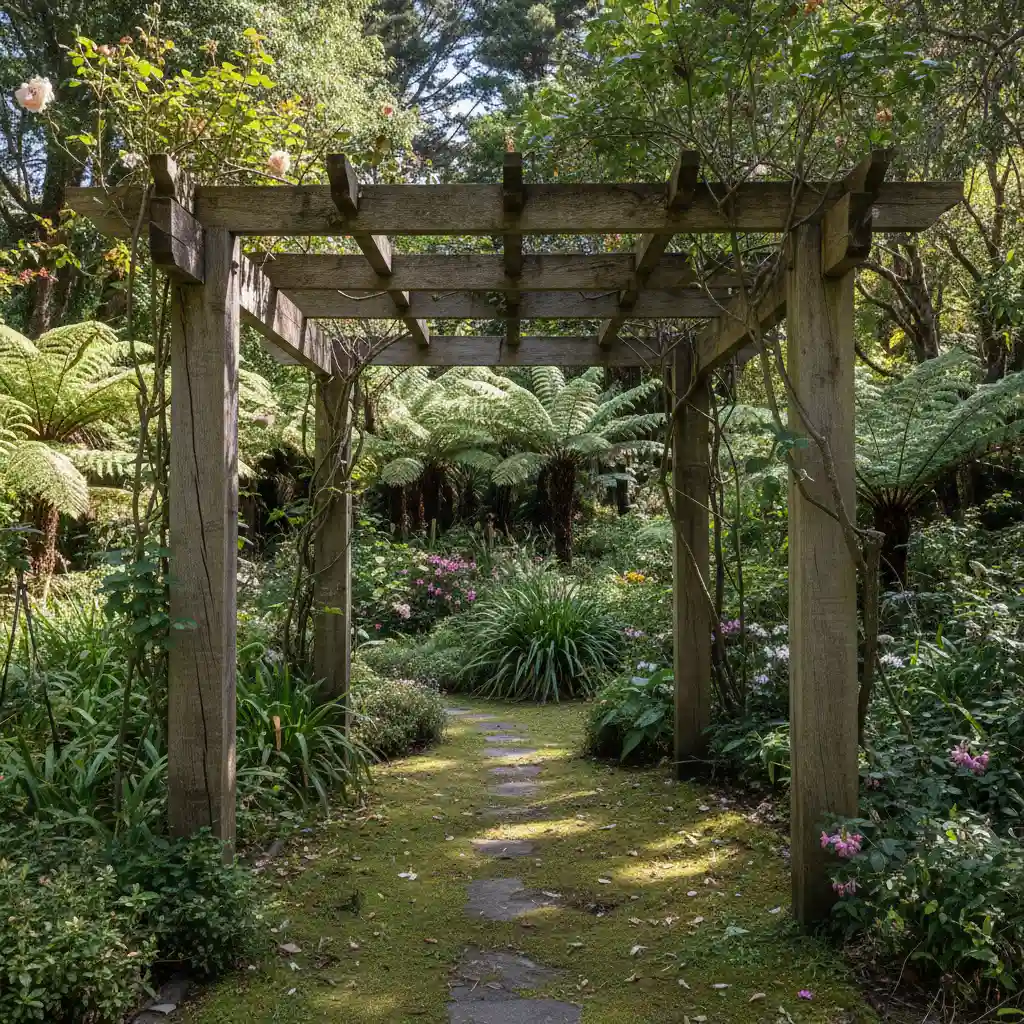
In the realm of outdoor architecture, few elements evoke the sense of permanence and warmth quite like a traditional timber pergola. For New Zealand homeowners, the drive to connect indoor comfort with the natural beauty of the outdoors has made wooden pergola designs nz a highly sought-after topic. Unlike sleek, modern aluminium structures, rustic timber designs offer a tactile, organic aesthetic that matures gracefully over time.
The rustic style is not merely about using old wood; it is a deliberate design choice that prioritizes craftsmanship, substantial material dimensions, and a connection to heritage building techniques. Whether attached to a classic weatherboard villa or standing independently in a native bush garden, these structures serve as the anchor for outdoor entertainment. They frame views, filter harsh sunlight, and provide a vertical dimension to flat landscapes.
Selecting the Right Wood: NZ Pine vs. Macrocarpa
The longevity and structural integrity of your pergola depend entirely on the choice of timber. In New Zealand, the market is dominated by two primary contenders for rustic construction: Radiata Pine and Macrocarpa. Understanding the properties of each is essential for making an informed decision.
Radiata Pine: The Versatile Workhorse
Radiata Pine is the backbone of the New Zealand construction industry. It is widely available, cost-effective, and sustainably grown. However, in its natural state, it is not durable against rot or insects. For pergola construction, the timber must be treated.
- H3.2 Treatment: Suitable for timber exposed to the weather but not in contact with the ground (e.g., rafters and beams).
- H4 Treatment: Required for timber in contact with the ground or in damp situations (e.g., posts embedded in concrete).
- H5 Treatment: The highest level of protection, recommended for structural piles and posts in critical structural applications.
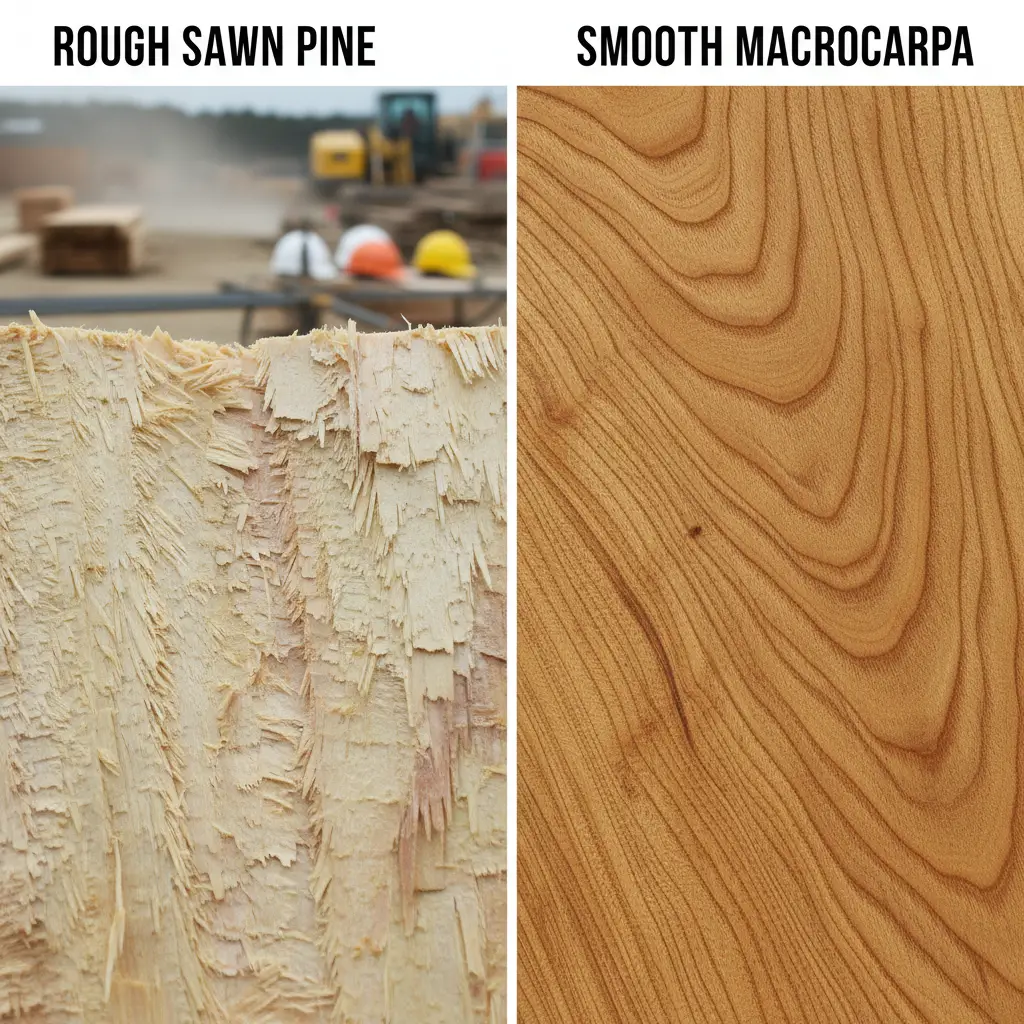
For a rustic look, builders often use “rough sawn” pine rather than “dressed” timber. Rough sawn timber retains the saw marks and texture, absorbing stains deeply and providing a rugged appearance that fits the traditional aesthetic perfectly.
Macrocarpa: The Natural Choice
For those seeking a chemical-free alternative or a specific grain aesthetic, Macrocarpa (Monterey Cypress) is the premium choice. It is naturally durable (Class 3 durability) due to the oils present in the heartwood, meaning it requires no chemical treatment to resist rot and borer.
Macrocarpa is prized for its golden hue, distinctive smell, and beautiful grain patterns. It is ideal for exposed beams and posts where the visual quality of the wood is paramount. However, it is generally more expensive than pine and can be prone to surface checking (cracking) as it dries, which many argue adds to its rustic charm. When left untreated, Macrocarpa will weather to a distinguished silver-grey, mimicking the look of driftwood found on NZ beaches.
Architectural Details: Rafters and Joinery
A pergola is defined not by walls, but by its roof structure and columns. To achieve a truly traditional or rustic style, the detailing of these elements is critical. The difference between a basic frame and a stunning architectural feature often lies in the rafter tails and bracing.
Exposed Rafter Tails
In modern minimalism, rafter ends are often boxed in or cut flush. In rustic wooden pergola designs nz, the rafter tails are exposed and shaped. This is known as a “scroll cut” or profile cut. Common traditional profiles include:
- The Ogee: A classic S-curve shape that adds elegance.
- The Chamfer: A simple 45-degree angle cut for a clean but traditional look.
- The Stepped Cut: A series of right angles creating a geometric, Art Deco-influenced rustic look.
Extending the rafters 300mm to 500mm past the main beam creates deep shadow lines and enhances the visual weight of the structure.
Knee Braces and Hardware
Knee braces are the diagonal timber pieces connecting the posts to the beams. While they provide essential lateral bracing (stopping the pergola from wobbling in the wind), they are also a key stylistic element. Using chunky 100x100mm timber for braces emphasizes the heavy, timber-frame aesthetic.
Furthermore, the hardware used to connect these timbers should be considered. In coastal NZ zones, Type 304 or 316 stainless steel is mandatory to prevent corrosion. For a rustic look, black powder-coated brackets or galvanized bolts with large washers can be used to create an industrial-chic or barn-style appearance.
Creating a Living Structure: Vines and Greenery
A wooden pergola is rarely considered complete until it has been integrated with nature. The concept of the “living roof” is central to traditional garden design, providing shade in summer while allowing light through in winter (if deciduous plants are chosen).
Top Climbing Plants for NZ Climates
When selecting greenery for your pergola, consider the weight of the mature plant. A robust timber frame is necessary to support heavy vines.
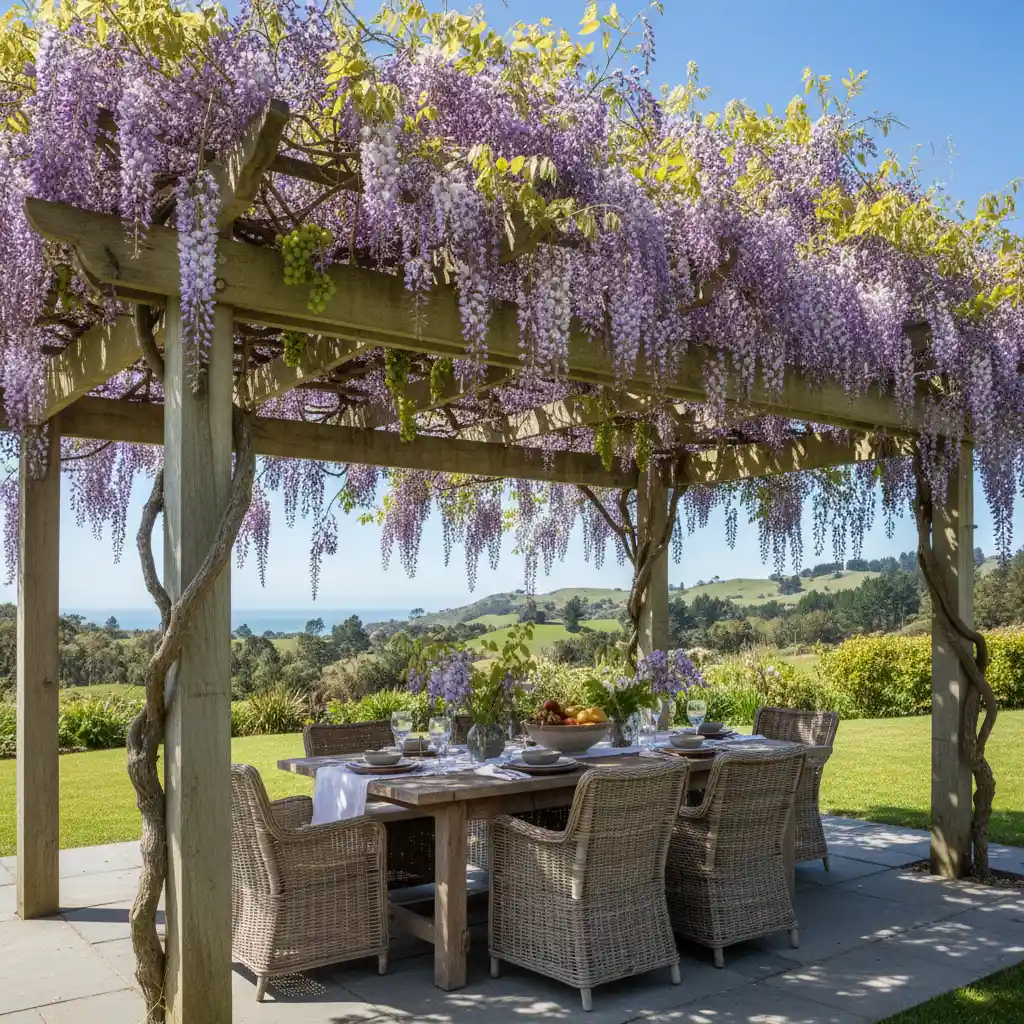
- Wisteria: Famous for its cascading purple flowers in spring. Note: Wisteria is incredibly vigorous and heavy; it requires substantial timber framing (150mm beams or larger) to prevent structural warping.
- Grape Vines: A productive and classic choice. They provide dense shade in summer and drop their leaves to let the winter sun warm your patio.
- Tecomanthe Speciosa: For a native NZ touch, the Three Kings Vine offers large, tropical-looking leaves and cream-colored flowers. It is vigorous and perfect for frost-free areas.
- Star Jasmine: An evergreen option that provides year-round coverage and a heady scent, though it grows slower than wisteria.
Staining, Finishing, and Maintenance
New Zealand has some of the harshest UV radiation in the world. Without protection, timber will degrade, crack, and warp. The finish you choose dictates the maintenance schedule and the final aesthetic of your rustic pergola.
Oils vs. Stains
Penetrating Oils: These are generally preferred for rustic designs. Oils penetrate deep into the wood fibers, nourishing the timber and preventing water absorption. They enhance the natural grain rather than masking it. Popular NZ brands offering decking and furniture oils often have specific formulations for vertical structures. Oils typically need reapplication every 12 to 18 months.
Film-Forming Stains: These sit on top of the wood, creating a barrier. While they offer excellent UV protection and come in a variety of colors (from Cedar to Charcoal), they can peel or flake if the timber moves or shrinks, requiring sanding before reapplication. For a rustic look, semi-transparent stains are better than solid colors.
The “Silvering Off” Approach
Some homeowners prefer the low-maintenance route. If you are using high-quality H4/H5 Pine or heart Macrocarpa, you can allow the wood to weather naturally. It will turn a silver-grey color. This does not necessarily mean the wood is rotting, but it does mean the surface fibers are drying out. To maintain structural integrity while allowing silvering, clear water-repellents can be applied.
Building Consents and Regulations in NZ
Before breaking ground, it is imperative to understand the legal landscape. Under the New Zealand Building Code, specifically Schedule 1, many pergolas are exempt from requiring a building consent, provided they meet specific criteria.
Generally, a pergola is exempt if:
- It is a simple structure on the ground floor.
- It does not exceed 20 square meters (if attached to the house) or 30 square meters (if freestanding and lightweight).
- If it has a solid roof (making it a veranda or carport), the rules change, and it is more likely to require consent or adhere to stricter exemptions regarding stormwater disposal.
However, you must still comply with the Resource Management Act, which governs site coverage and boundary setbacks (daylight angles). Always check with your local council (e.g., Auckland Council, Wellington City Council) before starting construction to ensure your wooden pergola designs nz project is compliant.

People Also Ask
Do I need a permit for a pergola in NZ?
In most cases, you do not need a building consent for a pergola in NZ if it is unroofed (open frame) or has a permeable roof (like shade cloth). However, if you add a solid waterproof roof, it may be classified as a verandah or carport. Generally, structures under 20sqm (attached) or 30sqm (freestanding) are exempt under Schedule 1, provided they comply with local planning rules regarding boundary setbacks and site coverage.
What is the best wood for a pergola in NZ?
The two best options are Radiata Pine and Macrocarpa. H5 Treated Radiata Pine is the most durable and cost-effective option for ground-contact posts, while Macrocarpa is a premium, naturally durable timber ideal for above-ground beams and rafters due to its aesthetic grain and lack of chemical treatment.
How long does treated pine last outside?
When properly treated and maintained, H3.2 treated pine (above ground) can last 25-30 years or more. H5 treated pine (in-ground contact) is rated to last 50+ years, making it an incredibly durable material for pergola posts in New Zealand conditions.
Can you put a roof on a pergola without a permit NZ?
Adding a solid roof (polycarbonate or corrugated iron) changes the classification of the structure. Under Schedule 1 exemptions, you can build a detached building up to 30sqm with a lightweight roof without consent, provided it is built by a professional or supervised. However, stormwater runoff must be managed. Always check local council maps for specific zoning rules.
What is the difference between a pergola and a verandah?
Technically, a pergola is an open structure with an open lattice or beam roof that does not block rain. A verandah is a roofed, open-air gallery or porch attached to the outside of a building. In NZ, the distinction is important for building consent purposes, as solid roofs add wind and snow load considerations.
How much does a wooden pergola cost in NZ?
Costs vary widely based on materials and size. A DIY kitset pine pergola might cost between $1,500 and $3,000 NZD. A custom-built, professionally installed Macrocarpa pergola can range from $5,000 to over $15,000 NZD depending on complexity, size, and site access.