
To request a pergola quote effectively, homeowners must provide contractors with specific details including precise site dimensions, preferred structural materials (such as high-grade aluminium or timber), desired features like motorised louvres or drop-down screens, and clear photos of the installation area. Providing comprehensive information upfront ensures accurate pricing, minimizes revisions, and allows installers to immediately assess site-specific challenges such as wind zones, mounting heights, and council consent requirements.
Why Detailed Quote Requests Save You Money
When you decide to upgrade your outdoor living space, the excitement often leads to rushing the initial enquiry stage. However, a vague request like “How much for a 3×3 pergola?” will almost always result in a vague estimate—or worse, a quote that balloons in price once the contractor actually sees the site. In the New Zealand outdoor living market, precision is currency.
Contractors and installation companies prioritize enquiries that demonstrate serious intent. By providing a detailed brief when you request a pergola quote, you signal that you are ready to do business, which often results in faster response times and sharper pricing. Furthermore, accurate initial data helps identify potential engineering issues—such as attaching to a brick veneer or navigating complex soffits—before a salesperson even steps foot on your property.
The Ultimate Checklist for Your Pergola Quote
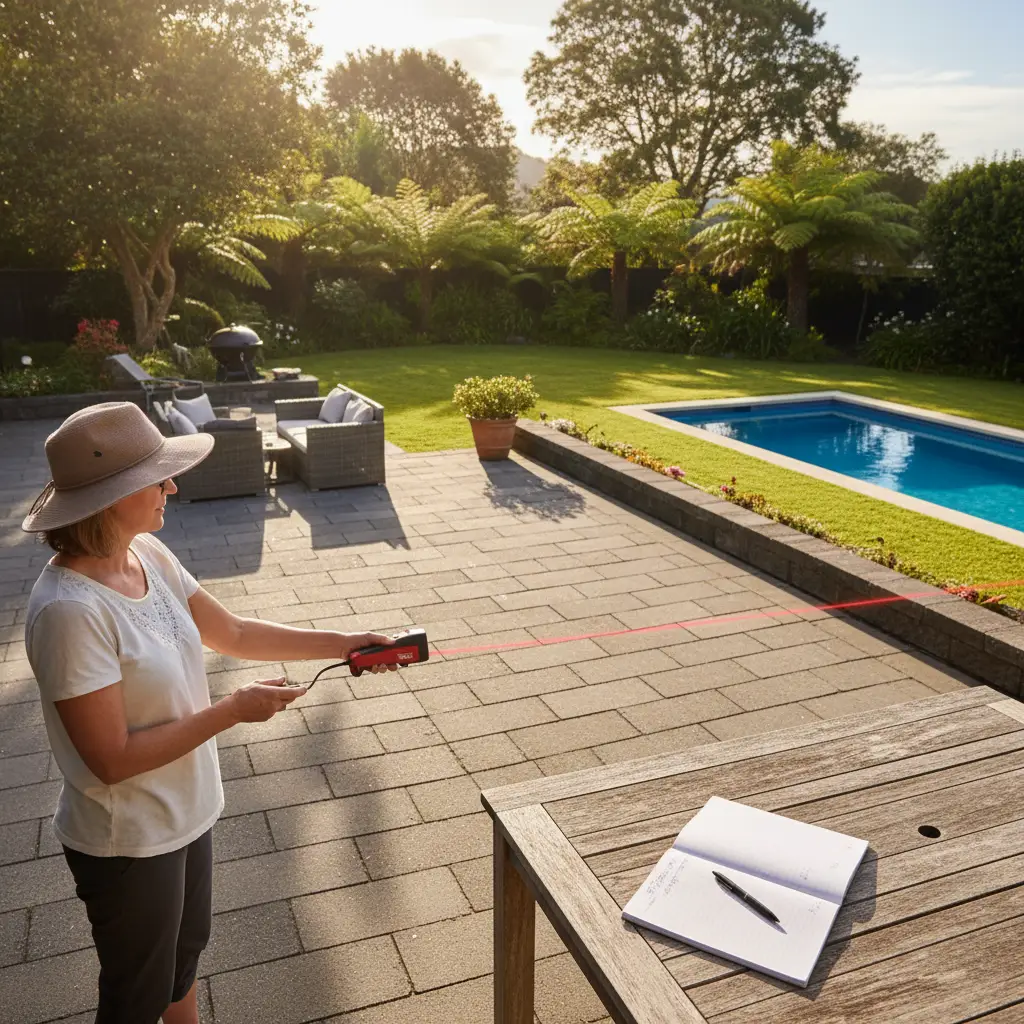
Before you hit send on that enquiry form or pick up the phone, gather the following information. This checklist is designed to cover the technical variables that influence the cost of louvre roofs and fixed pergolas.
1. Exact Dimensions (Width, Projection, and Height)
While rough estimates are acceptable for a ballpark figure, millimeter-perfect measurements are required for a final contract. When requesting a quote, provide:
- Width (Span): The distance along the house or the width of the opening.
- Projection: How far out from the house the structure will extend.
- Mounting Height: The height from the ground to the soffit or fascia where the pergola will attach. This is critical for determining post heights and checking for clearance over outward-opening doors.
2. Installation Type
Clarify how you envision the structure standing:
- Freestanding: Requires four (or more) posts and substantial footings. This is common for pool houses or garden gazebos.
- Wall-Attached: Attached to the existing dwelling on one or more sides. This requires structural assessment of your home’s framing (lintels and trusses).
- Integrated: Built into an existing roofline or void.
3. Site Conditions and Foundation
What is currently on the ground? The answer dictates the installation costs:
- Existing Concrete Pad: Ideally 100mm+ thick reinforced concrete. Posts can often be bolted directly to this.
- Timber Deck: Installers usually need to block under the deck to the piles or cut through the deck to concrete new footings into the earth.
- Grass/Soil: Requires digging holes (usually 600mm deep x 450mm square) and pouring concrete footings.
- Access: Can the installers carry long beams (up to 6-7 meters) down the side of your house, or is a crane/hiab lift required?
4. Wind Zone and Environment
In New Zealand, this is non-negotiable. Is your property in a Low, Medium, High, Very High, or Extra High wind zone? If you are coastal, you must specify this, as it necessitates marine-grade stainless steel fixings and specific powder coating warranties (e.g., Dulux Duratec) to prevent corrosion.
Comparing Apples with Apples: Analyzing the Bid
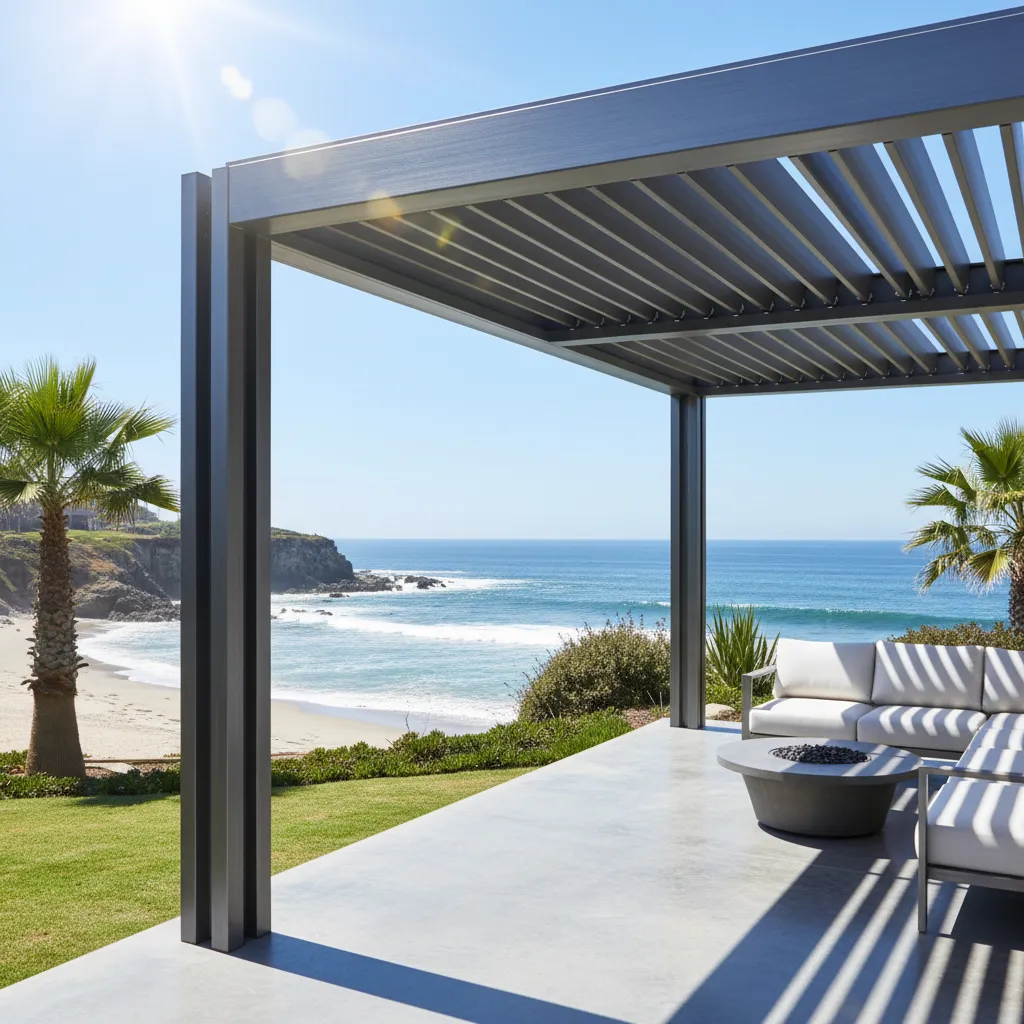
Once you receive multiple estimates, it can be tempting to simply choose the bottom-line price. However, in the construction industry, the cheapest quote often excludes critical elements that are added later as “variations.” Here is how to scrutinize the document to ensure you are comparing equivalent products.
Material Specifications
Not all aluminium is created equal. Check the alloy and temper. Structural grade 6063 T5 or T6 aluminium is the industry standard for premium pergolas. Cheaper imports may use softer alloys that are prone to sagging under snow loads or heavy winds. Ask specifically about the beam thickness—heavy-duty systems often use beams with a 3mm to 5mm wall thickness, whereas budget options may be as thin as 1.5mm.
Motorization and Electronics
If you are requesting a quote for an opening louvre roof, the motor is the heart of the system. Look for reputable European brands like Somfy or reliable linear actuators designed for outdoor use. Ask the following:
- Is the motor integrated inside the beam (hidden) or bolted on the outside (unsightly)?
- Does the quote include a rain sensor that closes the roof automatically?
- What is the warranty on the electrical components? (Standard is usually 2-5 years, distinct from the structural warranty).
Powder Coating Quality
The finish determines how long your pergola looks new. In NZ, look for the “Dulux” or “Interpon” brand names. A standard quote might include a basic finish, while a premium quote will specify a “Super Durable” class powder coat designed to withstand high UV levels without fading.
Inclusions vs. Exclusions
This is where the price difference usually hides. Ensure the following are clearly marked as included or excluded:
- Electrical Connection: Most pergola installers are not registered electricians. They will install the motor and run the cable to the post base, but you will likely need to hire a sparky to hardwire it to your mains.
- Council Consent: Does the quote include the cost of drafting plans and submitting them to the council, or is that the homeowner’s responsibility? (Note: Many pergolas under 30sqm are exempt, but verification is key).
- Rubbish Removal: Will the team take away the packaging and offcuts?

Understanding Payment Terms and Contracts
When you are ready to proceed, the financial structure of the deal is as important as the design. Standard construction contracts in the outdoor living niche usually follow a specific cadence to protect both the supplier and the client.
The Deposit Structure
Expect to pay a deposit to secure your booking and initiate the manufacturing process. Since most pergolas are custom-fabricated to exact millimeter measurements, they cannot be resold if you cancel. A typical deposit ranges from 30% to 50% of the total contract value. Be wary of companies asking for 100% upfront.
Progress Payments
For larger projects, there may be a progress payment required upon the materials arriving at the factory or prior to dispatch to your site. This covers the raw material costs for the manufacturer.
Final Balancing Payment
The final balance is generally due upon “practical completion.” This means the structure is up, the louvres are moving, and the site is tidy. Do not pay the final balance until you have inspected the powder coating for scratches, tested the remote controls, and ensured the downpipes are connected correctly.
Lead Time Expectations in the NZ Market
Timing is everything. One of the most common mistakes homeowners make is waiting until November to request a pergola quote for Christmas. The outdoor living industry is highly seasonal.
The Seasonal Curve
Peak Season (September to December): This is the “Christmas Rush.” Lead times can blow out to 12-16 weeks. If you haven’t ordered by late September, it is unlikely you will have your pergola installed before the holidays.
Shoulder Season (February to April): The weather is still good, and lead times often stabilize to around 8-10 weeks.
Off-Peak (May to August): This is the smartest time to buy. Manufacturers are quieter, lead times can drop to 4-6 weeks, and you may find “Winter Specials” or discounted pricing to keep factory staff busy. Installing in winter ensures you are ready the moment spring arrives.
Supply Chain Factors
While many companies manufacture locally in NZ (which is recommended for warranty support), they often import raw aluminium extrusion or motors. Global shipping delays can still impact local lead times. Always ask, “Is the material for my job currently in stock, or are we waiting for a shipment?”
Frequently Asked Questions
Do I need council consent for a pergola in New Zealand?
Generally, pergolas under 30 square meters are exempt from building consent under the Building Act 2004 (Schedule 1), provided the work is carried out by a competent person. However, if the structure is attached to the house or has a solid roof (like a louvre roof when closed), it may affect site coverage or boundary recession planes. Always check with your local council or ask your provider to verify exemptions.
How much does a motorized louvre pergola cost per square meter?
In the current NZ market, a high-quality, custom-made motorized aluminium louvre roof typically costs between $1,500 and $2,500 per square meter, fully installed. This varies based on complexity, height, color choices, and added accessories like rain sensors or LED lighting.
What is the difference between a pergola and a portico?
A pergola is generally an open structure with cross rafters or a lattice (or operable louvres) that provides partial shade. A portico is a roofed structure attached to the entrance of a house, supported by columns or enclosed by walls. Porticos are usually part of the home’s original roofline, whereas pergolas are additions.
Can I install a pergola myself to save money?
While kit-set pergolas exist, they are often lighter duty. Professional louvre systems require precise engineering, water management (gutters/downpipes), and electrical work. DIY installation of heavy structural beams can be dangerous and may void manufacturer warranties regarding wind ratings and water tightness.
Does a pergola add value to my home?
Yes, creating a seamless indoor-outdoor flow is highly desirable in the NZ property market. A well-built, permanent outdoor living structure effectively adds another “room” to the house, potentially increasing property value and saleability, often recouping the installation cost.
How long does the actual installation take on-site?
For a standard 20-25sqm residential pergola, on-site installation typically takes 2 to 3 days. Day 1 usually involves setting posts and the frame. Day 2 involves installing the louvre blades and motor. Day 3 is for finishing touches, flashings, and site cleanup. Electrical connection by a registered electrician usually happens after the mechanical install.