
Smart pergola systems are automated outdoor structures equipped with motorized louvres or retractable canopies that adjust autonomously to changing weather conditions. By integrating advanced rain sensors, wind detectors, and smart home connectivity, these systems provide immediate protection for outdoor living spaces, automatically closing to shield furniture from sudden downpours or retracting to prevent damage during high winds.
In the unpredictable climate of New Zealand, where homeowners often experience four seasons in one day, the evolution of outdoor living has shifted towards intelligent automation. Gone are the days of manually cranking handles to open a roof or rushing outside to rescue cushions from an unexpected shower. Modern smart pergola systems represent the pinnacle of convenience and engineering, merging robust structural design with responsive technology.
What Are Smart Pergola Systems?
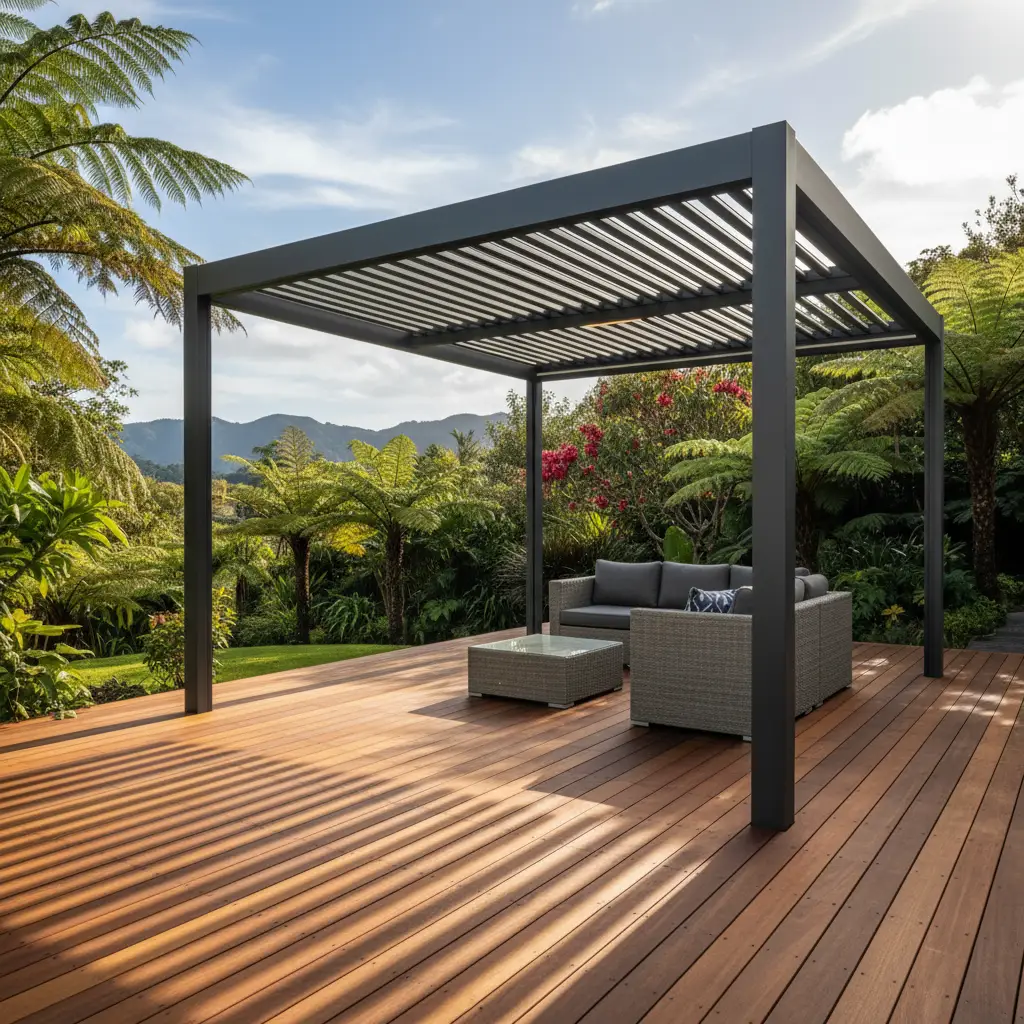
Smart pergola systems are bioclimatic structures designed to regulate the microclimate of your patio or deck through automated movement. Unlike traditional pergolas with static beams, these systems utilise motorised actuators to rotate aluminium louvres or retract fabric canopies. The “smart” designation comes from the control unit’s ability to process environmental data and execute commands without human intervention.
At the core of these systems is the central control box, which acts as the brain. It receives signals from various peripherals—remote controls, wall switches, smartphone apps, and crucially, environmental sensors. For New Zealand homeowners, this automation transforms an outdoor area into a year-round extension of the home. Whether it is shielding you from the harsh UV rays of the New Zealand sun or creating a watertight seal during a southerly blast, the system adapts instantly.
How Do Rain Sensors Work?
Rain sensors are the primary line of defence for outdoor furniture and decking. But how exactly do they detect precipitation so quickly?
Most smart pergola systems utilise conductive rain sensors. These devices feature a small, heated plate with two interlaced gold or copper electrodes. Under dry conditions, the circuit between these electrodes is open (broken). When a raindrop falls onto the sensor plate, the water—which contains minerals and is conductive—bridges the gap between the electrodes, closing the circuit.
The Automation Sequence
Once the circuit is closed, the sensor sends an immediate signal to the pergola’s control unit. The sequence typically follows these steps:
- Detection: The sensor detects moisture.
- Signal Transmission: A command is sent via radio frequency (RF) or hardwire to the motor controller.
- Action: The motor engages to rotate the louvres to a fully flat, 0-degree position.
- Sealing: The louvres interlock, compressing rubber gaskets to create a watertight seal.
Advanced sensors include a heating element that evaporates dew or light mist to prevent false triggers, ensuring the roof only closes when there is actual rain. This is particularly useful in coastal NZ regions where morning sea mist is common but doesn’t require the roof to close completely.
Why Are Wind Sensors Critical for Retraction Safety?
While rain sensors protect what is under the pergola, wind sensors protect the pergola itself. In New Zealand, where wind zones can range from Low to Extra High, ensuring the structural integrity of your outdoor system is paramount.
What is the function of a wind sensor?
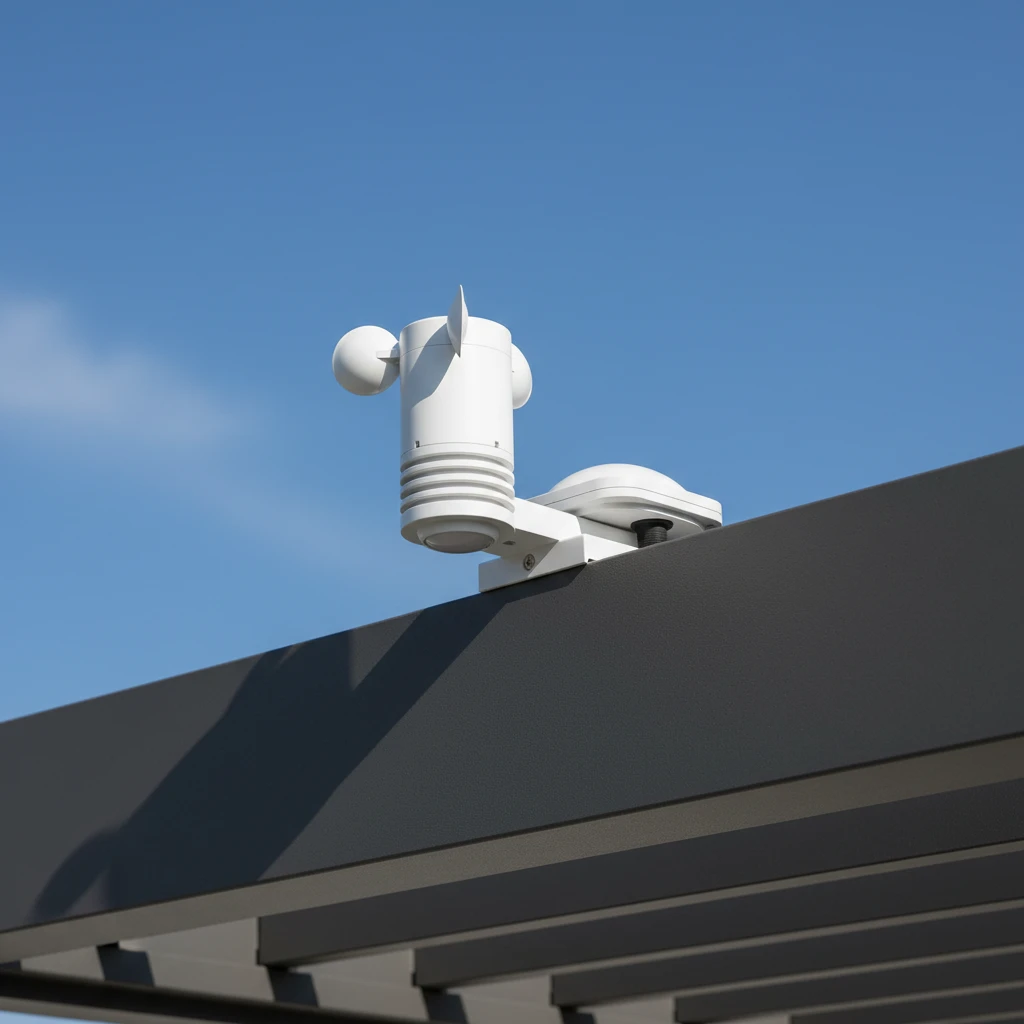
A wind sensor, or anemometer, continuously measures wind speed. It typically consists of spinning cups or a sophisticated ultrasonic device. When wind speeds exceed a pre-programmed threshold (e.g., 40 km/h), the sensor triggers a safety protocol.
Retractable vs. Louvre Safety Protocols
The action taken depends on the type of smart pergola system installed:
- Retractable Canvas Roofs: High winds are dangerous for extended fabric, acting like a sail. The wind sensor will trigger the motor to retract the roof fully into its protective cassette to prevent tearing or mechanism failure.
- Aluminium Louvre Roofs: Conversely, for louvre systems, the safest position is often slightly open. A fully closed flat roof creates significant uplift pressure during a storm. The sensor may command the louvres to open to a 45-degree angle, allowing the wind to pass through the structure (pressure equalisation) rather than fighting against it.
How to Integrate with Smart Home Apps?
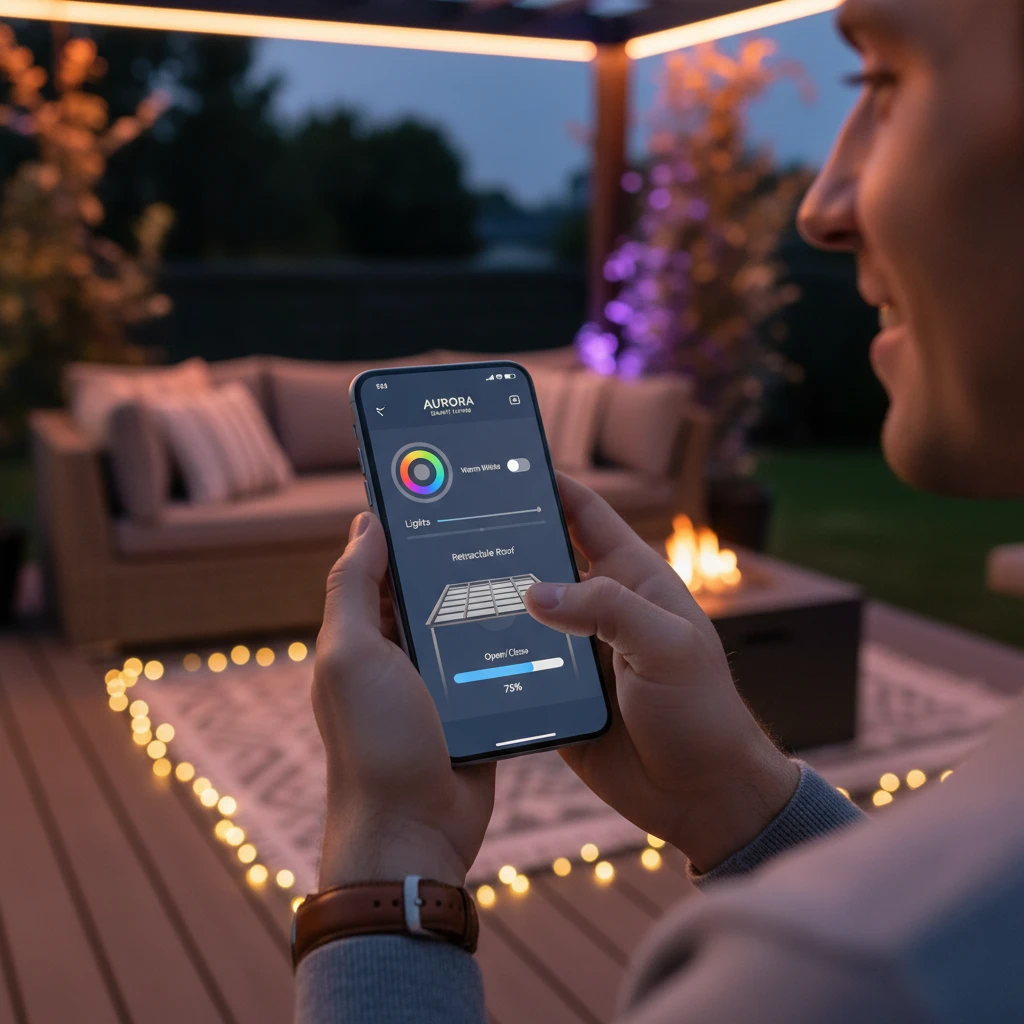
The true potential of smart pergola systems is unlocked when they are integrated into the broader smart home ecosystem. Modern motors, such as those from Somfy or Tuya-enabled devices, allow for seamless connection to home automation networks.
Connectivity Protocols
Most systems operate using one of the following protocols:
- RTS (Radio Technology Somfy): A proprietary protocol common in high-end systems. It requires a bridge (like the Somfy Connexoon or TaHoma) to connect to the internet.
- Zigbee/Z-Wave: Mesh network protocols that are highly reliable and use less power.
- Wi-Fi: Direct connection to your home router, often found in DIY or mid-range systems.
Voice Control and Scenarios
Once bridged to the internet, your pergola becomes compatible with platforms like Google Home, Amazon Alexa, and Apple HomeKit. This allows for voice commands such as, “Hey Google, open the pergola,” or “Alexa, set the patio lights to 50%.”
Advanced Automation Scenarios (IFTTT):
By using “If This Then That” logic, you can create sophisticated scenes:
- Sunset Mode: If the sun sets, close the louvres and turn on the integrated LED strip lighting.
- Temperature Control: If the local weather forecast predicts temperatures above 25°C, angle louvres to 120 degrees to block direct sun while allowing ventilation.
- Security: If the house alarm is triggered, flash the pergola lights and open the roof to improve visibility for security cameras.
Are Solar Powered Motors Viable in NZ?
With the push towards sustainability, solar-powered motors for smart pergola systems are gaining traction. But are they reliable enough for New Zealand’s variable sunlight hours?
How Solar Automation Works
A solar-powered system consists of a photovoltaic panel mounted on top of the pergola beam, connected to a lithium-ion battery pack concealed within the structure. The battery stores energy to power the motor, eliminating the need for hardwiring an electrician to run cables from the house.
Benefits and Limitations
Pros:
– Installation Cost: Significantly cheaper installation as no trenching or external electrical work is required.
– Eco-Friendly: Zero operating costs and a reduced carbon footprint.
– Independence: The system continues to work during power outages.
Cons:
– Battery Life: Batteries eventually degrade and will need replacement every 5-7 years.
– Power Limitations: Solar motors are generally suited for standard-sized bays. Large, heavy-duty commercial systems may require more torque than a solar battery can consistently provide.
– Shading: If the pergola is installed under large trees or on the south side of a two-story building, the panel may not generate sufficient charge in winter.
For most residential applications in NZ, modern solar motors are highly efficient. A fully charged battery can typically perform 50-100 cycles (open/close) without needing a recharge, which is sufficient to last through a week of cloudy weather.
Maintenance of Automated Systems
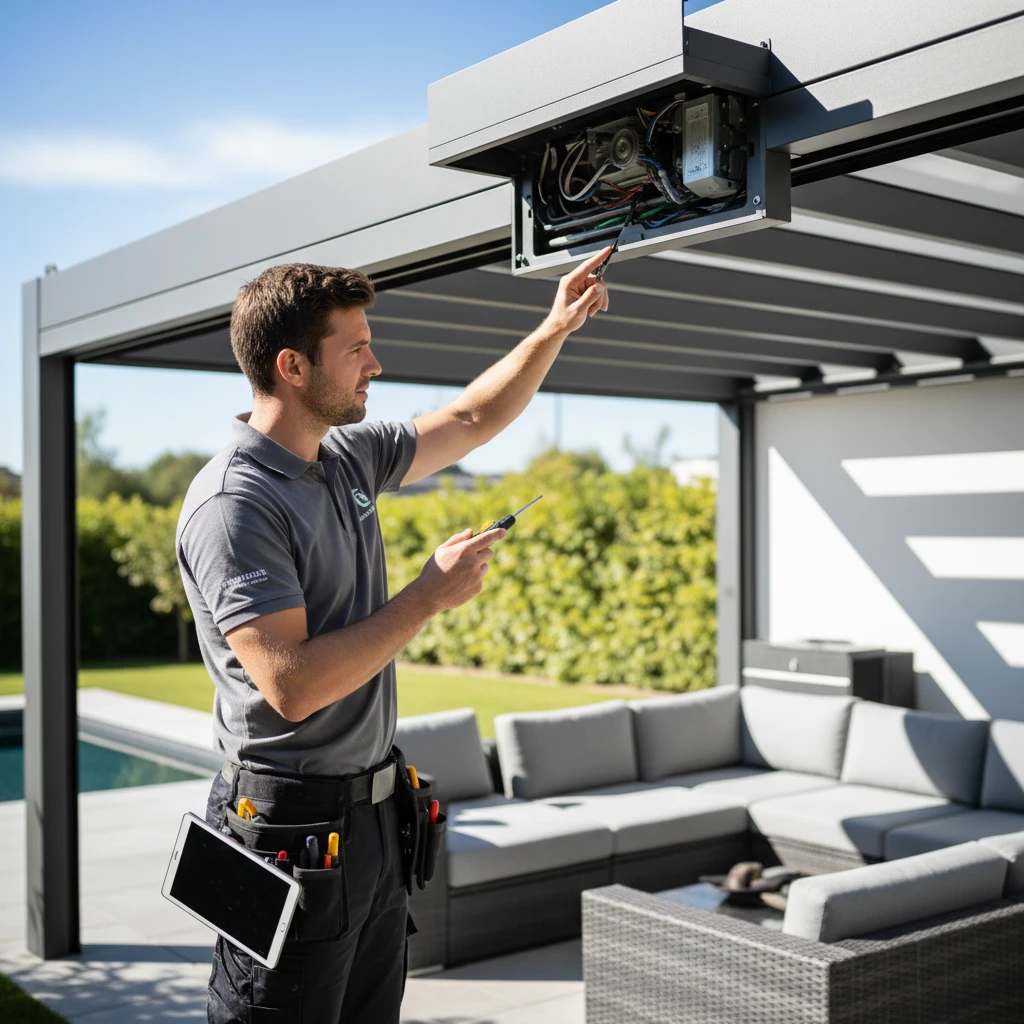
To ensure the longevity of your smart pergola system, regular maintenance of the electronic and mechanical components is necessary. Neglect can lead to sensor failure or motor burnout.
Cleaning Sensors
Rain sensors are prone to accumulating dust, bird droppings, and tree sap. If the sensor plate is dirty, it may fail to detect water or, conversely, think it is raining when it is dry due to conductive debris.
- Action: Wipe the sensor plate with a damp cloth and mild detergent every 3 months. Ensure the electrodes are free of corrosion.
Lubricating Moving Parts
The actuators and pivot pins that move the louvres operate under significant stress.
- Action: Apply a silicone-based spray lubricant to pivot points annually. Avoid oil-based lubricants (like WD-40) as they can attract dust and grit which wears down the nylon bushes.
Firmware Updates
For app-integrated systems, the control hub will occasionally require firmware updates to maintain security and compatibility with new phone operating systems. Check your app notifications regularly.
People Also Ask
Do smart pergolas close automatically when it rains?
Yes, smart pergolas equipped with rain sensors will automatically close the louvres or extend the roof when moisture is detected on the sensor plate, ensuring your outdoor area remains dry without manual intervention.
Can I control my pergola with my phone?
Absolutely. Most modern smart pergola systems can be integrated with smartphone apps via Wi-Fi or a dedicated bridge, allowing you to control the roof, lights, and screens from anywhere in the world.
What happens to a smart pergola in high winds?
If a wind sensor is installed, the system will detect high wind speeds and automatically move the roof to a safety position. For louvres, this usually means opening slightly to relieve pressure; for retractable roofs, it means retracting fully.
Are rain sensors reliable in heavy storms?
Rain sensors are highly reliable and react within seconds of detecting moisture. However, in extremely heavy storms, wind sensors usually take priority to protect the structure from damage, which may override the rain sensor.
Do smart pergolas require electricity?
Yes, the motors and sensors require power. This can be supplied via a hardwired connection to your home’s mains electricity (requiring an electrician) or via a solar panel and battery system for a wireless solution.
How much does a smart pergola system cost in NZ?
The cost varies significantly based on size and features. A basic motorised 3x3m system might start around $8,000 NZD, while fully automated, custom-sized systems with sensors and lighting can range from $20,000 to over $40,000 NZD.