
Deck pergola ideas in NZ focus on creating versatile outdoor living spaces that withstand local weather conditions while extending the home’s footprint. Key considerations include selecting durable materials like treated Radiata pine or powder-coated aluminium, ensuring structural integrity for specific wind zones, and integrating adjustable shade solutions for high UV protection.
Outdoor living is an intrinsic part of the New Zealand lifestyle. Whether it is a summer BBQ in Auckland, a windy evening in Wellington, or a frosty morning in Queenstown, the transition between indoor and outdoor spaces is crucial. A well-designed pergola does more than just provide shade; it frames your view, defines your entertainment zone, and adds significant value to your property. However, building a structure on top of an existing deck requires careful planning, particularly regarding weight distribution and council regulations.
Integrating a Pergola with Existing Decking
When looking for deck pergola ideas NZ homeowners often face the challenge of retrofitting a structure onto a completed deck. The goal is to make the pergola look like an original part of the architectural plan, rather than an afterthought. Seamless integration requires attention to material matching, proportion, and flow.
Visual Continuity and Material Selection
To achieve a cohesive look, the materials used for your pergola should complement your existing decking. If you have a Kwila or Vitex hardwood deck, using cedar or stained laminated timber for the pergola beams creates a warm, natural aesthetic. For modern composite decks, powder-coated aluminium structures in matte black or silver pearl often provide a striking contrast that feels contemporary and high-end.
If you are building with timber, consider the profile of the wood. Rough-sawn timber offers a rustic, “Kiwi Bach” feel, while dressed timber provides clean lines suitable for suburban villas. The key is consistency in the visual language of the structure.
Attachment Methods: Attached vs. Freestanding
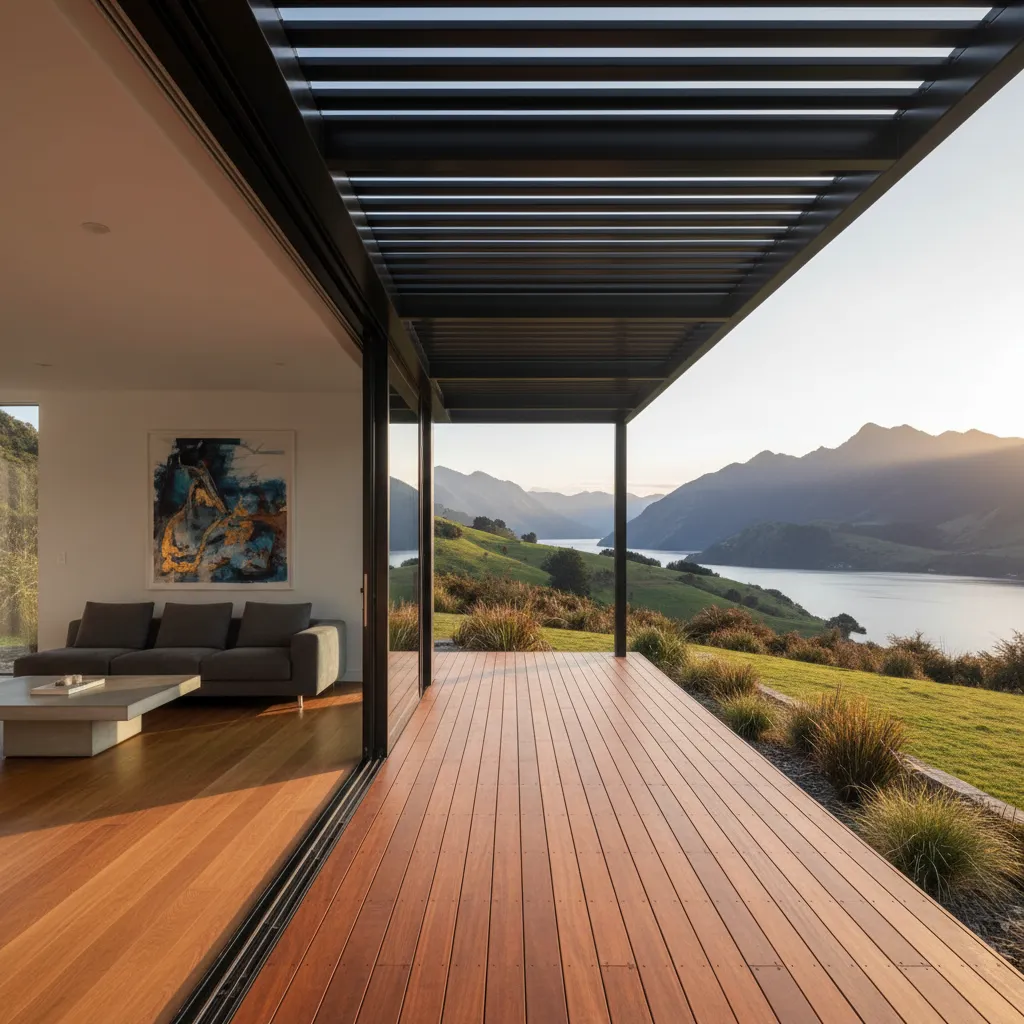
There are two primary ways to integrate a pergola: attaching it to the house (ledger board) or building it freestanding.
- Attached Structures: These are excellent for creating indoor-outdoor flow. They physically extend the living space. However, they require careful waterproofing where the ledger board meets the house cladding to prevent moisture ingress—a critical concern in leaky building prevention.
- Freestanding Structures: These offer more flexibility in placement. You can position a freestanding pergola to capture the best view or create a separate “destination” zone in your garden. They also simplify the consent process as they do not interfere with the building envelope.
Load-Bearing Considerations for Timber Decks
One of the most critical aspects often overlooked in DIY deck pergola ideas is the structural integrity of the base. A pergola adds significant weight (dead load) and wind resistance (live load) to your deck. Simply screwing posts into deck boards is dangerous and insufficient.
Understanding Point Loads
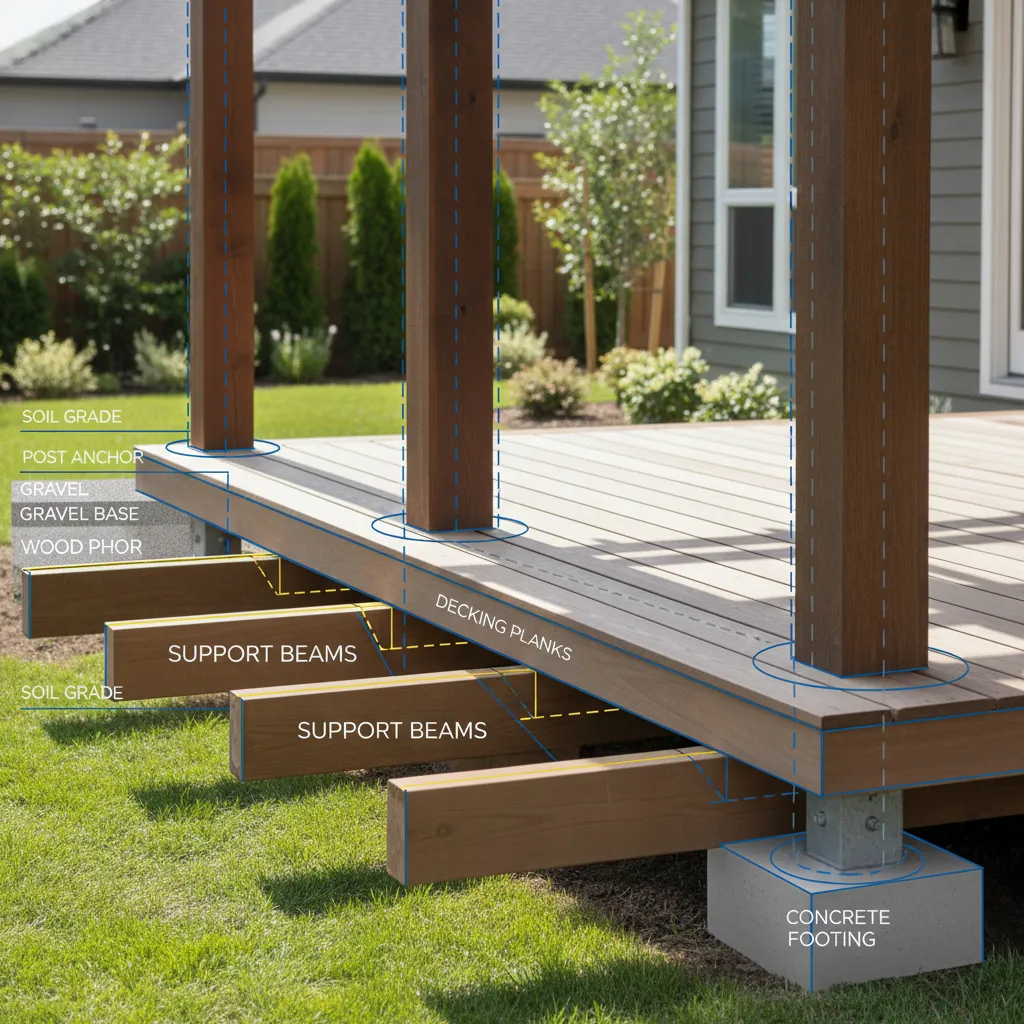
A pergola concentrates weight into specific points—the posts. Standard decking boards are not designed to carry this concentrated load. If you build a pergola on top of an existing deck, the load must be transferred directly to the sub-structure (bearers and piles) or to new concrete footings poured beneath the deck.
Blocking and Sub-Structure Reinforcement
If the pergola posts align with existing bearers, you may need to add additional blocking (nogs) to prevent twisting. In many cases, the best practice is to remove deck boards, install the pergola posts directly onto the bearers using heavy-duty galvanized brackets or coach bolts, and then cut the decking around the posts. This ensures the wind uplift forces—which can be severe in NZ’s coastal zones—are transferred to the main structure, not just the surface boards.
Wind Zones and Bracing
New Zealand is divided into various wind zones (Low, Medium, High, Very High, and Extra High). Your pergola design must account for this. A pergola in Wellington requires significantly more bracing and heavier hardware than one in a sheltered Hamilton gully. Knee braces (diagonal supports between the post and beam) are essential for preventing the structure from “racking” or collapsing sideways during a storm.
Shade Solutions for Sunny Patios
The New Zealand sun is notoriously harsh due to the lack of ozone and clear air. Consequently, shade is not just a comfort factor; it is a health and safety requirement. Modern deck pergola ideas NZ focus heavily on adjustable shade.
Motorized Louvre Roofs
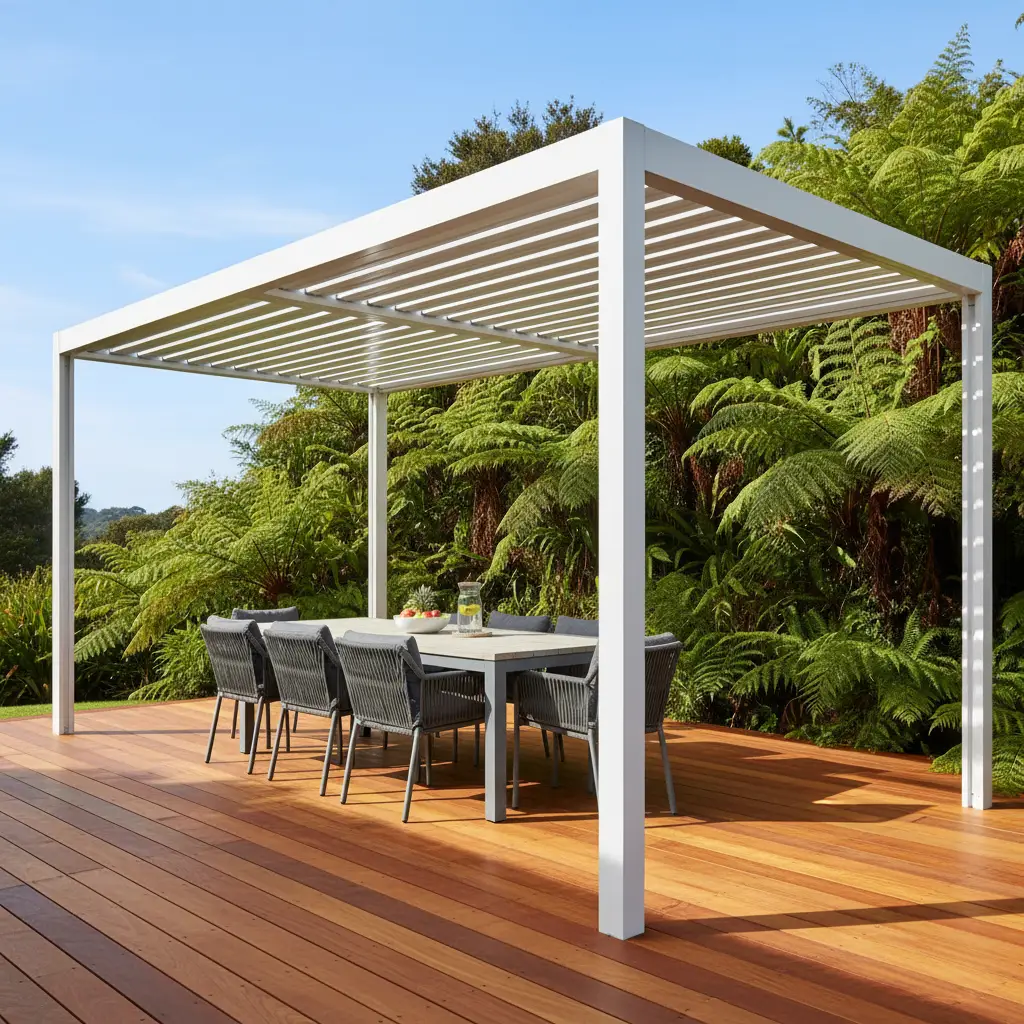
The gold standard for NZ outdoor living is the motorized opening louvre roof. These systems allow you to angle the blades to let in winter sun, block the harsh midday summer sun, or close completely to provide a waterproof roof during rain showers. While expensive, they maximize the usability of the deck year-round.
Polycarbonate Roofing
For a more budget-friendly fixed option, modern polycarbonate has come a long way. Products like ‘Laserlite’ or ‘Suntuf’ in tints like Grey or Bronze can block 99.9% of UV rays while still allowing light transmission. This is ideal for south-facing decks that need weather protection without becoming dark and gloomy.
Retractable Awnings and Shade Sails
For those who prefer a lighter aesthetic, integrating retractable canvas awnings or tensioned shade sails into the timber framework is effective. This allows for an “open sky” feeling at night for stargazing, which solid roofs prevent. Ensure that if you use shade sails, the pergola posts are over-engineered, as the tension loads from a shade sail in high wind are immense.
Design Inspiration: Styles for NZ Homes
Your pergola should reflect the architectural style of your home. Here are trending themes in the NZ market.
The Modern Minimalist
Think sleek, black lines. This style usually utilizes aluminium or painted timber. The joinery is hidden, and the structure is often cubic. It pairs perfectly with modern new builds and renovated 1970s brick homes. Incorporating LED strip lighting into the beams elevates this look for evening entertainment.
The Coastal Rustic
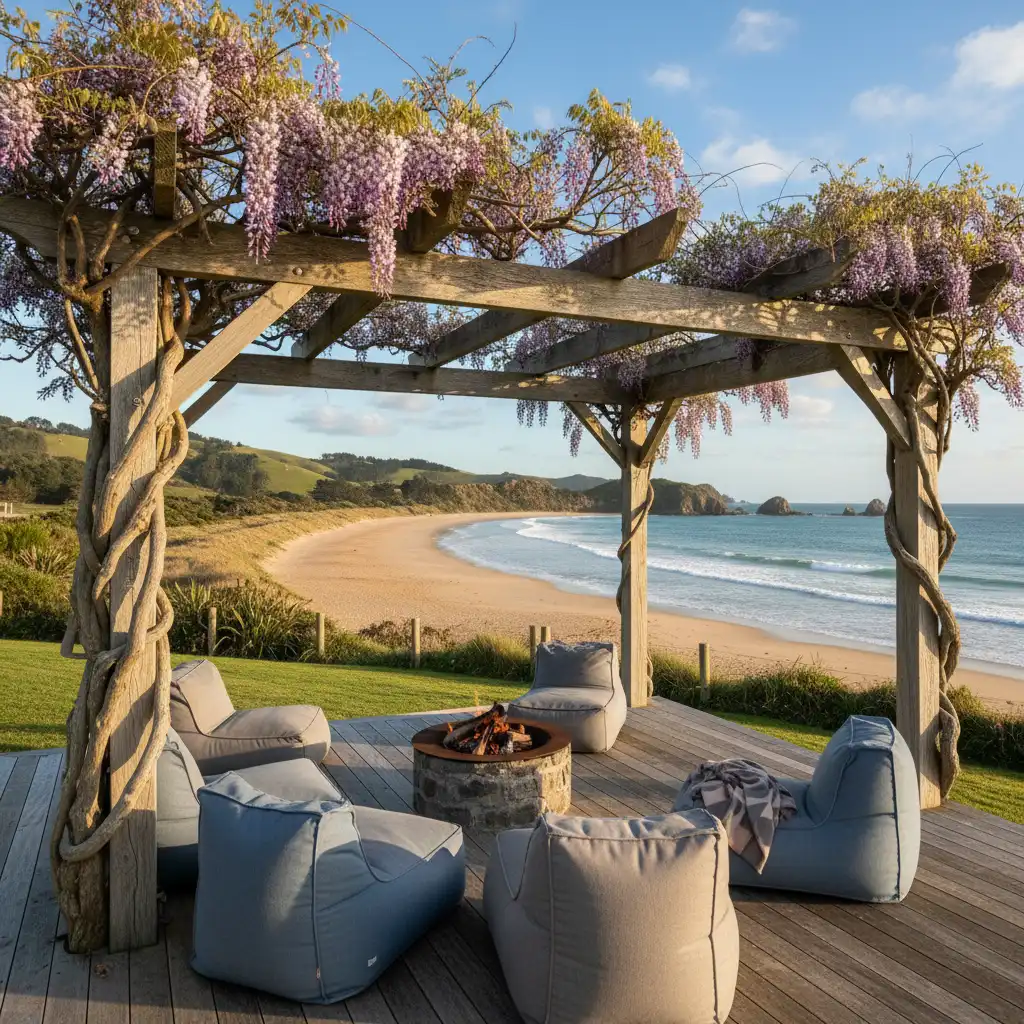
Popular in baches and coastal homes, this style uses chunky, rough-sawn macrocarpa or pine. The timber is often left to silver off naturally. The roof might be battened to provide dappled shade rather than full cover, encouraging vines like Grape or Wisteria to grow, creating a green canopy.
The Traditional Villa
For classic villas and bungalows, the pergola should feature decorative details. Scrolled ends on the rafters, white paint finishes, and turned posts help the structure blend with the heritage features of the home. This style often employs a lower pitch and integrates traditional trellis for privacy.
Building Consents and Regulations
Before breaking ground, you must understand the rules. In New Zealand, under the Building Act 2004, there are exemptions for low-risk building work, but specific criteria apply.
Generally, you may not need a building consent for a pergola if:
- It is on the ground floor level.
- It does not exceed 20 square metres in floor area (for attached) or 30 square metres (for freestanding), provided the design is carried out or reviewed by a Chartered Professional Engineer.
- If it is a simple structure (lightweight roof or open frame) under 20sqm, you might be exempt without an engineer, but checks are needed.
Crucially: Even if consent is not required, the work must still comply with the Building Code (structural stability and stormwater management). Furthermore, you must adhere to local council planning rules regarding “boundary setbacks” and “site coverage.” Always check with your local council or a professional before starting.
People Also Ask (PAA)
Do I need council consent for a pergola in NZ?
Generally, pergolas under 20 square metres attached to a house, or 30 square metres if freestanding, may be exempt from building consent under Schedule 1 of the Building Act. However, they must still comply with the Building Code and local planning rules regarding boundary setbacks and site coverage. Always verify with your local council first.
What is the best timber for pergolas in NZ?
H3.2 treated Radiata Pine is the most common and cost-effective choice due to its durability against rot and insects. For a premium look, Douglas Fir, Macrocarpa, or imported hardwoods like Kwila and Vitex are excellent options, though they require more maintenance to retain their colour.
How much does it cost to build a pergola in NZ?
A basic DIY timber pergola can cost between $150 and $300 per square metre. Professionally installed custom timber pergolas range from $400 to $800 per square metre. High-end aluminium louvre systems typically start from $1,000+ per square metre depending on automation and features.
Can I build a pergola on top of an existing deck?
Yes, but you usually cannot support the pergola solely on the deck boards. The posts must connect through the decking to the structural bearers or piles below to handle the additional weight and wind loads. Structural reinforcement or additional blocking is often required.
What is the difference between a pergola and a verandas?
In NZ terms, a veranda is typically an attached, roofed structure that runs along the side of a house and is part of the original building design. A pergola is often an open-framed structure (though it can be roofed) that is added later to define an outdoor space and provide shade.
How do I anchor a pergola to a deck without digging?
If you cannot dig new footings, you must bolt the pergola posts to the existing deck’s structural frame (bearers and joists) using heavy-duty galvanized coach bolts or structural brackets. Surface mounting to decking boards alone is unsafe and not recommended for wind stability.