
Motorised louvres offer superior convenience with remote operation and automated weather sensors, making them the preferred choice for variable New Zealand climates. While manual louvres provide a budget-friendly, reliable solution requiring physical operation, a motorised pergola NZ system maximizes year-round usability and property value through seamless integration and automation.
Creating the ultimate outdoor living space in New Zealand often comes down to one critical structural decision: selecting the right roofing system. With our unique climate—often experiencing four seasons in one day—the ability to control sunlight, ventilation, and rain protection is paramount. This brings homeowners to the definitive debate of motorised vs manual louvres.
While both systems utilize adjustable blades to manage the environment, the user experience, installation requirements, and long-term value differ significantly. Whether you are looking for a high-end motorised pergola NZ solution that reacts automatically to rain or a robust manual system for a bach or budget build, understanding the nuances of each is essential for making an informed investment.
What is the Difference Between Motorised and Manual Systems?
At a fundamental level, both motorised and manual opening roof systems share the same architectural DNA. They consist of extruded aluminium aerofoil blades (louvres) that rotate up to 180 degrees. This rotation allows you to follow the sun’s path, create ventilation to release hot air, or interlock the blades to form a watertight seal against rain.
The divergence lies in the actuation method—how those blades are moved.
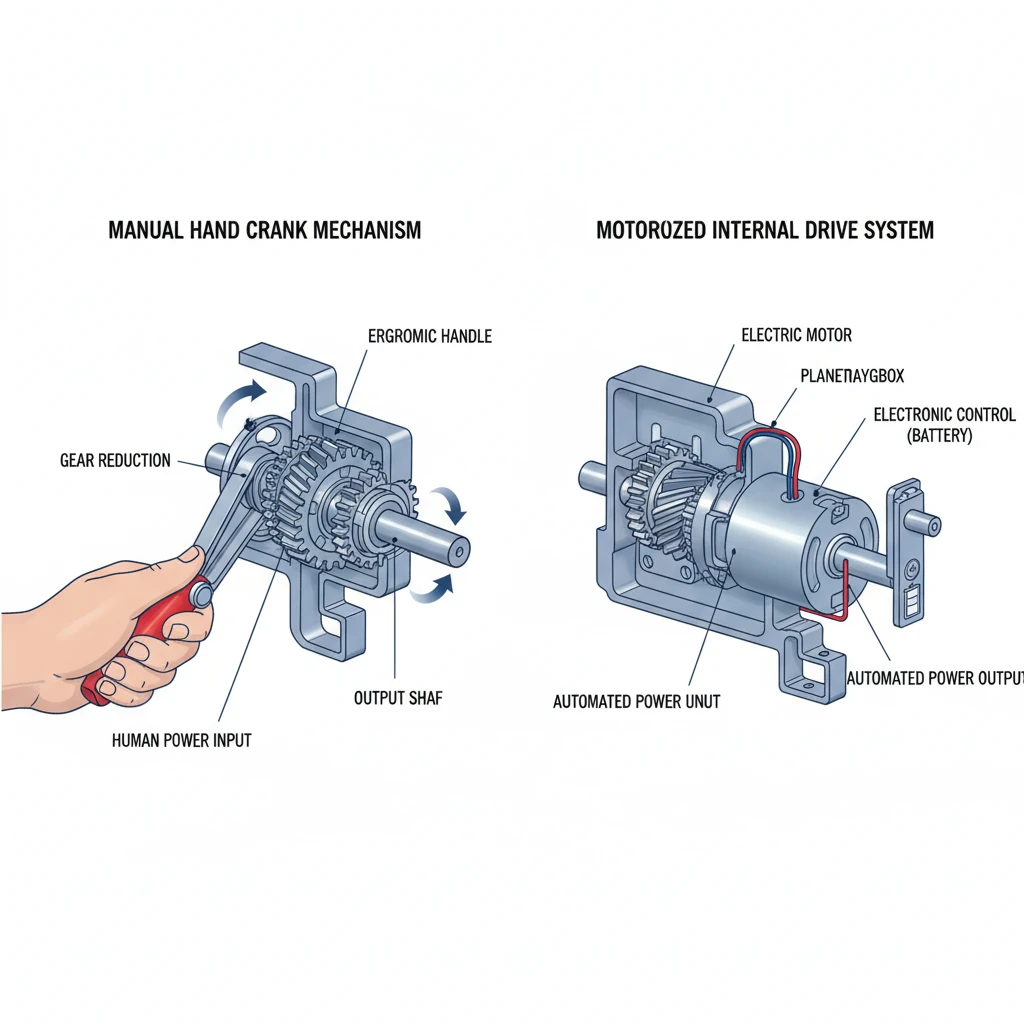
Manual Systems rely on a gearbox connected to a detachable hand crank. The user must physically hook the crank into an eyelet and wind it to open or close the roof. It is a purely mechanical process with no electrical components.
Motorised Systems utilize an internal tubular motor, typically housed discreetly within the pergola beam or the louvre mechanism itself. These are operated via a wall switch, remote control, or smartphone app. In the context of the motorised pergola NZ market, these systems are often paired with environmental sensors that automate the roof’s movement based on weather conditions.
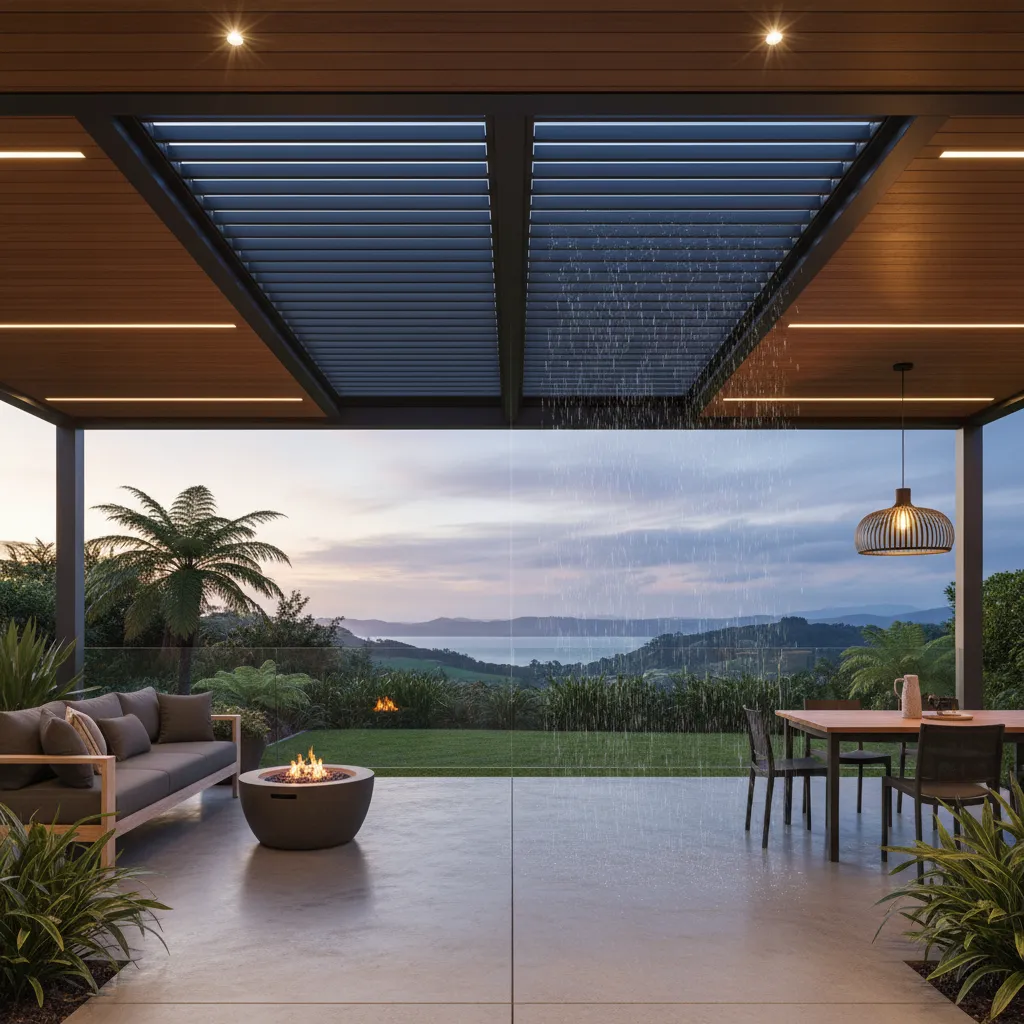
Why Choose a Motorised Pergola in NZ?
For the majority of modern residential and commercial projects in New Zealand, motorised systems are the standard recommendation. The preference for automation is not merely about luxury; it is about the practical response to our volatile weather patterns.
Convenience and Remote Control
The primary advantage of a motorised system is ease of use. With a manual system, adjusting the roof requires you to stop your conversation, locate the crank, and physically wind the roof open or closed. If a sudden shower hits during a dinner party, this can be disruptive.
With a motorised pergola, a single press of a button on a multi-channel remote or a smartphone app adjusts the roof instantly. This convenience significantly increases the frequency with which you use the features of the roof. Users with motorised systems tend to adjust their louvres multiple times a day to chase the sun or shade, whereas manual users often leave them in a static position due to the effort required.
Automated Weather Sensors
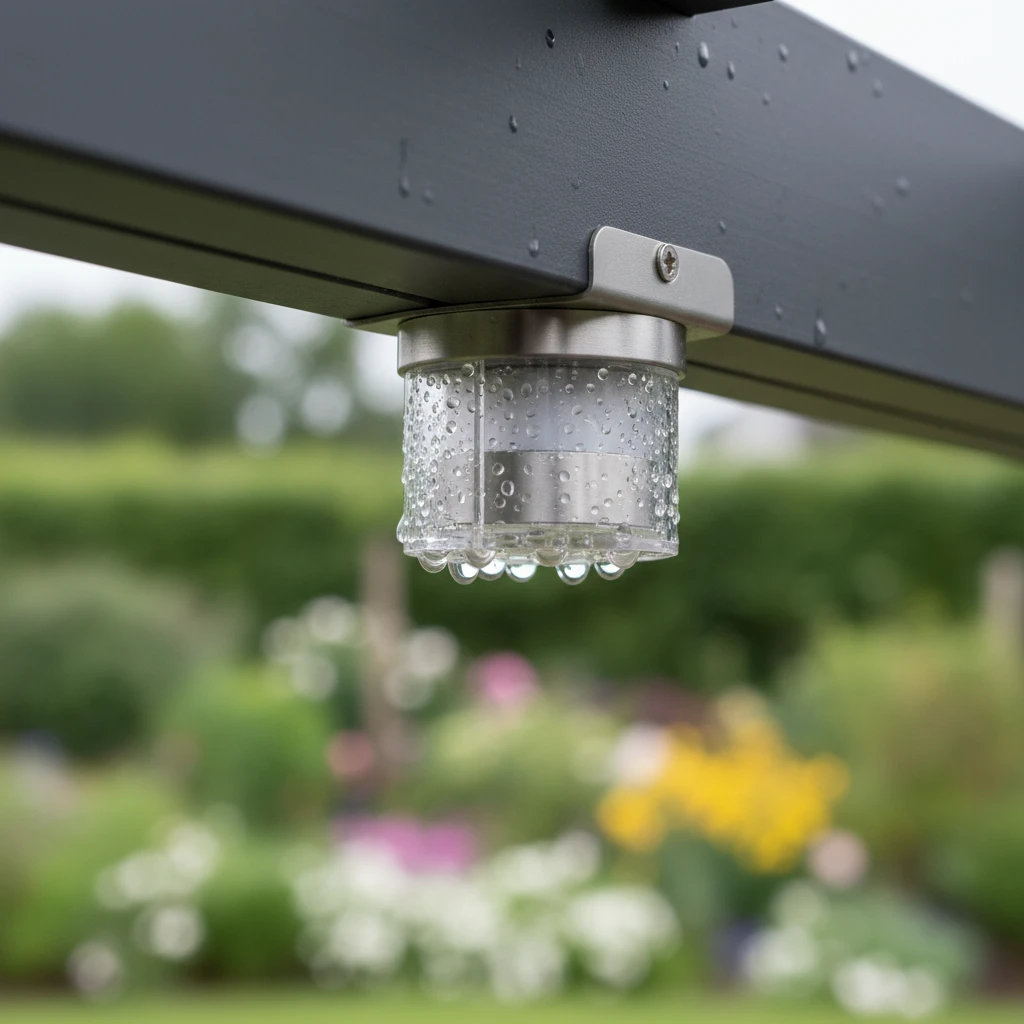
This is the “killer feature” for the New Zealand market. Motorised systems can be integrated with rain and wind sensors.
- Rain Sensors: When moisture is detected, the sensor sends a signal to the motor to close the louvres immediately, protecting your outdoor furniture and cushions even if you aren’t home.
- Wind Sensors: In high-wind zones (common in Wellington or coastal areas), strong gusts can damage louvres if they are caught in the wrong position. Wind sensors can automatically open the louvres slightly to allow airflow to pass through, reducing uplift pressure on the structure.
Smart Home Integration
Modern motorised pergolas often utilize motors from reputable manufacturers like Somfy or Jiecang, which can integrate with home automation systems (e.g., Control4, Apple HomeKit, or Google Home). This allows you to schedule your roof to open in the morning to warm the house and close at midday to keep the interior cool, reducing your reliance on air conditioning.
When is a Manual Louvre Roof the Better Choice?
Despite the dominance of automation, manual crank options remain a viable segment of the market, particularly for specific use cases.
Manual Crank Options for Budget Builds
If the primary constraint of your project is budget, a manual system offers the aesthetic and structural benefits of an aluminium pergola without the cost of motors and electrics. By removing the motor, receiver, remote, and sensors, you can shave a significant portion off the hardware cost. Furthermore, you eliminate the need for an electrician, which is a substantial saving in installation costs.
Simplicity and Off-Grid Locations
For baches in remote locations, garden structures far from the main dwelling, or areas where running 240v power is difficult or impossible, manual louvres are the logical solution. There is a certain peace of mind in a purely mechanical system; there are no circuit boards to fail and no power cuts to worry about. If you are building a pergola at a remote Coromandel bach where power supply is limited, a manual crank ensures you have full control regardless of the grid status.
Cost Difference Analysis: Motorised vs Manual
When searching for “motorised pergola NZ,” price is invariably a top query. It is important to view the cost not just as the price of the motor, but the total installed cost.
The Hardware Cost: Typically, a high-quality European or equivalent tubular motor kit (including remote and receiver) adds between $800 to $1,500 NZD to the price of the pergola kit compared to a manual gearbox.
The Electrical Cost: This is the hidden variable. A motorised system requires a registered electrician to run a protected line from your switchboard to the pergola. Depending on the distance from the house, the complexity of the cable run (underground vs. through roof cavities), and the age of your switchboard, this can add anywhere from $500 to $2,000+ NZD to the project.
The Verdict: Expect a motorised system to cost approximately $1,500 to $3,000 NZD more than a manual equivalent once fully installed and commissioned. However, for most homeowners, this extra cost is amortized over the lifespan of the product and is recovered through the increased utility and property resale value.
Reliability of Motors and Durability in NZ Conditions
A common concern regarding motorised pergolas is the longevity of the electronic components. “Will the motor burn out?” is a frequent question.
Motor Quality Matters
In the New Zealand market, the reliability of the system is directly tied to the brand of motor used. Premium installers utilize motors from established brands like Somfy (France), Teleco (Italy), or high-end Linak (Denmark) linear actuators. These motors are IP-rated (usually IP55 or higher) to withstand water ingress and are designed for thousands of cycles.
Cheaper, imported DIY pergola kits often use generic unbranded motors. These are more prone to failure due to moisture intrusion or gearing fatigue. When investing in a motorised pergola NZ, always ask for the motor specifications and warranty. A standard warranty for a quality motor is 5 years.
Mechanical Resilience
Ironically, manual systems can sometimes be less reliable if mistreated. Over-torquing a manual crank (trying to force the louvres past their closing point) can strip the gears in the manual gearbox. Motorised systems have electronic limit switches set during installation, meaning the motor automatically stops at the perfect open and closed positions, preventing mechanical strain on the louvres.
Installation and Electrical Considerations
Choosing between motorised and manual also dictates the complexity of your installation process.
The Manual Installation
A manual pergola is a “dry” install. It requires builders or competent DIYers to assemble the frame and blades. Once the structure is up, the crank is attached, and the job is done. This is ideal for retrofitting into existing spaces where you do not want to cut into cladding or dig trenches for cables.
The Motorised Installation
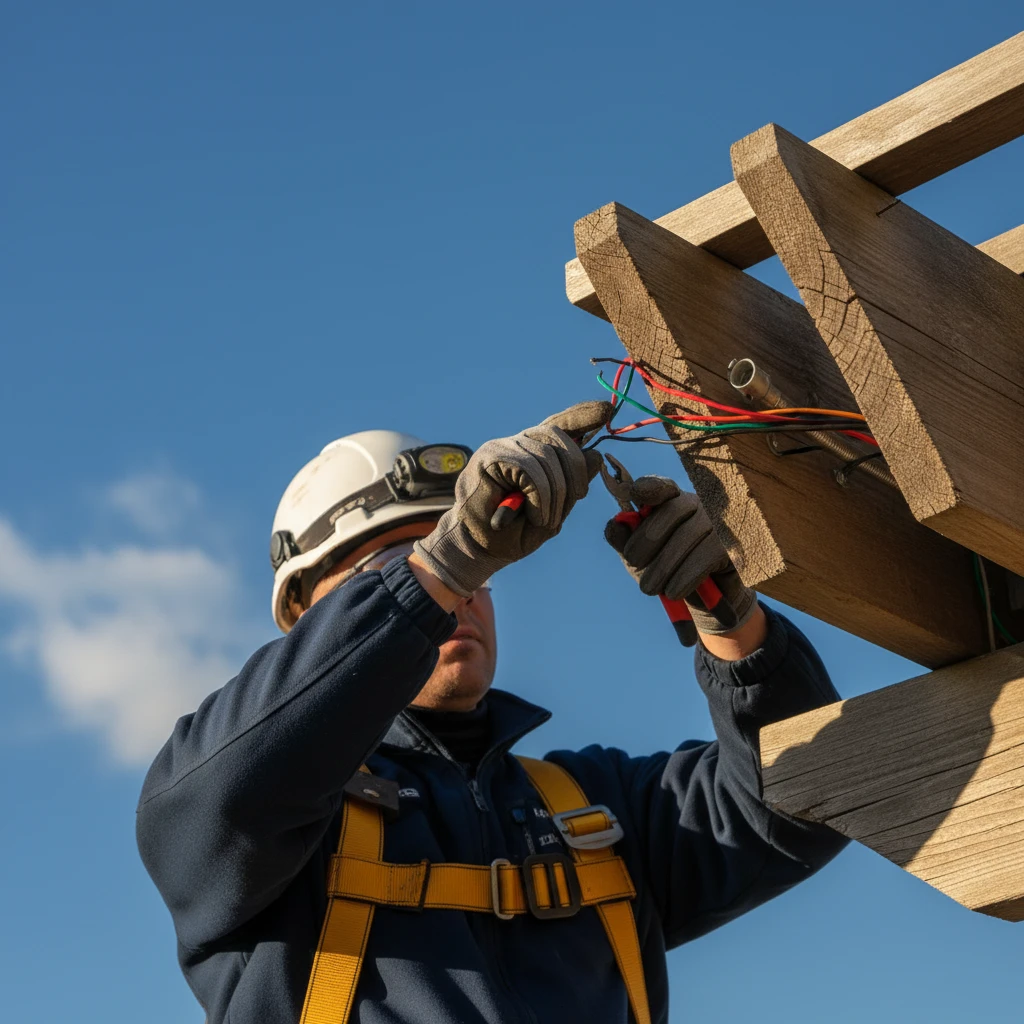
A motorised installation requires coordination. The frame is erected, but the motor cable must be fed through the beams (usually pre-drilled hidden channels) before the roof is closed up. An electrician must be present to terminate the connection.
Pro Tip: If you are building a new home, pre-wire for a motorised pergola even if you aren’t installing it immediately. Having a power cable run to the soffit or patio area during the framing stage saves thousands of dollars in retrofitting costs later.
Final Verdict: Which System Suits Your Lifestyle?
The choice between a motorised and manual louvre system ultimately hinges on your budget and how you intend to use the space.
Choose a Motorised Pergola if:
- You want a seamless “indoor-outdoor” flow where the roof reacts to the weather automatically.
- You value convenience and want to operate the roof from your seat or smartphone.
- You live in an area with unpredictable weather (most of NZ) and want rain sensors to protect your furniture.
- You are looking to add maximum resale value to a modern home.
Choose a Manual Louvre System if:
- You have a strict budget and want to prioritize the structure size over automation.
- The site is off-grid or running power to the location is prohibitively expensive.
- You prefer a purely mechanical solution with zero electronic maintenance.
For the quintessential New Zealand outdoor experience, the motorised pergola is the industry standard. The ability to sit comfortably with a glass of wine while the roof automatically closes at the first sign of drizzle is a luxury that quickly becomes a necessity.
Do motorised pergolas use a lot of electricity?
No, motorised pergolas consume very little electricity. The motors only draw power during the few seconds it takes to open or close the louvres. In standby mode (waiting for a remote signal or rain sensor trigger), the power consumption is negligible, similar to a TV in standby mode.
Can I open a motorised pergola if there is a power cut?
Generally, no. Most standard tubular motors lock in place when power is lost. However, battery backup systems are available as optional extras. If you live in an area with frequent outages, ask your supplier about “manual override” motors which allow for hand-crank operation during power failures.
Are motorised louvres noisy?
High-quality motors are designed to be very quiet, emitting only a low hum during operation. The sound of the aluminium blades gently interlocking is often louder than the motor itself. Cheaper motors may be noisier, so it is worth visiting a showroom to hear the system in action.
How long do the motors last on a pergola?
Reputable European motors (like Somfy) are tested for tens of thousands of cycles and typically come with a 5 to 7-year warranty. With proper installation and normal usage, a quality motor can last 10-15 years before requiring replacement.
Can I upgrade a manual pergola to motorised later?
It is possible, but it can be difficult and expensive. You would need to replace the manual gearbox with a motor, which may require dismantling parts of the roof. The biggest challenge is usually getting power to the structure after it is built. It is much more cost-effective to install the motor initially.
Do rain sensors work instantly?
Rain sensors are highly sensitive but not instantaneous. They usually require a certain level of moisture accumulation on the sensor plate to trigger. This means a few drops might get through before the roof fully closes. They are designed to prevent soaking, not to stop every single drop from the first second of a sprinkle.