
Mitre 10 pergola kitsets offer a cost-effective, DIY-focused solution for standard outdoor spaces, typically featuring lightweight aluminium frames and manual louvre operation. In contrast, custom builds provide heavy-duty structural integrity, precise architectural fit-to-measure sizing, and seamless integration of automation, making them superior for NZ’s high wind zones and coastal environments despite the higher initial investment.
When upgrading your New Zealand outdoor living area, the decision often boils down to convenience versus architectural permanence. While big-box retailers like Mitre 10 provide accessible entry points into the louvre roof market, discerning homeowners must weigh these against the long-term benefits of bespoke engineering. This guide analyzes the critical differences to help you decide which investment aligns with your property’s value.
Standard Sizes vs. Architectural Fit-to-Measure
One of the most significant limitations highlighted in mitre 10 pergola reviews nz is the restriction of fixed dimensions. Mass-produced kitsets are manufactured in predetermined sizes—commonly 3x3m, 3x4m, or 3x6m. While this standardization keeps manufacturing costs low, it rarely aligns perfectly with existing decks, patios, or architectural footprints.
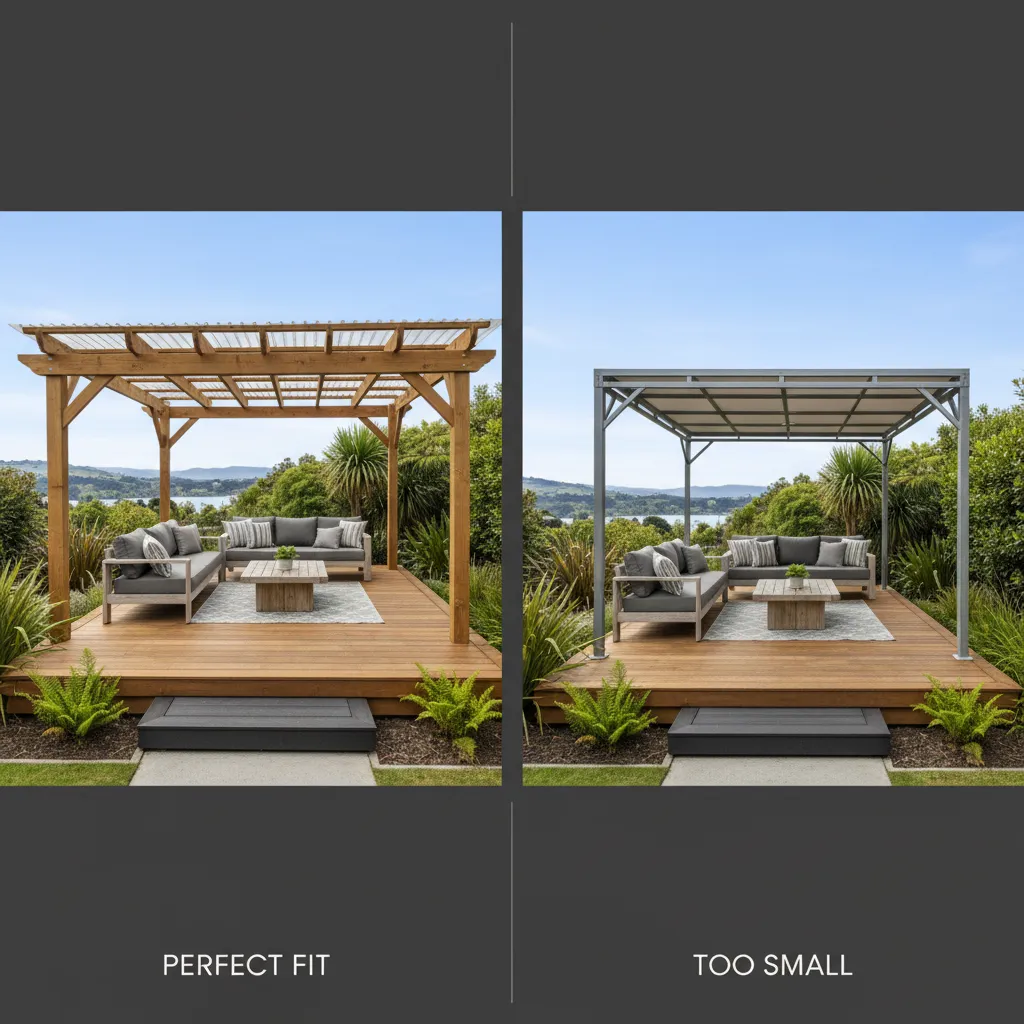
The “Gap” Problem
If your outdoor entertaining area is 3.5 meters wide, a 3-meter kitset leaves a 500mm gap that exposes furniture to rain and sun. Conversely, a 4-meter kit usually requires cutting into cladding or extending the deck to accommodate the posts. Custom builds are engineered to the millimeter, allowing for:
- Seamless House Connections: Attaching directly to the fascia or soffit without awkward overhangs.
- Post Placement Flexibility: positioning legs to avoid obstructing views or doorways.
- Height Variations: Accommodating sloped patios or specific window heights.
Installation Difficulty: DIY Reality Check
The allure of a “weekend project” drives many sales, but the reality of assembling a large aluminium structure can be daunting. Mitre 10 kitsets generally come flat-packed with hundreds of components. Reviews frequently mention that while the price is attractive, the assembly process requires significant patience, specific tools, and often more than two people.
Common Installation Pain Points
Many homeowners underestimate the complexity of squaring a structure. If a pergola is not perfectly square and level, the louvres will not operate correctly, leading to leaks and jamming. Key challenges include:
- Foundation Requirements: Kitsets require concrete pads for stability. You cannot simply bolt them to standard decking boards without reinforcing the subframe, a step often missed by DIYers.
- Instruction Clarity: Generic manuals often cover multiple models, leading to confusion during critical assembly steps.
- Handling Weight: Even lightweight aluminium beams become unwieldy at 4 meters long, posing safety risks during lifting.
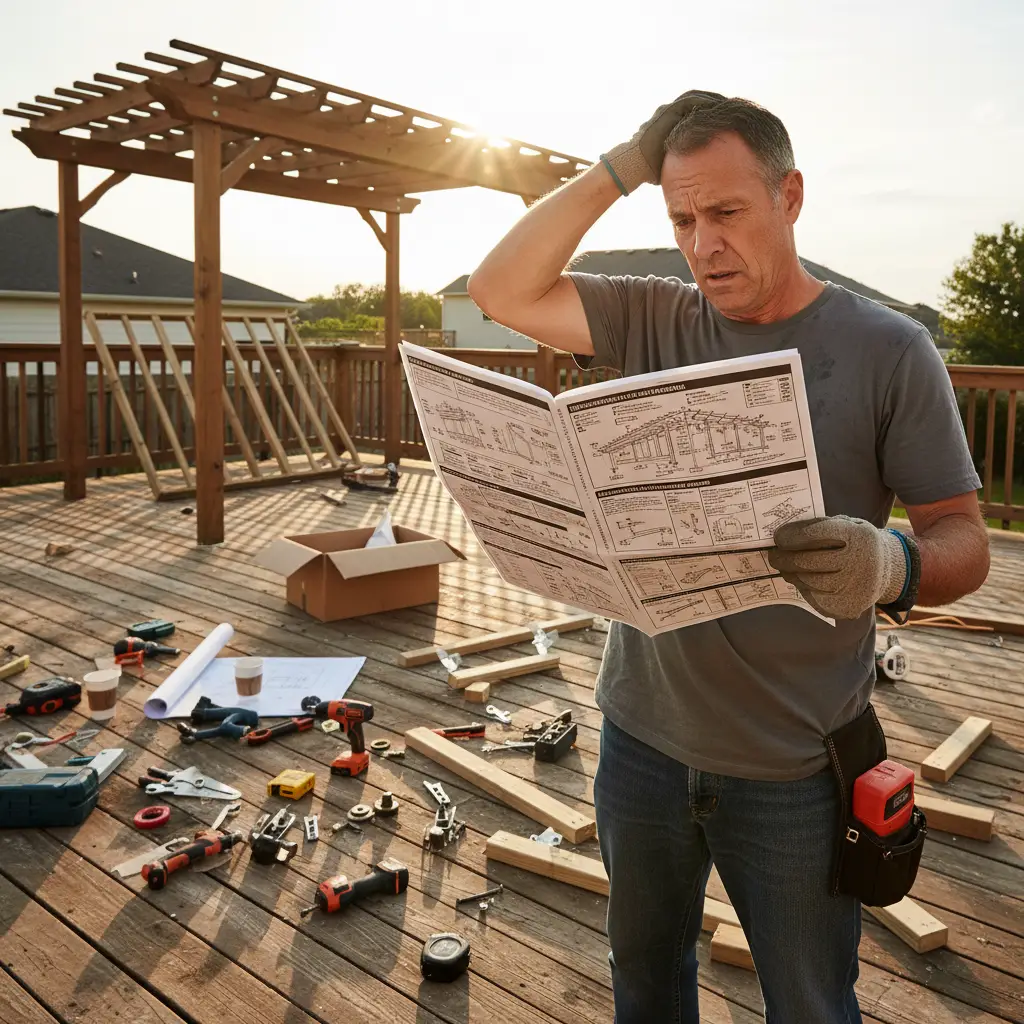
In contrast, custom build providers handle the entire consented process (if required), including engineering calculations for wind loading and professional installation that guarantees warranties are preserved.
Material Durability in NZ Coastal Climates
New Zealand’s environment is notoriously harsh on outdoor structures. High UV radiation and salt-laden air require superior materials to prevent corrosion and fading. This is where the divergence between budget kitsets and professional systems becomes most apparent.
Aluminium Grade and Thickness
Kitsets: Typically utilize thinner gauge aluminium to reduce shipping weight and cost. While sufficient for calm days, reviews often note rattling or flexing during high winds. The powder coating is often standard grade, which may chalk or fade faster under NZ’s intense sun.
Custom Builds: Utilize structural-grade aluminium (often 6060 or 6063 T6) with significantly thicker profiles. This allows for wider spans between posts (up to 6+ meters) without sagging. The finishing usually involves Dulux Duralloy or Duratec powder coating, specifically designed to withstand coastal salt spray for 10-20 years.
Wind Zone Ratings
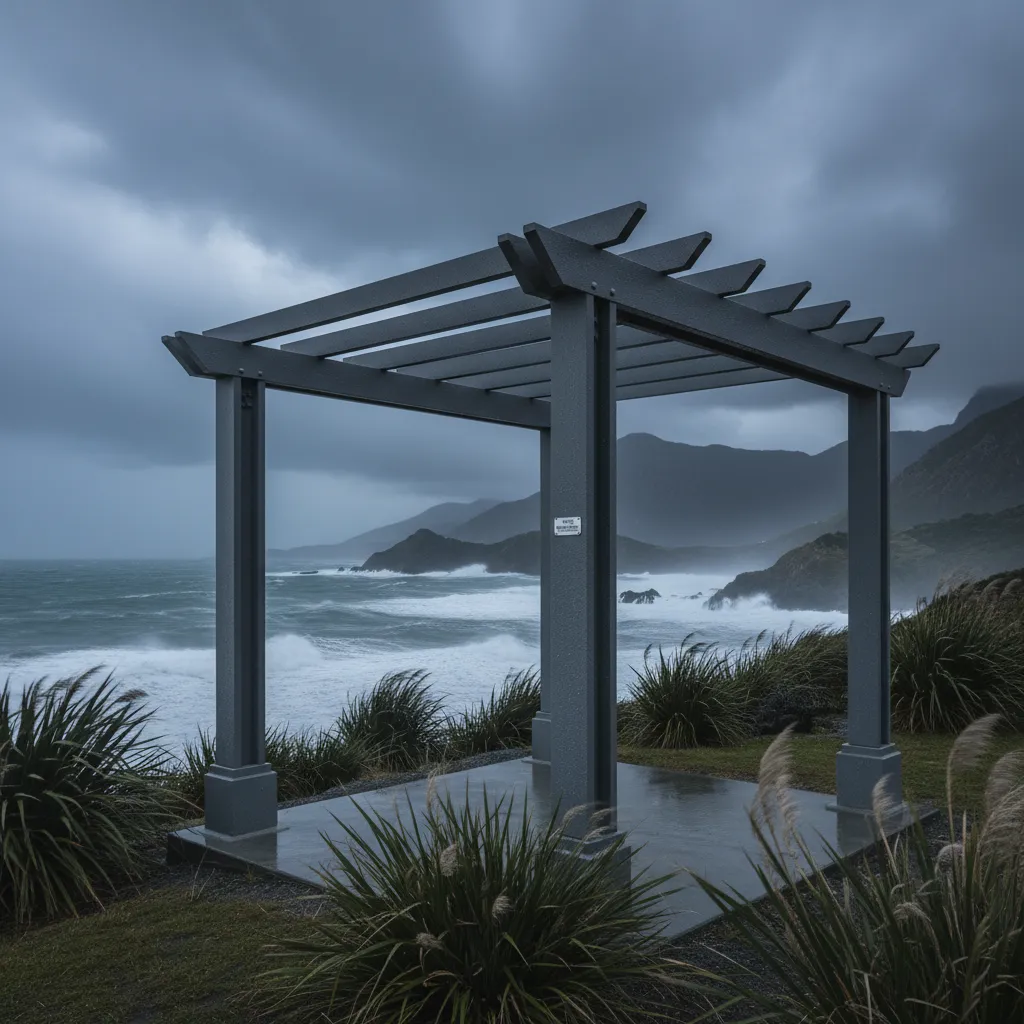
Most kitsets are rated for Low to Medium wind zones. If you live in a High or Very High wind zone (common in Wellington or coastal Auckland), a standard kitset may not be code-compliant or insurable. Custom pergolas are engineered specifically for the site’s wind zone, often capable of withstanding gusts exceeding 150km/h.
Customization: Blinds, Lights, and Automation
A pergola is rarely just a roof; it is the hub of an outdoor room. The ability to integrate accessories is a major differentiator.
Retrofitting vs. Integrated Design
With Mitre 10 kitsets, adding accessories is often a retrofit exercise. Adding outdoor blinds (like Ziptrak) to a kitset can be problematic because the legs may not be substantial enough to handle the tension of the blinds, or the profile shape doesn’t allow for a flush mount. Lighting is typically limited to stick-on LED strips that require external cabling.
Custom builds offer “Architectural Integration”:
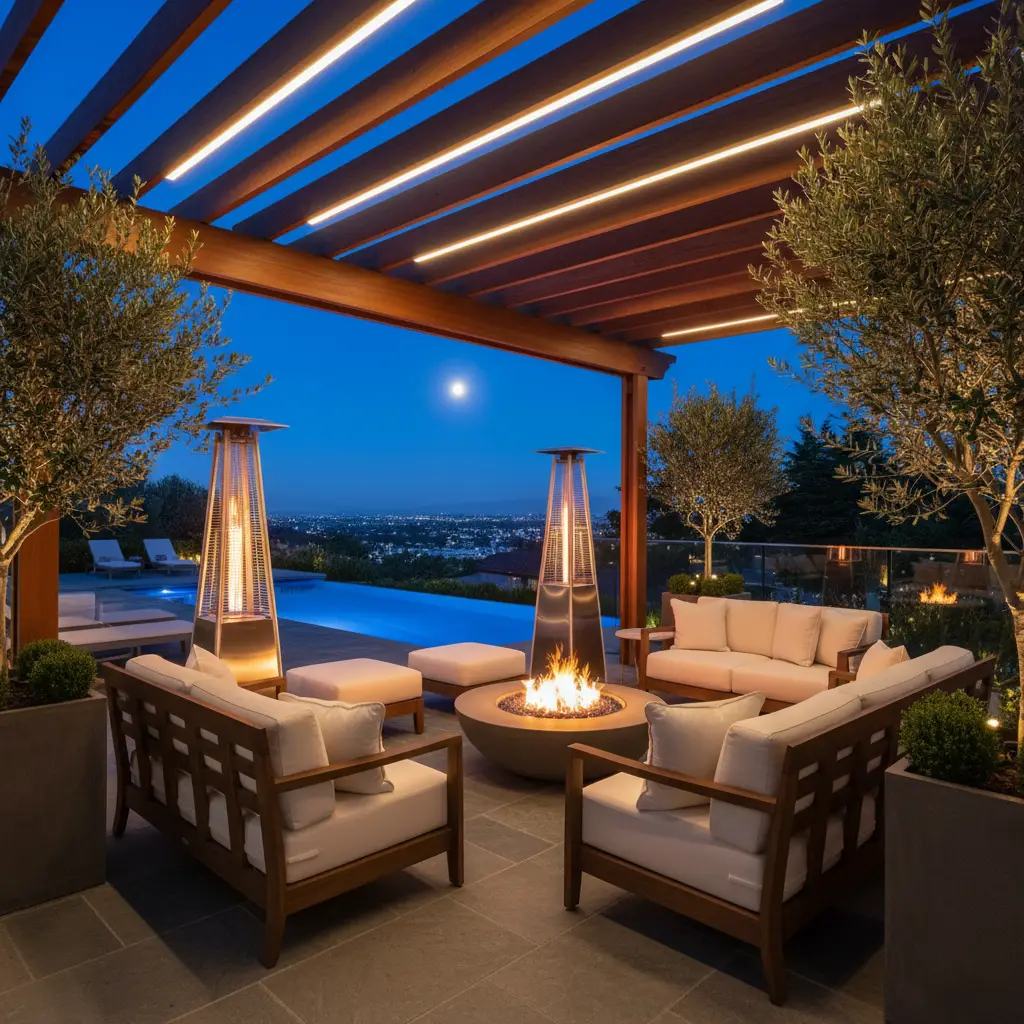
- Hidden Wiring: All cabling for lights, heaters, and motors is concealed inside the beams for a clean look.
- Integrated Tracks: Legs often feature built-in tracks for blinds to slide seamlessly, eliminating gaps where wind can enter.
- Rain Sensors: Automated systems close the louvres instantly when rain is detected, protecting your furniture even when you aren’t home—a feature rarely found in manual kitsets.
Cost Analysis: Upfront Savings vs. Long-Term Value
The primary driver for choosing a kitset is price. A standard 3x3m manual louvre kit might cost between $3,000 and $6,000 NZD. A comparable custom automated system, fully installed, usually starts from $12,000 to $15,000+ NZD.
Is the Premium Justified?
When reading mitre 10 pergola reviews nz, pay attention to the timeline of the review. Initial satisfaction is often high due to the low price, but follow-up reviews often mention issues with mechanism failure, leaking gutters, or fading paint after 2-3 years.
Value Proposition:
- Resale Value: A custom, professionally installed structure is considered a permanent addition to the home’s footprint, often adding more than its cost to the property value. Kitsets are often viewed as temporary chattels.
- Warranty: Custom builds typically come with a 10-15 year structural warranty and a 5-year motor warranty. Kitsets usually offer a 1-3 year consumer guarantee, which may not cover wind damage.
Frequently Asked Questions
Do I need a building consent for a pergola in NZ?
generally, pergolas up to 20 square meters (or 30 square meters if built by a Licensed Building Practitioner) are exempt from building consent, provided they are their own height away from boundaries and do not capture water into a stormwater system (unless authorized). However, they must still comply with the Building Code regarding structural integrity and stormwater disposal.
Are Mitre 10 pergolas waterproof?
Most louvre kitsets are “weather-resistant” rather than fully waterproof. While the louvres interlock to stop rain, the gutter systems in budget kits are often shallow and can overflow in heavy NZ downpours. Custom builds feature deep, internal guttering systems engineered to handle high rainfall volumes without leaking.
Can I install a kitset pergola on a wooden deck?
Yes, but you must reinforce the deck structure. Simply screwing the base plate into decking timber is unsafe. You must add blocking (nogs) underneath the deck boards where the posts sit to ensure the bolts grip into structural timber. For high wind zones, bolting through to the piles or bearers is recommended.
How long do aluminium pergolas last near the ocean?
A high-quality custom aluminium pergola with marine-grade powder coating can last 15-20+ years near the ocean with regular cleaning. Standard kitsets with lower-grade finishes may show signs of oxidation or paint bubbling within 3-5 years in coastal spray zones.
Can I automate a manual Mitre 10 pergola later?
Generally, no. Manual kitsets use a specific gearbox and crank handle mechanism that is not designed to accept a motor. The structural profiles are also usually too hollow to house internal motors and wiring. If you want automation, it is best to purchase an automated system from the start.
What is the best wind rating for a pergola in New Zealand?
New Zealand is divided into wind zones. For most urban areas, a design capable of withstanding “High” wind zone loads (approx 44m/s) is recommended. In exposed coastal or hill-top areas, you may need “Very High” or “Extra High” design, which almost always requires a custom-engineered solution rather than a store-bought kit.