
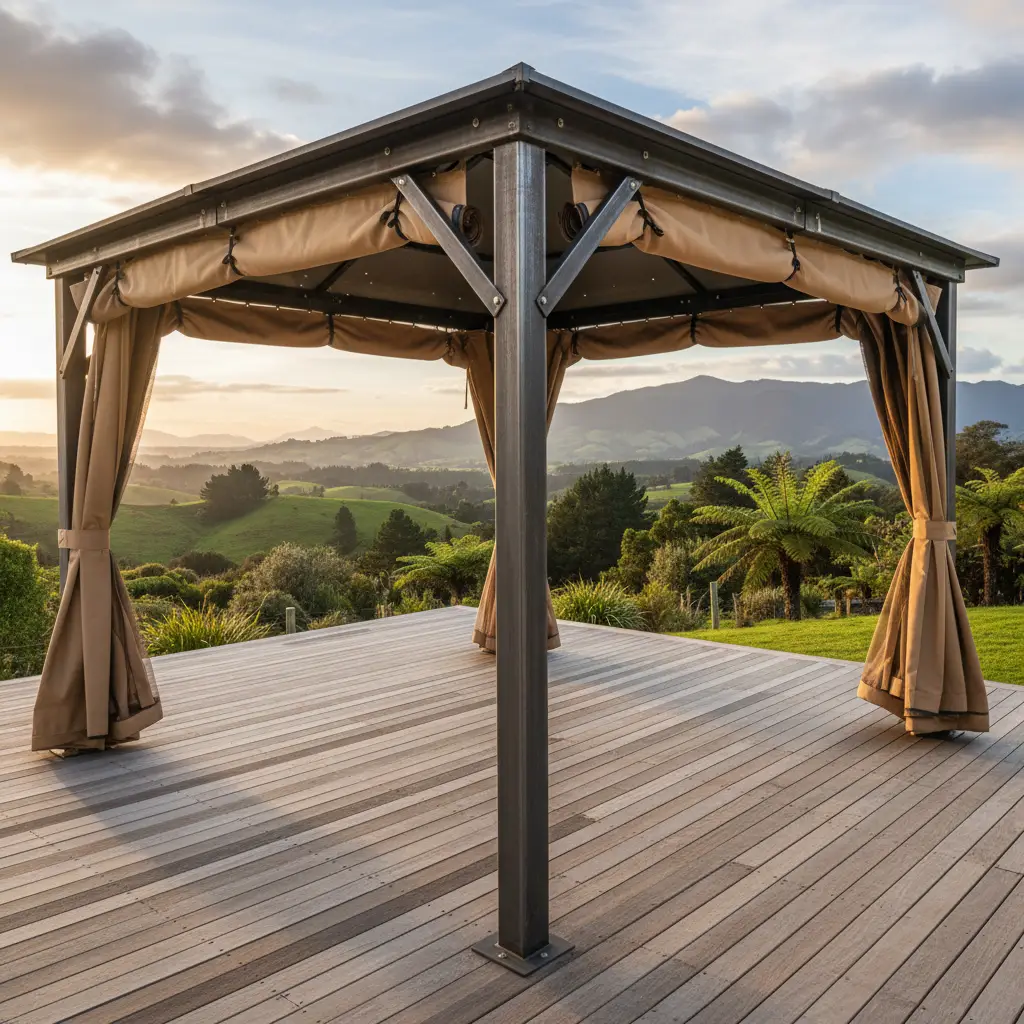
A gazebo with sides is a versatile outdoor shelter equipped with adjustable curtains, solid walls, or mesh netting attached to the frame. These integrated side panels provide essential protection against wind, rain, and insects while offering enhanced privacy and shade control, making them the ideal solution for adaptable outdoor living in variable climates like New Zealand.
Investing in a high-quality gazebo with sides transforms a simple garden structure into a functional, all-weather outdoor room. Whether you are looking to host dinner parties without the intrusion of mosquitoes or require a windbreak for your spa pool, understanding the nuances of sidewall configurations is critical for making the right purchase.
What Are the Main Benefits of a Gazebo with Sides?
In the realm of outdoor living, the standard canopy provides overhead shade, but it is the addition of sides that unlocks the true potential of the structure. A gazebo with sides offers a dynamic solution to the “four seasons in one day” phenomenon often experienced in New Zealand. By integrating walls, you gain control over your environment.
The primary benefit is adaptability. Unlike a permanent conservatory, a gazebo with retractable sides allows you to open the space entirely on a calm, sunny day or enclose it within seconds when the wind picks up or the sun angle becomes glaring. This flexibility extends the usability of your patio or garden well into the shoulder seasons of autumn and spring.
Furthermore, sides provide UV protection from low-angle sunlight. While a roof protects you at noon, late afternoon sun can be blinding and harmful. Solid curtains block these rays, protecting both your skin and your outdoor furniture from fading.

Why Is Mosquito Netting Essential for NZ Gardens?
One of the most popular configurations for a gazebo with sides is the inclusion of mosquito netting (mesh walls). While New Zealand does not have the dangerous vectors found in tropical climates, sandflies and mosquitoes can ruin an evening outdoors.
The Barrier Function
High-quality mesh netting acts as a physical barrier that allows you to enjoy the fresh air without the annoyance of biting insects. The weave of the mesh is critical; it must be tight enough to stop small midges and sandflies but open enough to preserve visibility and ventilation. A “no-see-um” grade mesh is often recommended for coastal NZ areas where sandflies are prevalent.
Visual Continuity
Unlike solid curtains, netting maintains a visual connection with your garden. You can supervise children playing on the lawn or simply admire your landscaping while remaining inside the protective zone. This transparency prevents the gazebo from feeling claustrophobic, retaining the open-air ambiance that defines outdoor living.
How Do Solid Walls Enhance Privacy and Comfort?
While netting handles pests, solid walls address privacy and heavy weather. For homeowners in suburban settings with neighbors in close proximity, a gazebo with sides made of solid polyester or canvas creates an instant, secluded sanctuary.
Creating an Outdoor Room
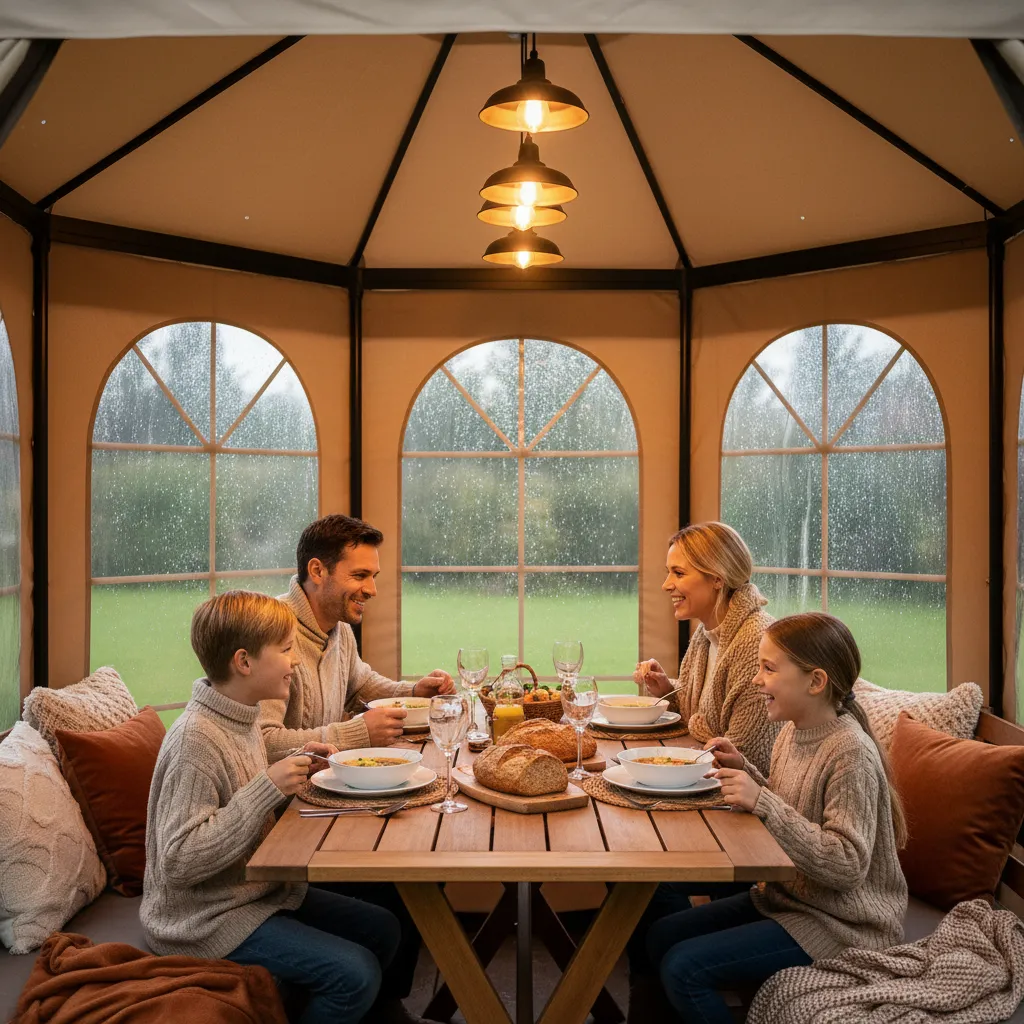
When all solid sides are deployed, the gazebo effectively becomes a tent or an outdoor room. This is particularly useful for:
- Spa Enclosures: Keeping the wind off wet skin and blocking the view from overlooking balconies.
- Home Offices: Reducing glare on laptop screens and minimizing distractions.
- Dining Areas: Preventing wind from blowing napkins away or cooling food too quickly.
Wind and Rain Protection
Solid walls are typically treated with water-resistant coatings (PU or PVC). In New Zealand, where horizontal rain is not uncommon, these walls keep the interior dry. However, it is vital to anchor the gazebo securely when using solid sides, as they essentially act as sails, catching the wind and increasing the uplift force on the structure.
Zipper vs. Velcro: Which Attachment Style Is Better?
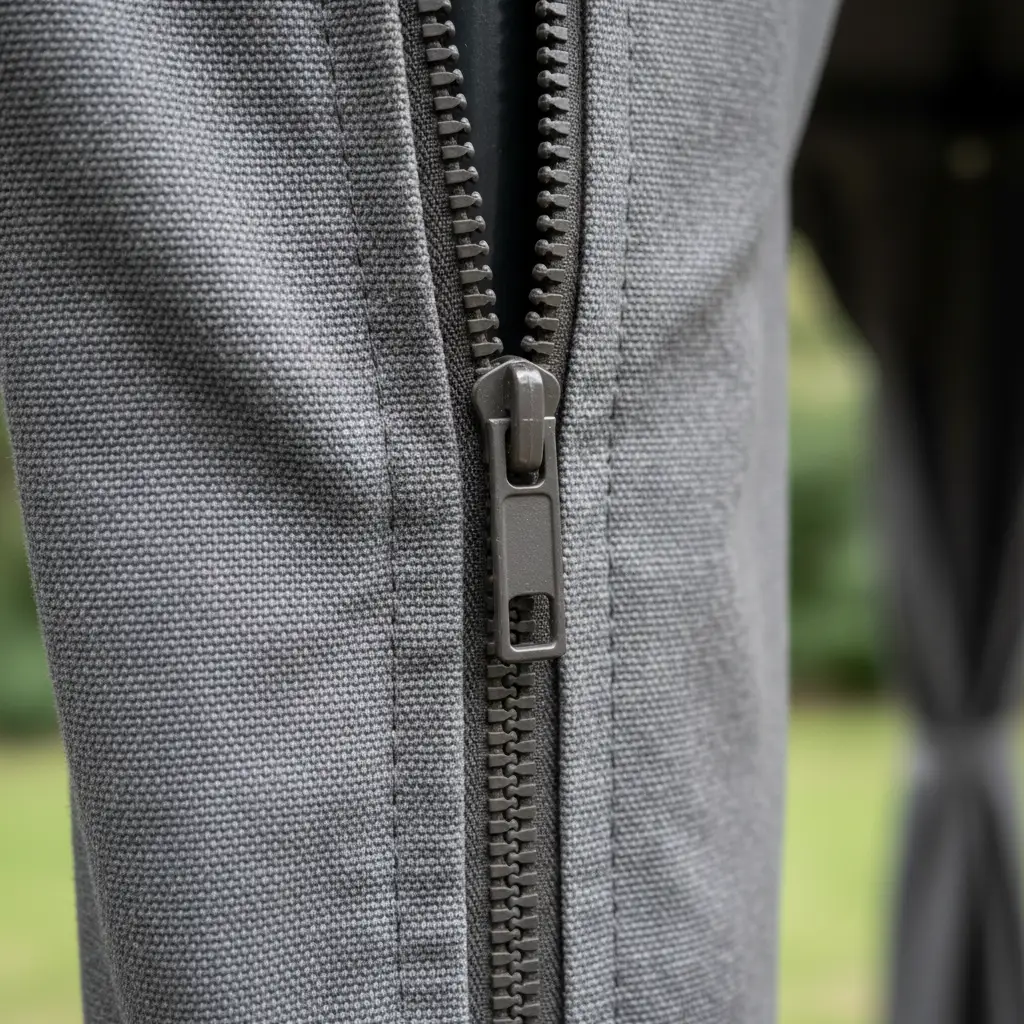
When shopping for a gazebo with sides, you will encounter different mechanisms for attaching the walls to each other and to the frame. The two most common methods are industrial zippers and Velcro straps.
The Case for Zippers
Zippers are generally superior for full enclosure. High-quality, double-sided zippers allow you to open and close the walls from both inside and outside. When zipped together, the walls form a seamless seal. This is crucial for:
- Insect Control: Velcro often leaves gaps that persistent bugs can navigate through. Zippers eliminate these gaps.
- Wind Resistance: A zipped connection is stronger and less likely to burst open during a gust compared to Velcro tabs which can peel apart under tension.
The Case for Velcro
Velcro is often found on budget-friendly models or as a secondary attachment method (e.g., securing the curtain to the leg of the gazebo). While easier to replace if damaged, Velcro straps do not provide the airtight seal of a zipper. They are best suited for decorative curtains where absolute weatherproofing is not the primary goal.
Track vs. Ring Systems
Beyond connecting the walls to each other, consider how they attach to the frame.
- Double Track System: This is the premium standard. It allows you to hang both mosquito netting and solid curtains simultaneously on separate rails. You can engage the mesh, the curtains, or both, independently.
- Clip/Ring System: Common on pop-up gazebos, where sides are clipped to the truss bars. This is less seamless but highly portable.
How to Manage Airflow in Enclosed Gazebos
A common concern with fully enclosed gazebos is the “greenhouse effect.” If a gazebo with sides is left fully zipped up in direct sunlight, the internal temperature can rise rapidly. Managing airflow is therefore essential for comfort.
Vented Roofs
Always prioritize a gazebo with a double-tiered roof or roof vent. As hot air rises, it needs an escape route. A vented roof allows this hot air to exit at the peak, drawing cooler air in from the bottom, even when the sides are mostly closed. Without a roof vent, an enclosed gazebo can become stiflingly hot.
Strategic Wall Deployment
You rarely need to close all four sides simultaneously unless it is raining heavily or you are storing items overnight. For optimal cooling:
- Identify the prevailing wind direction.
- Open the wall on the leeward side (away from the wind) and the windward side slightly to create a cross-breeze.
- Use the mesh walls on the sunny side to cut glare while allowing air passage, and leave the shady sides open.
Choosing the Right Materials for New Zealand Weather
The longevity of your gazebo with sides depends entirely on the materials used. The NZ sun has high UV levels that can degrade inferior fabrics rapidly.
Fabric Density (Denier)
Look for fabric specifications listed in Denier (D) or GSM (grams per square meter).
- Polyester: The most common material. A rating of 300D to 600D is recommended for durability. Anything lower (like 160D) is lightweight and prone to tearing in wind.
- PVC Coating: Ensure the fabric has a PVC or PU coating for waterproofing. However, be aware that heavy PVC coatings can stiffen in winter frosts.
- Solution-Dyed Acrylic: The gold standard. The color goes all the way through the fiber, making it incredibly resistant to fading. It is more expensive but lasts years longer in the NZ sun.
Frame Strength
The added weight and wind resistance of sides put extra stress on the frame.
- Steel: Strong and heavy, providing good anchorage, but prone to rust if the powder coating is scratched.
- Aluminum: Rust-proof and lightweight. If choosing aluminum, ensure the leg profile is thick (at least 50mm for hex legs) to prevent buckling under the wind load created by the sides.
Maintenance and Care for Gazebo Curtains
To ensure your gazebo with sides lasts for many seasons, regular maintenance is required. Neglecting the fabric can lead to mold, mildew, and mechanical failure of the zippers.
Cleaning Protocol
Do not machine wash gazebo sides unless the manufacturer explicitly states it is safe. The agitation can strip the waterproof coating. Instead:
- Spread the walls on a clean tarp or driveway.
- Use a soft brush and a mild soap solution (warm water and dish soap).
- Gently scrub stains and bird droppings.
- Rinse thoroughly with a hose.
- Crucial: Allow the sides to dry completely before folding or reattaching. Storing damp curtains is the fastest way to grow mold.
Winter Storage
If you have a pop-up or semi-permanent structure, it is highly advisable to remove the sides during the winter months or during storm warnings. While the frame might withstand a gale, the sides act as sails and can cause the entire structure to take flight or bend. Store the sides in a dry, rodent-proof container during the off-season.
Lubricating Zippers
Salt air in coastal NZ regions can corrode metal zipper pulls and cause plastic teeth to stick. Apply a silicone-based lubricant or simple beeswax to the zippers once a season to ensure they glide smoothly and do not snag the fabric.
People Also Ask
Can you add sides to any gazebo?
Not always. While universal side panels exist that attach via Velcro straps, they fit best on standard 3x3m pop-up gazebos. Permanent hard-top gazebos usually require specific track-mounted curtains designed by the manufacturer. Always check your frame’s dimensions and attachment points before buying universal sides.
Are gazebo sides waterproof?
Most solid gazebo sides are water-resistant rather than fully waterproof. They will shed rain effectively due to coatings like PU or PVC. However, during heavy driving rain, mist may penetrate through the zippers or seams unless they are taped. Mesh sides are not waterproof.
How do you secure a gazebo with sides in the wind?
When sides are attached, wind load increases significantly. You must use heavy-duty leg weights (sandbags or cast iron) and guy ropes staked into the ground. In high winds (over 30km/h), it is safer to unzip and roll back the sides to allow wind to pass through the structure rather than pushing against it.
What is the difference between mesh and solid gazebo walls?
Mesh walls (netting) are designed primarily for insect protection and maintaining airflow/visibility. Solid walls are made from polyester or canvas and are designed to provide privacy, block UV rays, stop wind, and repel rain. Many premium gazebos include both on a double-track system.
Do gazebo sides help retain heat?
Yes, solid gazebo sides can significantly retain heat, especially if used in conjunction with an outdoor heater. By blocking the wind and trapping a layer of air, they can raise the internal temperature by several degrees, making outdoor dining possible on cooler evenings.
How do I clean mold off gazebo curtains?
Mix a solution of one part white vinegar to three parts warm water. Use a soft brush to scrub the affected areas gently. For stubborn mold, a specialized outdoor fabric cleaner can be used. Avoid bleach as it can damage the UV coating and discolor the fabric. Always dry fully in the sun.