
When browsing gazebos for sale NZ, buyers should prioritize frame durability—typically opting for heavy-duty aluminium or powder-coated steel—and high-denier, UV-resistant canopy fabrics. The ideal choice depends on intended use: pop-up models offer portability for events and camping, while permanent timber or metal structures provide robust, year-round outdoor living solutions capable of withstanding New Zealand’s variable weather conditions.
Finding the perfect outdoor shelter transforms a simple backyard into a functional living space or turns a market stall into a professional storefront. In New Zealand, where the sun is harsh and the winds can be unpredictable, selecting the right gazebo requires a careful balance of structural integrity, material quality, and aesthetic appeal. Whether you are looking for a temporary shade solution for summer barbecues or a permanent fixture for year-round entertainment, understanding the technical specifications of modern gazebos is essential.
Pop-up vs Permanent Gazebos: Which Suits Your Lifestyle?
The first decision when filtering through gazebos for sale NZ is determining the permanence of the structure. This choice dictates not only the price point but also the longevity and utility of the shelter.
The Convenience of Pop-Up Gazebos
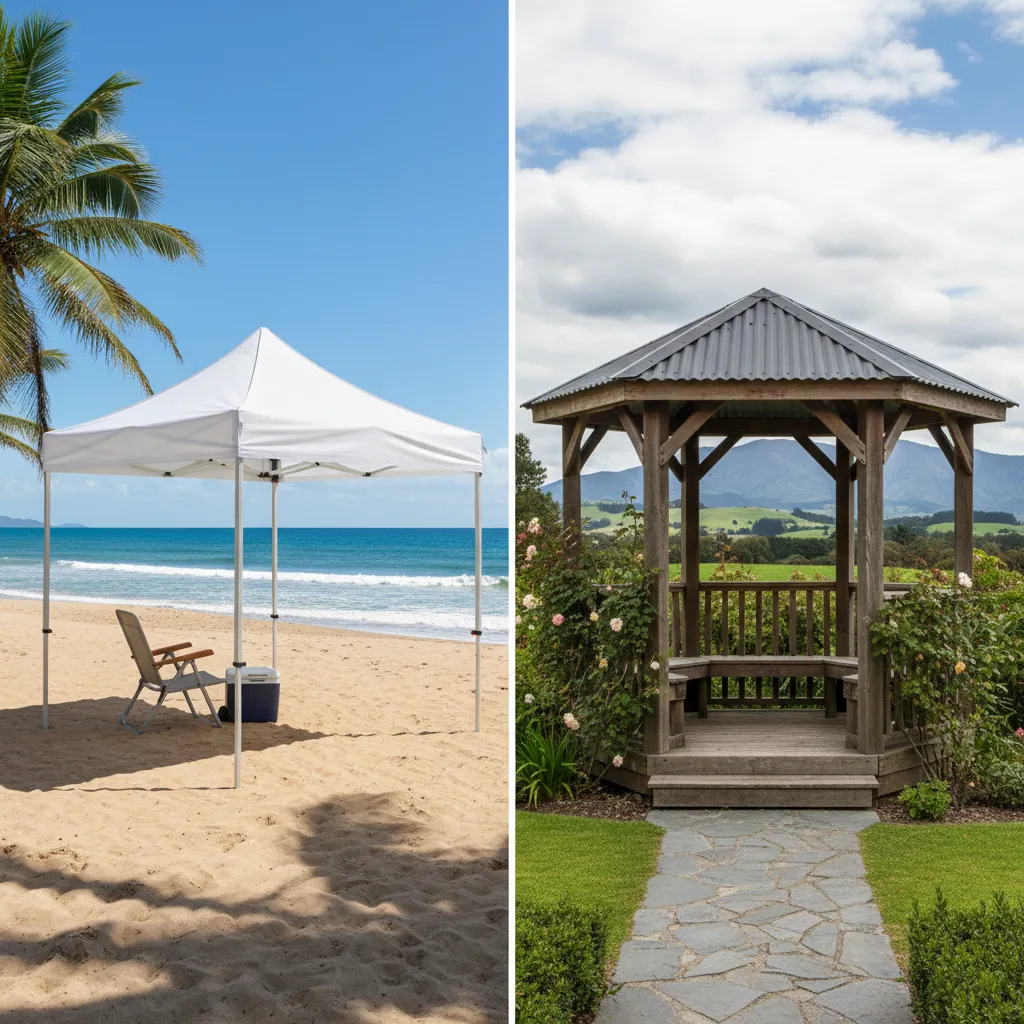
Pop-up gazebos, often referred to as marquees or instant canopies, are designed for mobility and speed. They utilize a concertina frame mechanism that allows the structure to be erected in under sixty seconds by one or two people. These are the gold standard for market vendors, camping trips, and temporary garden parties.
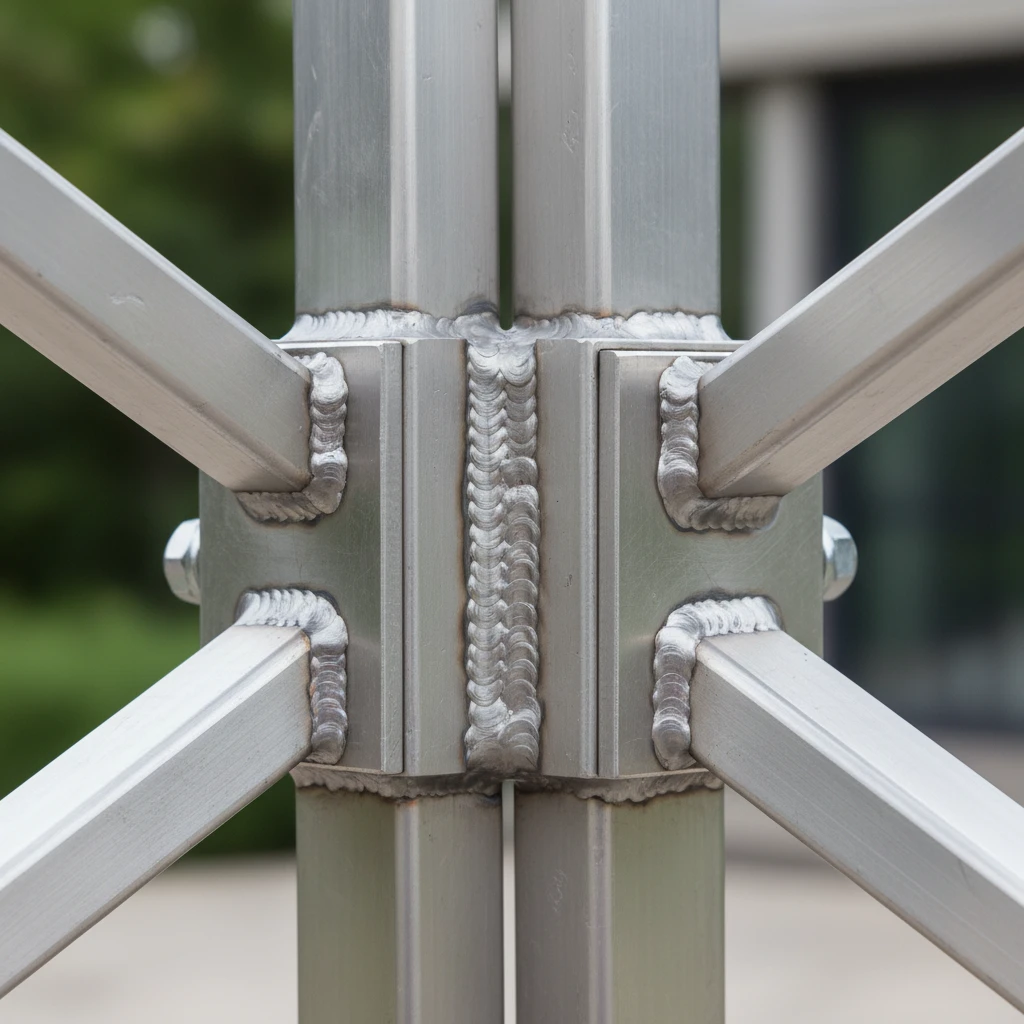
However, not all pop-ups are created equal. Entry-level models often feature plastic joints and thin steel legs, suitable only for calm days. Commercial-grade pop-ups feature hex-frame aluminium legs (often 40mm to 50mm thick) and cast alloy joints, making them robust enough for regular trade use.
The Durability of Permanent Structures
Permanent gazebos are architectural additions to your property. Usually constructed from treated timber, heavy-gauge steel, or aluminium with polycarbonate roofing, these structures are bolted into concrete pads or decking. They are designed to stay up year-round, handling snow loads and high winds that would destroy a portable unit. While the upfront investment and installation effort are higher, they extend your home’s footprint and add value to the property.
Choosing the Right Size for Your Space
Size selection is critical to ensuring your gazebo is functional without overwhelming your outdoor area. The most common query regarding dimensions is typically: “What size gazebo do I need for a family gathering?”
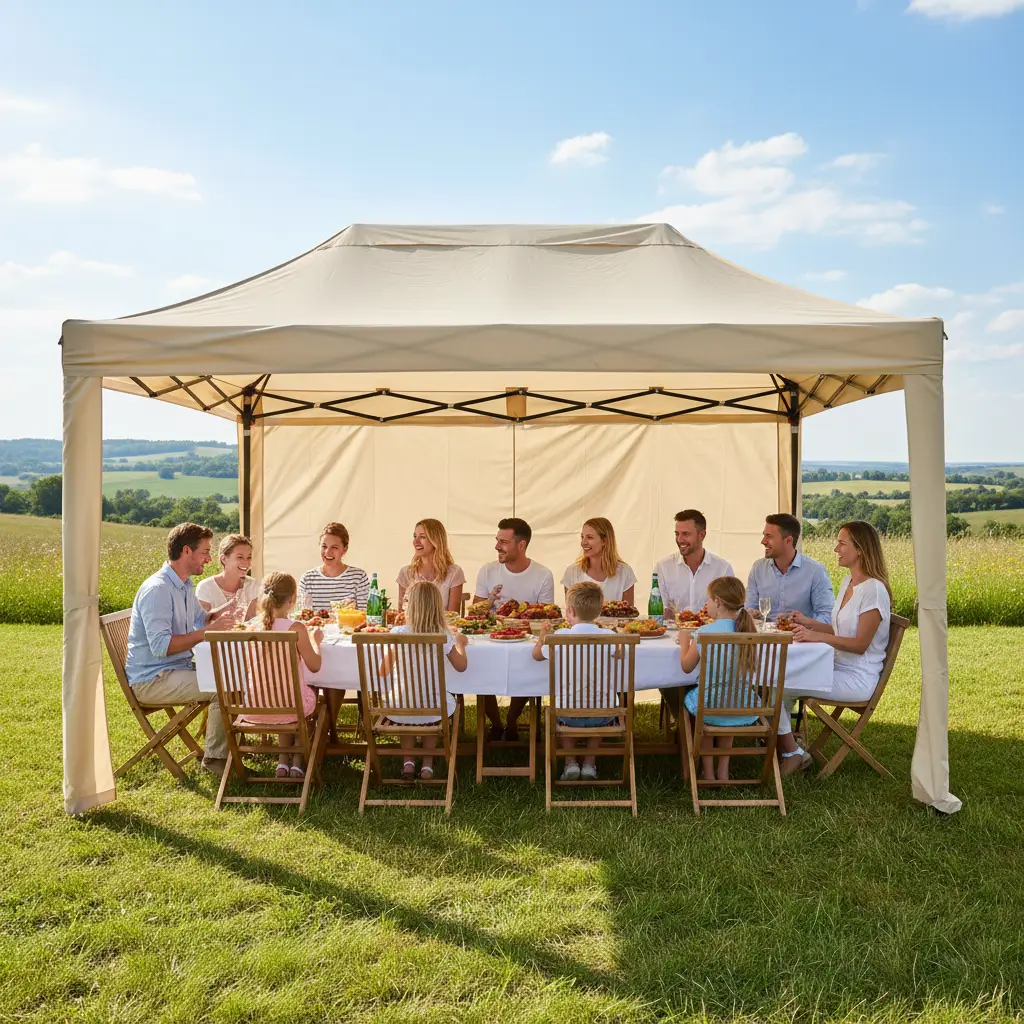
Standard 3x3m Gazebos: This is the industry standard and the most versatile size. It comfortably covers a standard outdoor dining table with six chairs or provides standing room for approximately 10-15 people. For market stallholders in NZ, 3x3m is the standard plot size allocated at most fairs and events.
Compact 2.4×2.4m Options: Ideal for smaller patios, townhouse courtyards, or intimate camping setups. These offer sufficient shade for two to four people seated.
Large Format 3x6m and 4x8m: These rectangular structures are essentially double the standard size. They are favoured for car storage (functioning as a portable carport), large weddings, or sports team shelters. A 3x6m gazebo can house a long banquet table or protect a vehicle from sun and sap.
Wind Ratings and Weather Resistance in NZ
New Zealand’s environment is notoriously hard on outdoor equipment. High UV levels degrade inferior fabrics, and gusty winds can turn a lightweight gazebo into a kite. When evaluating gazebos for sale, specific technical ratings must be scrutinized.
What is the best fabric denier for a gazebo?
The canopy durability is measured in Denier (D). A higher number indicates a thicker, heavier thread. Budget gazebos often use 150D or 300D polyester, which is prone to tearing and UV fade. For New Zealand conditions, look for a minimum of 600D PVC-coated polyester. The PVC coating provides 100% waterproofing and significantly increases UV resistance. Top-tier commercial canopies may go up to 1200D or use pure PVC vinyl (580gsm), which is heavy but virtually indestructible.
Understanding Frame Integrity
Wind resistance is a function of frame weight and design. A heavy-duty gazebo should be able to withstand wind gusts of up to 40-50km/h when properly anchored. Look for cross-truss designs in the roof structure, which distribute wind pressure more evenly than a simple pyramid design. However, manufacturers always recommend taking portable gazebos down if severe wind warnings are in place, regardless of the quality.
Material Matters: Steel vs. Aluminium Frames
The skeleton of your shelter defines its lifespan and portability. The debate generally settles between powder-coated steel and anodized aluminium.
Steel Frames: Steel is strong and heavy, which can be an advantage for stability in wind. It is generally more affordable than aluminium. The downside is susceptibility to rust if the powder coating is scratched or chipped. Steel frames are best for semi-permanent setups where the gazebo won’t be moved often.
Aluminium Frames: Aluminium is the premium choice for portable gazebos. It is lighter than steel (making transport easier) yet has a higher strength-to-weight ratio. Crucially, aluminium does not rust, making it the only viable option for coastal NZ locations where salt spray is a factor. Look for 6061-grade aluminium with hexagonal legs for maximum torsional strength.
Seasonal Storage and Maintenance Tips
Even the most rugged gazebos for sale in NZ require maintenance to ensure they last more than a single season. Neglect is the primary reason for premature failure.
How do I stop my gazebo from getting mouldy?
Mould thrives on damp fabric. Never fold down and store a gazebo canopy when it is wet. If you are forced to pack up in the rain, you must unpack it within 24 hours to let it dry completely in the sun or a warm garage. Once dry, store the canopy in a cool, dry place. Using a silica gel packet in the storage bag can also help absorb residual moisture.
Frame Maintenance
For pop-up frames, silicon spray should be applied to the sliding joints and legs every few months. This keeps the action smooth and prevents friction wear. Check all nuts and bolts periodically; the vibration from wind can loosen them over time. Tightening these fixtures is a simple preventative measure that maintains structural rigidity.
Essential Accessories for Stability and Comfort
To maximize the utility of your shade solution, consider the ecosystem of accessories available. These add-ons can adapt a standard gazebo to specific weather conditions.
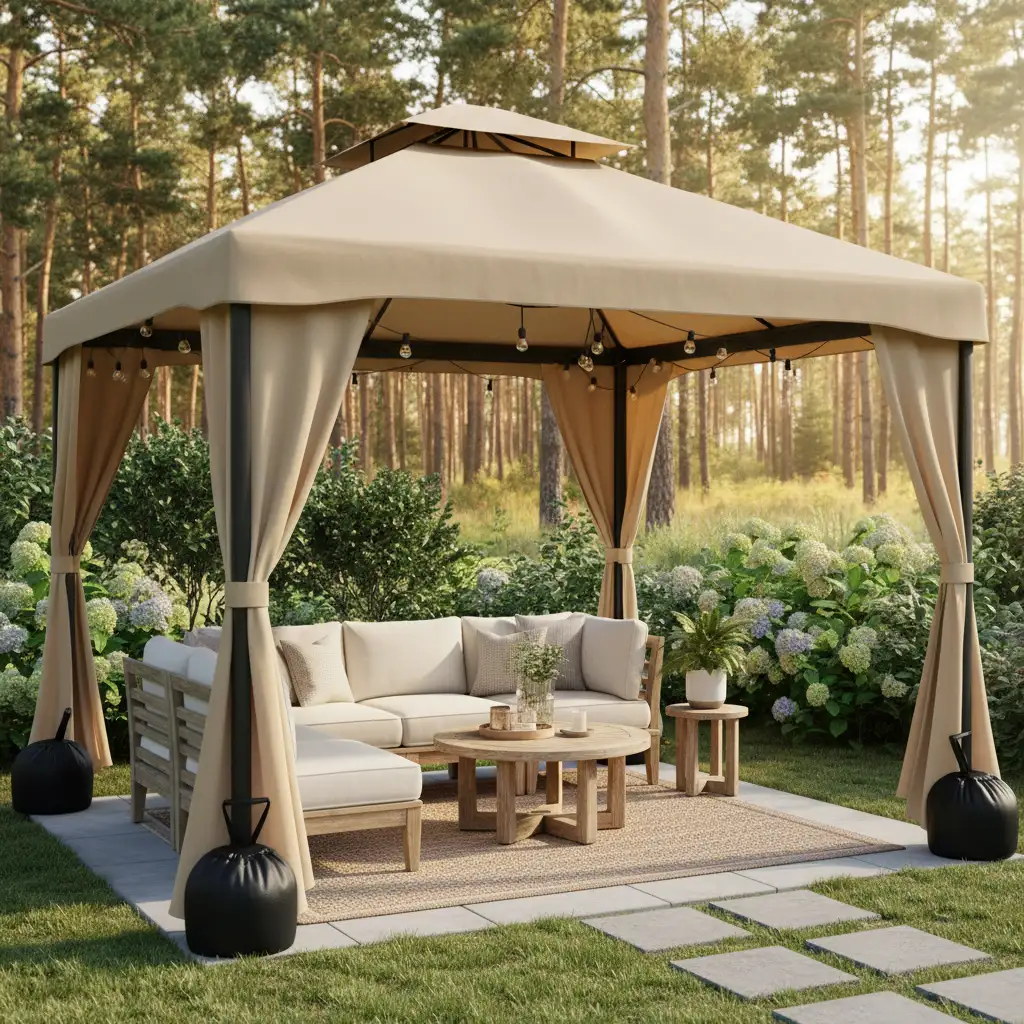
Anchoring Systems: Pegs are often insufficient for NZ soil or hard surfaces. Cast iron leg weights or sandbags (typically 15kg to 20kg per leg) are mandatory for safety, especially at public events. For permanent setups on concrete, Dyna-bolts are required.
Side Walls: Walls transform a roof into a room. They provide privacy, wind protection, and rain shielding. Look for walls that attach via heavy-duty Velcro or zippers rather than simple ties, as this creates a better seal against the elements.
Rain Gutters: If you are connecting two gazebos side-by-side, a rain gutter is essential to prevent water from pouring down the gap between the canopies. This is particularly important for market stalls protecting stock.
People Also Ask
Do I need a permit for a gazebo in NZ?
Generally, portable gazebos and temporary structures under 10 square metres do not require a building consent in New Zealand. However, permanent structures or those larger than 10-30 square metres (depending on local council rules and whether they are attached to the house) may require consent. Always check with your local council regulations for permanent installations.
Can I leave a pop-up gazebo up all year round?
No, pop-up gazebos are designed as temporary structures. While high-quality commercial frames are durable, prolonged exposure to UV radiation will eventually degrade the fabric, and a significant storm event can damage the frame. For year-round use, invest in a permanent timber or metal pavilion.
What is the difference between a marquee and a gazebo?
In New Zealand, the terms are often used interchangeably. Technically, a “gazebo” often refers to a smaller, hexagonal or square structure (permanent or portable), while a “marquee” usually refers to a larger, rectangular temporary structure used for events. However, in the context of portable shade, they generally refer to the same folding-frame products.
How do I repair a tear in my gazebo canopy?
Small tears in PVC-coated polyester can be repaired using a dedicated vinyl repair kit or heavy-duty tent repair tape. Clean the area with alcohol first, apply the patch on both sides of the fabric, and allow it to cure. For large tears, replacement canopies are usually available from reputable suppliers.
Are waterproof gazebos actually 100% waterproof?
Yes, if the fabric is PVC-coated or made of PVC vinyl and the seams are tape-sealed. “Water-resistant” means it sheds light rain but will mist or leak in a downpour. “Waterproof” means the fabric is impermeable. Always check for heat-sealed seams, as needle holes are the most common leak points.
What is the best gazebo for high wind areas?
For high wind areas, a permanent structure is best. If a portable option is required, choose a commercial-grade gazebo with a 50mm hexagonal aluminium frame. Aluminium flexes slightly under load rather than buckling like cheap steel. Always use heavy weights (20kg+) on each leg and guy ropes.