
Gazebo weights in NZ are essential safety accessories designed to stabilize portable shelters against New Zealand’s variable wind conditions. They typically come in the form of stackable cast iron plates, water-filled plastic drums, or heavy-duty sandbags that attach to the gazebo legs. Properly securing your structure prevents damage and ensures safety on hard surfaces like concrete or decking where pegs cannot be used.
Whether you are hosting a backyard barbecue in Auckland, setting up a market stall in Wellington, or camping in the South Island, the unpredictable Kiwi weather demands robust stability for any temporary structure. Investing in high-quality gazebo accessories, particularly weights and spares, is not just about convenience—it is a matter of safety and longevity for your outdoor investment.
Securing Your Investment: The Importance of Gazebo Weights in NZ
New Zealand is renowned for its “four seasons in one day” weather patterns. A calm morning can quickly turn into a blustery afternoon, posing a significant risk to lightweight outdoor structures. While most pop-up gazebos come with standard guy ropes and pegs, these are often insufficient for the unique wind tunnels found in urban NZ environments or coastal breezes.
The primary function of gazebo weights nz shoppers look for is to provide a low center of gravity. By adding mass directly to the legs of the frame, you counteract the lift force generated by wind getting under the canopy. This is critical for hard surfaces. If you are setting up on a patio, driveway, or wooden deck, you cannot drive pegs into the ground. In these scenarios, leg weights are the only line of defense against your gazebo becoming a kite.
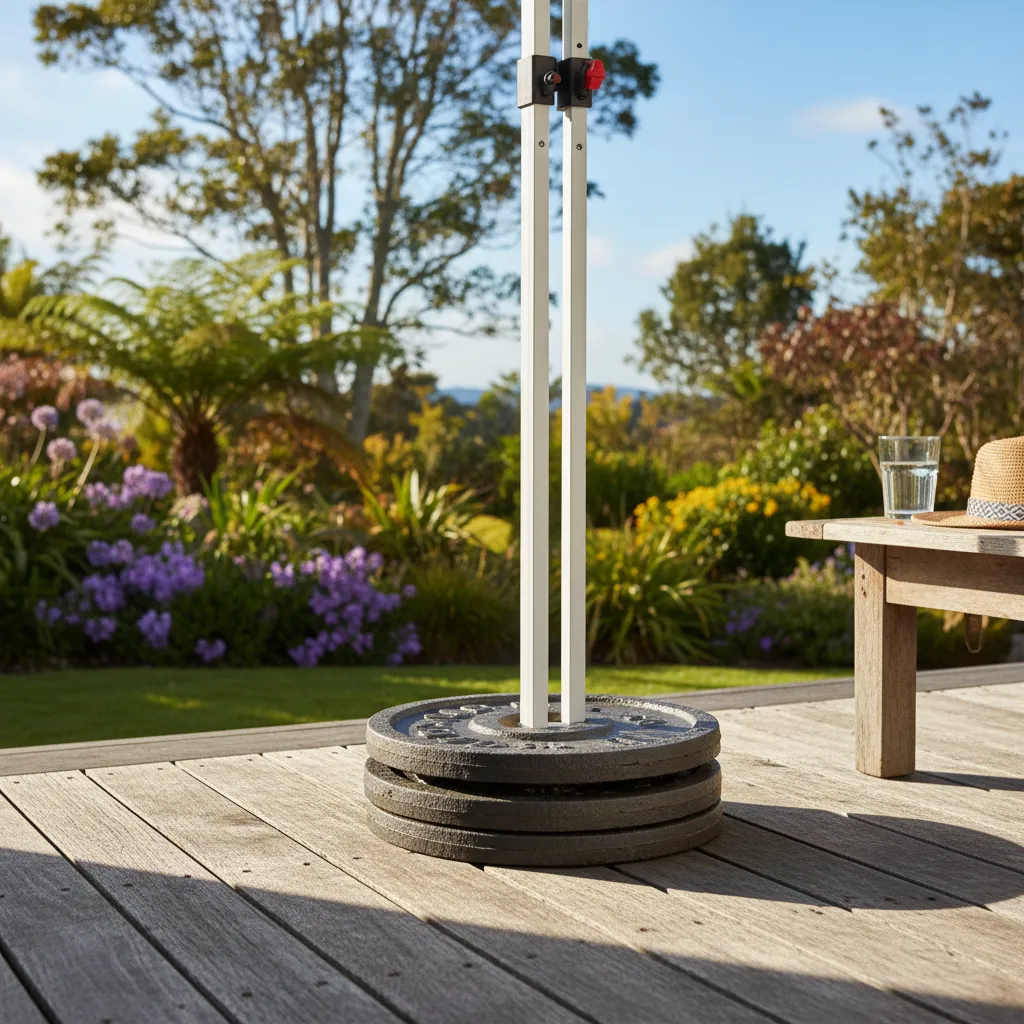
Top Types of Gazebo Weights and Leg Anchors
When searching for the best solution to secure your shelter, you will encounter several distinct categories of weights. Choosing the right one depends on your specific usage, transport capabilities, and the aesthetic you desire.
1. Cast Iron and Steel Plate Weights
For commercial operators, market stallholders, and those seeking a permanent look, metal plate weights are the gold standard. These are typically designed with a slot to slide over the foot of the gazebo leg.
- Durability: Virtually indestructible. They do not leak, tear, or degrade in the sun.
- Stackability: Most designs allow you to stack multiple plates to achieve the desired weight (e.g., 15kg to 30kg per leg).
- Profile: They have a slim footprint, reducing the tripping hazard compared to bulkier options.
2. Water-Filled Drum Weights
Plastic drum weights are a popular choice for recreational users. These hollow containers clamp around the gazebo leg and are filled with water on-site.
- Portability: They are lightweight when empty, making them easy to transport to a campsite or picnic spot.
- Capacity: Once filled, they can provide substantial weight (often 10kg to 15kg per leg).
- Versatility: Can be filled with sand for even greater density if water is not readily available or if a heavier hold is required.
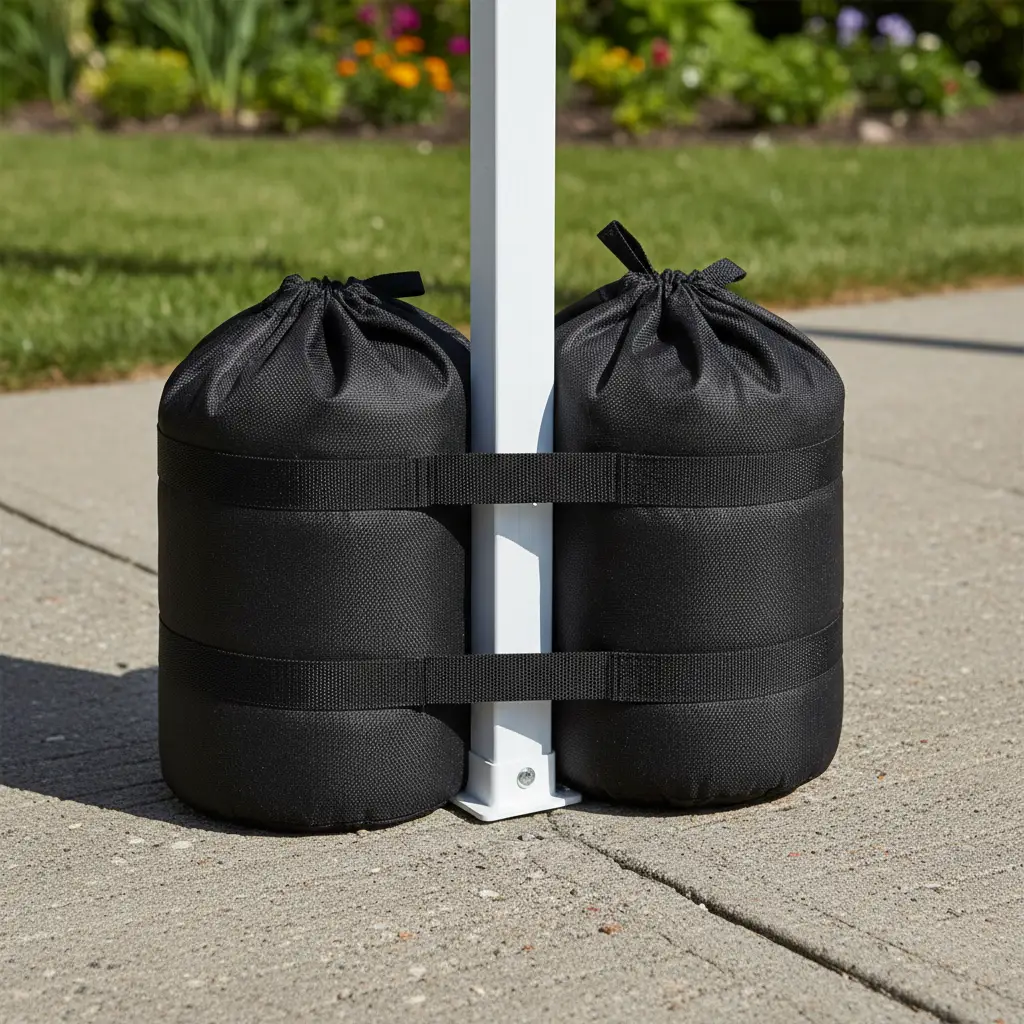
3. Sandbag Weight Bags
Sandbags offer a versatile and cost-effective solution. High-quality versions are made from heavy-duty polyester (often 600D or higher) with PVC coating to prevent tearing and water damage.
- Flexibility: They can be wrapped around almost any leg shape (square or hexagonal).
- Soft Impact: Unlike metal, they won’t scratch your car during transport or hurt your toes if you accidentally kick them.
- Usage: These are sold empty. You fill them with dry sand, gravel, or even water bottles. Double-cylinder designs drape over the leg foot for balanced stability.
Revitalizing Your Shelter with Replacement Canopies
Even the most robust frame can outlast its fabric top. In New Zealand, the UV index is exceptionally high, which accelerates the degradation of fabrics. Over time, polyester can fade, become brittle, and lose its waterproofing capabilities. Instead of purchasing an entirely new unit, sourcing a replacement canopy is a cost-effective and environmentally friendly option.
Choosing the Right Fabric Grade
When selecting a spare canopy, pay attention to the denier (D) rating and coating:
- Recreational Grade (300D – 420D): Suitable for occasional use. Lightweight and easy to fold.
- Commercial Grade (600D – 1200D): Essential for regular use. These fabrics are thicker, more resistant to tearing, and typically feature a heavy PVC backing for 100% waterproofing.
Ensuring the Perfect Fit
Not all 3x3m gazebos are identical. The height of the peak pole (the center pole pushing the roof up) varies between brands. Before ordering a replacement, measure the length of the truss bars and the height of the center peak to ensure compatibility. A loose canopy will pool water, while an overly tight one may tear under tension.
Managing the Elements: Gutter Kits for Rain Diversion
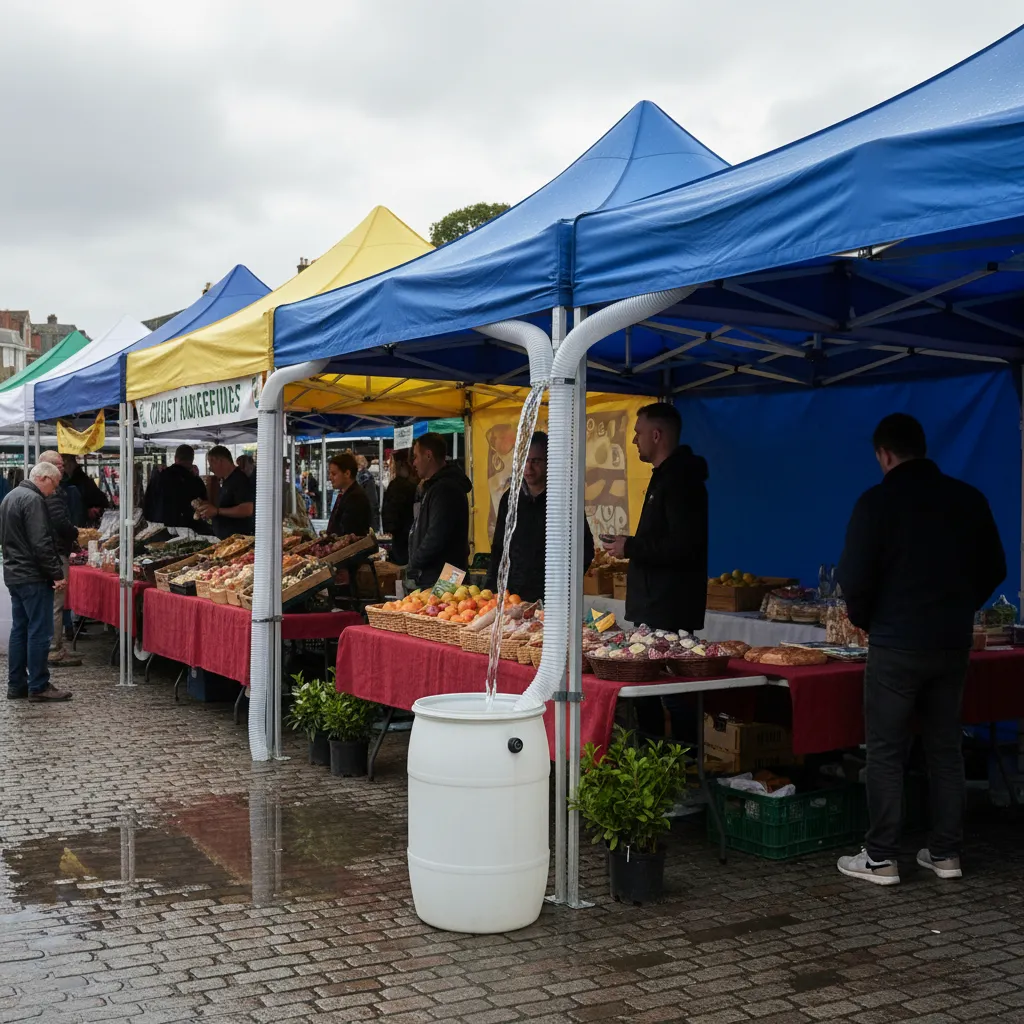
For events requiring a larger covered area, joining two or more gazebos together is a common practice. However, the gap between the two structures creates a vulnerability where rain can pour through, potentially ruining merchandise or soaking guests. This is where gutter kits become an indispensable accessory.
How Gutter Kits Work
A gutter kit is a strip of waterproof fabric designed to connect the canopy valances of two adjacent gazebos. It creates a seamless channel that catches rainwater running off the roofs and diverts it to the sides, away from the center of your event space.
Installation and Benefits
Most gutter kits attach via continuous Velcro strips lining the inside of the canopy valance. This ensures a tight seal that prevents dripping. In NZ’s unpredictable climate, where a sunny afternoon can turn into a heavy shower, a gutter kit ensures that your extended covered area remains fully functional and dry.
Illuminating the Night: Solar Lighting Attachments
Extending the usability of your gazebo into the evening requires adequate lighting. Traditional plug-in lights can be cumbersome, requiring extension cords and access to mains power, which isn’t always available at campsites or outdoor markets. Solar lighting accessories offer a wire-free, eco-friendly solution.
Types of Gazebo Lighting
- Clamp-on LED Spots: These units attach directly to the truss bars or legs of the gazebo. They often feature adjustable heads, allowing you to direct light onto a cooking area or a display table.
- LED Strip Lights: Designed to run along the scissor truss bars of the roof, these provide ambient, shadow-free lighting. Many modern kits are USB rechargeable or solar-powered.
- Solar Lanterns: Hanging from the center peak hook, these provide a central light source similar to a dining room pendant.
When choosing lighting for NZ conditions, ensure the solar panels are weather-resistant (IP65 rated) and have sufficient battery storage to last through the longer winter nights if necessary.
Maintenance and Care for Long-Lasting Accessories
To get the most value out of your gazebo weights nz purchases and other spares, proper maintenance is required. Outdoor gear is subjected to harsh elements—salt air in coastal regions, intense UV radiation, and moisture.
Caring for Weighted Bags
If you use sandbags, empty them if they become wet to prevent mold growth inside the fabric. Periodically check the stitching and Velcro straps for signs of wear. If the fabric begins to thin, replace the bag immediately to prevent sand from leaking onto your patio or into your vehicle.
Metal Weight Maintenance
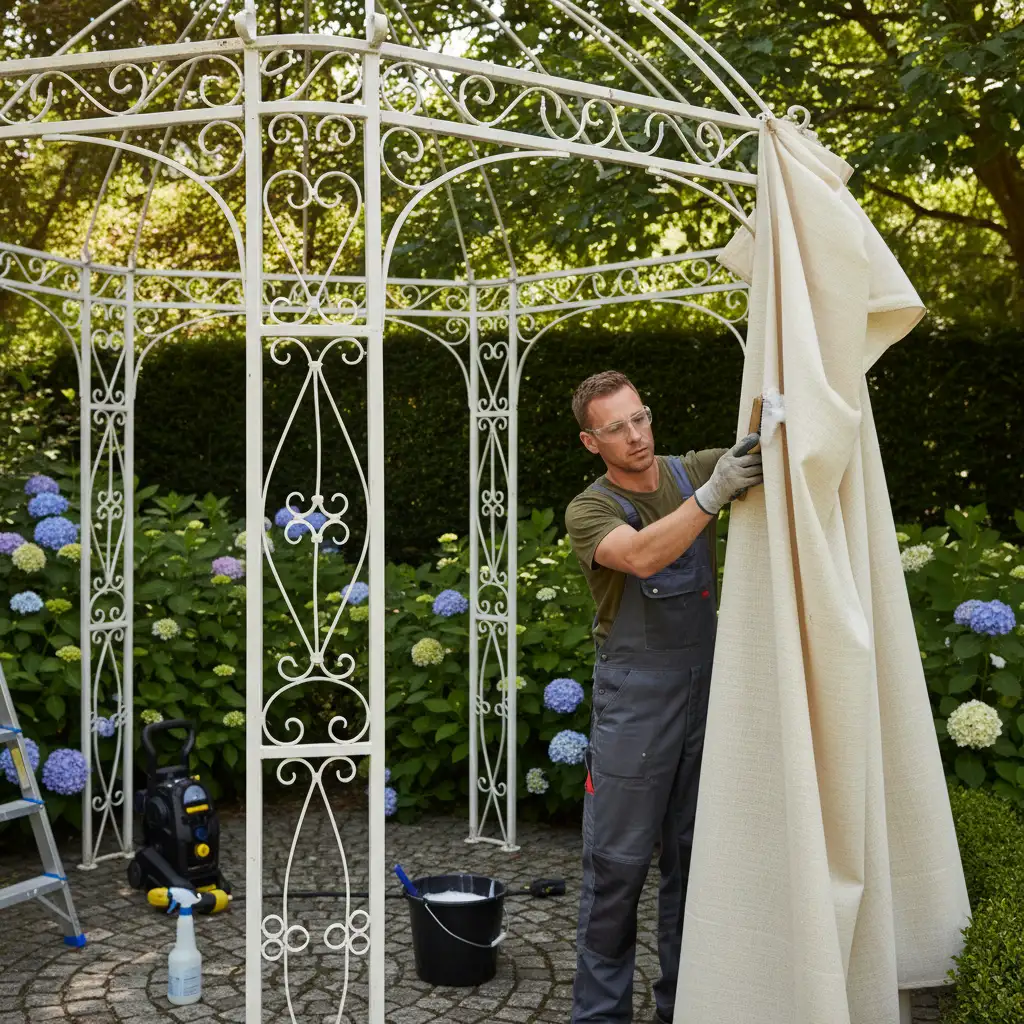
Cast iron weights can develop surface rust if left out in the rain continuously. While this rarely affects their structural integrity, it can stain concrete or decking. Wipe them down with a rust inhibitor or repaint them with metal protection paint annually to keep them looking pristine.
Canopy Storage
Never pack your canopy away while it is wet. This is the fastest way to degrade the waterproofing coating and encourage mildew. Always allow the fabric to dry completely in the sun before folding. If you are storing the gazebo for winter, ensure it is kept in a dry place free from rodents.
Frequently Asked Questions
How much weight do I need for a gazebo in NZ?
For a standard 3x3m gazebo, it is recommended to have at least 15kg to 20kg of weight per leg in mild conditions. In windier NZ zones or for commercial use, aiming for 25kg to 30kg per leg is safer. Always check the manufacturer’s wind rating for your specific frame.
Can I use bricks as gazebo weights?
Using bricks or concrete blocks is not recommended as they are not designed to attach securely to the legs. They can easily shift, causing the gazebo to become unstable, and they present a significant tripping hazard and potential for injury if they fall.
Are water or sand weights better?
Sand weights are generally preferred for higher weight requirements as sand is denser than water. Sandbags are also less prone to leaking. However, water weights are more convenient if you need to transport the weights empty and fill them at the destination.
How do you secure a gazebo on concrete?
Since you cannot use pegs, you must use leg weights. Stackable cast iron plates or heavy-duty sandbags are the best options. Additionally, you can use tie-down straps connected to nearby heavy immovable objects (like a fence post or vehicle) for extra security.
Do gutter kits work in heavy rain?
Gutter kits are highly effective at diverting water and preventing it from falling between gazebos. However, in extremely heavy torrential rain, the volume of water may overwhelm the channel. Ensure the gutter has a slight slope to encourage runoff and prevent pooling.
How long do gazebo canopies last in NZ sun?
In the harsh New Zealand sun, a standard polyester canopy may last 1-2 years if left up frequently. Heavy-duty PVC-coated canopies can last 3-5 years or more. Using UV protection sprays and taking the canopy down when not in use significantly extends its lifespan.