
In New Zealand, you generally do not need a building consent for a pergola if it is unroofed and stands on the ground level. However, if you add a roof, it becomes a ‘veranda’ or ‘porch.’ Under Schedule 1 of the Building Act, detached structures up to 20 square metres (or 30 square metres if built by a Licensed Building Practitioner) are often exempt, provided they comply with boundary setbacks and daylight recession planes.
Understanding Exempt Building Work in NZ
For Kiwi homeowners looking to enhance their outdoor living space, the pergola is a staple. It offers shade, aesthetic structure, and a framework for climbing plants. However, the bureaucracy of local councils can be daunting. The good news is that the New Zealand Building Act 2004, specifically Schedule 1, provides generous exemptions for low-risk building work. Understanding these exemptions is the key to saving thousands of dollars in consent fees and months of waiting time.
The primary rule of thumb revolves around the complexity and risk associated with the structure. The government wants to ensure that structures won’t fall on people, spread fire to neighbours, or cause moisture issues in existing homes. Because pergolas are typically open structures, they are viewed as low risk.
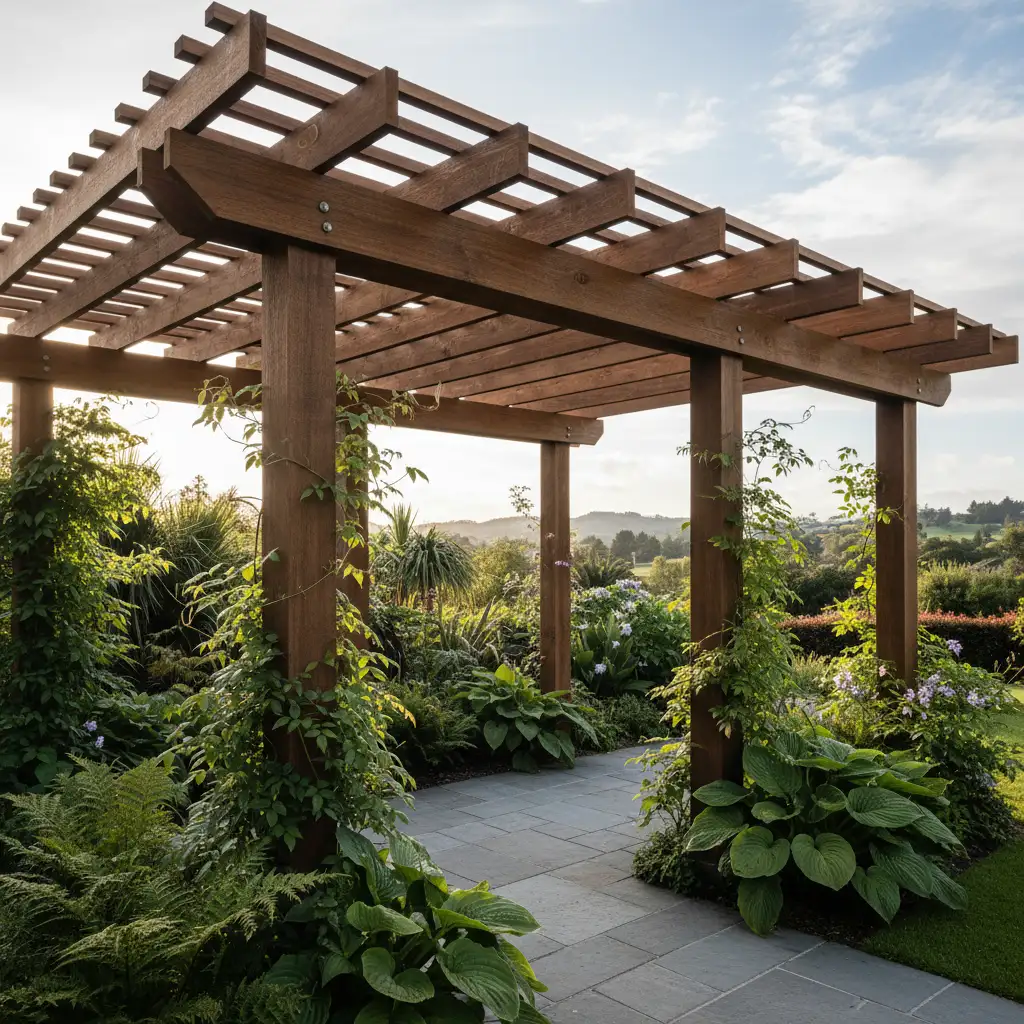
The 20-Square-Metre Rule (DIY Friendly)
Under the current legislation, any homeowner can build a detached standalone building or structure (which includes pergolas and sleepouts) up to 20 square metres in floor area without a building consent. This falls under the “Single-storey detached buildings” exemption.
To qualify for this DIY exemption, the structure must:
- Be located on the ground floor.
- Not exceed one storey.
- Not contain sanitary facilities (plumbing) or facilities for the storage of potable water.
- Not include sleeping accommodation (though this applies more to sleepouts than pergolas).
- Be at least the structure’s own height away from any residential building or boundary (unless specific fire rating criteria are met, though open pergolas rarely trigger fire concerns).
The 30-Square-Metre Rule (LBP Required)
If your vision for an outdoor entertaining area exceeds the standard 20 square metre footprint, you can extend up to 30 square metres without a consent, provided the work is carried out or supervised by a Licensed Building Practitioner (LBP). Alternatively, lightweight structures can sometimes be built using a kitset that has been signed off by a Chartered Professional Engineer.
This tier was introduced to allow for larger garden structures and carports without clogging up council consent processing teams, acknowledging that qualified builders understand the structural requirements of wider spans and wind zones.
Size, Height, and Material Limitations
While the footprint area is the most discussed metric, height and materials are equally important when determining if you need a permit for a pergola in NZ. The Building Code is designed to prevent structures that are structurally unsound or that negatively impact neighbours.
Height Restrictions
There is no single “maximum height” listed in the exempt building work schedule that applies to every property nationwide; however, practical limitations exist. Most exemptions apply to single-storey structures. In the context of the Building Code, this usually implies a floor-to-ceiling height of roughly 2.4 to 3 meters, with a maximum apex often capped around 3.5 to 4 meters depending on the specific clause being utilized.
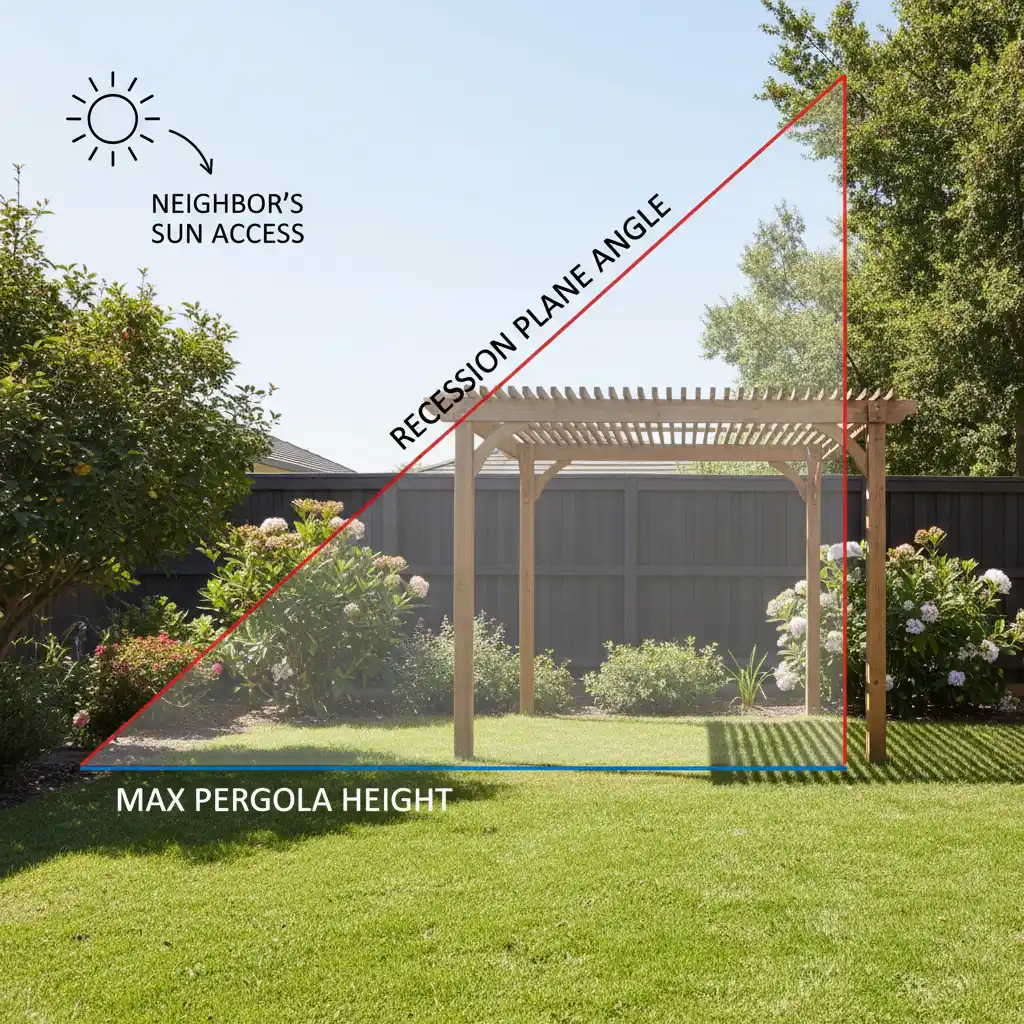
Crucially, the height of your pergola dictates how close it can be to the boundary. This is governed by “Daylight Recession Planes” (discussed in detail later). If you build a 4-meter high pergola right on your fence line, you will almost certainly require Resource Consent, even if you don’t need Building Consent.
Durability and Materials
Even if your work is exempt from consent, it is not exempt from the Building Code. This is a vital distinction. Any structure you build must comply with the code regarding structural stability and durability.
- Timber Treatment: In New Zealand, outdoor timber exposed to the elements must be treated to H3.2 or H4 levels (for ground contact). Using untreated timber for a pergola is a breach of the Building Code.
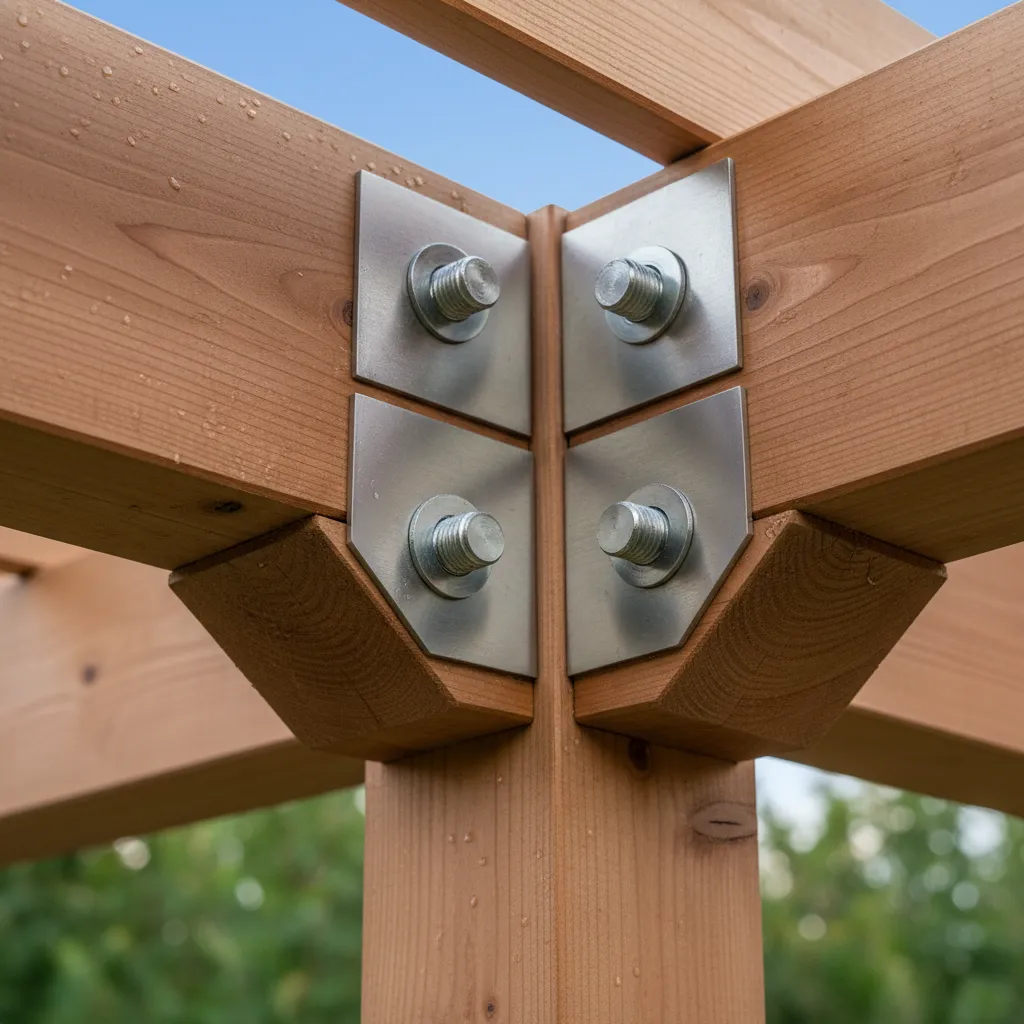
- Fixings: You must use galvanised or stainless steel fixings (nails, bolts, brackets) appropriate for your specific corrosion zone. For example, if you live in a coastal zone like Orewa or heavily salt-sprayed areas of Wellington, standard zinc-plated brackets will rust out in a few years, rendering the structure non-compliant.
The Critical Distinction: Roof vs. Open Rafters
This section addresses the most common point of confusion. In the dictionary, a pergola is an open framework. In the minds of many homeowners, a pergola often includes clear roofing or louvres to block the rain. In the eyes of the Council, adding a roof changes the classification of the structure entirely.
When a Pergola Becomes a Veranda
If you attach a solid roof (polycarbonate, corrugated iron, or shingles) to your structure, it is technically no longer a “pergola” in the strict sense; it becomes a veranda, porch, or carport. This introduces new loads:
- Wind Uplift: A roof acts as a sail. The wind uplift forces on a roofed structure are significantly higher than on open rafters.
- Snow Loading: In parts of the South Island or Central Plateau, snow accumulation adds immense weight.
- Water Management: Once you have a roof, you must manage stormwater. The Building Code requires that water from your roof does not cause a nuisance to neighbours or damage the ground stability. You may need spouting and a connection to a soak pit or stormwater system.
Closing in the Walls
Adding a roof and then closing in the sides with PVC blinds or permanent walls moves the structure closer to being a “building” or conservatory. If the structure is fully enclosed, it contributes to the “habitable space” or “site coverage” calculations much more aggressively than an open frame.
Boundary Setbacks and Daylight Angles
You can build a compliant, exempt pergola and still be forced to tear it down. How? By ignoring the District Plan. While the Building Act covers construction quality (Building Consent), the District Plan covers land use (Resource Consent).
Every council (Auckland Council, Christchurch City Council, Wellington City Council, etc.) has maps defining zones. Your zone determines your:
- Yard Setbacks: Most residential zones require structures to be set back 1 meter or 1.5 meters from the side and rear boundaries.
- Site Coverage: You are only allowed to cover a certain percentage of your land with structures (often 35% to 50%). If your property is already maxed out, adding a 20sqm pergola could trigger a need for Resource Consent.
Daylight Recession Planes (Height-to-Boundary)
To protect your neighbour’s access to sunlight, councils use a formula called the recession plane. Imagine a line drawn at an angle (usually 35 to 55 degrees) starting from 2.5 meters above your boundary fence and angling inwards over your property. Your pergola cannot poke through this invisible ceiling.
If you build a tall pergola right next to the fence, you will likely breach this plane. This is the most common reason homeowners get complaints from neighbours, leading to council enforcement action.
Building Consent vs. Resource Consent
It is vital to distinguish between these two permissions. You might be exempt from one but liable for the other.
Building Consent
This confirms the structure is safe. As established, pergolas under 20sqm (or 30sqm with an LBP) are usually exempt. If you are exempt, you do not need to file paperwork for this, though keeping records of your design is wise.
Resource Consent
This confirms the structure fits the neighbourhood rules (shading, dominance, privacy). There is no automatic exemption from Resource Consent based on size. Even a 5sqm structure could require Resource Consent if it is placed 10cm from a boundary in a zone requiring a 1-meter setback.
Deemed Permitted Boundary Activity: If you breach a boundary rule (like being too close to the fence), but your neighbour gives their written approval, you can apply for a “Deemed Permitted Boundary Activity.” This is faster and cheaper than a full Resource Consent, but it requires your neighbour’s formal sign-off.
When to Hire a Planner or LBP
While many Kiwis possess the DIY DNA, knowing when to call in a professional can save a project from becoming a legal nightmare. The complexity of modern outdoor living spaces, especially those involving louvre systems or heavy hardwoods, often surpasses basic DIY skills.
The Role of the Licensed Building Practitioner (LBP)
Hiring an LBP is not just about paying for labour; it’s about shifting liability. When an LBP signs off on a 30sqm structure, they are legally verifying that it meets the Building Code. If the structure fails later, there is a paper trail of accountability. For complex pergolas involving cantilevers or heavy roofing loads, an LBP is essential.
When to Call a Planner
You should consult a private planner or the council’s duty planner if:
- You are building on a slope or near a retaining wall.
- You want to build closer to the boundary than the standard setback (usually 1m).
- Your property is in a Heritage Zone or a Special Character Area (common in parts of Ponsonby, Devonport, or Thorndon).
- You are unsure about the “permeable surface” rules (how much of your garden is paved vs. grass).

Frequently Asked Questions
Can I put a clear roof on my pergola without consent?
Generally, yes, provided the total area is under 20sqm (or 30sqm with an LBP) and it meets the definition of a detached structure. However, adding a roof increases wind and snow loading requirements, so the structure must be robust enough to handle these additional forces to comply with the Building Code.
How close to the boundary can I build a pergola in NZ?
Most district plans require a setback of 1 meter or 1.5 meters from side and rear boundaries. If you wish to build closer, you will likely need your neighbour’s written approval and may need to apply for a Deemed Permitted Boundary Activity notice from your council.
Do louvre roof systems require council consent?
Louvre systems are treated similarly to solid roofs because they can be closed to form a solid surface. If the structure is freestanding and under the size thresholds (20sqm/30sqm), it may be exempt from building consent, but you must ensure the mechanical system and structural posts are engineered to withstand high winds when the louvres are closed.
Does a pergola count towards site coverage?
Yes, in most councils, any structure with a roof (pervious or impervious) counts toward site coverage. An open pergola (rafters only, no roof) often does not count towards site coverage, but this varies by specific Council Unitary or District Plans, so checking local rules is essential.
Can I attach a pergola to my house without a permit?
Attaching a structure to the existing house is riskier. Exemptions for “verandas and porches” exist (up to 20sqm for ground floor), but the connection point to the house must be weathertight. If you disturb the building envelope (cladding) of the main house, you risk creating leaks. Many experts recommend keeping the pergola freestanding (even by just 100mm) to avoid complex weathertightness compliance issues.
What happens if I build a pergola without a permit when I needed one?
If you build without required consent, the council can issue a “Notice to Fix,” forcing you to dismantle the structure or undergo a costly “Certificate of Acceptance” process (which is more expensive than the original consent). Furthermore, unconsented work can delay or derail the sale of your property in the future.