
Glass pergola reviews consistently highlight the aesthetic appeal and superior light transmission of glass roofing compared to polycarbonate or metal. While customers rate them highly for durability and property value, common critical feedback centers on heat accumulation in direct sunlight and the need for frequent cleaning. Overall, satisfaction is highest when using tinted, laminated safety glass.
The Verdict: Summary of Customer Feedback
When analyzing hundreds of glass pergola reviews across various platforms, a clear pattern emerges regarding customer satisfaction. The consensus is that glass pergolas are a premium, high-impact addition to a home, but they require careful specification to ensure usability year-round.
Homeowners in the outdoor living market, particularly in regions with variable weather like New Zealand, often turn to glass structures to bridge the gap between indoor and outdoor living. Unlike louvered systems which block light when closed, or polycarbonate which can yellow over time, glass offers a pristine, architectural finish.
Top-Rated Features
- Unobstructed Views: The primary driver for positive reviews is the ability to see the sky and surrounding trees without visual distortion.
- Acoustics: Many users note that rain noise is significantly quieter on heavy glass compared to the “drumming” sound associated with polycarbonate plastic roofs.
- Longevity: Reviews for systems installed 5+ years ago often praise the material for not fading, warping, or becoming brittle.
Common Complaints
- Heat Buildup: The number one complaint in negative reviews is the space becoming uncomfortably hot during mid-summer if the wrong glass type is chosen.
- Cleaning Requirements: Unlike opaque roofs, glass shows bird droppings, leaves, and dust, leading to reviews mentioning higher maintenance efforts.
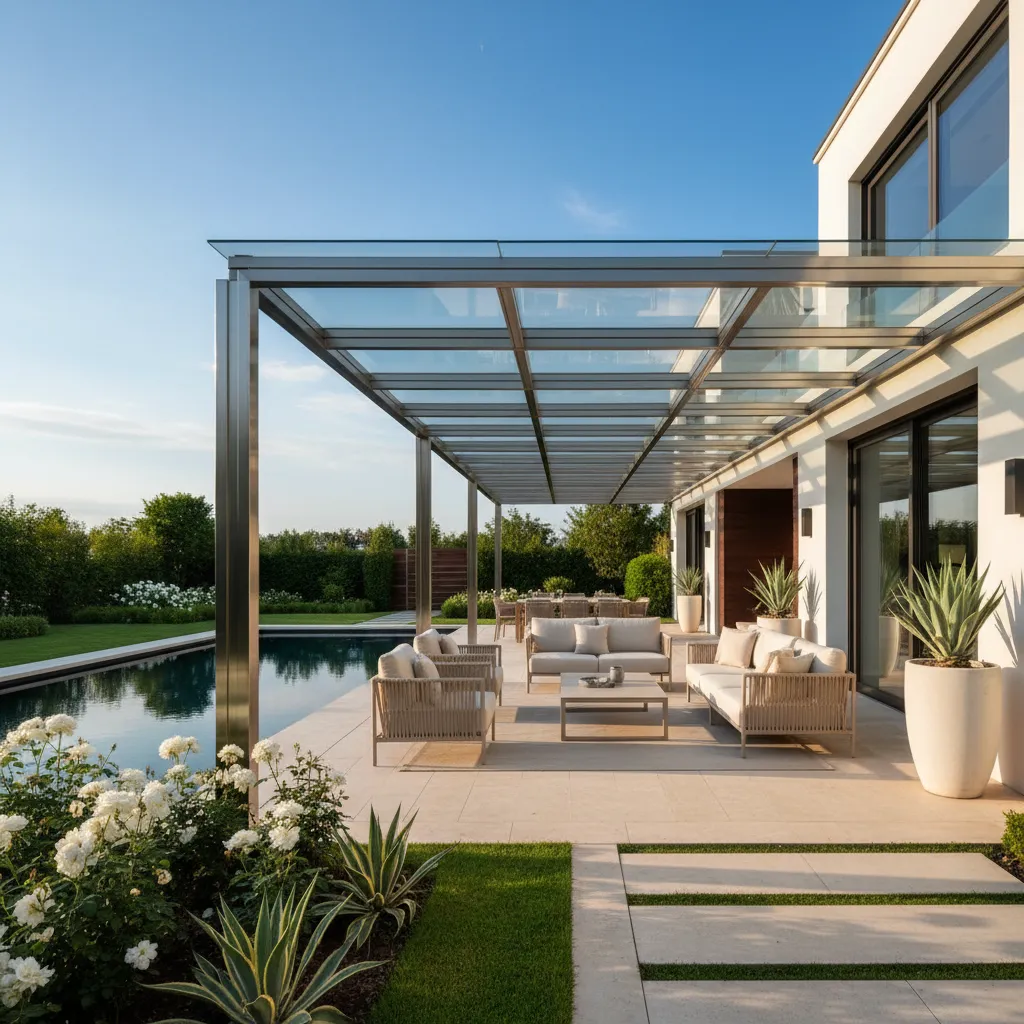
Product Quality Comparisons: Glass vs. The Rest
In the realm of commercial and residential reviews, the comparison between glass and alternative roofing materials is stark. Understanding the nuances of the glass itself is critical for interpreting these reviews.
Laminated vs. Toughened Glass Reviews
Not all glass is created equal. Reviews indicate a strong preference for Laminated Safety Glass (VSG) over simple Toughened Glass (ESG) for overhead applications.
- Safety Perception: Customers express greater peace of mind with laminated glass. In the event of breakage, the interlayer holds the shards together, whereas toughened glass shatters into small granules that can fall.
- UV Protection: High-end reviews frequently mention the benefit of PVB interlayers which can block up to 99% of UV rays, protecting outdoor furniture from fading—a common pain point in reviews of cheaper plastic covers.
Glass vs. Polycarbonate
When users switch from polycarbonate to glass, the reviews are almost universally positive regarding clarity. Polycarbonate reviews often cite scratching and clouding within 3-5 years. In contrast, glass pergola reviews emphasize that the material looks “brand new” even after a decade, provided it is cleaned.
The “Greenhouse Effect”: Managing Heat & Glare
A recurring theme in glass pergola reviews is thermal comfort. Standard clear float glass allows a massive amount of solar energy to pass through, which can turn a patio into a sauna. This section analyzes how different glass specifications affect customer satisfaction ratings.
Tinted Glass Performance
Reviews for grey or bronze tinted glass are generally higher in warmer climates. Users report a significant reduction in glare, making it easier to read screens or books outside. However, some reviews note that tints can darken the adjacent interior rooms, which is a trade-off potential buyers must consider.
Solar Control Coatings
The highest-rated products in the niche feature “Low-E” or solar control coatings. While these are significantly more expensive, reviews suggest they are worth the investment.
- Customer Feedback: “We initially looked at standard glass but upgraded to solar control. Even on 30-degree days, we can sit under the pergola comfortably.”
- The Science: These coatings reflect the infrared spectrum (heat) while letting visible light through, addressing the main criticism found in standard glass reviews.
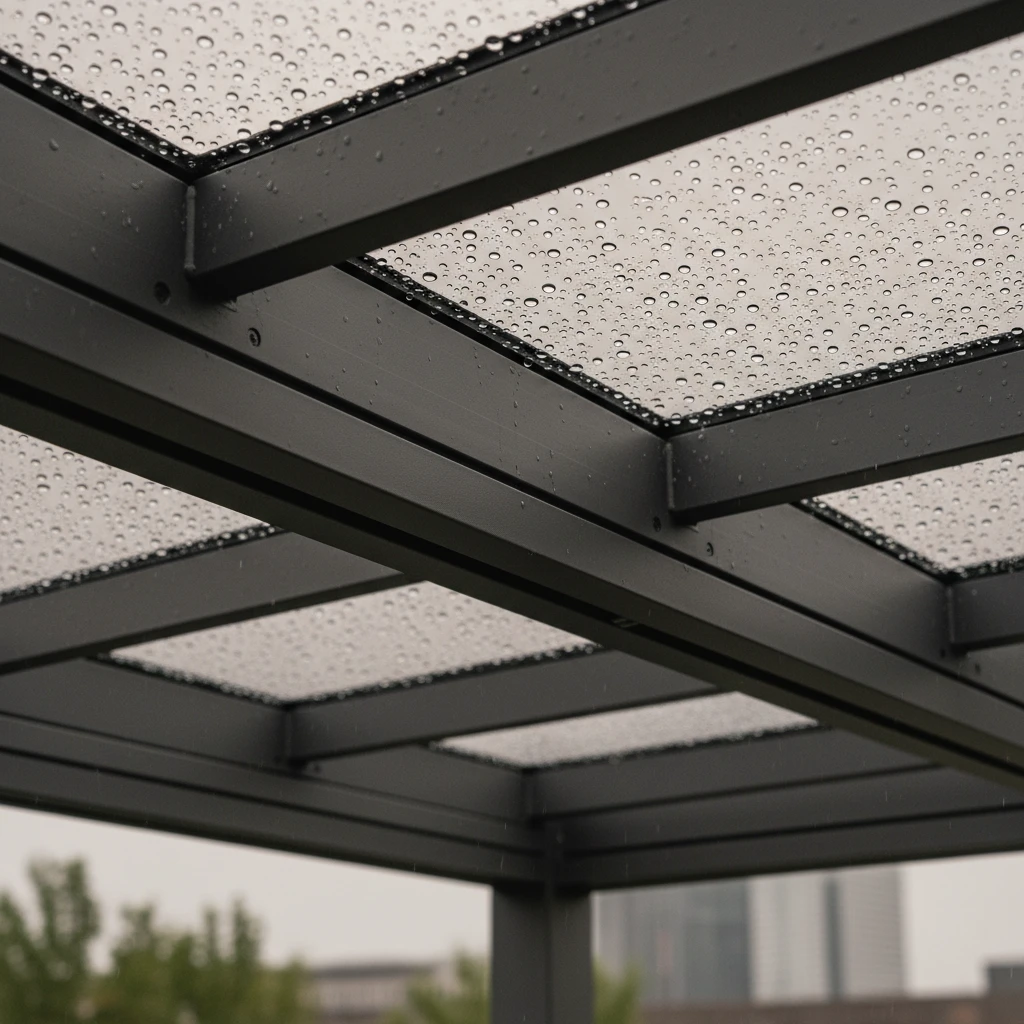
Installation & After-Sales Support Ratings
Even the highest quality glass will fail if installed incorrectly. Reviews for glass pergolas often hinge on the quality of the installation service and after-sales support.
The Leak Issue
The most damaging reviews for any pergola brand involve leaks. Glass systems require sophisticated glazing bars and rubber gaskets to remain watertight. Reviews indicate that “budget” providers often use excessive silicone sealant rather than proper mechanical seals. Over time, silicone degrades, leading to leaks.
What to look for in reviews:
- Mentions of “dry glazing” systems (superior ratings).
- Comments on how the company handled callbacks for leaks.
- Feedback on the integration with the existing house fascia.
Engineering and Permits
In markets like New Zealand, glass is heavy. A 10mm glass panel weighs significantly more than a 3mm polycarbonate sheet. Positive reviews often highlight companies that managed the engineering calculations and council consent processes efficiently. Negative reviews frequently stem from projects that were delayed due to insufficient structural support for the glass weight.
Durability and Safety Reviews
When investing in a permanent structure, durability is paramount. Glass pergola reviews generally outperform fabric awnings and plastic roofs in the “longevity” category.
Impact Resistance
Prospective buyers often search for reviews concerning hail or falling branches. Laminated glass is incredibly robust. There are numerous anecdotal reviews where owners describe severe storms damaging their property, yet the glass pergola remained intact. This durability justifies the higher price point for many customers.
Wind Load Capacity
For high wind zones, glass offers rigidity that prevents the “flapping” noise associated with fabric or light plastic. Reviews from coastal areas consistently rate glass structures higher for their ability to withstand gale-force winds without sustaining damage or creating noise pollution.
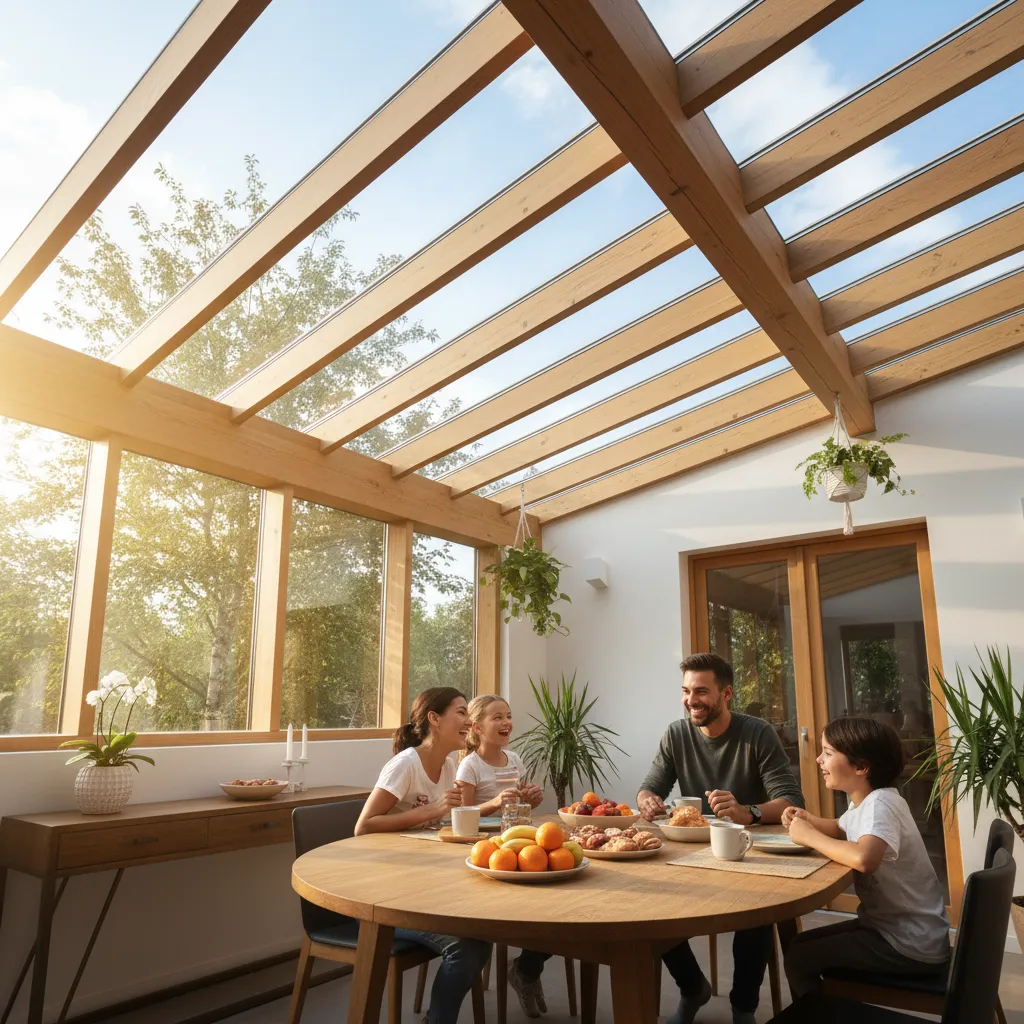
Real-Life Maintenance: What Owners Say
It is crucial to address the elephant in the room: cleaning. Glass pergola reviews are honest about the effort required to keep the roof looking pristine.
The “Self-Cleaning” Myth
Some brands market “self-cleaning” glass (hydrophilic coatings). Reviews on these products are mixed. While they do help water sheet off and reduce spotting, they do not eliminate the need for manual cleaning. Owners report that stubborn dirt, bird lime, and tree sap still require scrubbing.
Accessibility
A common regret found in reviews is the lack of thought given to access. If the pergola is deep, reaching the center panels for cleaning can be dangerous or difficult. High-rated reviews often come from installations that included a safe maintenance plan or were designed with a slope that allows for easy hose-down from a second-story window.
Cost vs. Value: Is It Worth the Investment?
Glass pergolas sit at the top of the price hierarchy for outdoor structures. Do the reviews suggest the value matches the cost?
Resale Value: Real estate agents and homeowners alike note in reviews that a high-quality glass veranda adds tangible value to a property. It is seen as a permanent extension of the living space, unlike a retractable awning which is viewed as a chattel.
Long-Term ROI: When amortized over 15-20 years, the cost of glass becomes competitive. Polycarbonate roofs often require replacement every 7-10 years due to brittleness and discoloration. Glass does not degrade. Therefore, reviews focused on long-term value strongly favor glass despite the initial sticker shock.
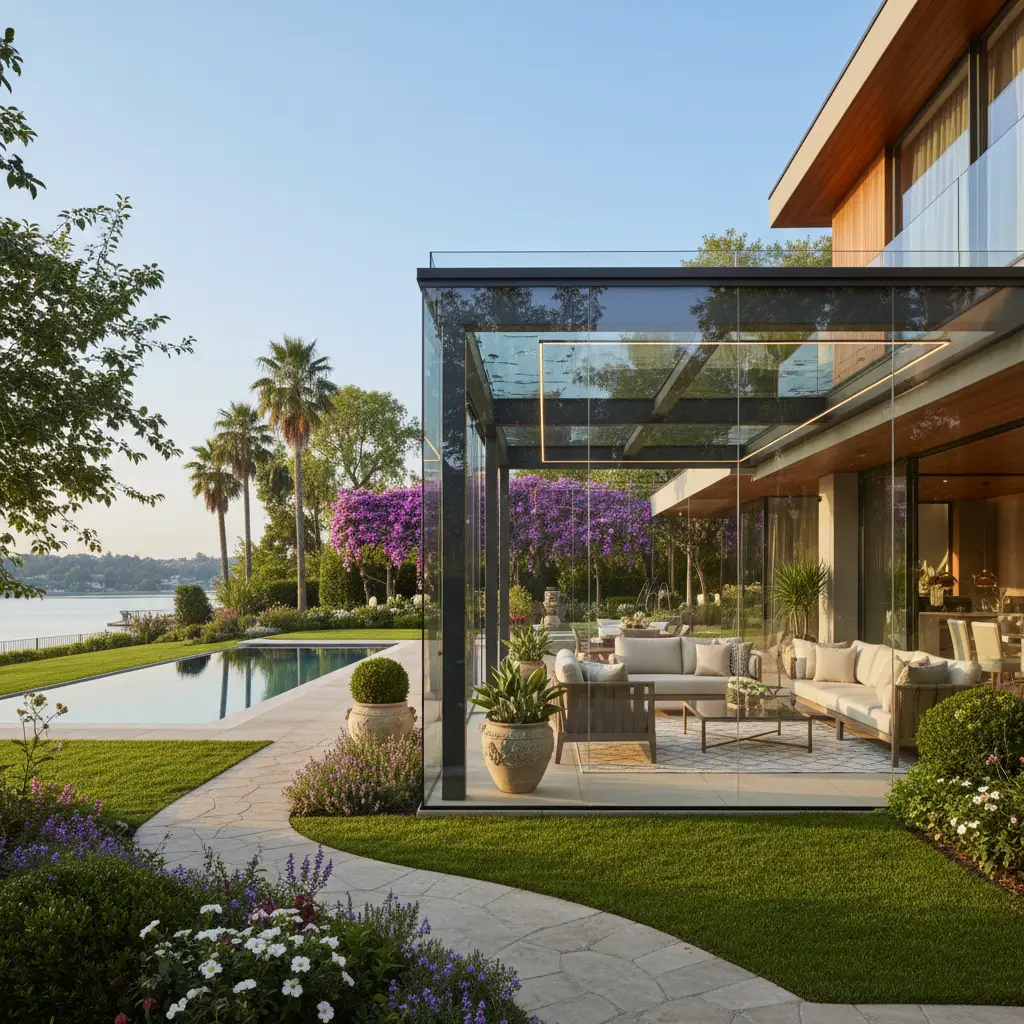
People Also Ask (PAA)
Do glass pergolas get too hot?
Yes, standard clear glass can cause significant heat buildup, creating a greenhouse effect. However, this is mitigated by using solar-control glass, tinted interlayers, or adding under-glass awnings. Reviews suggest that without these treatments, south-facing (or north-facing in NZ) glass roofs can become uncomfortably warm in peak summer.
Is a glass pergola better than polycarbonate?
In terms of longevity, aesthetics, and clarity, glass is superior to polycarbonate. Glass does not yellow, scratch easily, or become brittle over time. However, polycarbonate is significantly cheaper and lighter. Reviews favor glass for permanent, high-end applications, and polycarbonate for budget-conscious or DIY projects.
How do you clean a glass pergola roof?
Most owners use a telescopic water-fed pole with a soft brush attachment. For stubborn grime, a mixture of warm water and mild dish soap is recommended. Never walk on the glass unless it is specifically engineered as “walk-on” glass. Many reviews recommend hiring professional window cleaners once or twice a year.
Are glass pergolas noisy in the rain?
Glass is generally quieter than polycarbonate. The density of the glass (especially laminated glass) dampens the sound of raindrops, creating a dull thud rather than the high-pitched drumming sound associated with plastic roofs. Many owners find the sound of rain on a glass roof to be soothing.
Can you walk on a glass pergola?
Generally, no. Most residential glass pergolas are designed to support snow loads and wind, but not the concentrated weight of a person. If walkability is required for maintenance, the glass must be specified as “walk-on” structural glass, which is thicker and more expensive.
How much does a glass pergola cost?
Prices vary wildly based on size and glass specification, but glass pergolas are a premium product. In the New Zealand market, you can expect to pay between $800 to $1,500+ per square meter installed. Custom engineering and solar-control glass will push the price to the higher end of the spectrum.