
Outdoor flooring ideas in NZ range from traditional Kwila timber decking and durable concrete pavers to modern low-maintenance composite decking and porcelain tiles. Selecting the right material involves balancing aesthetics, budget, and resilience against New Zealand’s high UV levels and variable rainfall to create functional, seamless indoor-outdoor living spaces.
Transforming your backyard into a functional extension of your home is a staple of the Kiwi lifestyle. Whether you are renovating a villa in Ponsonby or building a new bach in the Coromandel, the right outdoor flooring forms the foundation of your alfresco living area. In New Zealand, where the weather can fluctuate between harsh UV sunshine and heavy rainfall, choosing materials that stand the test of time is just as critical as the design itself.
Timber Decking vs. Concrete Pavers: Which Suits Your Lifestyle?
When exploring outdoor flooring ideas in NZ, the most common debate is between the warmth of natural timber and the industrial durability of concrete pavers. Both offer distinct advantages depending on your property’s topography, your budget, and your willingness to perform maintenance.
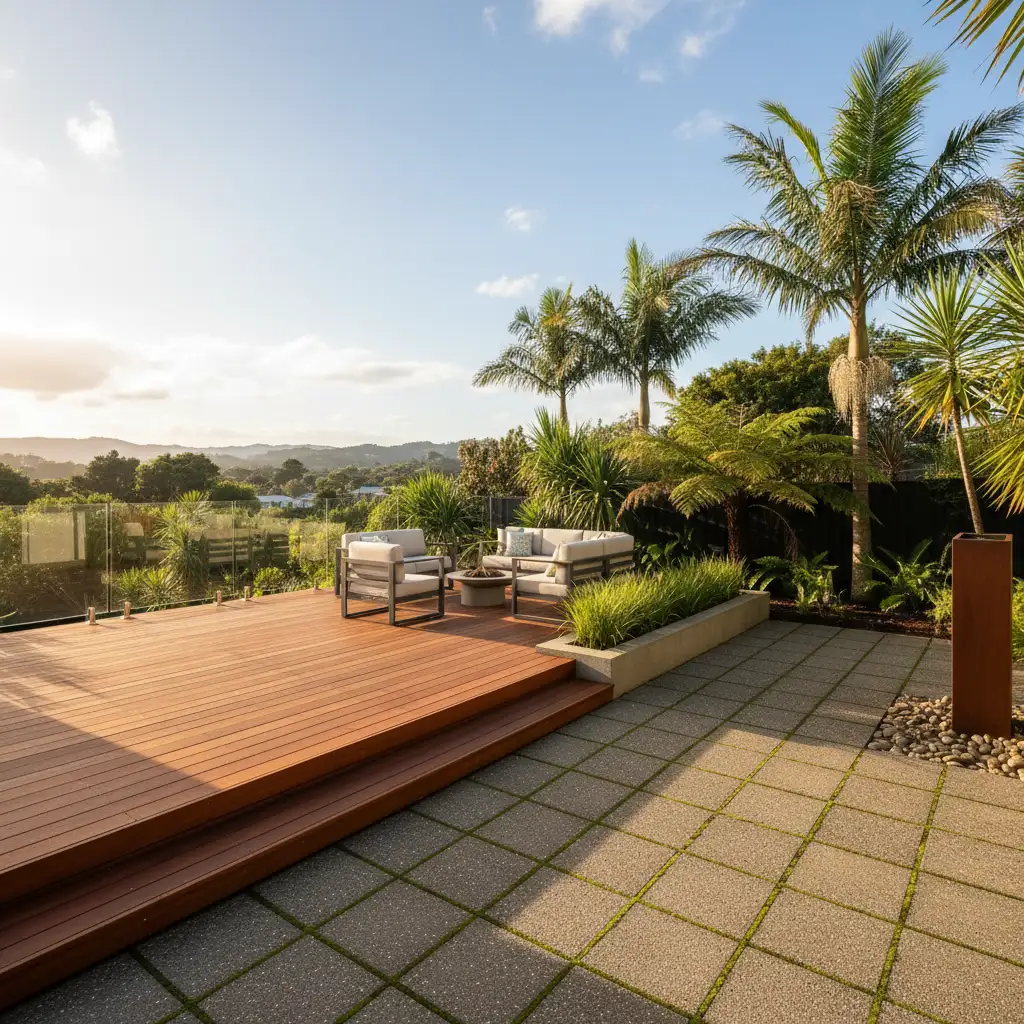
The Classic Kiwi Timber Deck
Timber decking is synonymous with New Zealand summers. It provides a natural, warm aesthetic that blends beautifully with garden greenery. However, the type of wood you choose matters significantly.
- Radiata Pine: The most affordable and widely available option. It is chemically treated (usually H3.2) to resist rot and insects. While cost-effective, it requires regular staining or painting to prevent warping and checking.
- Kwila (Merbau): A hardwood favourite in NZ due to its durability and rich red-brown hue. It bleeds tannins when new, so care must be taken near porous surfaces, but it offers superior longevity compared to pine.
- Vitex: A creamy-grey hardwood that is gaining popularity as a sustainable alternative to Kwila. It is durable and weathers to a silver-grey if left un-oiled.
The Durability of Concrete Pavers
Concrete pavers are an excellent choice for ground-level patios. They offer a robustness that timber cannot match, particularly in damp areas where wood might rot. Modern pavers come in various finishes, from terrazzo-style exposed aggregate to sleek, honed surfaces.
Pros of Pavers:
- Low Maintenance: Unlike timber, pavers do not require annual staining. A simple water blast keeps them looking new.
- Thermal Mass: Concrete absorbs heat during the day and releases it slowly, which can be beneficial in cooler evenings.
- Design Flexibility: They can be laid in various patterns (herringbone, stretcher bond) and combined with pebbles for a textured look.
Why Choose Composite Decking in New Zealand?
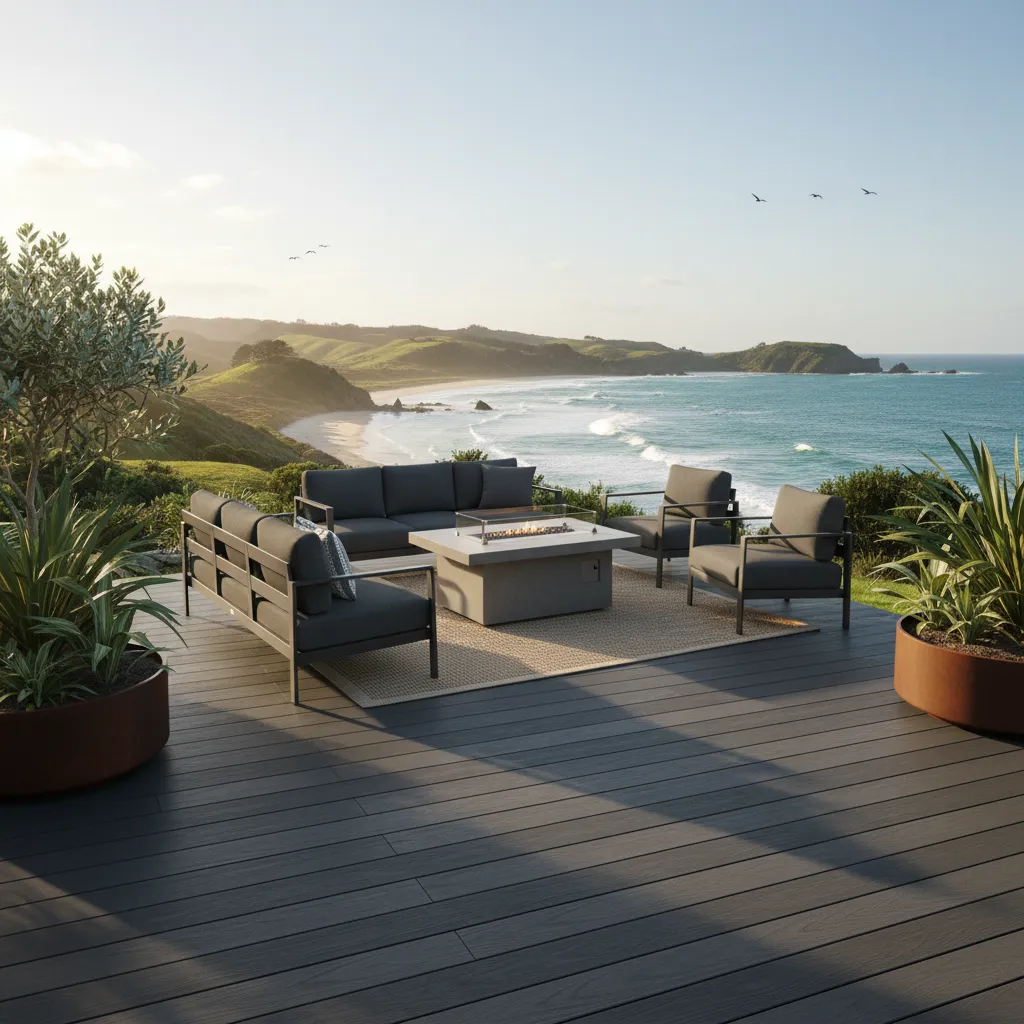
As homeowners seek low-maintenance outdoor flooring ideas in NZ, composite decking has seen a surge in popularity. Made from a blend of recycled plastics and wood fibres, composite boards offer the look of timber without the laborious upkeep.
Unmatched Durability Against UV and Rain
New Zealand has some of the highest UV radiation levels in the world. Traditional timber can crack, fade, and splinter under this intense sun. High-quality composite decking is engineered with UV inhibitors that prevent significant fading. Furthermore, because it is non-porous, it does not absorb water, making it immune to rot, mould, and warping—common issues in wetter regions like Auckland or the West Coast.
Safety and Sustainability
For families with children and pets, composite decking is often safer. It is splinter-free and typically features a hidden fastening system, meaning no nails or screws pop up over time. Environmentally, many composite brands available in NZ use up to 95% recycled materials, diverting plastic from landfills.
Essential Drainage Considerations for NZ Weather
Ignoring drainage is the single biggest mistake in outdoor flooring installation. With New Zealand’s variable climate, ensuring water moves away from your home and doesn’t pool on your patio is vital for structural integrity and safety.
Surface Water Management
Regardless of whether you choose decking or paving, the surface must have a slight gradient (fall) to direct water away from the house foundation. A fall of roughly 1:100 (1cm drop for every 100cm of length) is standard.
Permeable Solutions
Many local councils in NZ have strict regulations regarding impermeable surfaces to manage stormwater runoff.
- Permeable Pavers: These allow water to filter through the gaps between stones into the soil below, reducing the load on stormwater drains.
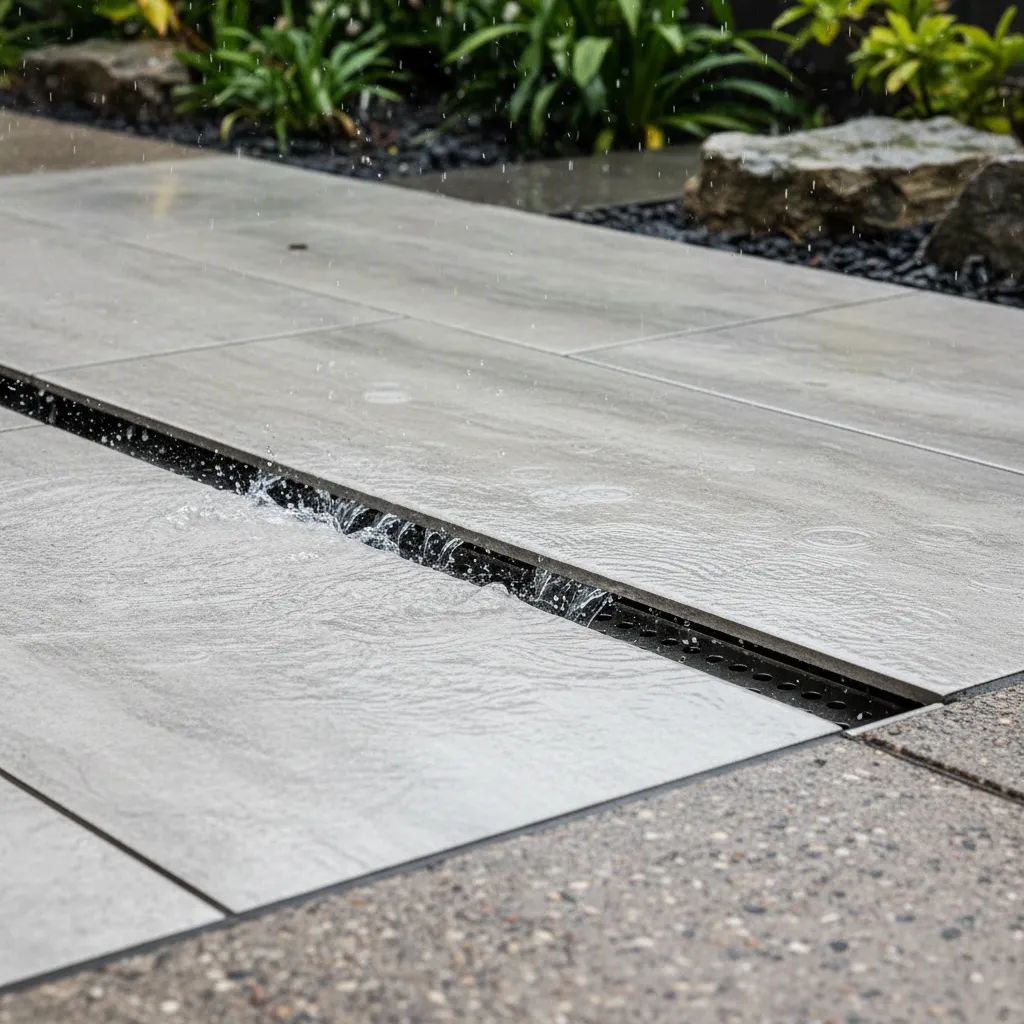
- Decking Gaps: Proper spacing between deck boards (usually 3-6mm) ensures water drains quickly and allows for airflow, which prevents the sub-frame from rotting.
Sub-Surface Drainage
For ground-level patios, installing a base layer of compacted gap 20 or gap 40 aggregate is essential. In clay-heavy soils often found in NZ, you may also need to install NovaFlo or perforated drainage pipes behind retaining walls or under the patio base to prevent waterlogging.
Mastering Indoor-Outdoor Flow: Seamless Transitions
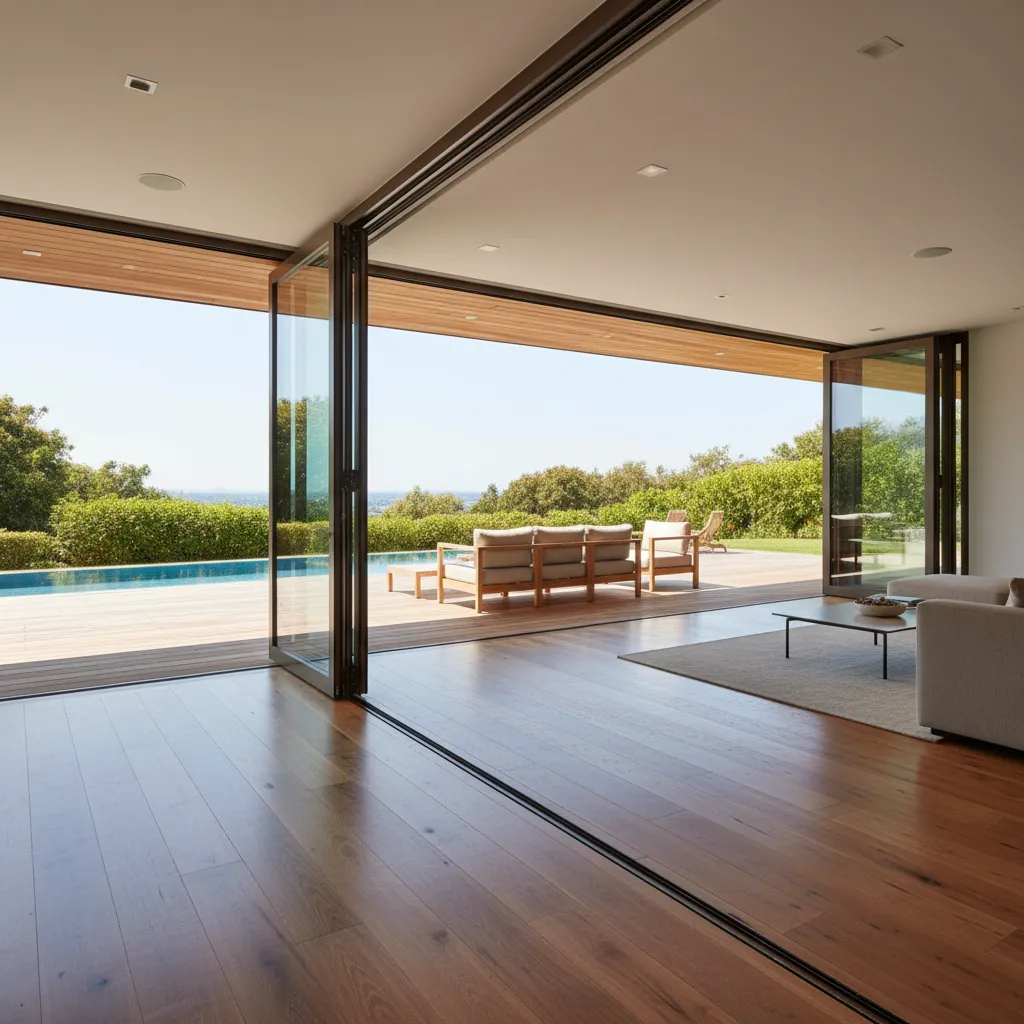
The concept of “indoor-outdoor flow” is central to Kiwi architecture. The goal is to make the transition between the lounge and the deck or patio feel invisible, effectively doubling your living space.
Flush Thresholds
Achieving a flush threshold—where the indoor floor level matches the outdoor deck level exactly—requires careful planning.
Technical Tip: To prevent water ingress with a flush threshold, you must use a linear drain (channel drain) along the joinery line. This captures surface water before it can bridge the gap into the interior.
Material Continuity
Visual continuity expands the space. If you have timber floorboards inside, choose a decking timber that matches the tone and grain direction. If you have concrete floors or grey tiles inside, opt for large-format porcelain outdoor tiles or concrete pavers in a similar shade. This optical illusion draws the eye out to the garden, making the interior feel larger.
Alternative Outdoor Flooring Options: Stone, Tiles, and Gravel
While decking and concrete are the heavyweights, other outdoor flooring ideas in NZ offer unique textures and benefits.
Exterior Porcelain Tiles
Outdoor porcelain tiles are becoming increasingly popular for high-end homes. They are thicker (20mm) than indoor tiles and have an anti-slip rating (R11 or higher). They are impervious to stains, moss, and UV fading, making them a premium, low-maintenance option.
Natural Stone
For a rustic or high-end look, natural stone like Bluestone, Sandstone, or Schist is unbeatable.
- Bluestone (Basalt): Very popular in NZ, offering a sophisticated dark grey palette. It can get hot in the sun, so it is best used in covered areas or interspersed with greenery.
- Sandstone: Provides a softer, warmer look but is more porous and requires sealing to prevent staining from leaves and wine spills.
Gravel and Pebbles
For budget-conscious homeowners or secondary paths, gravel is an excellent permeable option. It provides a satisfying “crunch” underfoot and is excellent for security. Using stabilisation grids (honeycomb mats) underneath prevents the gravel from migrating and makes it stable enough to roll a BBQ or wheelchair over.
Maintenance Tips for Long-Lasting Outdoor Floors
To ensure your outdoor flooring withstands the NZ climate, regular maintenance is required.
Timber Decking Care
Wash your deck annually with a specialized deck cleaner to remove dirt and mould spores. Re-stain or oil every 12-18 months. If using Kwila, remember that the “bleeding” stops after a few months, but silvering will occur if UV oil isn’t applied.
Paver and Tile Care
Apply a penetrating sealer to concrete and natural stone pavers every 2-3 years to prevent staining. For moss and lichen—common in damp NZ winters—spray with a ‘wet and forget’ style product annually. Avoid using high-pressure water blasters too close to the surface, as this can pit concrete and damage the grout between tiles.
People Also Ask
What is the cheapest outdoor flooring option in NZ?
Gravel or crushed shell is generally the cheapest outdoor flooring option in New Zealand. For hard surfaces, concrete pavers are typically more affordable than timber decking, especially when factoring in the sub-frame costs required for decks. Radiata pine is the cheapest timber decking option.
Do I need a building consent for a deck in NZ?
Generally, you do not need a building consent for a deck if it is less than 1.5 metres high from the ground. However, you must still comply with the Building Code regarding safety barriers and distance from boundaries. Always check with your local council as regulations can vary.
Which decking timber lasts longest in NZ?
Hardwoods like Vitex, Kwila, and Purpleheart generally last longer than softwoods like Pine. However, high-quality composite decking often outlasts natural timber as it does not rot, warp, or suffer from insect damage, often coming with warranties of 25 years or more.
Can I lay outdoor tiles over an existing concrete patio?
Yes, you can lay outdoor porcelain tiles or natural stone over an existing concrete pad, provided the concrete is in good condition, free of major cracks, and has proper drainage fall. You may need to use a decoupling membrane to prevent cracks transferring to the tiles.
How do I stop my timber deck from getting slippery?
Slippery decks are usually caused by algae, moss, or mould buildup. Regular cleaning with a stiff broom and deck cleaner is the best prevention. You can also apply anti-slip decking oils or install anti-slip strips on stairs and high-traffic areas.
Is composite decking hot to walk on in summer?
Early generations of composite decking could get very hot. However, modern “capped” composites often feature technology to reduce heat absorption. Lighter colours will always stay cooler than dark greys or browns. In direct NZ summer sun, all dark surfaces, including timber and concrete, will get hot.