
Pergola brackets in NZ are specialized structural hardware components designed to securely connect timber posts, beams, and rafters in outdoor environments. Available in hot-dip galvanized steel, marine-grade stainless steel, or powder-coated finishes, these fixings ensure compliance with New Zealand building codes for high wind zones and corrosion resistance while providing essential stability for pergolas, gazebos, and carports.
What is the Best Material for Pergola Brackets in New Zealand?
When constructing outdoor structures in New Zealand, selecting the correct material for your hardware is not merely an aesthetic choice; it is a structural necessity dictated by the environment. New Zealand’s unique geography means that a significant portion of the country is classified as a coastal zone, where salt-laden air accelerates corrosion. Consequently, standard zinc-plated hardware found in indoor applications is insufficient for outdoor pergolas.
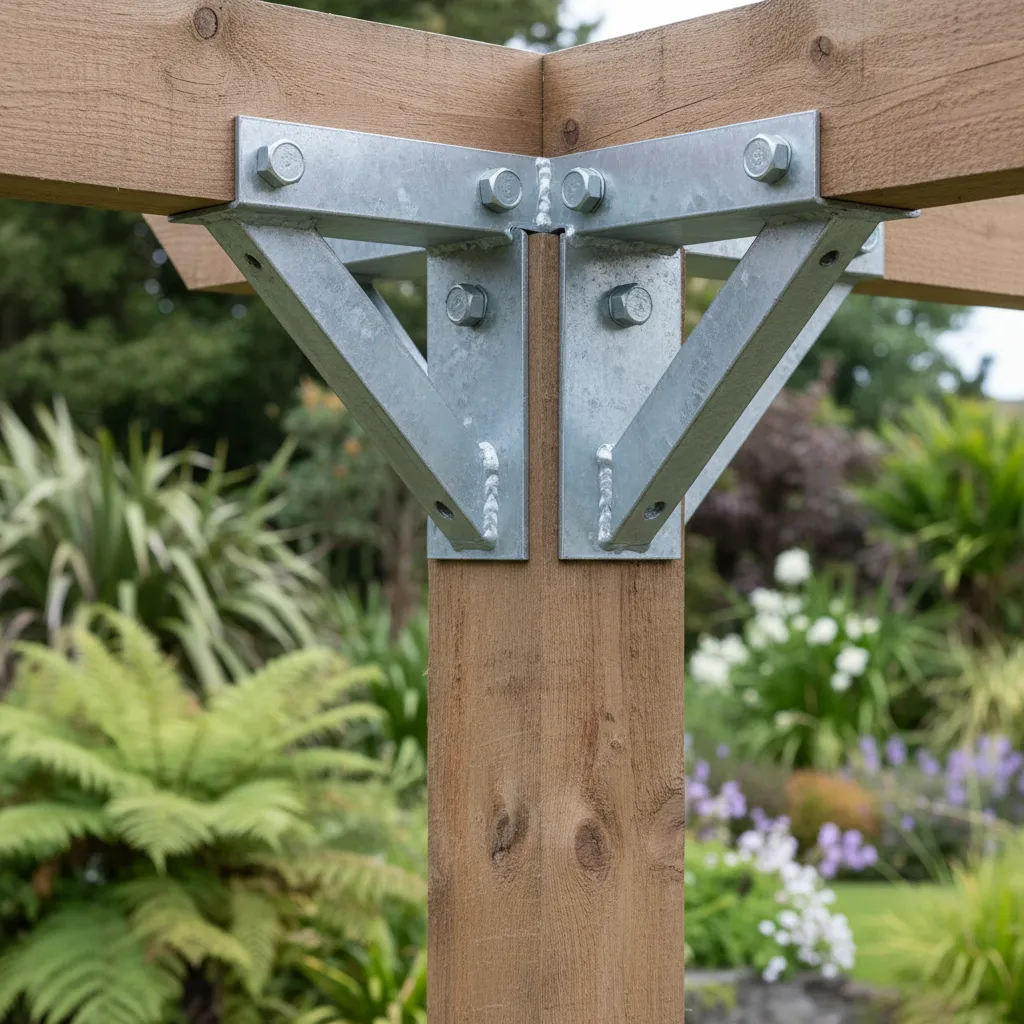
Hot-Dip Galvanized Steel
Hot-dip galvanized (HDG) steel is the industry standard for general outdoor construction in New Zealand. Unlike electro-galvanizing, which applies a thin layer of zinc, the hot-dip process involves submerging the steel bracket into molten zinc. This creates a thick, metallurgical bond that protects the base metal from rust. For most inland NZ locations (Zone B and some of Zone C), HDG pergola brackets offer a cost-effective and durable solution. They are identifiable by their dull, matte grey finish.
Marine-Grade Stainless Steel (304 vs. 316)
For properties located within 500 meters of the coastline (Zone D), or in areas with geothermal activity like Rotorua, stainless steel is often mandatory to meet durability requirements under NZS 3604. However, not all stainless steel is created equal.
- 304 Grade: Suitable for general outdoor use where superior corrosion resistance is needed over galvanized steel, but not directly exposed to sea spray.
- 316 Grade (Marine Grade): This contains molybdenum, which significantly increases resistance to salt corrosion. If you are building a pergola in a coastal area like the Hibiscus Coast, Mount Maunganui, or seaside Christchurch, 316 stainless steel brackets are the only viable option to prevent structural failure over time.
While stainless steel brackets command a premium price, they offer an extended lifespan and a sleek, modern appearance that complements high-end architectural designs.
What Hardware Do You Need for a Pergola?
A sturdy pergola relies on a load path that transfers weight from the roof (rafters) through the beams and posts down to the ground. Each connection point requires specific hardware designed to handle these loads, including uplift forces caused by wind.
Post Anchors and Stirrups
The foundation of your pergola begins with the post supports. These brackets keep the timber post off the ground, preventing moisture wicking and rot—a critical consideration for New Zealand’s damp winters.
- Full Stirrup Anchors: These are U-shaped brackets set into concrete. They are ideal for high-wind areas as they bolt through the post, providing excellent uplift resistance.
- Center Pin (T-Blade) Anchors: These offer a cleaner look by being inserted into a slot cut into the base of the post. They are often used in architectural builds where visual minimalism is desired.
- Bolt-Down Plates: Designed for fixing posts to existing concrete slabs or timber decks. These usually feature a square base plate with holes for dynabolts or coach screws.
Beam-to-Post Connectors
Connecting the horizontal main beams to the vertical posts is a critical structural joint. While traditional joinery uses notches (checking out), modern brackets simplify this process.
T-brackets and L-brackets made from heavy-gauge steel can be used to reinforce these joints. For a robust industrial look, many Kiwis opt for exposed steel plates bolted on either side of the post and beam connection.
Rafter Clips and Joist Hangers
Rafters, the smaller beams that run perpendicular to the main beams, provide the shade and structure for roofing materials. Rafter clips (often called hurricane clips or grips) are essential for securing these rafters against wind uplift. In New Zealand, where wind speeds can be significant, using properly rated grips or skew nailing combined with wire dogs is standard practice.
How to Choose Between Decorative and Concealed Fixings?
Once the structural requirements are met, the choice of pergola brackets largely comes down to the desired aesthetic of your outdoor living space.
Decorative Post Brackets
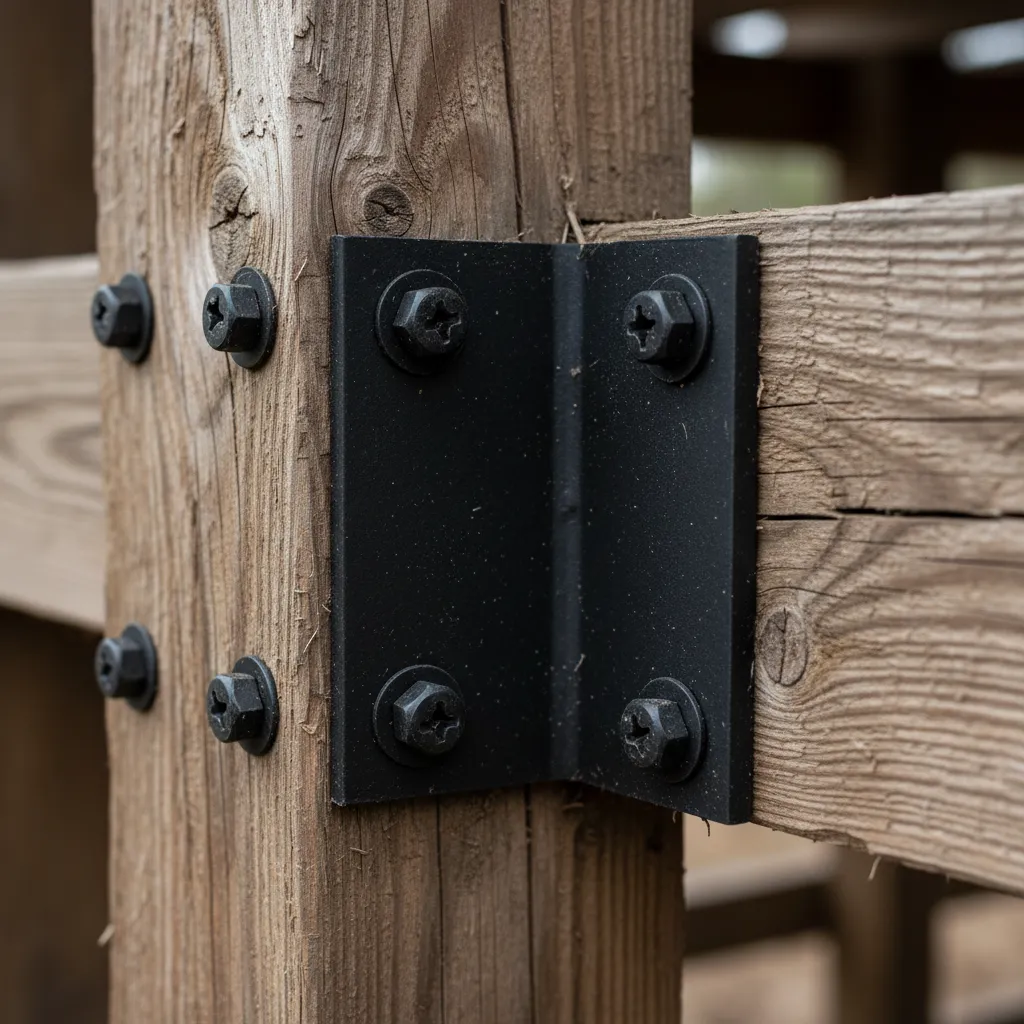
Industrial-chic and farmhouse styles have popularized visible hardware. Manufacturers now produce ranges of “decorative” structural hardware, typically finished in black powder coating over a galvanized base. These brackets are designed to be seen. They feature ornamental shapes, bevelled edges, and use large, decorative coach screws or hex bolts to create a statement. Using black hardware against natural cedar or stained pine creates a striking contrast that frames the structure beautifully.
Concealed Joinery Options
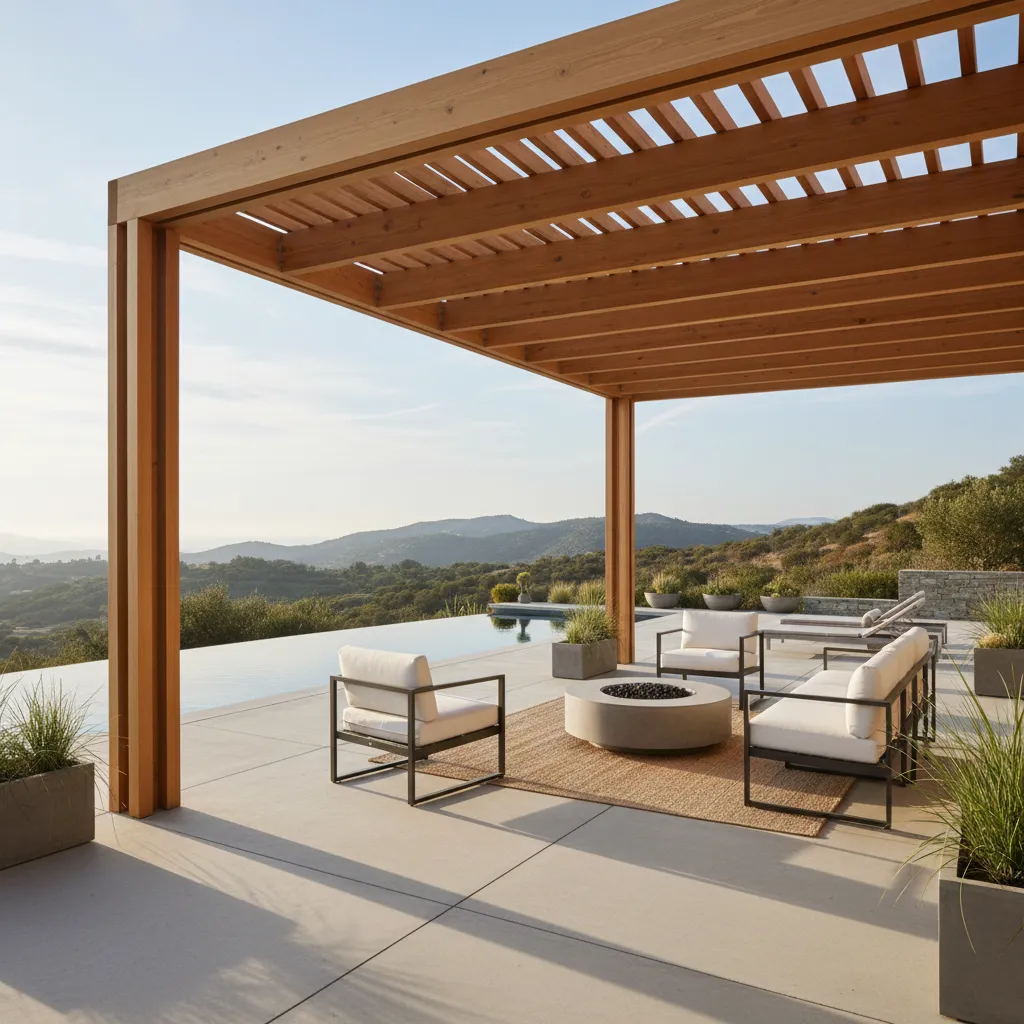
For a modern, minimalist, or “floating” pergola look, concealed joinery is the preferred method. This involves using internal connectors that are hidden inside the timber.
Systems such as the primal timber connectors or architectural internal brackets allow you to join beams and posts without visible steel plates. Installation typically involves cutting slots or mortises in the timber, inserting the metal connector, and driving pins through the side of the timber to lock it in place. The result is a clean line where the timber appears to butt join seamlessly. This style is particularly popular in contemporary Auckland and Wellington architectural builds.
How to Install Pergola Brackets Correctly?
Proper installation is paramount for safety and longevity. Even the highest quality bracket will fail if installed incorrectly.
Sizing for NZ Timber
One common pitfall for DIYers is the difference between nominal and actual timber sizes. In New Zealand, a “100×100” rough sawn post is approximately 100mm square. However, a “100×100” dressed (smooth) post usually finishes at roughly 88mm or 90mm square.
When buying post stirrups or U-brackets, ensure you check the internal dimension. A bracket designed for 100mm rough sawn timber will have a gap if used with 90mm dressed timber, requiring packers which can compromise stability and aesthetics. Always measure your timber before purchasing hardware.
Fixing to Concrete
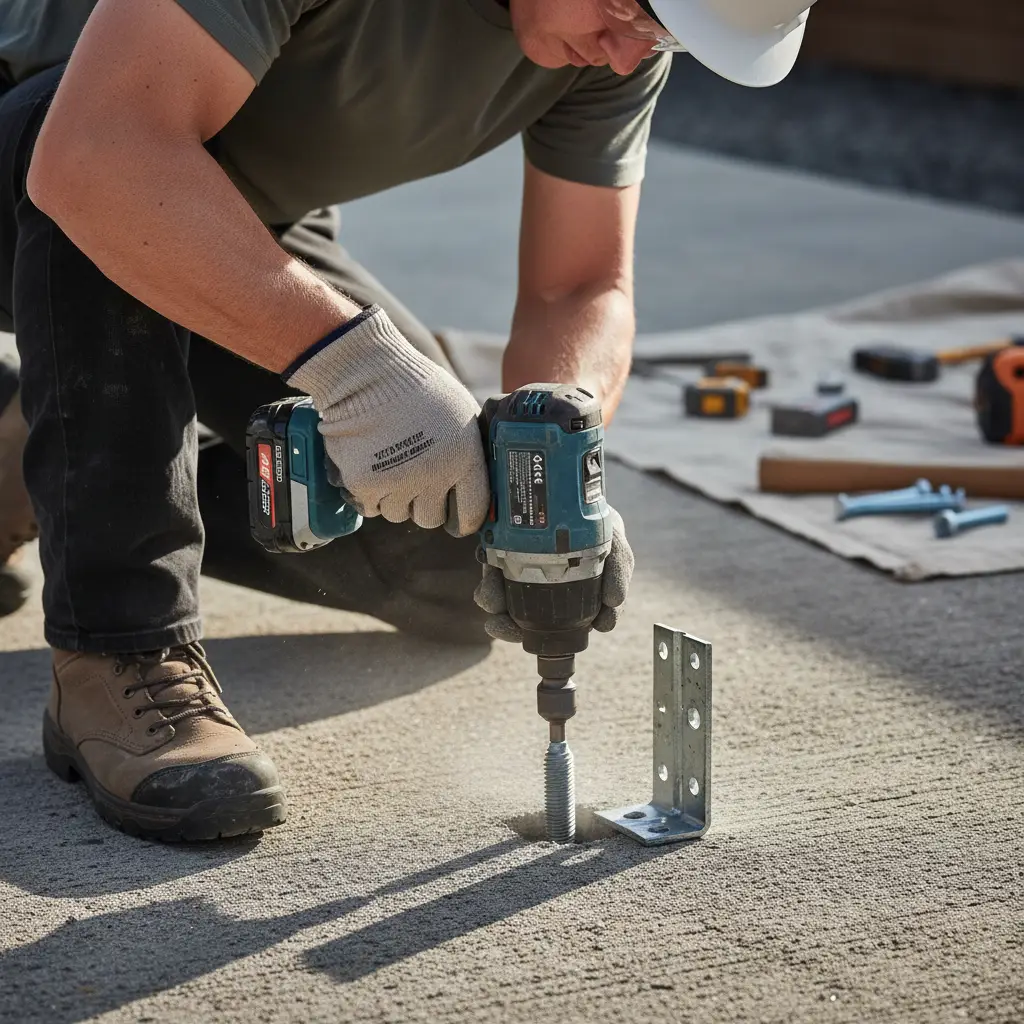
When installing post anchors into existing concrete:
- Mark Out: Use a chalk line to ensure posts are perfectly square.
- Drill: Use a masonry drill bit of the correct diameter for your chosen anchor bolt (e.g., Dynabolt or AnkaScrew).
- Clean: Blow out the dust from the hole. This is crucial; dust can act as a lubricant, causing the anchor to slip under load.
- Tighten: Insert the bolt and tighten to the manufacturer’s specified torque. Over-tightening can crack the concrete.
Where to Buy Pergola Brackets in NZ?
Sourcing quality hardware is easier than ever, but it pays to shop where trade professionals shop to ensure compliance with New Zealand standards.
Hardware Chains: Major retailers like Mitre 10, Bunnings, and PlaceMakers stock extensive ranges of standard galvanized brackets, including brands like Pryda, Bowmac, and Simpson Strong-Tie. These are generally sufficient for standard DIY projects.
Specialist Fastener Suppliers: For marine-grade stainless steel (316) or specific architectural black hardware, specialist fastener companies (such as Fortress Fasteners or Blacks Fasteners) often carry stock that general hardware stores do not. If you are building in a high wind zone or a sea spray zone, visiting a specialist is highly recommended to ensure you get certification-backed products.
Online Architectural Retailers: Several NZ-based online stores now specialize in decorative pergola systems, offering kits that include pre-coated brackets and matching screws, simplifying the design process for homeowners.
People Also Ask
What size post bracket do I need for a 100×100 post?
For a rough sawn 100×100 post, you need a bracket with an internal width of 100mm-105mm. For a dressed (smooth) 100×100 post, which actually measures approx 90mm, you need a 90mm bracket. Always measure your timber specifically before buying.
Can I use dynabolts for pergola brackets?
Yes, dynabolts (sleeve anchors) are commonly used to fix bracket base plates to existing concrete. However, for high wind zones or heavy loads, screw-bolts (like AnkaScrews) or chemical anchors are often recommended for superior hold.
How do I stop my pergola brackets from rusting?
Choose hot-dip galvanized steel for general use or 316 marine-grade stainless steel for coastal areas. If using galvanized brackets, you can paint them with a metal primer and exterior paint for extra protection.
What is the difference between a stirrup and a post anchor?
The terms are often used interchangeably. Generally, a ‘stirrup’ refers to the U-shaped cup that holds the timber, while ‘post anchor’ is the general term for the entire unit connecting the post to the ground (concrete or deck).
Do I need a building consent for a pergola in NZ?
Generally, pergolas under 20 square meters (or 30 square meters if built by a lightweight building product) do not require consent, provided they are not attached to the house in a way that affects weathertightness. However, you must still comply with the Building Code regarding structural stability.
Are black pergola brackets durable?
Yes, if they are high quality. Look for brackets that are hot-dip galvanized first and then powder-coated. This ‘duplex’ coating provides excellent corrosion resistance. Avoid brackets that are simply painted steel without galvanization.