
The primary difference between a wooden vs aluminium pergola lies in long-term maintenance and structural durability. Aluminium pergolas offer a modern, rot-proof solution with powder-coated finishes ideal for New Zealand’s coastal salt spray, requiring virtually no upkeep. Timber pergolas provide a traditional, natural aesthetic and lower upfront material costs but demand regular staining and sealing to prevent warping, rot, and UV degradation.
Choosing the right material for your outdoor living space is a significant investment that impacts not only the aesthetics of your garden but also your long-term maintenance schedule and property value. In the unique climate of New Zealand—characterized by high UV radiation, variable precipitation, and coastal salt-laden winds—the debate between wooden vs aluminium pergola structures is particularly relevant.
This comprehensive guide analyzes the structural integrity, cost implications, and lifestyle benefits of both materials to help you make an informed decision for your Kiwi backyard.
The Core Comparison: Wood vs Aluminium
When evaluating outdoor structures, homeowners are often torn between the organic warmth of timber and the sleek industrial capability of aluminium. Understanding the fundamental material properties is the first step in this decision-making process.
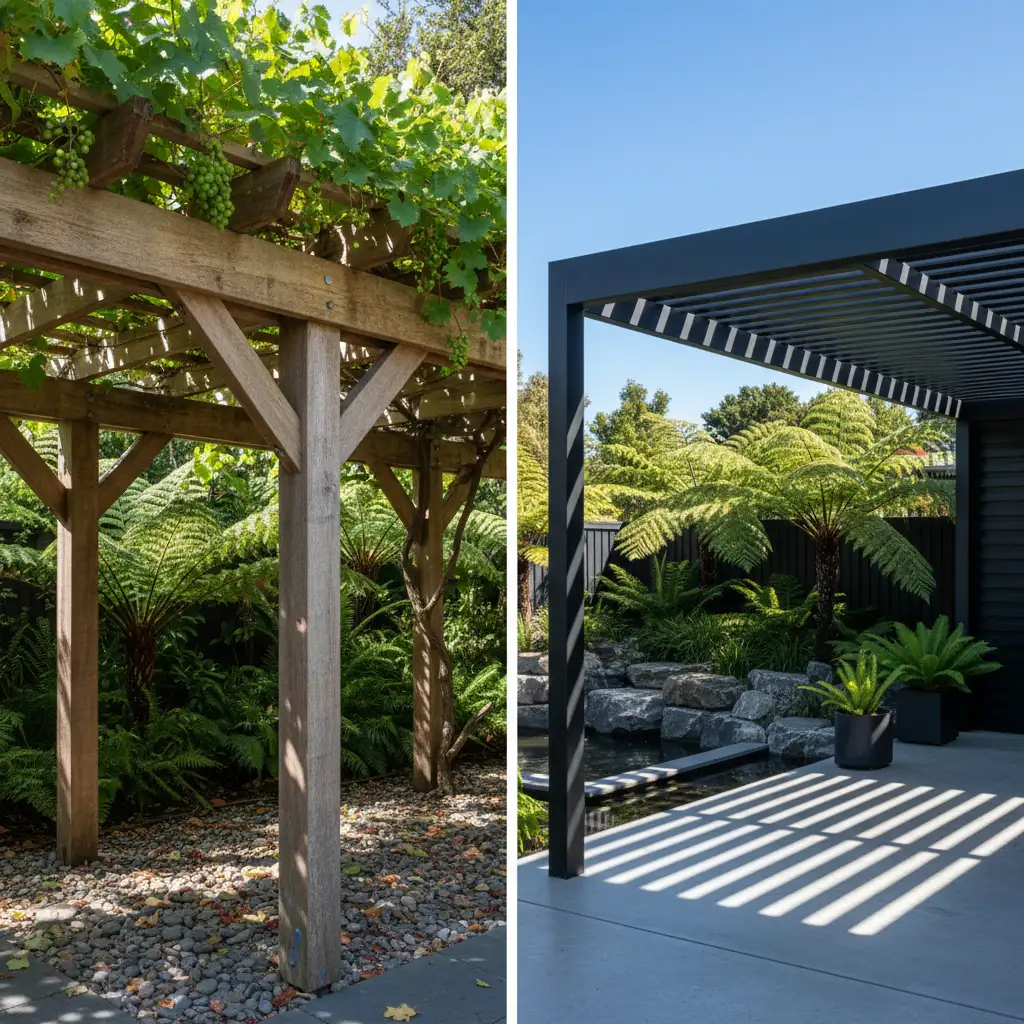
Material Composition and Engineering
Aluminium pergolas are typically constructed from extruded aluminium alloys. In the New Zealand market, high-quality units use T6 aircraft-grade aluminium, known for its high strength-to-weight ratio. These structures are engineered to be hollow yet incredibly rigid, allowing for integrated features such as internal guttering systems and automated louver blades without the risk of sagging over time.
Wooden pergolas rely on the density and grain structure of the timber. Common options in NZ include H3.2 or H4 treated Radiata Pine, Macrocarpa, or imported Cedar. While timber offers significant structural strength, it is a hygroscopic material, meaning it absorbs and releases moisture from the surrounding environment. This constant expansion and contraction is the root cause of many maintenance issues associated with wood.
Durability in NZ Coastal Conditions
New Zealand’s environment is harsh on building materials. We have some of the highest UV ratings in the world, combined with high rainfall and salt spray that can travel kilometers inland. How do these materials stack up against the elements?
Aluminium: The Coastal Champion
Aluminium is naturally resistant to rust (iron oxide) because it contains no iron. When exposed to oxygen, aluminium forms a microscopic layer of aluminium oxide, which shields the metal underneath from further corrosion.
For NZ conditions, the durability is further enhanced through powder coating. This process involves applying a dry powder electrostatically and then curing it under heat to form a skin. A high-quality powder coat (often rated as ‘marine grade’) makes the aluminium impervious to salt air, ensuring that a pergola installed in a coastal suburb like Mission Bay or Mount Maunganui will not corrode, peel, or blister.
Timber: The Battle Against Rot and Warping
Timber faces three main enemies in New Zealand: moisture, UV radiation, and insects.
- Moisture: Constant wetting and drying cycles cause wood to check (crack) and warp. If water gets trapped in joints, it leads to fungal decay (rot).
- UV Radiation: The NZ sun breaks down lignin, the natural glue holding wood fibers together. This causes the surface to turn grey and become fibrous (