
The most effective heater for a pergola is a radiant electric infrared heater, offering instant, wind-resistant warmth by heating objects rather than the air. For seamless integration, choose slimline, black-anodized units paired with dimmable LED strip lighting, ensuring year-round comfort and a sophisticated aesthetic for your outdoor living area.
Creating a truly functional outdoor living space in New Zealand requires more than just a roof over your head. The variable climate, characterized by crisp evenings and sudden temperature drops, demands a robust strategy for climate control and illumination. Integrating high-performance heating and lighting transforms a standard pergola into a luxurious, year-round extension of your home.
Choosing the Right Heater for Your Pergola
When searching for a heater for pergola structures, the primary challenge is combating the open-air environment. Unlike indoor spaces where insulation traps heat, outdoor areas are susceptible to wind drift, which can rapidly dissipate warm air. This makes traditional convection heaters or standard gas mushrooms largely ineffective for modern, open-sided architectural structures.
For commercial and high-end residential applications in New Zealand, electric radiant heaters are the gold standard. They provide directional heat that mimics the sun, warming people and furniture directly rather than wasting energy trying to heat the moving air. When selecting a unit, consider the mounting height, the spread of the heat footprint, and the IP (Ingress Protection) rating to ensure longevity against rain and humidity.
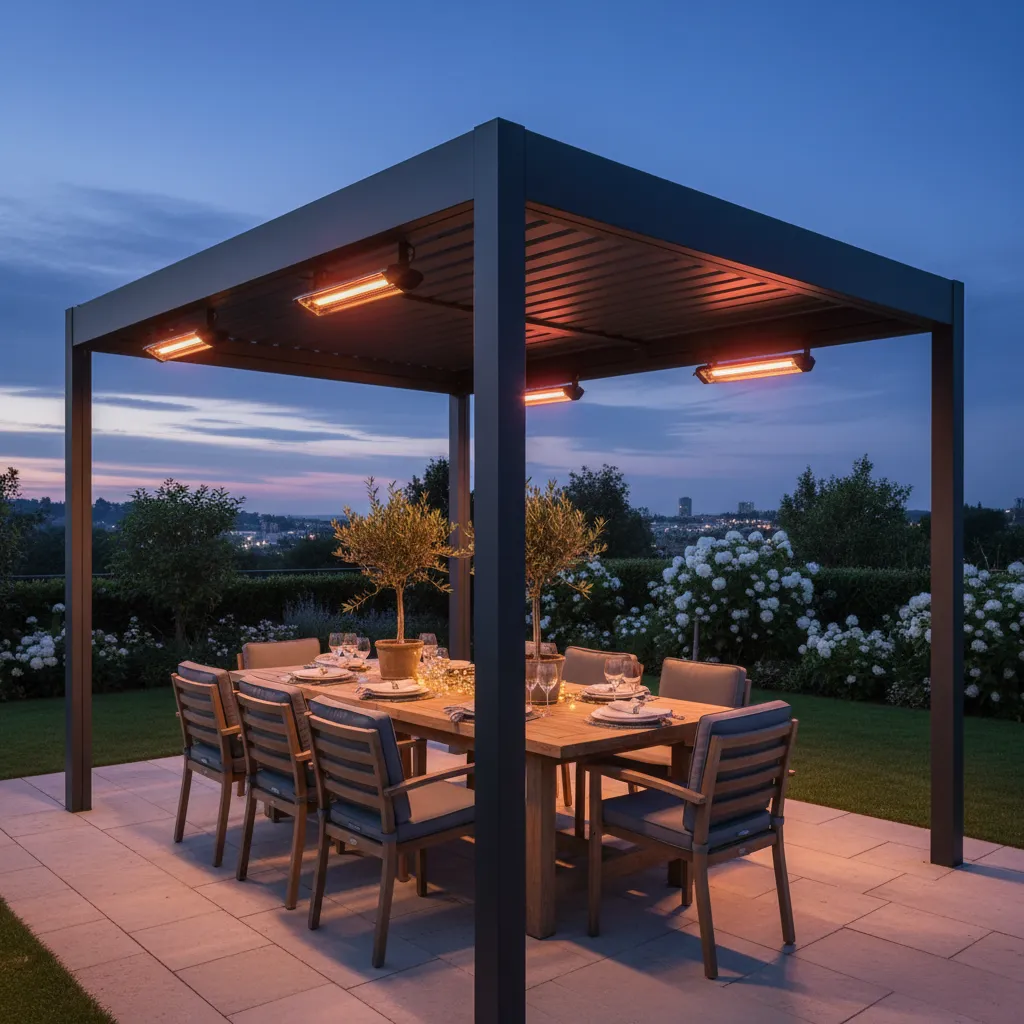
Is Gas or Electric Better for Pergolas?
While gas heaters have historically been popular, electric infrared heaters are superior for pergola integration for several reasons:
- Efficiency: Electric heaters convert over 90% of energy into heat, whereas gas heaters lose significant energy to the surrounding air.
- clearance: Electric units require significantly less vertical clearance than gas options, making them safer for mounting under louvre roofs or fixed canopies.
- Wind Resistance: Infrared heat cuts through the breeze. Gas flames can flicker or blow out, and the heat they generate often blows away before reaching your guests.
- Aesthetics: Electric heaters can be sleek, linear, and unobtrusive, blending into the pergola structure rather than dominating the floor space like bulky gas bottles.
Understanding Infrared Technology
To maximize the utility of your outdoor room, understanding the type of infrared heat is crucial. Not all electric heaters are created equal. They generally fall into two categories relevant to outdoor living: Medium-wave and Short-wave.
What is the difference between Short-wave and Medium-wave infrared?
Short-wave Infrared (Near Infrared): These heaters emit a distinct red glow and provide high-intensity heat instantly. They are the most effective solution for exposed, windy areas because the short wavelength penetrates the air with minimal loss. If your pergola is fully open on the sides, short-wave technology is essential for feeling warm during a chilly NZ winter evening.
Medium-wave Infrared: These units often produce no visible light (often called “black heat” or “zero light” heaters). They provide a gentler, more pervasive warmth but are susceptible to air movement. These are best suited for enclosed outdoor rooms (e.g., pergolas with drop-down screens or glass sliding doors) where the wind is managed. They take longer to heat up but offer a very comfortable, non-intrusive heat source.
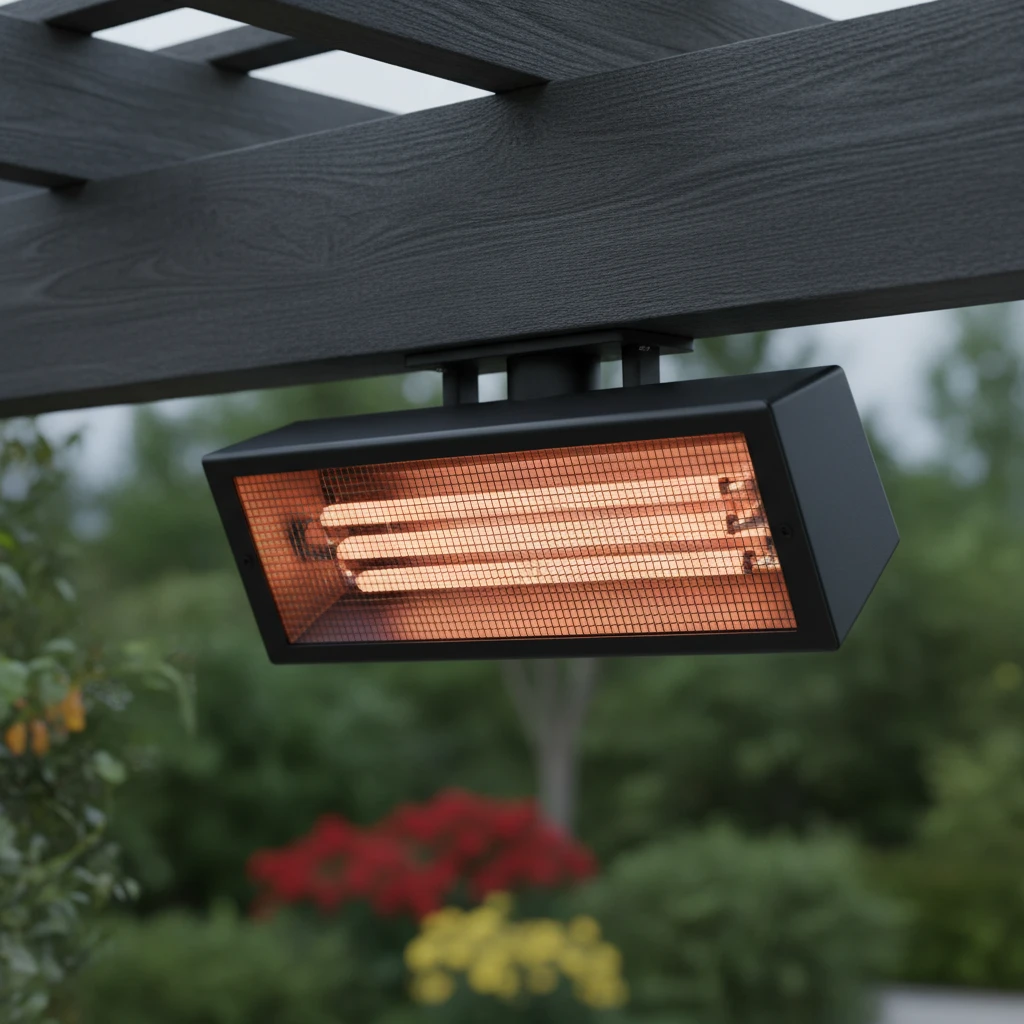
Mastering LED Strip Lighting Integration
Lighting is the second pillar of a functional outdoor space. While the heater provides physical comfort, lighting dictates the mood and usability of the space. The modern standard for pergola lighting is integrated LED strips, often embedded directly into the louvre blades or the perimeter frame.
Linear Lighting vs. Spotlights
Old-fashioned spotlights can create harsh shadows and glare, which is unpleasant for evening dining. Linear LED strips offer a continuous line of light that provides uniform illumination. When integrated into the louvres, the light moves with the roof, allowing you to direct the illumination or bounce it off the closed blades for a soft, diffused glow.
Color Temperature Matters
The “warmth” of the light is measured in Kelvin (K). For outdoor entertaining, avoid the clinical look of Cool White (5000K+). instead, opt for:
- Warm White (2700K – 3000K): Creates a cozy, intimate atmosphere similar to incandescent bulbs. Perfect for dining and relaxing.
- Natural White (4000K): A crisper, cleaner light that is excellent for task lighting, such as over an outdoor kitchen or BBQ station.
Ideally, select an integrated system that allows you to tune the white balance or dim the lights, giving you complete control over the environment from dusk until late night.
The Art of Wiring Concealment
The difference between a DIY project and a high-end commercial-grade installation lies in the details—specifically, the wiring. A luxury pergola should look monolithic and clean, with no visible conduits, cables, or junction boxes disrupting the aesthetic.
How do you hide wiring in a pergola?
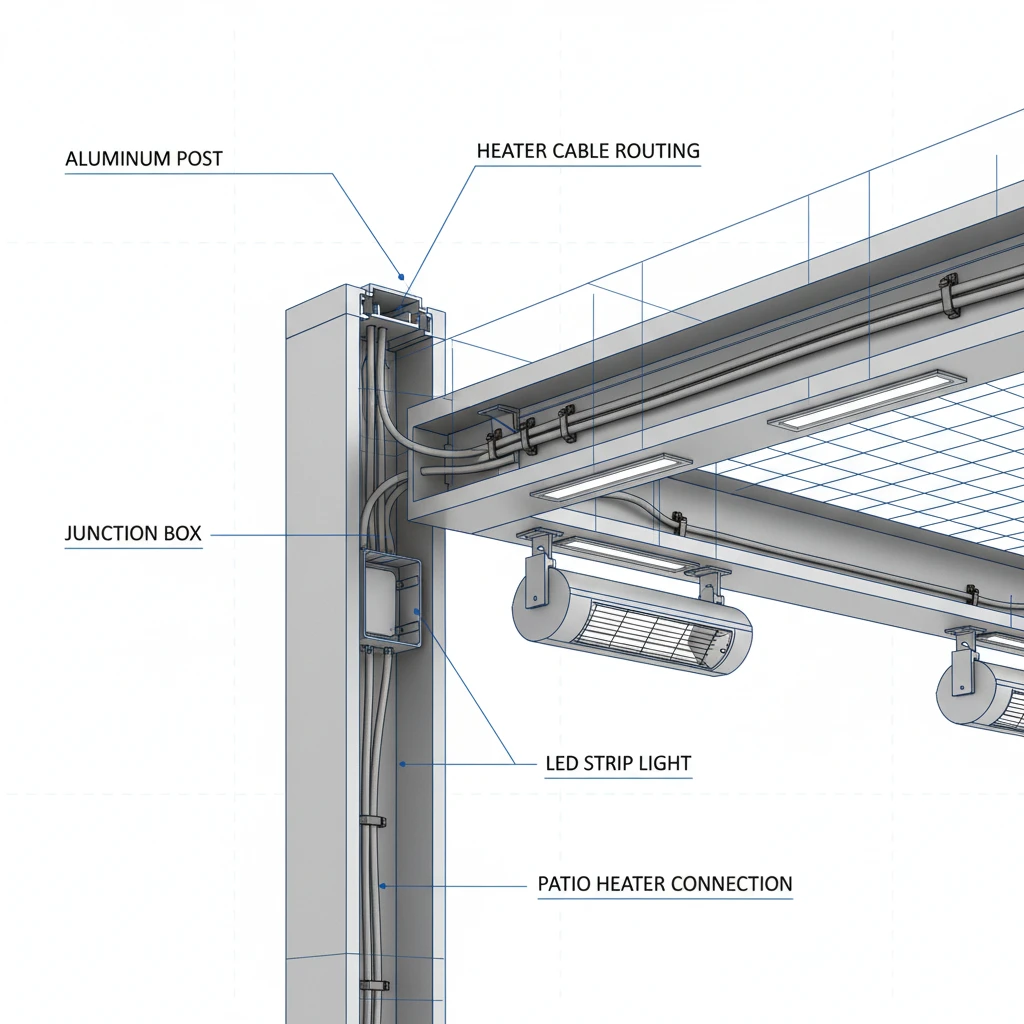
Professional pergola systems, particularly aluminum louvre roofs, are designed with internal channels within the posts and beams. During the installation phase, all cabling for the heater for pergola units and LED strips is run through these hollow voids.
Key Considerations for Concealment:
- Pre-Planning: The electrical plan must be determined before the structure is erected. Drilling retrofitted holes into powder-coated aluminum can compromise the finish and warranty.
- Beam Capacity: Ensure the structural beams are large enough to house the transformers and drivers required for low-voltage LED systems. If the beams are too slim, these components may need to be remotely located in a garage or ceiling cavity, requiring longer cable runs.
- Separation: High-voltage cables (for heaters) and low-voltage cables (for LEDs and sensors) should ideally be separated to prevent interference, although this is less of an issue with modern shielded cables.
Creating Ambience for Evening Entertaining
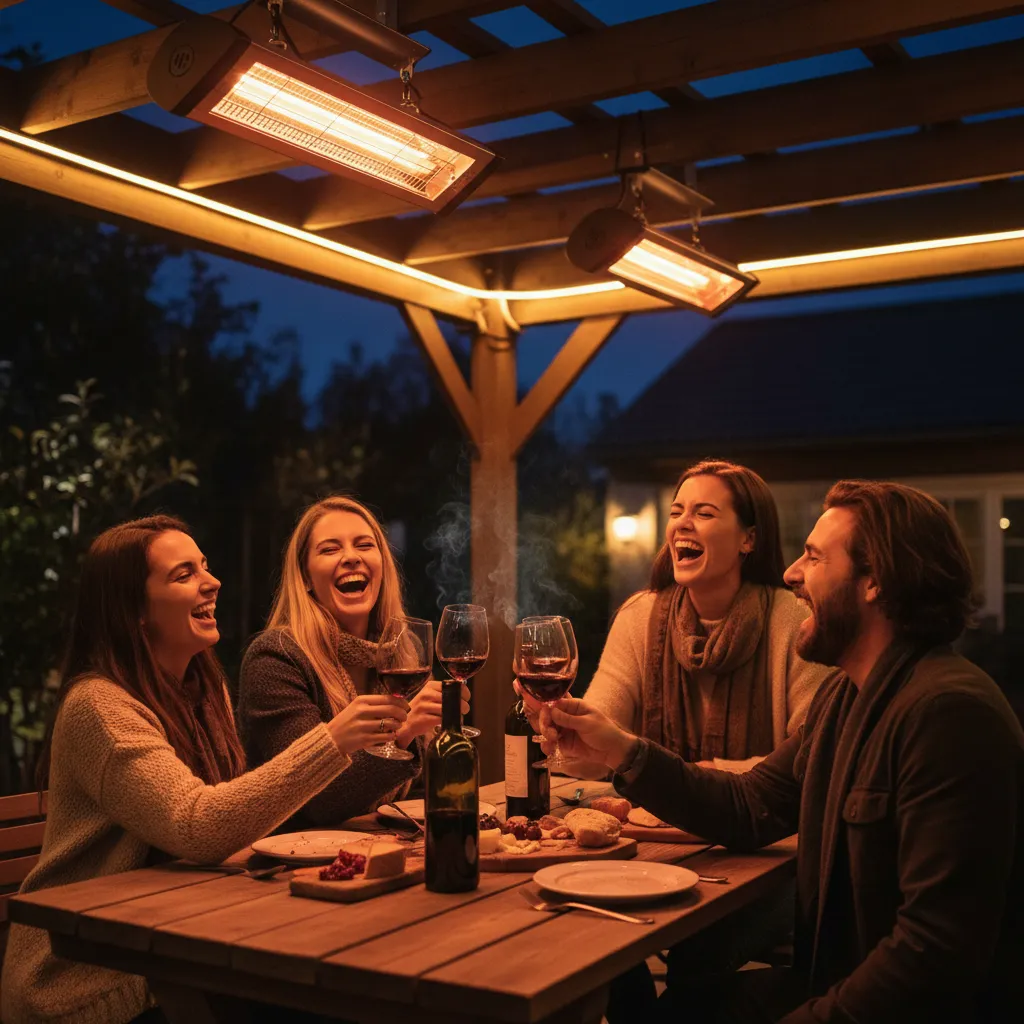
Achieving the perfect ambience involves balancing the heat and light sources to create zones. In a large pergola, you might not want to heat the entire area if you are only using the dining table. This is where zoning comes into play.
Zoning Your Heating and Lighting
Wire your heaters on separate circuits. For example, if you have a 6-meter pergola with four heaters, wire them as two pairs. This allows you to turn on only the heaters above the active area, saving energy and customizing comfort levels. Similarly, lighting should be zoned—keep the BBQ area bright while dimming the lounge area for post-dinner drinks.
Smart Control Systems
The ultimate integration is automation. Modern outdoor systems can be connected to home automation platforms like Control4, Savant, or simpler app-based systems like Tuya or Somfy.
Benefits of Smart Integration:
- Convenience: Turn on the heaters 15 minutes before you go outside so the furniture is warm.
- Voice Control: “Hey Google, turn on the patio heaters.”
- Sensors: Rain sensors can close the louvres automatically, and motion sensors can trigger low-level lighting for security.
New Zealand Specific Considerations
When selecting a heater for pergola setups in NZ, one must consider the coastal nature of the country. Salt spray can be corrosive to inferior metals. Ensure your heaters and light fittings are constructed from marine-grade stainless steel or high-quality anodized aluminum.
Furthermore, look for products with a minimum rating of IP55 or IP65. This ensures they can withstand directional water jets (like washing down the pergola) and dust ingress, guaranteeing safety and durability in the Kiwi outdoors.
Frequently Asked Questions
What is the best wattage for a pergola heater?
For an open pergola, a heater between 2000W and 3000W is typically recommended per 4-5 square meters of space. Higher wattages (like 3000W or 4000W) are better for mounting heights above 2.5 meters to ensure the heat reaches the occupants effectively.
Can I install a heater on a timber pergola?
Yes, but safety clearances are critical. Infrared heaters generate significant heat. You may need to install a heat shield or use extended brackets to ensure the timber does not get scorched. Always follow the manufacturer’s clearance specifications regarding combustible materials.
How much does it cost to run an electric patio heater in NZ?
Cost depends on your electricity rate, but generally, a 2000W (2kW) heater costs roughly 50 to 70 cents per hour to run (based on average NZ power prices of $0.25-$0.35 per kWh). This is often cheaper and more convenient than refilling gas bottles.
Are infrared heaters waterproof?
Most quality outdoor infrared heaters are weather-resistant, not waterproof. Look for an IP rating of IP55 or higher, which means they can handle rain and water spray, but they should not be submerged or subjected to high-pressure cleaning directly on the element.
Do LED strip lights need a diffuser?
Yes, a diffuser is essential for outdoor LED strips. It protects the diodes from moisture and dust, and visually, it smooths out the “dots” of light to create a seamless, neon-like glow that is much more pleasing to the eye.
Can I automate my pergola heating?
Absolutely. Most modern electric heaters can be wired into a relay switch controlled by smart home apps or remote controls. Some high-end models come with built-in Bluetooth or Wi-Fi capabilities for direct phone control.