
Louvered roof systems in NZ are premium, adjustable outdoor structures typically constructed from marine-grade aluminum. They feature rotating blades that allow homeowners to control sunlight, ventilation, and rain protection with the touch of a button, effectively extending living space year-round regardless of New Zealand’s variable weather conditions.
New Zealand’s climate is notoriously four-seasons-in-one-day. For homeowners and commercial property managers alike, the challenge has always been creating an outdoor environment that remains usable whether the sun is scorching or a sudden southerly brings rain. Advanced louvered roof systems have emerged as the definitive solution to this architectural challenge.
The Rise of Opening Roofs in New Zealand
The concept of the “indoor-outdoor flow” is fundamental to Kiwi architecture. However, traditional fixed pergolas or canvas awnings often fall short. Fixed roofs block winter sun when it is most needed, while canvas solutions often struggle against high winds and degrade under UV exposure. This gap in the market has driven the exponential rise of louvered roof systems NZ wide.
These systems, often referred to as opening roofs, offer a bioclimatic solution. By adjusting the angle of the louvers, you can manipulate the microclimate of your outdoor area. In summer, angling the blades allows hot air to escape while blocking direct sun, significantly cooling the area. In winter, the blades can be angled to invite warm sunlight into the home, or closed completely to create a watertight seal against the rain.
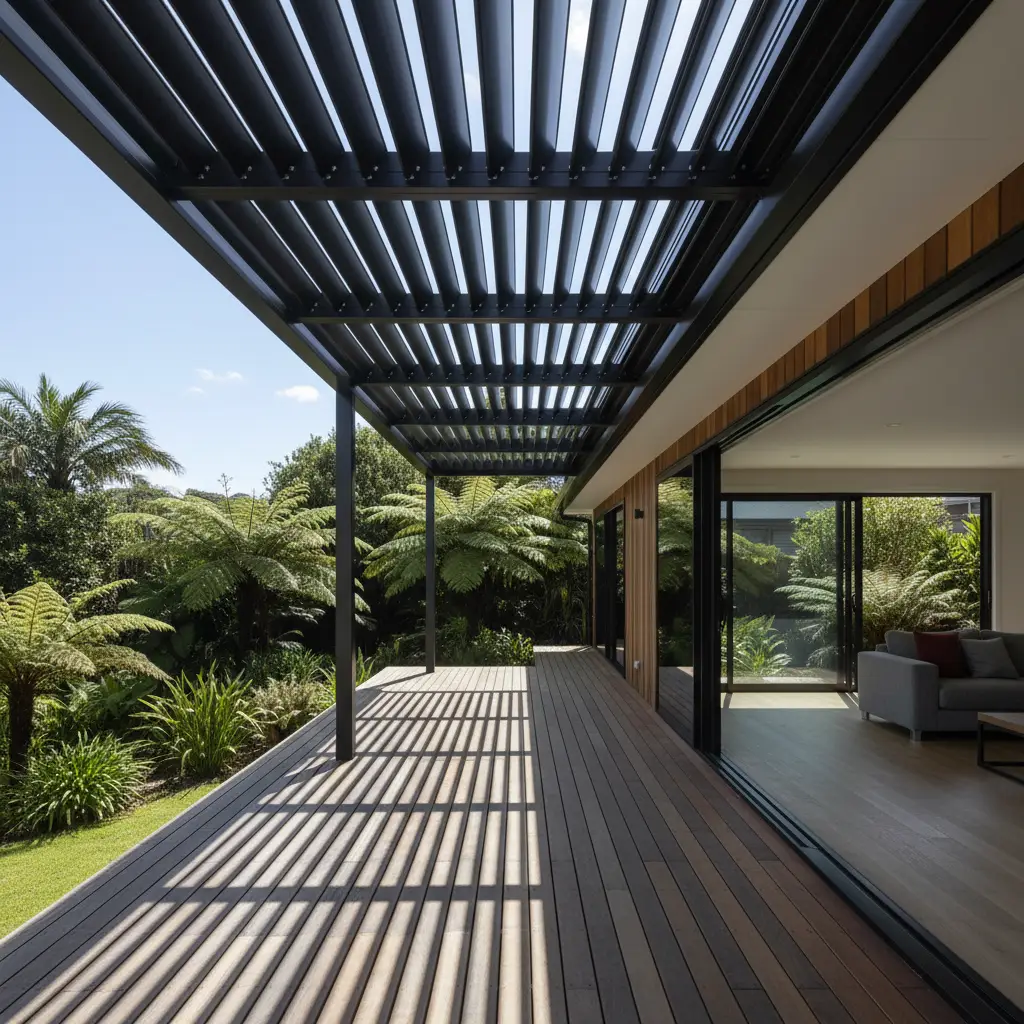
The aesthetic appeal is also a major driver. Modern systems are designed with clean lines, hidden gutters, and integrated electronics, making them a seamless addition to contemporary architecture rather than an afterthought. Real estate data consistently suggests that permanent, high-quality outdoor living structures add significant value to property prices in New Zealand.
Motorised vs. Manual Systems: Making the Right Choice
When investigating louvered roof systems in NZ, the primary operational decision is between manual and motorised mechanisms. While both serve the same functional purpose, the user experience differs vastly.
Manual Systems
Manual louvered roofs are operated via a hand crank or a gearbox rod.
Pros:
- Cost-Effective: Generally 20-30% cheaper than motorised versions.
- Simplicity: No electrical wiring required, making installation simpler in detached garden areas.
- Reliability: Fewer components mean fewer potential points of failure.
Cons:
- Laborious: Adjusting the roof requires physical effort, which can be inconvenient during sudden weather changes.
- Lack of Automation: You cannot integrate rain sensors or smart home features.
- Speed: Closing the roof manually in a sudden downpour is slower than a motor.
Motorised Systems
Motorised systems utilize linear actuators or tubular motors, usually hidden within the frame, to rotate the blades.
Pros:
- Convenience: Operation via remote control, wall switch, or smartphone app.
- Precision: Motors allow for exact blade positioning to track the sun.
- Integration: Essential for incorporating weather sensors.
Cons:
- Price: Higher upfront investment for motors and electrical work.
- Infrastructure: Requires a qualified electrician to run power to the site.
For most commercial applications and high-end residential projects, motorised systems are the standard due to the seamless user experience they provide.
Weather Sensors and Smart Automation
The true power of a modern louvered roof system lies in its intelligence. Automation transforms a static structure into a responsive machine that protects your property even when you aren’t home.
Rain Sensors
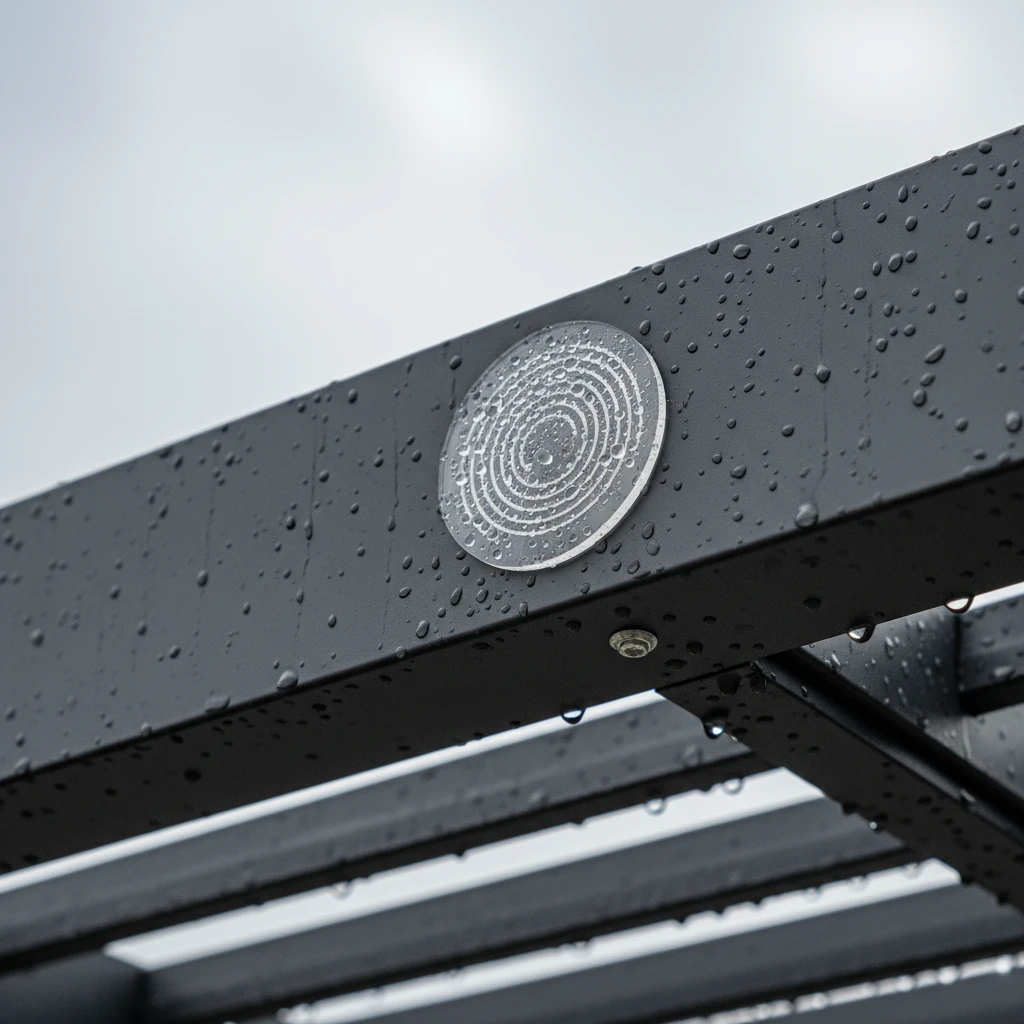
In New Zealand, rain can arrive unexpectedly. A rain sensor detects moisture on the roof and automatically triggers the motor to close the louvers, creating a watertight seal. This is crucial for protecting outdoor furniture, cushions, and electronics (like outdoor TVs) from water damage.
Wind Sensors
While these systems are engineered for strength, hurricane-force winds can cause damage if the blades are caught in a “sail” position. Wind sensors detect high velocity gusts and automatically open the louvers to a neutral position, allowing air to pass through freely and reducing the structural load on the frame and fixings.
Smart Home Integration
Leading NZ brands now offer connectivity with systems like Somfy Connexoon or similar hubs. This allows voice control via Google Assistant or Amazon Alexa, and app-based control from anywhere in the world. You can schedule your roof to open every morning to air out the deck and close at sunset to retain heat.
Engineering for NZ Conditions: Wind Zones and Materials
New Zealand has some of the harshest UV ratings and wind zones in the world. A louvered roof system imported from a region with a milder climate may not withstand a Wellington southerly or the corrosive salt air of an Auckland coastal property.
Material Selection
Extruded Aluminum: The industry standard in NZ is 6060 or 6063 T5 marine-grade aluminum. Unlike steel, aluminum does not rust, making it ideal for coastal environments. It is lightweight yet incredibly strong.
Stainless Steel Fixings: All screws, bolts, and pins must be 316-grade stainless steel to prevent galvanic corrosion. Lower grade metals will seize and rust within a few years in NZ conditions.
Powder Coating
To withstand the high UV levels, the aluminum must be powder coated to a high standard (often referred to as Dulux Duralloy or Duratec). This finish ensures the color does not fade or chalk over time. Look for warranties that specifically cover the finish for 10-15 years.
Customization: Lighting, Heating, and Enclosures
To create a truly “all-weather” room, the roof is just the beginning. Advanced systems allow for extensive integration of accessories.
- LED Lighting: LED strips can be integrated directly into the louver blades or the perimeter frame. Dimmable warm white light creates ambience for evening entertainment.
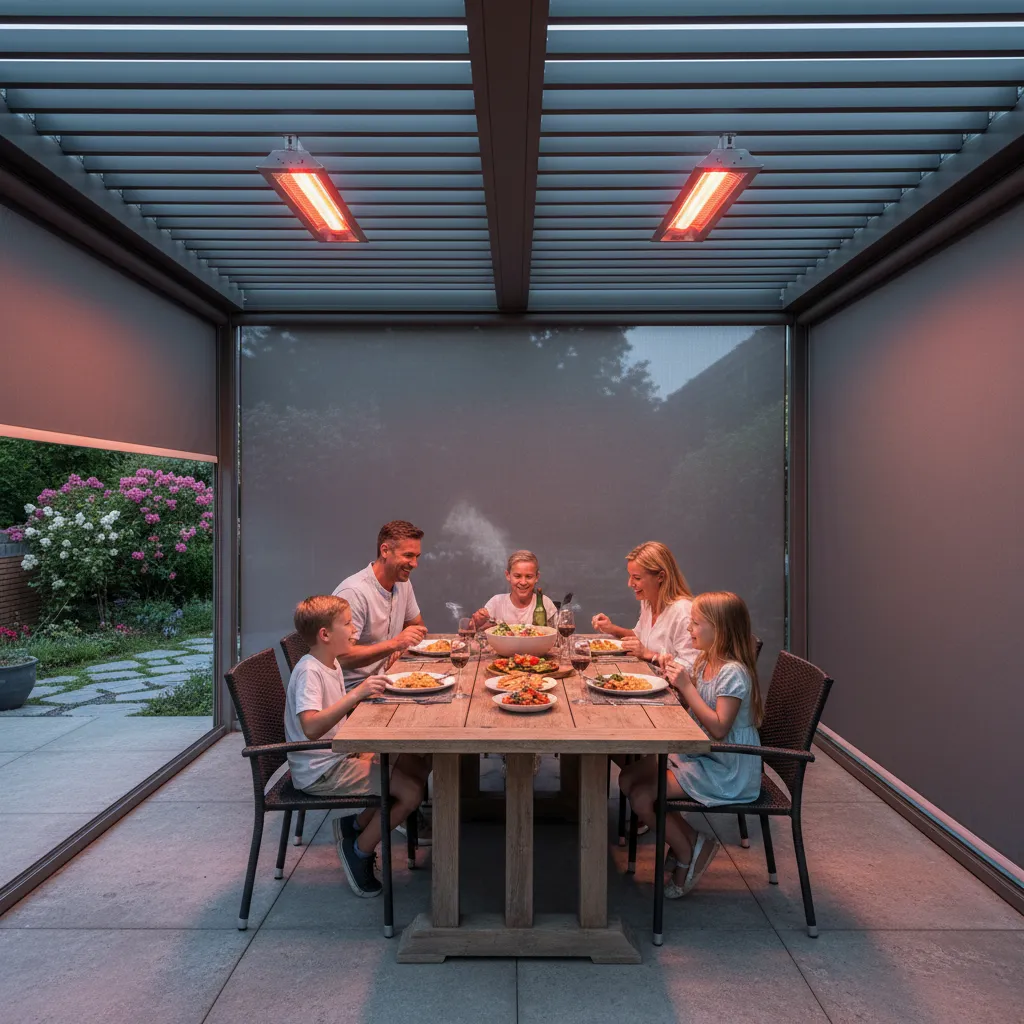
- Infrared Heating: Electric radiant heaters can be mounted to the frame beams. Because louvered roofs can trap heat when closed, these heaters become highly efficient in winter.
- Ziptrak® Blinds: To block wind and driving rain from the sides, retractable mesh or clear PVC blinds (like Ziptrak) are often installed between the posts. This effectively turns the outdoor area into an enclosed conservatory.
Comparing Top NZ Brands and Features
The New Zealand market is competitive, with several established players offering high-quality systems. When comparing quotes, it is essential to look at blade profile, span capabilities, and drive systems.
Louvretec
Arguably the most recognized brand in the luxury sector. They offer a wide range of blade shapes (from 120mm to 600mm). Their systems are known for their “Spiral Pivot” system which hides the motor drive mechanism completely within the frame for a sleek look. They are typically at the higher end of the price spectrum but offer extensive warranties and dealer networks.
Stratco (Outback)
Stratco offers the “Pavilion” and “Outback” ranges. These are often more accessible in terms of pricing and are popular for their robustness. Their blades are designed with a unique shape to maximize span distances, reducing the need for intermediate posts.
Johnson & Couzins
A South Island-born company known for innovation. They offer the “Silencio” system, which minimizes the noise of rain hitting the blades—a common complaint with aluminum roofs. They also offer a unique “SkyLouvre” which can retract fully (slide back) rather than just rotate, giving you a completely open sky.
Generic / Kitset Importers
There is a growing market for kitset louver systems. While significantly cheaper, buyers must be wary of wind ratings. Many are only rated for low wind zones and use thinner gauge aluminum. Parts availability for repairs can also be an issue compared to established NZ manufacturers.
The Installation and Consent Process
Do I need a building consent for a louvered roof in NZ?
In many cases, louvered roofs under 30 square meters may be exempt from building consent under Schedule 1 of the Building Act, provided they are built by a professional and do not impact the weathertightness of the existing house or violate boundary coverage rules. However, attached structures often require careful assessment.
It is critical to consult with your provider. Reputable companies will handle the council compliance checks for you. If the structure is attached to the house, it generally requires a consent because it involves penetrating the building envelope (cladding). Freestanding units are easier to exempt.
The Workflow:
- Consultation & Measure: Site visit to determine orientation, wind zone, and fixing points.
- Design & Engineering: CAD drawings are produced. If consent is needed, engineering calculations are submitted to the council.
- Fabrication: The system is manufactured to exact millimeter measurements.
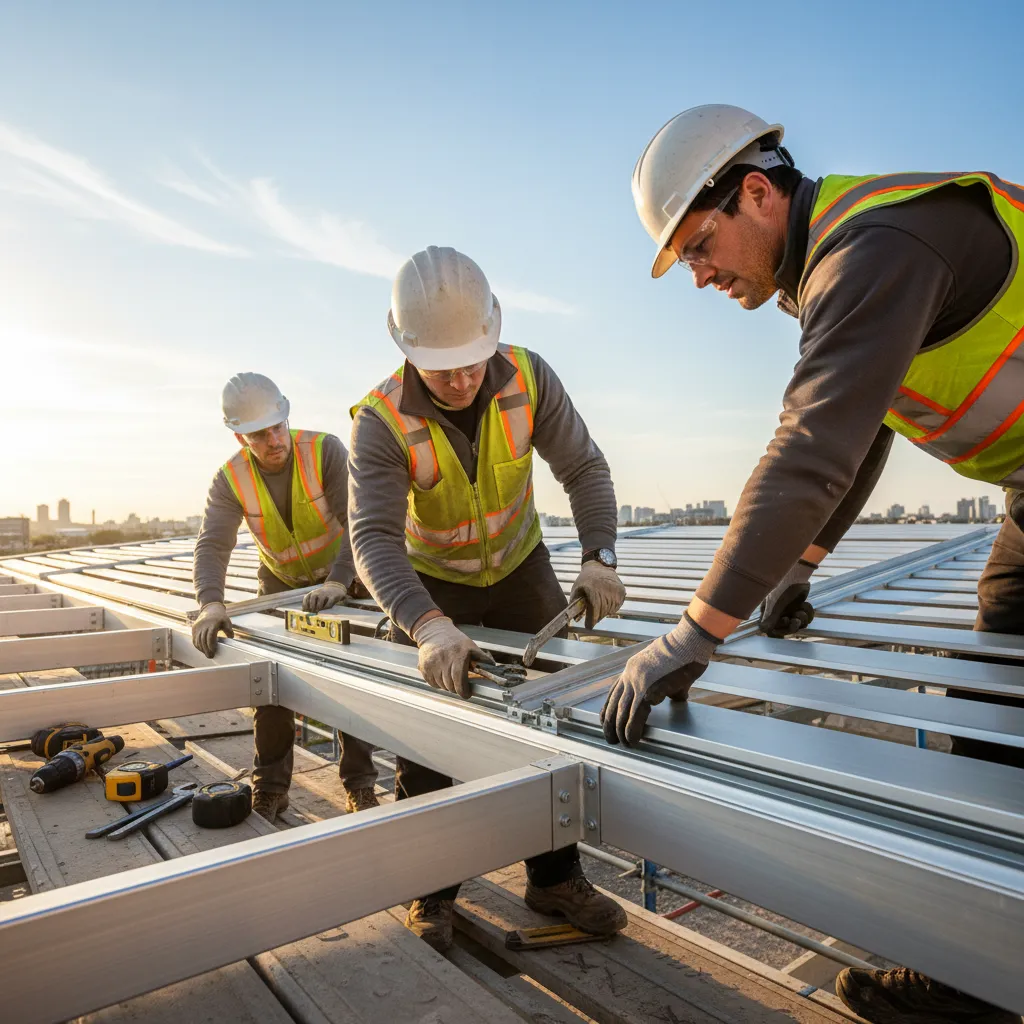
- Installation: Typically takes 2-4 days depending on complexity and electrical work.
Maintenance and Longevity
While aluminum is low maintenance, it is not “no maintenance.” To ensure your system lasts the 20+ years it is designed for, a regular cleaning schedule is required.
- Wash Down: Every 3-6 months (more frequently in coastal areas), wash the frame and blades with warm soapy water and a soft brush to remove salt and pollutant buildup.
- Gutter Clearing: Ensure the internal gutters are free of leaves to prevent overflow during heavy rain.
- Check Fixings: Visually inspect brackets and fixings annually.
- Motor Care: Listen for straining sounds. Modern motors are sealed, but if operation becomes jerky, contact the service agent immediately.
Investing in a louvered roof system is one of the most effective ways to upgrade a New Zealand property. It bridges the gap between the indoors and the outdoors, providing a flexible, durable, and stylish space that can be enjoyed regardless of the forecast.
How much does a louvered roof cost in NZ?
Costs vary significantly based on size, automation, and brand. Generally, fully installed motorised systems range from $1,500 to $2,500+ per square meter. A standard 20m² deck cover usually costs between $30,000 and $50,000 NZD depending on complexity and accessories.
Are louvered roofs 100% waterproof?
High-quality systems are designed to be watertight when closed. They utilize interlocking blades and internal guttering systems that channel water down through the posts. However, during extreme weather events with horizontal rain, minor misting can occur, but for general use, they are considered waterproof.
Can I install a louvered roof myself?
While kitset options exist for DIYers, they are generally not recommended for high-wind zones or complex attached structures. Professional installation ensures the system is structurally sound, compliant with the Building Code, and that the motor warranties remain valid.
Does a louvered roof add value to my home?
Yes. Real estate experts in NZ agree that functional outdoor living spaces are highly desirable. A permanent, high-quality structure like a louvered roof extends the usable floor plan of the home, which is a key selling point and value driver.
What happens to the roof during a power cut?
If the power goes out, the roof remains in its last position. Some premium systems come with a battery backup option. If you live in an area with frequent outages, ask your supplier about manual override options or battery backups to ensure you aren’t stuck with a closed roof on a hot day.
How long is the warranty on louvered roof systems?
Standard warranties in NZ are typically 10-15 years on the aluminum structure and powder coating, and 5 years on the motors and electronics. Always check that the warranty covers labor and parts, and verify the specific terms regarding coastal proximity.