
When comparing NZ made vs Chinese pergolas, the primary differences lie in material grade, surface treatment, and structural engineering. NZ made systems typically utilize high-tensile 6063-T5 aluminium and Dulux Duralloy powder coating, whereas Chinese imports often use 6060 alloys and generic coatings that may not withstand New Zealand’s extreme UV levels and coastal salt spray.
What is the difference between 6060 and 6063 aluminium alloys?
In the world of architectural aluminium, the specific alloy used determines the strength, finish quality, and corrosion resistance of the final product. When evaluating NZ made vs Chinese pergolas, the distinction between 6060 and 6063 alloys is critical for long-term performance.
Alloy 6063 is widely considered the “architectural alloy.” It is specifically designed for extrusions that require a high degree of surface finish and significant structural strength. In New Zealand, reputable manufacturers almost exclusively use 6063-T5 or T6 aluminium. The T5/T6 designation refers to the tempering process—heat treating the metal to increase its hardness and tensile strength. This makes the pergola capable of spanning larger distances without sagging and ensures the louvres remain rigid under wind pressure.
Conversely, many imported pergolas from China utilize 6060 aluminium. While 6060 is chemically similar to 6063, it generally has slightly lower magnesium and silicon content, resulting in lower mechanical properties. It is often chosen for mass-produced items because it extrudes faster and cheaper. However, for a permanent outdoor structure in New Zealand, the lower yield strength of 6060 can lead to structural vulnerabilities, especially in high-wind zones or when supporting heavy snow loads in the South Island.
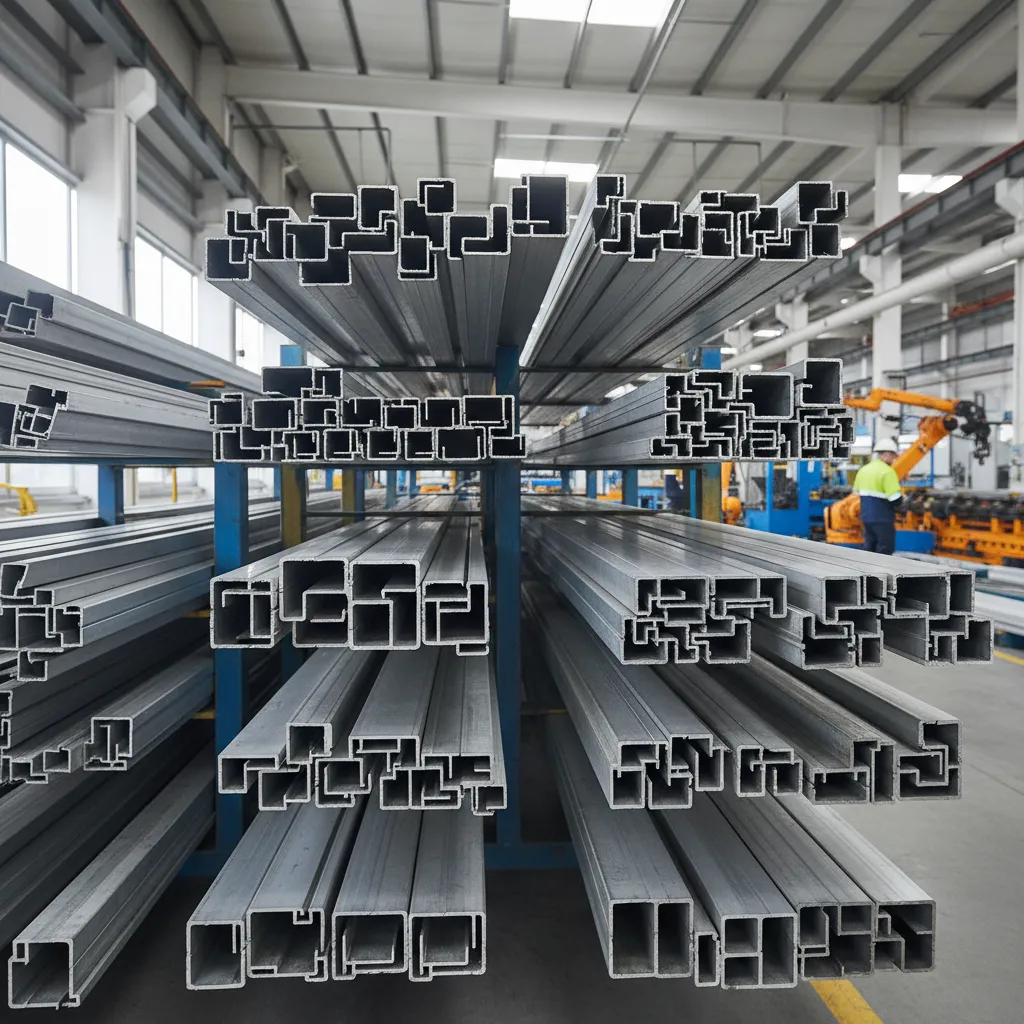
The Importance of Tempering (T5 vs T6)
Beyond the alloy number, the tempering process is what gives the aluminium its “backbone.” NZ manufacturers typically control the cooling and aging process to reach T5 or T6 specifications. This ensures that the pergola can withstand the torsional stresses caused by opening and closing louvre systems thousands of times over its lifespan. Imported kits often lack transparency regarding their tempering processes, which can result in “soft” aluminium that is prone to denting or warping during installation or extreme weather events.
How do powder coating standards like Dulux Duralloy compare?
The finish of a pergola is not just about aesthetics; it is the primary defense against New Zealand’s harsh environment. New Zealand has some of the highest UV radiation levels in the world and a significant portion of the population lives near the coast, where salt spray is a constant corrosive threat.
NZ made pergolas are typically finished using Dulux Duralloy or Interpon powder coatings. These products are specifically formulated for the South Pacific climate. Dulux Duralloy, for instance, meets the AS/NZS 3715 standard, which dictates strict requirements for film thickness, adhesion, and resistance to weathering. This ensures that the color remains vibrant and the surface does not “chalk” (turn into a white powdery substance) after a few years of sun exposure.
Imported pergolas often use generic polyester powder coatings. While these may look identical to the naked eye at the time of purchase, they frequently lack the UV stabilizers required for NZ conditions. Within 24 to 36 months, an imported pergola may show signs of fading, bubbling, or peeling. Because these coatings are often applied in factories that do not follow the rigorous pre-treatment processes (like chromate-free conversion coatings) used by NZ applicators, the bond between the metal and the paint is significantly weaker.
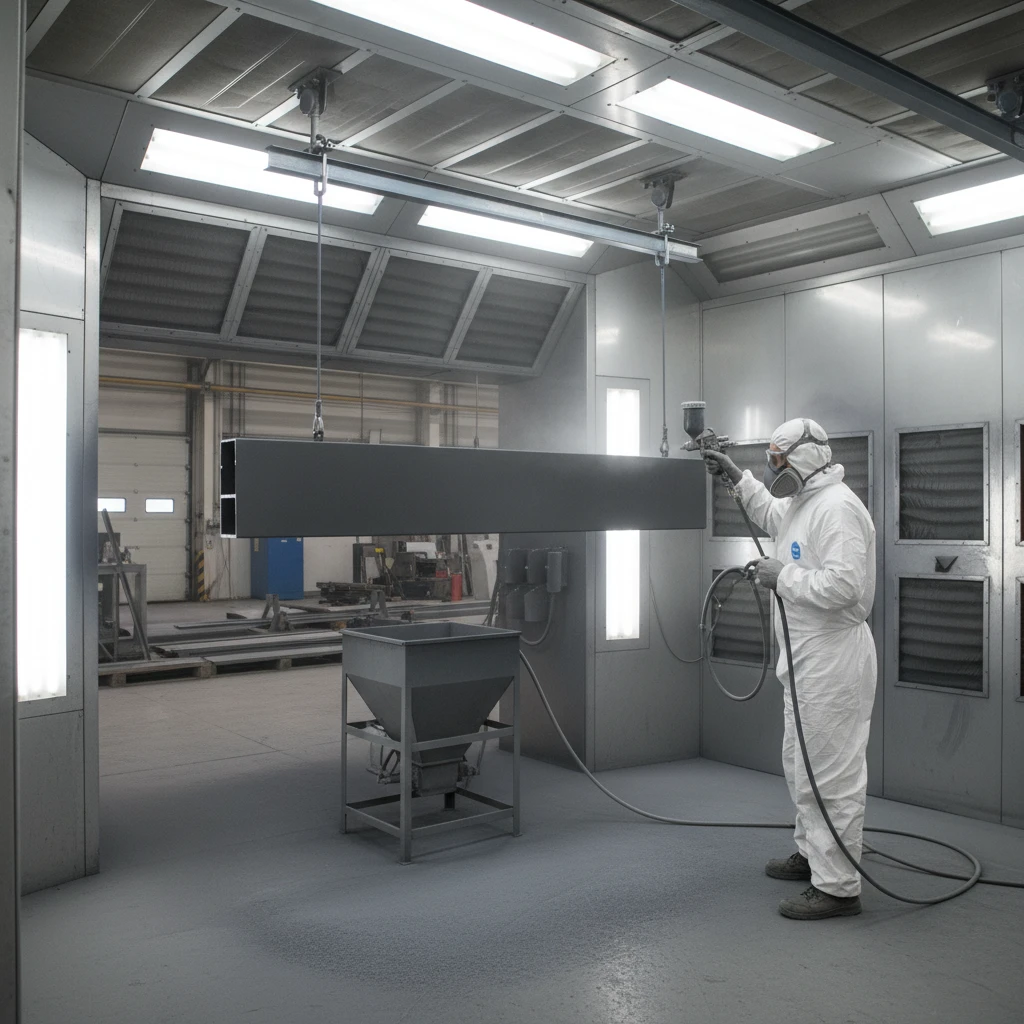
Coastal Performance and Warranties
If you live within 500 meters of the ocean, the powder coating quality becomes even more paramount. NZ manufacturers offer specific “Coastal Grade” coatings that provide enhanced protection. Furthermore, because the coating is applied locally, the warranties are enforceable and backed by companies like Dulux NZ. With an imported product, claiming a warranty for a failed finish is often impossible once the offshore supplier has moved on to a different production batch.
Why is supply chain stability important for pergolas?
A pergola is a 20-year investment. However, mechanical systems like motorized louvres or integrated LED lighting may eventually require maintenance. This is where the “NZ made vs Chinese pergolas” debate becomes a matter of long-term utility.
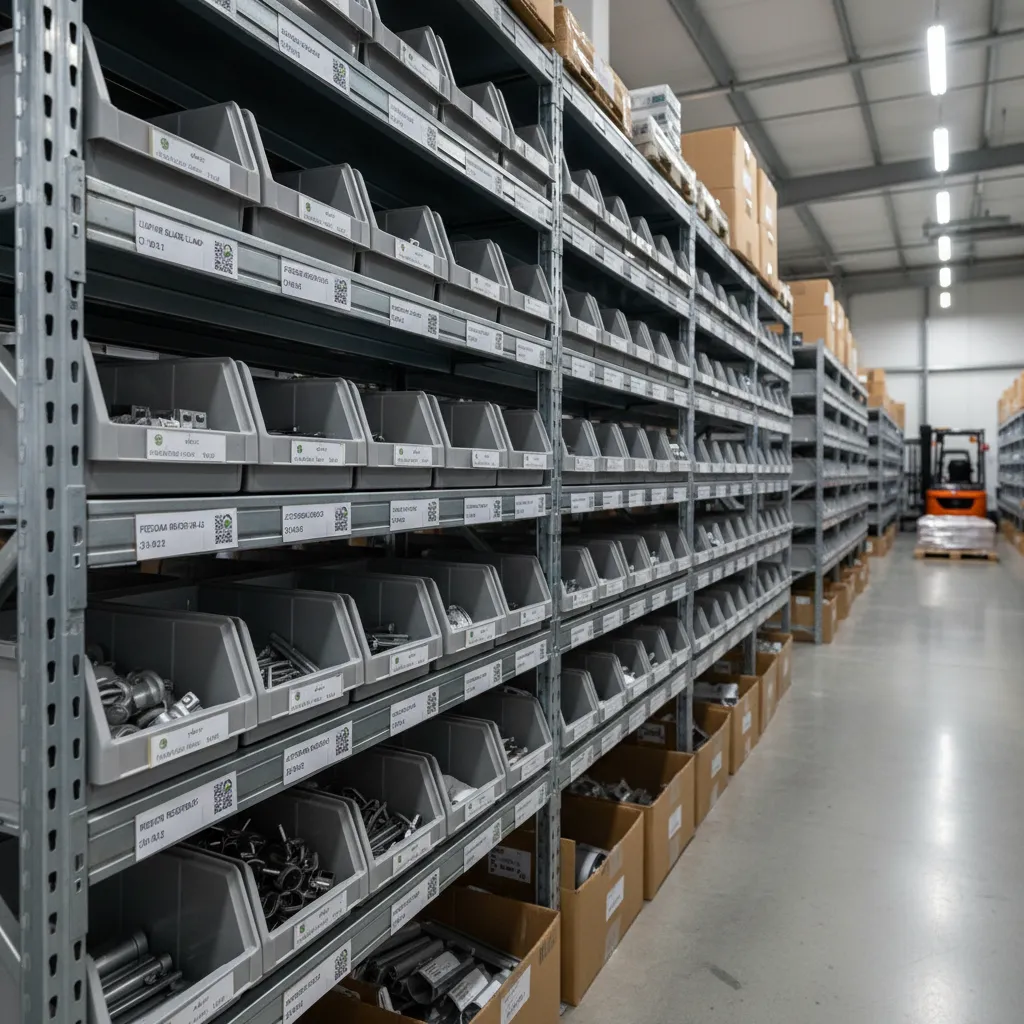
When you purchase an NZ made pergola, you are buying into a local ecosystem. The motors (often European brands like Somfy), the plastic end caps, the stainless steel fixings, and the drive shafts are stocked locally. If a freak storm damages a single louvre blade, an NZ manufacturer can extrude or pull a replacement from stock and have it powder-coated to match your existing structure in a matter of weeks.
With imported pergolas, spare parts are a significant risk. Most imports are sold as “kits” through third-party retailers. These retailers rarely stock individual components. If a motor fails or a bracket breaks five years down the line, and that specific model is no longer being imported, you may be left with a non-functional structure. The lack of standardized parts in the import market often turns a small repair into a full replacement project.
What are the benefits of supporting local manufacturing?
Choosing NZ made is not just a patriotic gesture; it is a strategy for quality assurance and economic resilience. When a pergola is manufactured in New Zealand, it is built to comply with the New Zealand Building Code (NZBC). This includes specific considerations for wind zones (from Low to Extra High) and snow loading requirements which vary significantly between Auckland and Queenstown.
Local manufacturers employ skilled designers and engineers who understand the nuances of NZ architecture. They can provide site-specific PS1 (Producer Statements) that are required by local councils for building consents. Many imported kits do not have the engineering documentation necessary to satisfy NZ building officials, leading to costly delays or the need for additional structural reinforcement.
Furthermore, supporting local manufacturing keeps the expertise within the country. It allows for customisation—tailoring the height, width, and color to perfectly integrate with your home’s existing architectural lines. Imported pergolas are typically restricted to standard sizes, which often results in a “tacked-on” look rather than a seamless integration.
How is structural integrity managed for NZ conditions?
New Zealand’s geography creates unique wind tunnels and microclimates. A pergola in a coastal Wellington suburb faces vastly different stresses than one in a sheltered Hamilton garden. NZ made pergolas are engineered with these variables in mind.
The wall thickness of the aluminium extrusions is a key differentiator. Local manufacturers often use thicker-walled profiles in critical load-bearing areas. While this increases the weight and the cost of the raw material, it ensures the structure does not vibrate or “whistle” in high winds. Many Chinese-made pergolas prioritize light shipping weights to keep freight costs down, resulting in thinner extrusions that may flex or rattle, creating an unsettling environment during a storm.
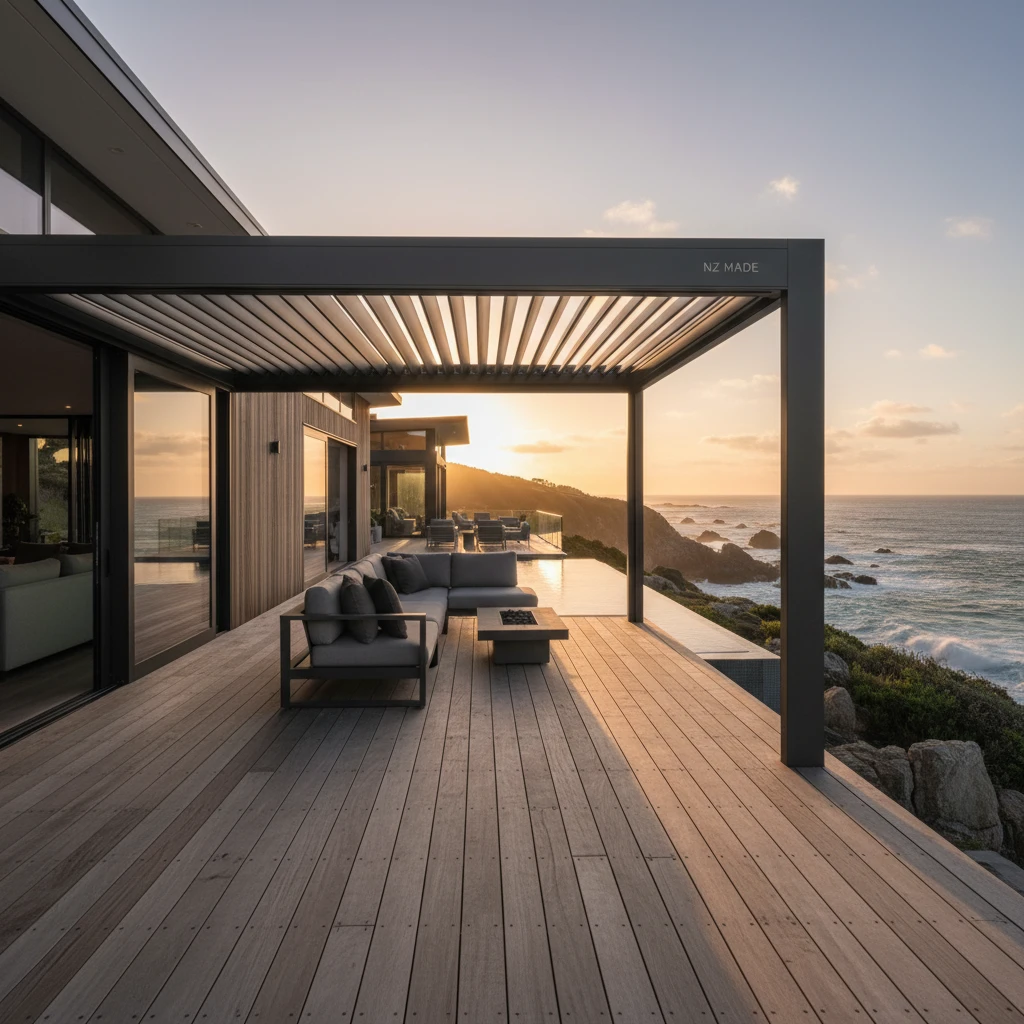
The Environmental Case for NZ Made
Sustainability is becoming a core driver in consumer decisions. NZ made aluminium pergolas often have a lower carbon footprint compared to their imported counterparts. New Zealand’s aluminium smelting (at Tiwai Point) uses primarily renewable hydroelectric energy, making it some of the lowest-carbon aluminium in the world.
Additionally, the logistics of shipping a heavy, bulky pergola from overseas involve significant carbon emissions. By sourcing locally, the transport distance is reduced from thousands of miles to a few hundred. There is also less packaging waste; local manufacturers can use reusable stillages rather than the massive amounts of single-use plastic and cardboard required to protect a kit during international transit.
People Also Ask
Are Chinese pergolas cheaper than NZ made ones?
Yes, initially. Chinese imported pergolas are typically 30-50% cheaper upfront because they use mass-production techniques, lower-grade alloys, and generic coatings. However, when factoring in lifespan, maintenance, and potential replacement costs, NZ made systems often provide better long-term value.
How can I tell if a pergola is NZ made?
Look for the “NZ Made” trademark or ask the supplier for the origin of their extrusions. Reputable NZ manufacturers will be able to provide the name of the local extruder (such as Altus or McKechnie) and the specific powder coating brand used.
Do imported pergolas meet the NZ Building Code?
Some do, but many do not. Most imported kits are designed for global markets and may not meet specific NZ requirements for wind or snow loading. Always ask for a PS1 engineering certificate before purchasing an imported system.
What is the typical lifespan of an NZ made pergola?
An NZ made pergola using 6063 aluminium and Dulux Duralloy coating is expected to last 20-25 years or more with basic maintenance. The structural integrity often outlasts the mechanical components, which are themselves designed for long-term use.
Can I customize the size of a Chinese pergola?
Usually no. Imported pergolas are typically sold as pre-set kits (e.g., 3x3m or 3x4m). NZ made pergolas are generally custom-manufactured to the millimeter, allowing for perfect fitment against your house or within a specific deck area.
Is the warranty on imported pergolas reliable?
It depends on the retailer. If the retailer goes out of business or stops carrying that specific brand, the warranty is often void. NZ manufacturers have a physical presence and local accountability, making warranty claims more straightforward.