
Commercial pergolas in NZ are heavy-duty, architectural outdoor structures designed specifically for the hospitality sector to maximize year-round seating capacity. Engineered to withstand New Zealand’s high wind zones and variable climate, these systems—often featuring motorized louvers or retractable roofs—transform underutilized outdoor areas into profitable, weather-proof dining spaces that significantly boost revenue and property value.
Expanding Revenue: The Economics of All-Weather Seating
In the competitive landscape of the New Zealand hospitality industry, floor space equates to revenue. For cafes, restaurants, bars, and hotels, the ability to utilize outdoor areas is often dictated by the notorious unpredictability of the weather. A sunny morning in Auckland or Wellington can quickly turn into a blustery, rainy afternoon, rendering uncovered outdoor tables useless and driving customers away.
Installing high-quality commercial pergolas NZ businesses trust is not merely an aesthetic upgrade; it is a strategic operational asset. By converting an exposed courtyard or deck into a sheltered, usable space, venue operators can effectively increase their permanent seating capacity by 30% to 50%. This expansion is not limited to the summer months. With the right enclosure, an outdoor area becomes a premium asset during the shoulder seasons and even throughout winter.
Consider the “turning tables” metric. If a restaurant has an outdoor section that seats 40 people but is only usable 40% of the year due to rain, wind, or excessive UV glare, the potential revenue loss is staggering. A commercial pergola system transforms that usability to near 100%. This consistency allows managers to roster staff more effectively, accept more bookings without fear of weather cancellations, and provide a reliable experience for patrons.
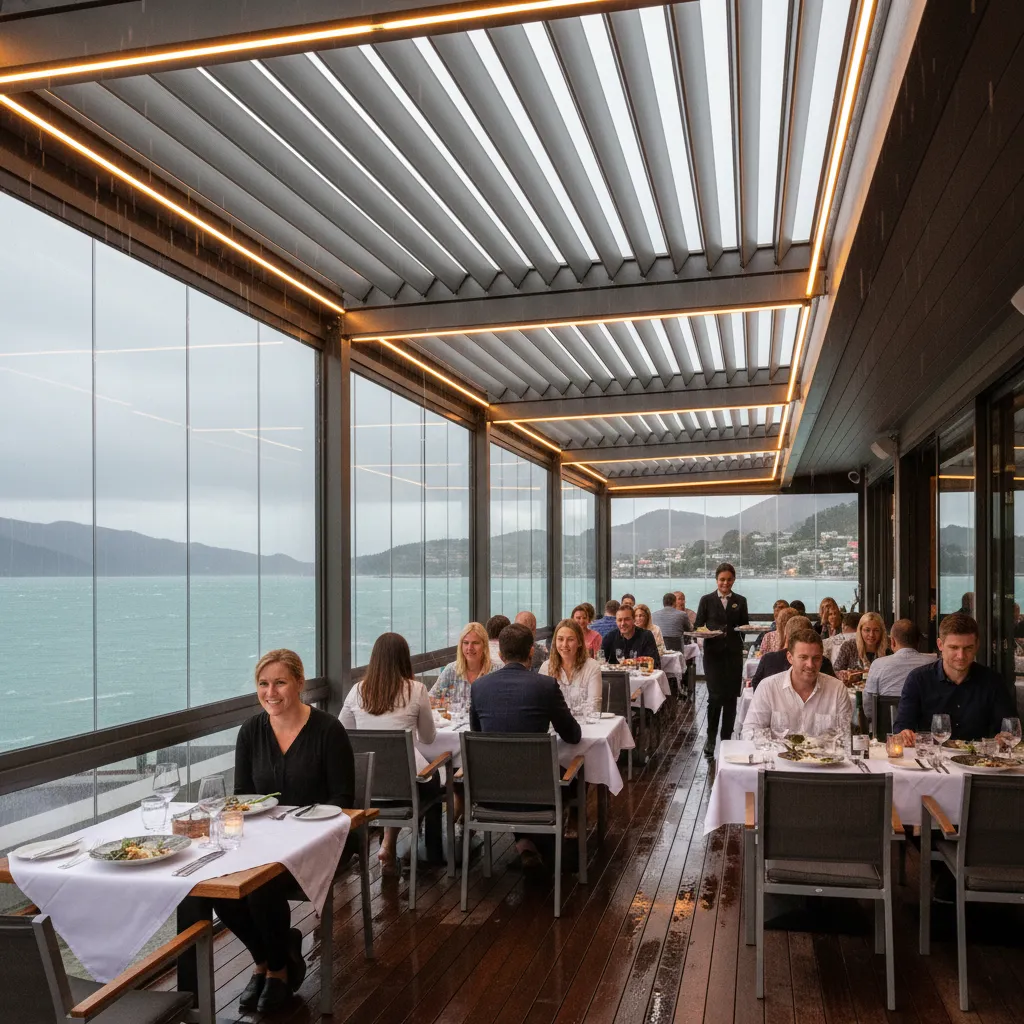
Engineering for the Elements: NZ Weather Durability
New Zealand presents a unique set of environmental challenges that standard residential shade structures simply cannot withstand. Commercial entities require heavy-duty durability to ensure safety and longevity. When sourcing commercial pergolas in NZ, the structural integrity must meet specific building codes and wind zone requirements.
Why Marine-Grade Materials Matter?
Given that much of New Zealand’s commercial hospitality sector is located near coastlines, resistance to corrosion is non-negotiable. High-end commercial pergolas are typically constructed from high-grade extruded aluminum (often 6063-T6 alloy). Unlike timber, which can warp and rot, or steel, which is prone to rust without constant maintenance, aluminum offers distinct advantages:
- Corrosion Resistance: Essential for venues in coastal areas like the Viaduct, Mount Maunganui, or Queenstown’s lakeside.
- Strength-to-Weight Ratio: Allows for wider spans between posts, preserving sightlines and maximizing floor space for tables.
- Low Maintenance: Requires minimal upkeep compared to wood, reducing long-term operational costs.
Wind Loading and Seismic Compliance
New Zealand’s building standards (NZS 3604) categorize wind zones from Low to Extra High. Commercial pergolas must be engineered to withstand the specific wind pressures of the site. This is particularly critical for rooftop bars and high-exposure coastal venues. Professional systems utilize reinforced louver blades and robust guttering systems capable of handling heavy downpours without overflowing into the dining area. The structural posts and footings are engineered to handle significant uplift forces, ensuring the safety of patrons during storm events.
Branding and Architectural Customization
A pergola is a dominant visual feature of a property’s exterior. Therefore, it must align seamlessly with the venue’s branding and architectural style. Leading manufacturers of commercial pergolas in NZ offer extensive customization options that go beyond simple dimensions.
Powder Coating and Color Matching:
The aluminum frames can be powder-coated in a vast array of colors. Most suppliers utilize the Dulux Duralloy or Duratec ranges, which are formulated for NZ conditions. This allows business owners to match the structure to their brand colors or the existing building façade, ensuring the addition looks like an intentional part of the architecture rather than an afterthought.
Structural Configuration:
Every hospitality space is different. Customization options include:
- Freestanding Modules: Ideal for poolside areas or beer gardens detached from the main building.
- Wall-Mounted/Attached: Perfect for extending existing indoor dining rooms seamlessly onto a deck.
- Cantilevered Designs: Useful for walkways or areas where posts would obstruct traffic flow.
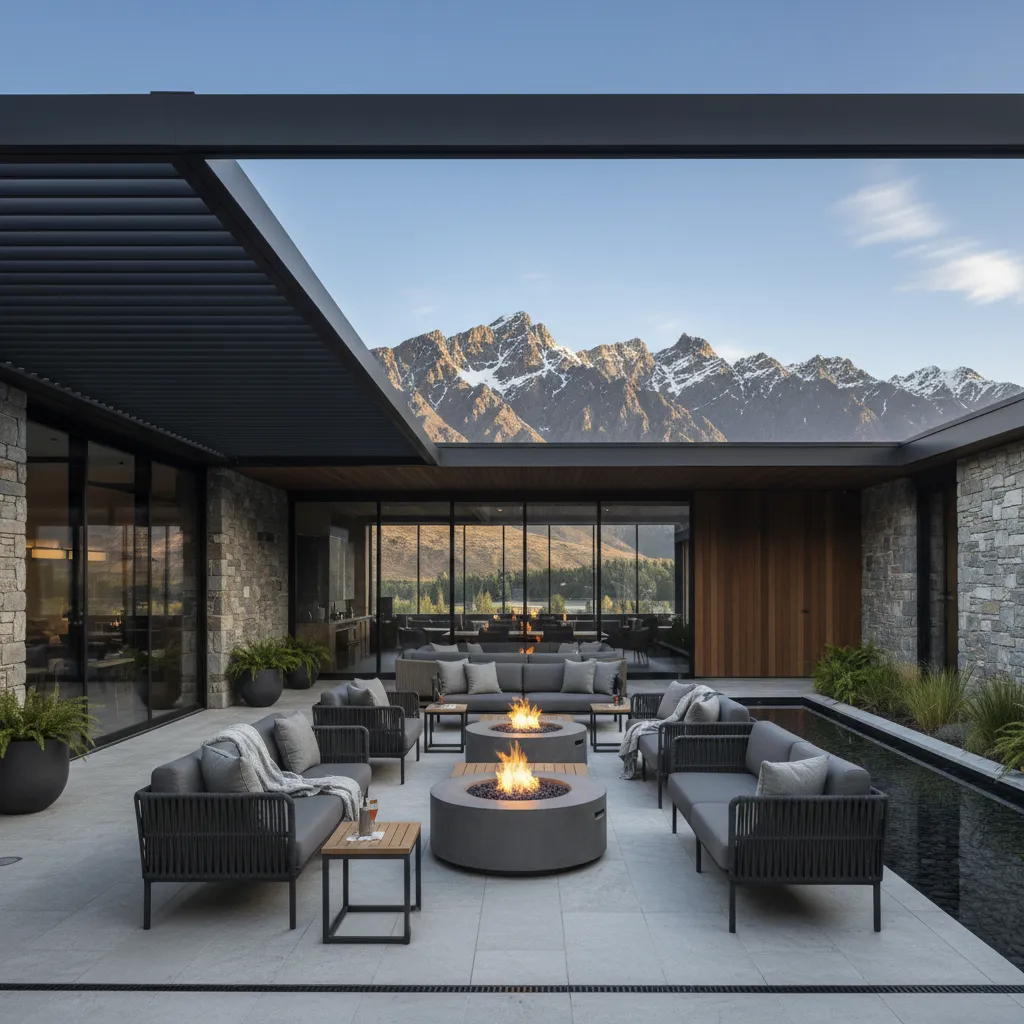
Calculating the ROI for Hospitality Businesses
For business owners, the decision to install a commercial pergola is ultimately a financial one. While the upfront capital expenditure can be significant, the Return on Investment (ROI) is often realized rapidly, typically within 12 to 24 months, depending on the venue’s volume.
The ROI Formula
To calculate the potential return, hospitality owners should analyze the following variables:
- Additional Covers: How many extra seats can be reliably sold per day?
- Average Spend Per Head: What is the average ticket value?
- Usable Days: Increase the usable days from ~150 (fair weather) to ~350 (all weather).
Example Scenario:
A cafe adds a pergola covering 40 square meters, accommodating 20 extra seats. If those seats are filled just once a day with an average spend of $25, that is $500 daily revenue. Over a year (assuming 6 days a week operation), that is over $150,000 in additional gross revenue. The protection provided by the pergola ensures this revenue is protected against rain, making the investment highly lucrative over the asset’s lifespan.
Types of Commercial Pergola Systems
Understanding the different technologies available is crucial for selecting the right solution for your specific business needs.
1. Motorized Louvered Roofs
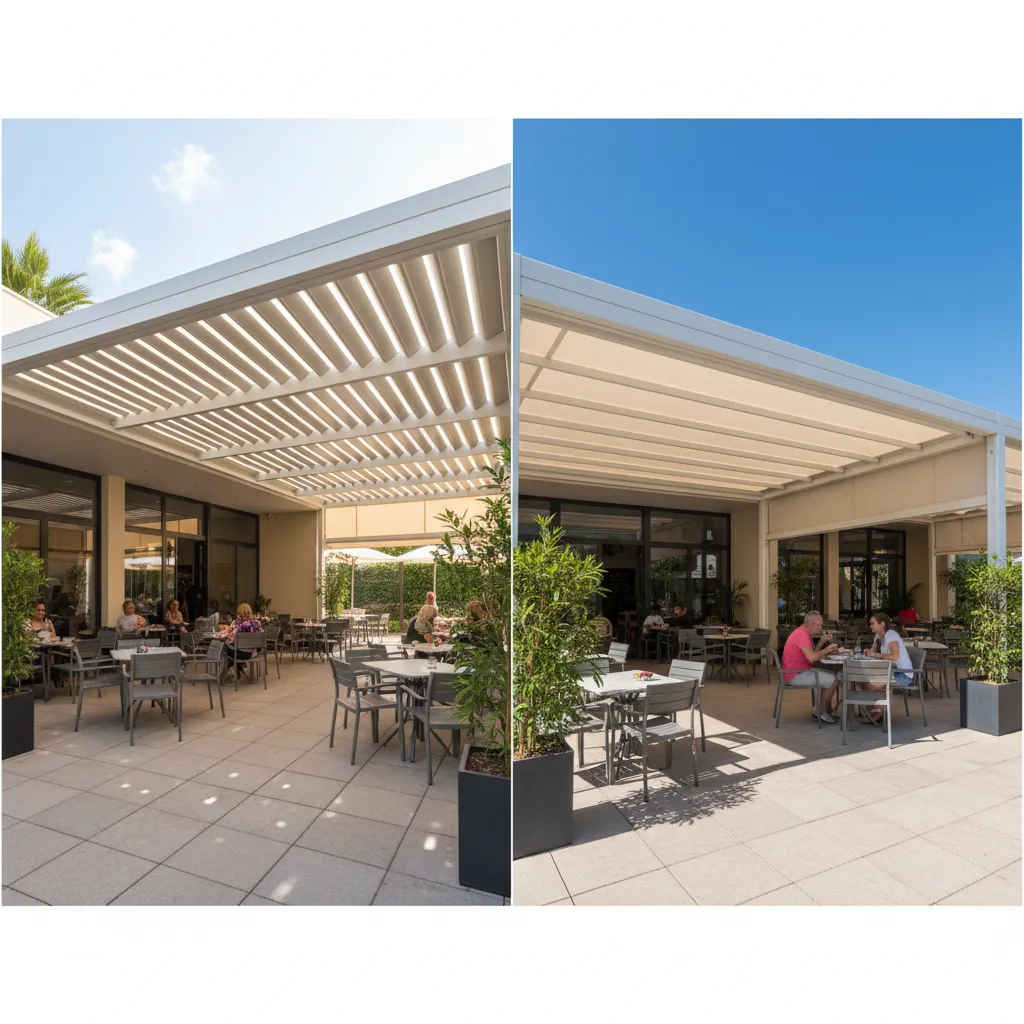
This is the gold standard for commercial pergolas in NZ. These systems feature aluminum blades that rotate up to 180 degrees.
Pros: precise control over sunlight and ventilation; completely waterproof when closed; high wind resistance.
Best For: Restaurants and high-end bars requiring versatility.
2. Retractable Canvas Roofs
These systems use a heavy-duty, tensioned PVC fabric that retracts completely, leaving the sky fully open.
Pros: Offers a true “open-air” feeling when retracted; softer aesthetic.
Best For: Venues that want to maximize star-gazing at night or complete sun during perfect weather.
3. Fixed Polycarbonate or Glass Roofs
A permanent roof structure that allows light through but does not open.
Pros: Lower cost; constant weather protection.
Cons: Can create a “greenhouse effect” (heat buildup) in summer if not properly ventilated.
Best For: Walkways or areas requiring permanent shelter.
Essential Integration Features: Heating, Lighting, and Screens
To truly maximize the utility of a commercial pergola, it must be equipped with integrated accessories that enhance the guest experience.
Automated Drop-Down Screens
In New Zealand, the wind is often more problematic than the rain. Integrated outdoor blinds (such as Ziptrak systems) made from clear PVC or mesh can be installed between the pergola posts. These screens block the wind while preserving the view, effectively creating an outdoor room that is insulated from the elements.
Infrared Heating Systems
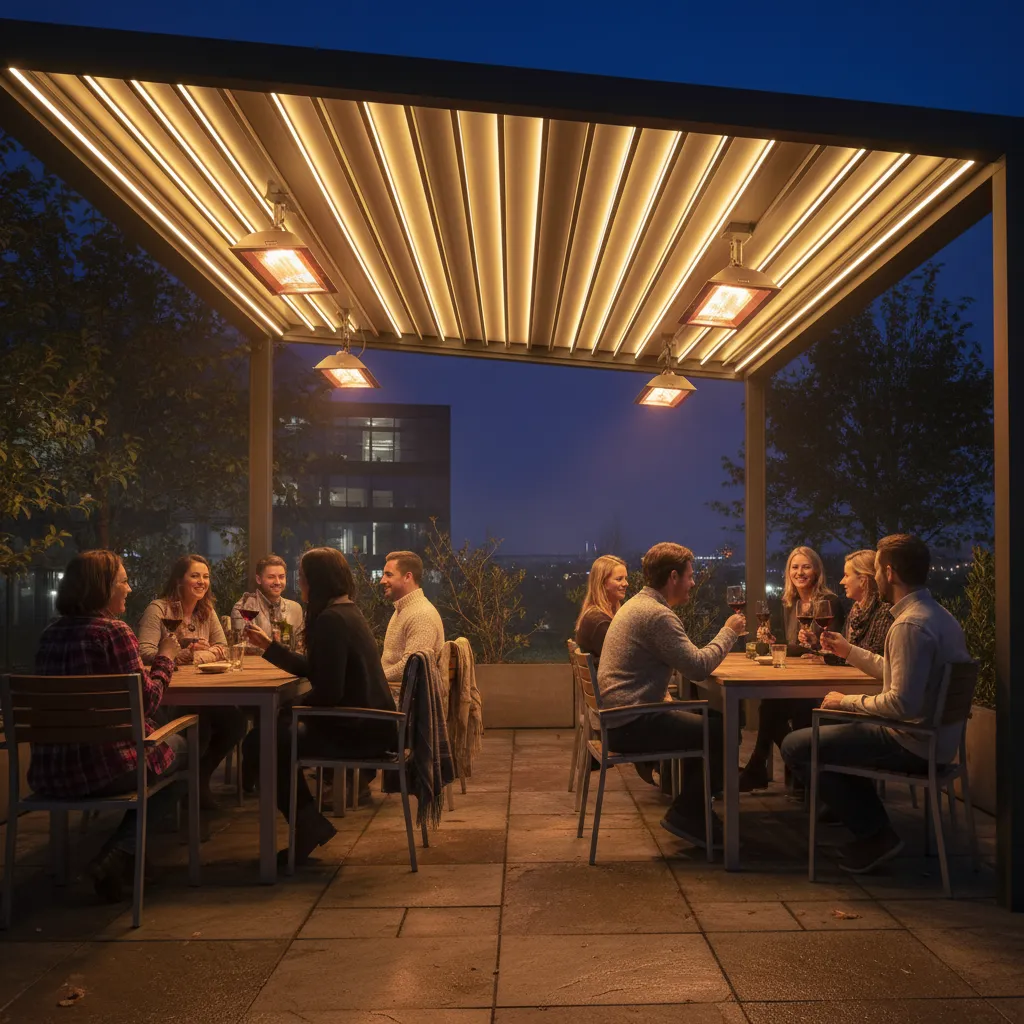
Winter dining is only possible with adequate heating. Commercial pergolas are designed to support mounted infrared heaters. Unlike gas mushrooms that take up floor space, mounted electric radiant heaters direct warmth specifically to the patrons and surfaces, ensuring comfort even when the air temperature drops.
Integrated LED Lighting
Ambiance is key to evening trade. Modern systems allow for LED strips to be integrated directly into the louvers or the frame perimeter. Dimmable options allow staff to transition the mood from a bright, energetic lunch service to an intimate, sophisticated dinner setting.
The Consultation and Installation Process
Investing in a commercial pergola is a significant project that requires professional execution. The process typically follows a structured path to ensure compliance and satisfaction.
- Site Assessment: Experts evaluate the ground conditions, existing structures, and wind zones.
- Design & Engineering: CAD drawings are produced to visualize the outcome. Engineering calculations are performed to ensure the structure meets NZ Building Code.
- Council Consents: Depending on the size and location (and local council rules in Auckland, Wellington, Christchurch, etc.), a building consent or resource consent may be required. Experienced suppliers often handle this paperwork.
- Fabrication: The system is custom-manufactured to the exact millimeter.
- Installation: Professional teams install the structure, electrical components, and drainage systems with minimal disruption to business operations.
By partnering with reputable providers of commercial pergolas in NZ, hospitality businesses invest in a future-proof solution that delivers immediate returns through increased capacity and enhanced customer satisfaction.
People Also Ask
Do commercial pergolas require building consent in NZ?
Often, yes. While some smaller structures (under 30sqm) might be exempt under Schedule 1 of the Building Act, commercial structures used by the public usually require consent to ensure safety, fire egress, and structural integrity. It is crucial to consult with your local council or pergola provider.
What is the wind rating for commercial pergolas?
High-quality commercial pergolas in NZ are engineered to withstand specific wind zones, often rated up to “Extra High” or specific cyclonic ratings depending on the location. They can typically withstand wind speeds of 120km/h+ when closed, though it is recommended to open louvers in extreme storms to reduce resistance.
Can pergolas be fully waterproof?
Yes, motorized louvered pergolas are designed to be watertight when closed. They feature interlocking blades and internal guttering systems (inside the beams) that channel water down the posts and away from the dining area, keeping the space underneath dry.
How much does a commercial pergola cost in NZ?
Costs vary significantly based on size, customization, and automation. Generally, prices can range from $1,000 to $2,500+ per square meter for a fully installed, high-end automated system with heating and screens. A precise quote requires a site visit.
Are rain sensors necessary for commercial pergolas?
They are highly recommended for hospitality venues. Rain sensors automatically close the louvers or roof when moisture is detected, protecting furniture and table settings even if staff are busy inside or the venue is closed.
How long does installation take?
Once fabrication is complete, the on-site installation for a standard commercial pergola typically takes 2 to 5 days. Complex projects with electrical integration and screens may take longer, but suppliers aim to minimize downtime for the business.