
A garden arch pergola in NZ is a vertical landscape structure designed to frame pathways, support climbing flora, and create distinct visual transitions within an outdoor space. Typically constructed from H3.2 treated timber or powder-coated steel to withstand New Zealand’s variable weather, these features serve as both functional gateways and aesthetic focal points that enhance vertical garden depth.
Transforming a flat, unidimensional backyard into a dynamic sanctuary requires more than just a manicured lawn and a few shrubs. It requires verticality, structure, and a sense of journey. This is where the garden arch pergola excels. Whether you are looking to frame a view of the Waitakere Ranges, create a romantic entrance to a secret garden in Christchurch, or simply add shade to a sunny walkway in the Bay of Plenty, an arch pergola is a versatile solution.
In this comprehensive guide, we will explore how to utilise these structures to define your landscape, the specific considerations for New Zealand’s unique climate, and the practical differences between buying a kitset versus commissioning a custom build.
How to Create Focal Points with Garden Arches?
In landscape design, a focal point is an area that draws the eye and anchors the space. Without these anchors, a garden can feel chaotic or unfinished. A garden arch pergola serves as an immediate architectural statement that commands attention.
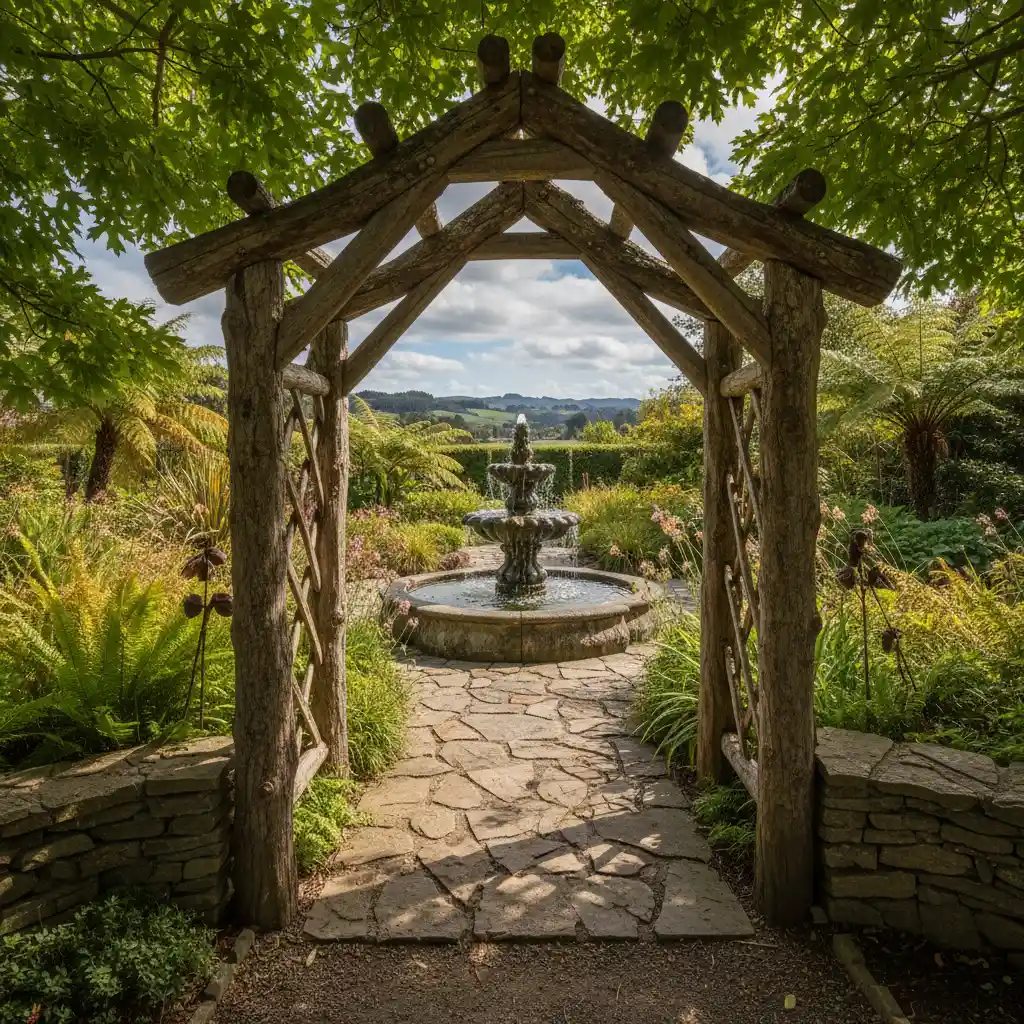
The human eye is naturally drawn to frames. By placing an arch at the entrance of a path or framing a specific view—such as a statue, a water feature, or a particularly beautiful specimen tree—you dictate where the viewer looks. In smaller urban Kiwi sections, this is particularly useful for distracting from less desirable views, such as a neighbour’s fence or a garage wall.
The Rule of Scale and Proportion
When selecting an arch for a focal point, scale is critical. A flimsy, narrow arch in a large, sprawling rural garden will look lost. Conversely, a heavy, wide timber pergola in a small courtyard can feel oppressive. A general rule of thumb for New Zealand residential gardens is to ensure the arch is at least 1.2 metres wide to allow for comfortable passage, especially once plants begin to encroach on the internal space.
How Do Walkway Pergolas Connect Outdoor Zones?
Modern landscape design often treats the garden as a series of “outdoor rooms.” You might have a dining area (the alfresco room), a vegetable patch (the utility room), and a flat lawn for kids (the play room). A walkway pergola acts as the hallway connecting these rooms, providing a clear transition that signals a change in function and mood.
This concept is known as the “journey” in landscape architecture. Walking through a tunnel of greenery creates a sense of compression. When you emerge from the arch into an open space, you experience a sense of expansion. This psychological effect makes even small gardens feel larger and more intriguing.
Design Layouts for Walkways
For long paths, consider a series of unconnected arches spaced 2-3 metres apart rather than a continuous tunnel. This “colonnade” effect provides rhythm and repetition—a key design principle—without blocking out all the light. In high-wind zones, such as Wellington or coastal areas, spaced arches are also structurally safer than a solid, continuous tunnel which can act as a wind sail.

What Are the Best Climbing Plants for the NZ Climate?
A garden arch pergola is rarely complete without the softening touch of climbing plants. However, New Zealand’s climate varies drastically from the sub-tropical North to the frost-prone South. Selecting the right plant is crucial for the longevity of your structure and the aesthetics of your garden.
Top Native Options
For those wanting to support local biodiversity, New Zealand has stunning native climbers that thrive on pergola structures:
- Clematis paniculata (Puawhananga): Known as the harbinger of spring, this plant produces masses of pure white, star-shaped flowers. It prefers cool roots and a sunny head, making it perfect for an arch where the base is shaded by other planting.
- Tecomanthe speciosa (Three Kings Vine): A vigorous climber with large, tropical-looking leaves and cream-coloured tubular flowers. It is frost-tender, so it is best suited for North Island gardens.
Classic Exotics for Kiwi Gardens
If you prefer a traditional cottage garden look or a modern scent profile, consider these reliable performers:
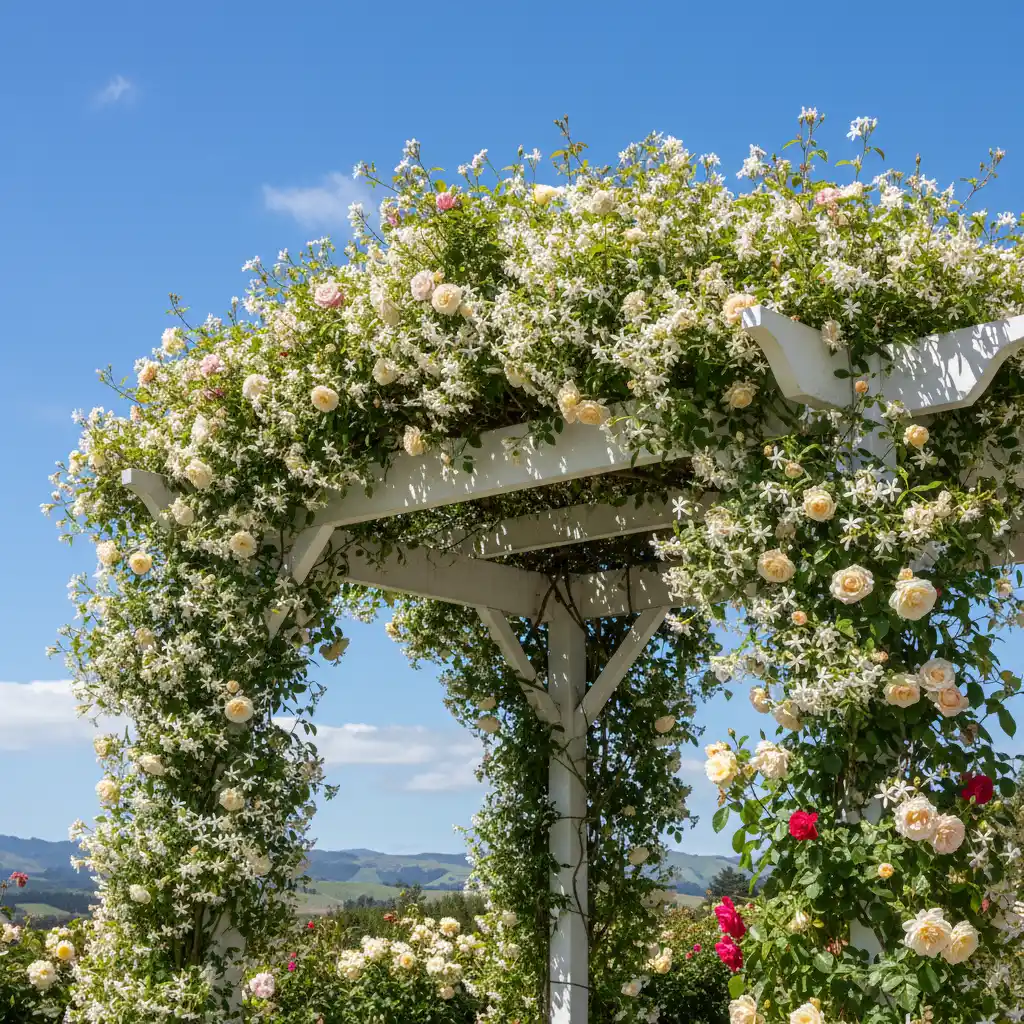
- Star Jasmine (Trachelospermum jasminoides): An evergreen favourite in NZ. It is manageable, smells divine in summer, and looks good year-round. It is not too heavy, making it suitable for lighter kitset arches.
- Wisteria: The showstopper. However, Wisteria is incredibly heavy and vigorous. Only plant this if you have a custom-built, heavy-duty timber pergola with strong concrete footings. It can crush flimsy trellis work.
- Climbing Roses: Varieties like ‘Pierre de Ronsard’ or ‘Iceberg’ are staples in New Zealand rose gardens. They require tying in as they don’t self-cling like ivy.
Kitset Arches vs. Custom Builds: Which is Right for You?
When investing in a garden arch pergola in NZ, the primary decision is between buying a pre-fabricated kitset or hiring a builder for a custom solution. Both have distinct advantages depending on your budget and skills.
Kitset Garden Arches
Pros:
- Cost-Effective: generally ranges from $150 to $800 NZD.
- Convenience: Available at major retailers like Bunnings, Mitre 10, or specialized garden centres.
- DIY Friendly: Usually requires only basic tools (drill, screwdriver, level) to assemble.
Cons:
- Durability: Cheaper tubular steel models often rust within a few years in coastal NZ air.
- Size Limitations: You are restricted to standard dimensions, which may not fit your specific path width.
Custom Built Pergolas
Pros:
- Longevity: Built using 100x100mm H4 posts and heavy gauge timber, these can last 20+ years.
- Design Flexibility: Can be built to exact dimensions, accommodating slopes, corners, or specific architectural styles.
- Strength: Essential if you plan to grow heavy vines like Wisteria or Grapes.
Cons:
- Cost: Expect to pay $1,500+ for materials and labour.
- Time: Requires planning, potentially building consent (though usually exempt under 20m² for low structures), and construction time.
Material Selection for New Zealand Conditions
New Zealand has high UV levels and frequent rain, meaning material selection is not just about looks—it is about survival.
Timber
Radiata Pine: The most common material. Ensure any timber in contact with the ground is treated to H4 standard. Timber above ground should be H3.2. Staining or painting is recommended every 2-3 years to prevent warping and cracking from the sun.
Macrocarpa: A naturally durable alternative to treated pine. It silvers off beautifully but is more expensive and can be prone to checking (cracking) as it dries.
Metal
Powder-Coated Steel: Offers a sleek, modern look. Ensure the powder coating is high quality (UV resistant) to prevent fading. If you live near the sea, look for marine-grade coating or galvanised steel to prevent corrosion.
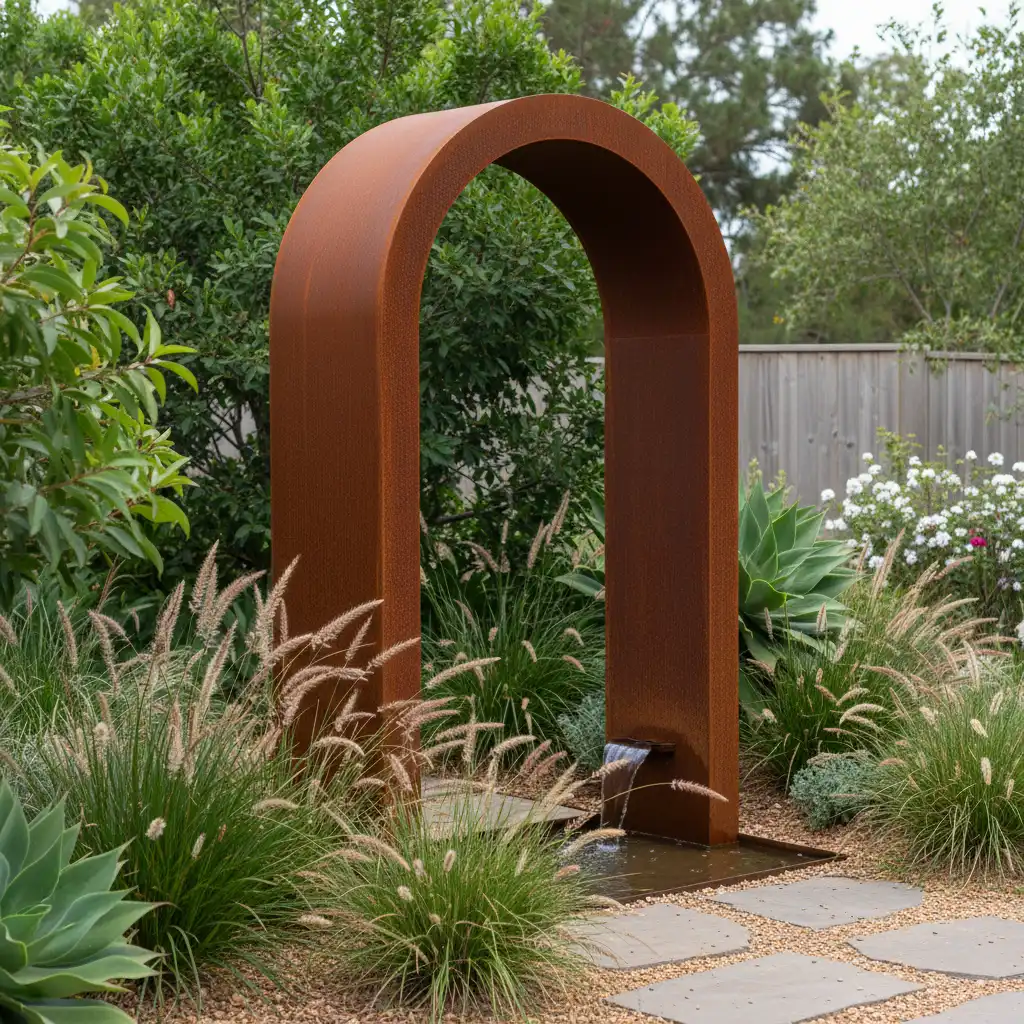
Corten Steel: Popular in high-end NZ landscape design. It develops a stable rust-like appearance that acts as a protective layer. It creates a striking contrast against green foliage.
Installation and Maintenance for Longevity
Even the most expensive garden arch pergola will fail if not installed correctly. New Zealand soil types vary from heavy clay in Auckland to sandy loam in coastal areas and stony ground in Canterbury. Secure footing is non-negotiable.
Anchoring Your Arch
For light kitset arches, pushing the legs into the soil is rarely enough. In high winds, they will topple. Use ground spikes or set the legs into quick-set concrete. For custom timber arches, post holes should be at least 600mm deep. Using concrete ensures the structure remains plumb and level over time, preventing the “leaning tower” effect that plagues many DIY projects.
Maintenance Checklist
- Annual Inspection: Check for rust on metal fixings and tighten any loose bolts.
- Pruning: Keep climbing plants trimmed. Overgrown plants act as sails in the wind and trap moisture against the structure, accelerating rot or rust.
- Retreatment: Re-stain timber every 2-3 years. If using paint, wash it down annually to remove moss and mould build-up, which is common in damp NZ winters.
By carefully selecting the right style, material, and placement for your garden arch pergola, you create more than just a support for plants. You create a permanent architectural feature that adds value to your property and enhances your outdoor living experience for years to come.
People Also Ask
Do I need a building permit for a pergola in NZ?
Generally, no. Under the New Zealand Building Code, pergolas and garden arches are typically exempt from building consent if they are under 20 square metres in size and do not have a solid roof. However, they must still comply with the Building Code regarding structural safety and distance from boundaries. Always check with your local council if you are unsure, especially for larger custom structures.
How deep should pergola posts be in the ground?
For a standard garden arch or pergola, posts should be set at least 600mm (60cm) into the ground. If the structure is particularly tall or heavy, or if you are in a high wind zone, 900mm is safer. Post holes should be filled with concrete to ensure stability.
What is the best wood for outdoor arches in NZ?
H3.2 or H4 treated Radiata Pine is the most cost-effective and widely used option due to its resistance to rot and insects. For a chemical-free, naturally durable option, Macrocarpa or imported hardwoods like Kwila are excellent choices, though they come at a higher price point.
Can you grow grapes on a garden arch?
Yes, grapes grow very well on garden arches. However, grapevines become extremely heavy when laden with fruit and have woody, vigorous growth. You must use a sturdy, custom-built timber or heavy-steel arch. A lightweight tubular kitset arch will likely collapse under the weight of a mature grapevine.
How wide should a garden walkway arch be?
A garden walkway arch should be a minimum of 1.2 metres wide. This allows one person to walk through comfortably without brushing against the sides. If you want two people to walk side-by-side, or if you plan to grow thorny roses that will reduce the internal width, aim for 1.5 to 2 metres wide.
How do I stop my metal garden arch from rusting?
To prevent rust, choose a hot-dip galvanised or high-quality powder-coated steel arch initially. If you notice scratches or chips, sand the area lightly and apply a rust-inhibiting metal paint immediately. In coastal NZ areas, washing the salt spray off the metal periodically also helps extend its life.