
In New Zealand, a standard pergola typically costs between $200 and $3,500 per square metre installed. Basic timber structures range from $200 to $500 per m², while high-end motorised aluminium louvered systems usually cost between $1,500 and $3,500 per m². Labour averages $65 to $95 per hour for professional installation.
Planning an outdoor living renovation involves navigating a wide variance in pricing structures. Whether you are looking for a simple shade structure to define a garden zone or a fully automated louvered roof system for year-round entertainment, understanding the specific cost drivers in the New Zealand market is essential. This guide serves as a comprehensive pergola price estimator, breaking down material costs, labour rates, and council compliance fees.
How much does a pergola cost in NZ?
The price of a pergola in New Zealand is dictated primarily by the complexity of the design and the durability of the materials used. While off-the-shelf kitsets from hardware stores like Bunnings or Mitre 10 can be purchased for under $2,000 total, custom-designed architectural solutions often exceed $20,000.
When estimating your budget, it is helpful to categorize the project into three distinct tiers:
- Entry-Level ($1,500 – $5,000): Usually DIY kitsets made from treated pine or light-gauge aluminium with manual roofing (polycarbonate or shade cloth).
- Mid-Range ($5,000 – $15,000): Custom-built timber pergolas (Macrocarpa or Cedar) or fixed-roof aluminium structures installed by professionals.
- High-End ($15,000 – $50,000+): Motorised opening louvered roofs, integrated LED lighting, automated drop-down screens, and heavy-duty powder-coated aluminium frames tailored to high wind zones.
Cost Per Square Metre by Material
The choice of material is the single biggest variable in your pergola price estimator. In New Zealand, the climate demands materials that can withstand high UV radiation and moisture.
Timber Pergola Costs
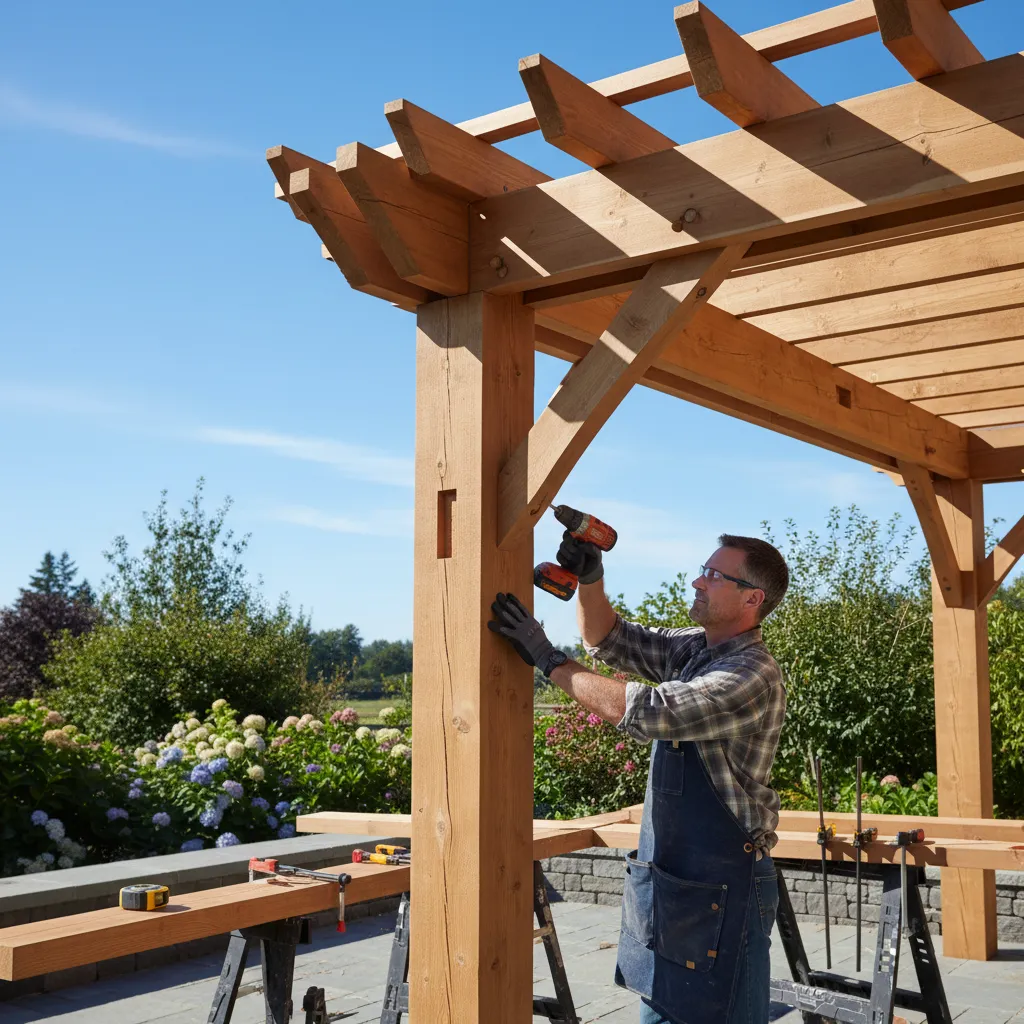
Timber remains a traditional favourite due to its aesthetic warmth and versatility. However, prices vary significantly based on the wood species.
- H3.2 Treated Pine ($200 – $450 per m²): The most affordable and common option. It requires regular painting or staining to maintain its appearance and prevent rot.
- Macrocarpa ($400 – $700 per m²): A popular NZ native timber alternative that offers natural durability and a rustic look. It is more expensive than pine but requires fewer chemical treatments.
- Cedar ($600 – $900 per m²): A premium softwood known for its rich colour and resistance to warping. Cedar is often used for feature beams or slats rather than structural posts due to its high cost.
- Hardwoods (e.g., Kwila/Vitex) ($700 – $1,000+ per m²): Extremely durable and heavy, often matching existing decking. These require significant labour to work with due to their density.
Aluminium Pergola Costs
Aluminium has overtaken timber in the modern market because it is low maintenance and rust-resistant, particularly important for coastal NZ properties.
- Standard Box Section ($500 – $1,200 per m²): Simple fixed-frame structures, often powder-coated in standard colours like Grey Friars or Ironsand.
- Premium Heavy-Duty ($1,200 – $2,500 per m²): Thicker gauge aluminium designed to span larger distances without intermediate posts. These are essential for unobstructed views and high wind zones.
Steel and Composite Materials
Steel is less common for residential pergolas due to weight and corrosion risks but is used for industrial-style designs. Galvanised steel structures can cost upwards of $1,000 per m² purely for the framing, requiring specialist fabrication and crane installation.
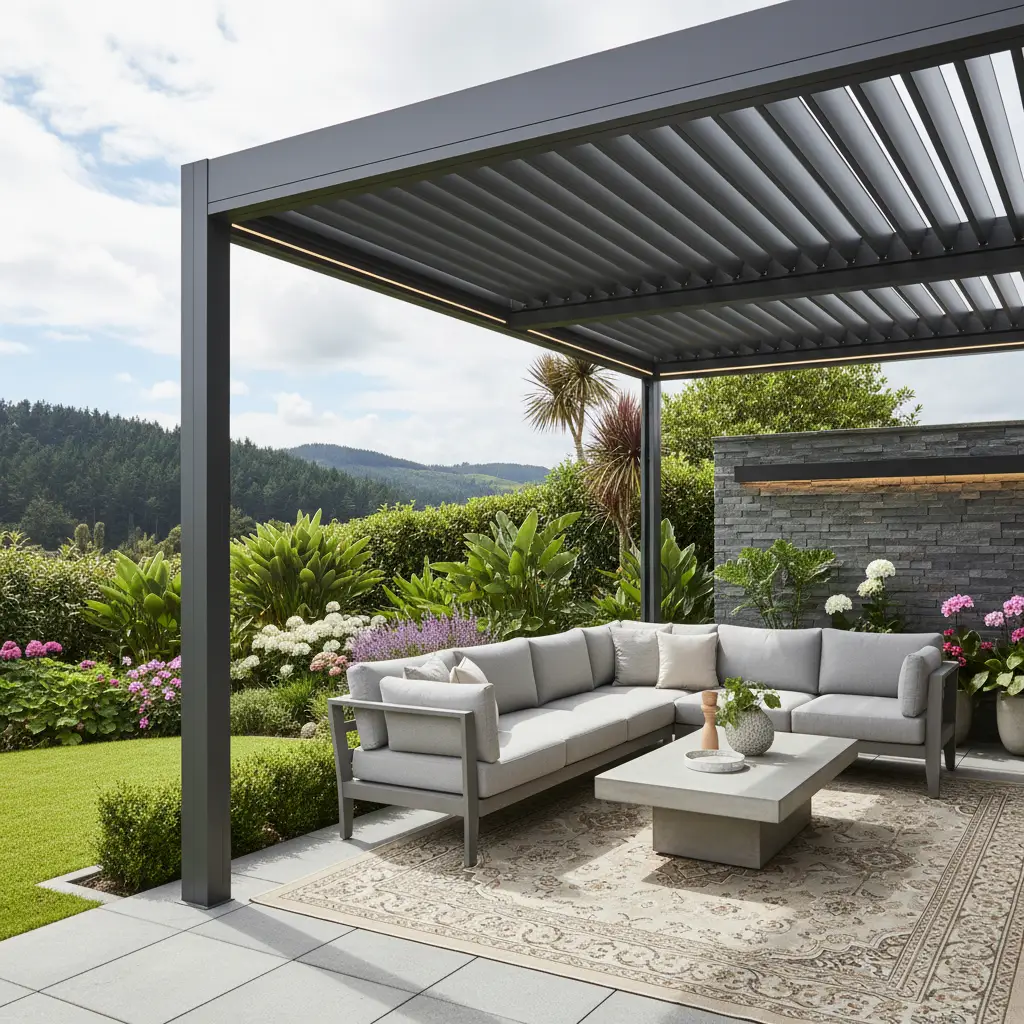
Price of Motorised Louvered Systems
Motorised louvered roofs are the pinnacle of outdoor living luxury in New Zealand, allowing homeowners to control sunlight and rain with the touch of a button. These systems are technically complex, involving internal guttering, motors, and electrical wiring.
What influences the price of louvered roofs?
A fully installed motorised system typically costs between $1,500 and $3,500 per square metre. The variance is due to:
- Motor Brand: European motors (e.g., Somfy) are the industry standard for reliability but come at a premium compared to generic alternatives.
- Blade Design: Aerofoil blades that rotate 180 degrees offer better airflow and light control than flat blades.
- Sensors: Rain sensors that automatically close the roof when moisture is detected add $300 – $600 to the system cost.
- Integration: Smart home connectivity (controlling the roof via phone app) creates additional hardware and setup costs.
For a standard 4m x 4m (16m²) area, expect to pay between $24,000 and $40,000 for a high-quality motorised solution including installation.
Labour Cost Averages in New Zealand
Unless you are purchasing a flat-pack kitset, labour will comprise approximately 30% to 50% of your total project cost. The “building boom” and skilled labour shortages in NZ have pushed rates higher in recent years.
Professional Installation Rates
Qualified builders and specialist installers typically charge:
- Hourly Rate: $65 to $95+ GST per hour per builder.
- Team Day Rate: A two-person team may cost between $1,200 and $1,600 per day.
Installation Timelines
- Simple Timber Frame: 2–3 days (approx. $2,500 – $4,000 in labour).
- Complex Aluminium System: 3–5 days (approx. $4,000 – $7,000 in labour), often requiring specialist calibration of motors and louvres.
Note: If your site has difficult access (e.g., steep hills, no vehicle access to the backyard), labour costs can increase significantly due to the time required to hand-carry materials.

Council Consent Fee Estimates
Navigating the New Zealand Building Code is a critical step in your price estimation. Ignoring this can lead to costly fines or the removal of your structure.
Do I need a building consent for a pergola?
Under Schedule 1 of the Building Act, you may be exempt from building consent if:
- The structure is less than 30 square metres.
- It is on the ground floor.
- A Chartered Professional Engineer (CPEng) has designed the structure (for proprietary systems).
- Or, if it is a lightweight structure without a solid roof (e.g., shade cloth or open slats) that does not exceed 20 square metres.
However, if you are attaching the pergola to the house (penetrating the cladding) or installing a solid waterproof roof over a certain size, consent is often required to ensure weathertightness and structural integrity.
Estimated Council Costs
If consent is required, budget for the following:
- Building Consent Fee: $1,500 – $3,000 (varies by local council, e.g., Auckland Council vs. Christchurch City Council).
- Resource Consent: $2,500 – $5,000+ (only needed if you breach boundary setbacks or site coverage ratios).
- Development Contributions: Rarely applicable for simple pergolas but possible for large extensions.
Always verify with your local council or a professional planner before commencing work, as regulations can vary by region.
Hidden Costs and Site Preparation
A pergola price estimator often focuses on the superstructure, but the foundation and accessories can add 20% to the total budget.
1. Footings and Concrete Pads
Pergolas require solid anchoring to resist wind uplift. If you are installing onto an existing patio, you may need to cut concrete and pour new footings.
Cost: $500 – $1,500 for concrete cutting and pouring footings.
2. Electrical Work
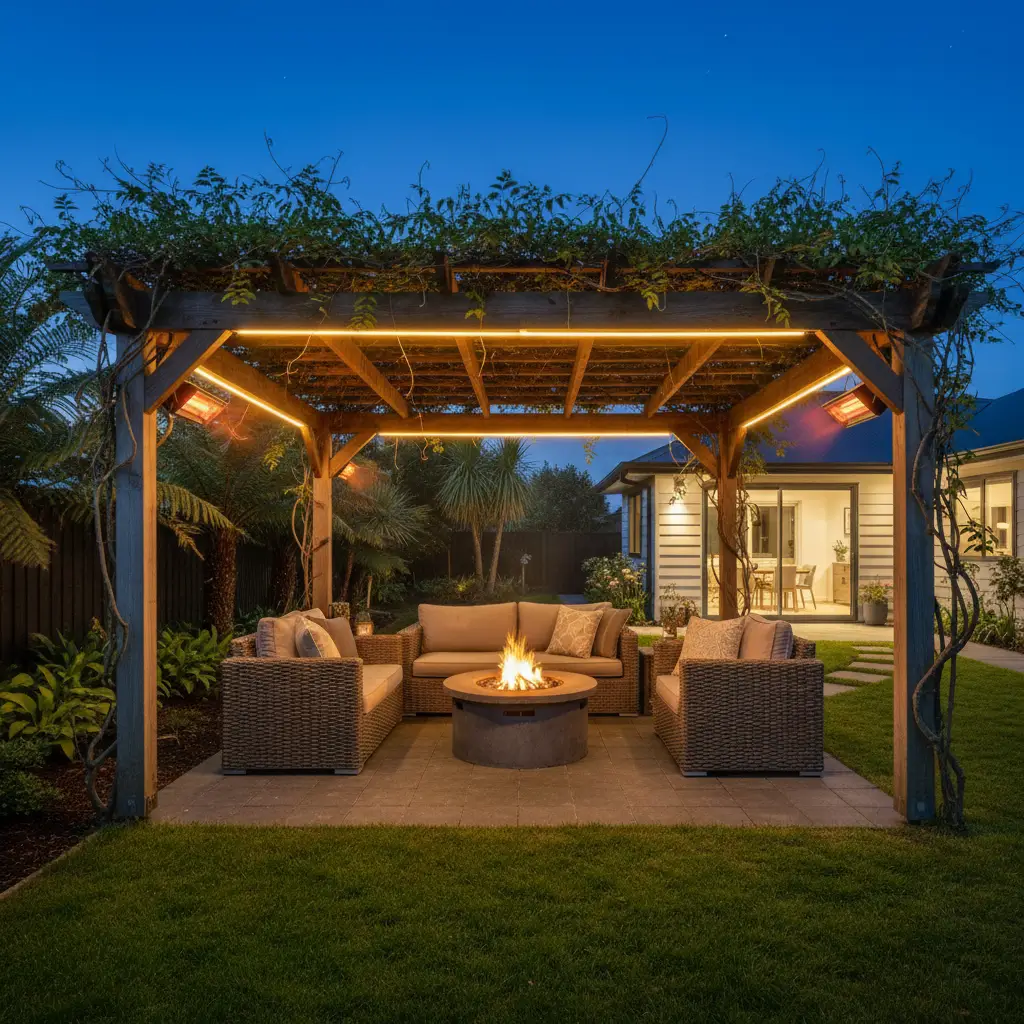
For motorised systems, heaters, or LED lighting, you need a registered electrician to run cabling from your main switchboard to the outdoor area.
Cost: $800 – $2,000 depending on the distance from the switchboard and complexity of concealment.
3. Outdoor Blinds and Screens
To make the space usable in wind and rain, many Kiwis add Ziptrak or similar drop-down screens.
Cost: $1,000 – $2,500 per blind (manual vs motorised).
4. Heating
Infrared radiant heaters are standard for NZ winters.
Cost: $600 – $1,200 per heater unit, plus installation.
People Also Ask
Does a pergola add value to a home in NZ?
Yes, a well-constructed pergola creates “indoor-outdoor flow,” a highly sought-after feature in the NZ property market. Real estate experts estimate that a high-quality outdoor living area can return between 50% to 80% of its cost in added property value, improving saleability.
What is the cheapest way to build a pergola?
The cheapest method is to use H3.2 treated pine and build a simple open-slat structure yourself using a kitset. Avoiding a solid roof eliminates expensive roofing materials and guttering, and keeping it under 20–30sqm typically avoids council consent fees.
How long does a timber pergola last in NZ weather?
A properly treated H3.2 or H4 pine pergola can last 15 to 25 years if maintained correctly. Hardwoods and Cedar can last longer but require oiling to prevent silvering and cracking. Aluminium pergolas typically offer a longer lifespan of 25+ years with minimal maintenance.
Can I attach a pergola to my house without consent?
Attaching a pergola to a house usually requires a building consent because it involves penetrating the building envelope (cladding), which risks weathertightness issues. However, some exemptions exist for lightweight porches under specific sizes. Always check Schedule 1 of the Building Act.
What is the difference between a pergola and a verandas?
In New Zealand terminology, a veranda is typically a roofed open-air gallery or porch attached to the outside of a building, often running along the front or side. A pergola is often a freestanding structure or a frame that may or may not have a roof, often used to define a space in the garden.
How much do outdoor cafe blinds cost for a pergola?
Custom-fitted outdoor blinds (like PVC or mesh screens) generally cost between $800 and $1,500 per blind for manual operation. Motorised blinds integrated into the pergola structure can cost between $1,500 and $3,000 each.